Mom's Best Recipes
Recipe

Classic Beef Stew

Tender beef, hearty vegetables, and a rich gravy with bright, savory depth. One pot, low drama, big comfort.

Author By Matt Campbell
4.8/5
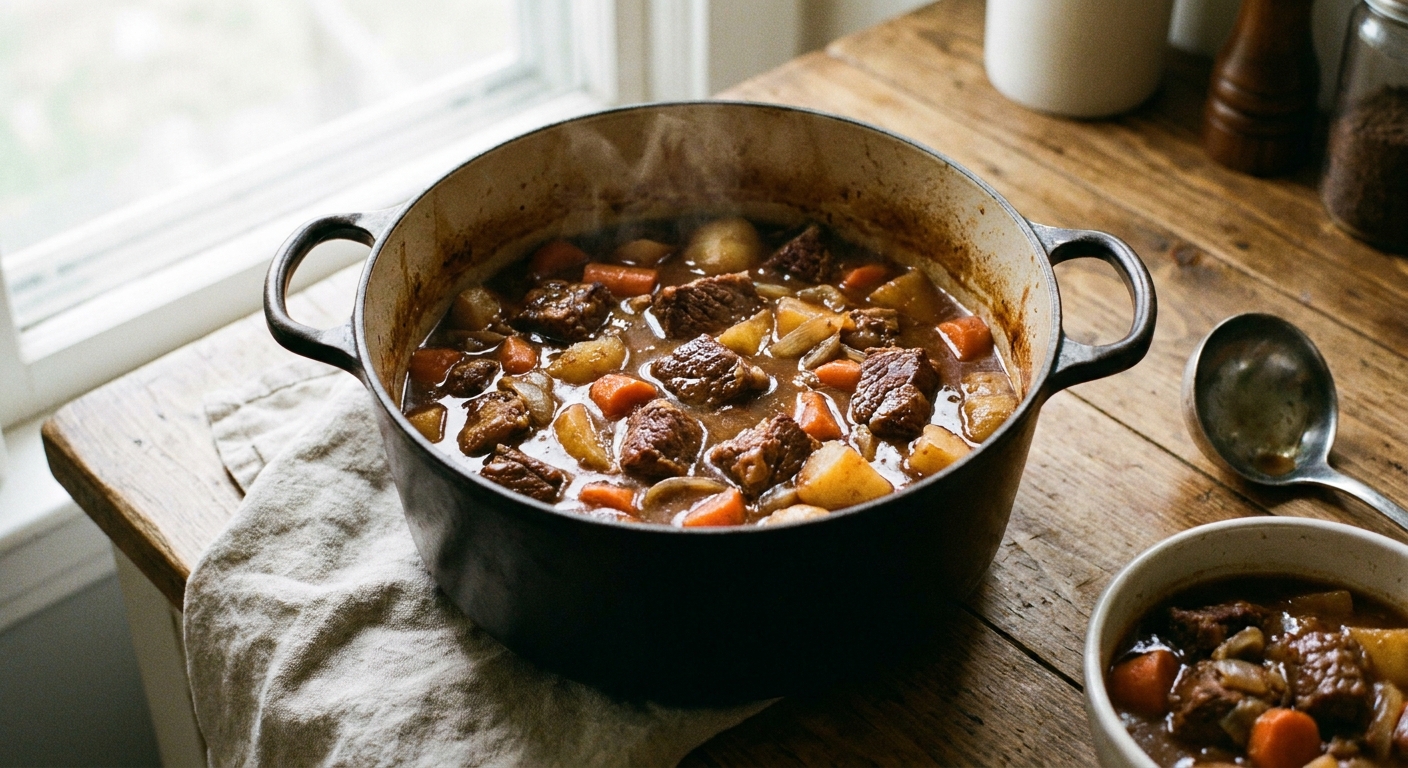
A real photograph of a cast iron Dutch oven filled with classic beef stew, showing browned beef chunks, carrots, potatoes, and a glossy brown gravy, sitting on a wooden kitchen counter with soft window light
Jump to Recipe

Beef stew is the kind of dinner that makes the whole house smell like you have your life together, even if the kitchen is currently a disaster zone of cutting boards and rogue onion skins. It is warm, filling, and deeply forgiving. Miss a measurement? Fine. Swap a veggie? Also fine. As long as you brown the beef and give it time to get tender, you are going to land somewhere delicious.

This version is my go-to: big chunks of beef that actually turn tender, potatoes that stay hearty, and carrots that do not dissolve into orange confetti. The little trick here is building flavor in layers, meaning we brown hard, deglaze smart, and let tomato paste and herbs do the background work while the stew simmers.
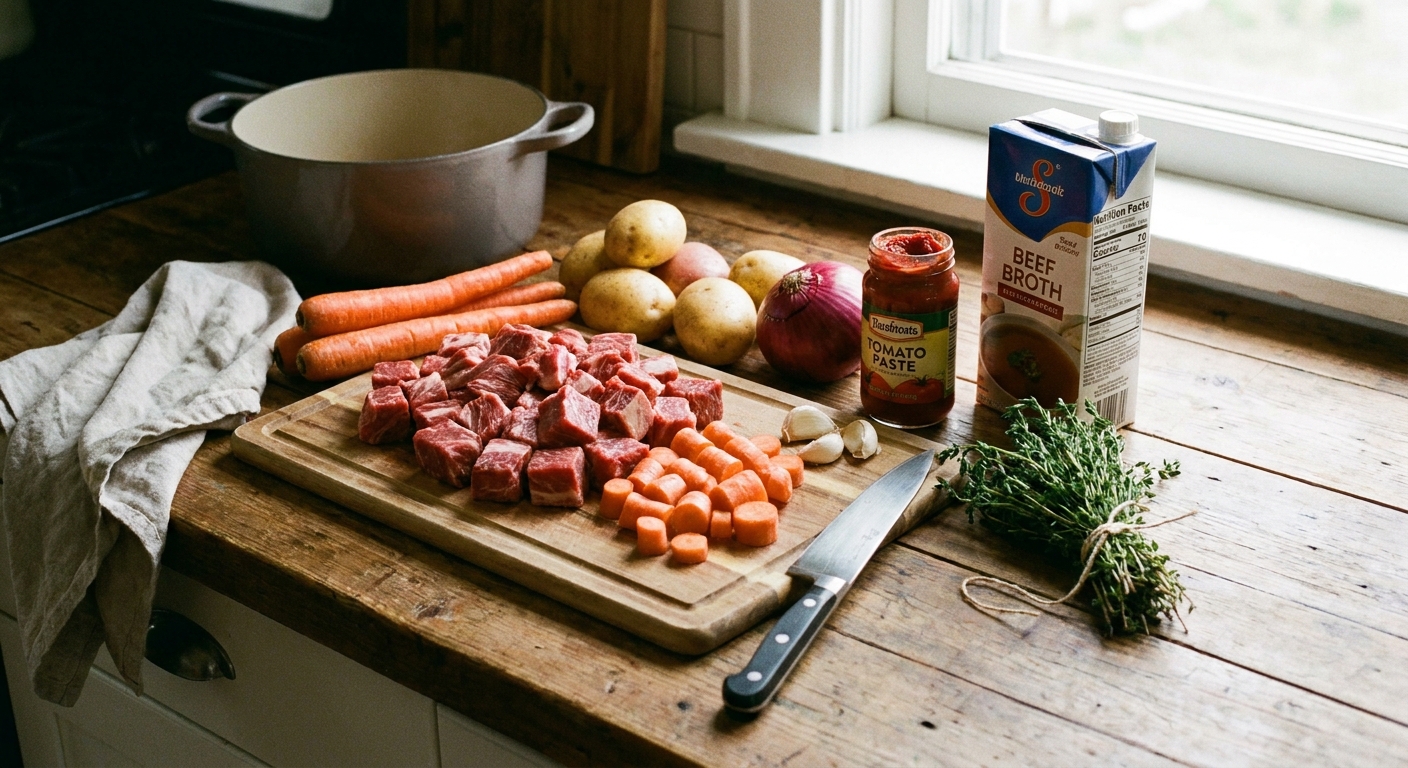
A real photograph of beef stew ingredients arranged on a kitchen counter, including cubed chuck roast, carrots, potatoes, onion, garlic, tomato paste, beef broth, and fresh thyme

Why It Works

  • Tender beef, not chewy beef: We use chuck roast and give it enough low, slow time to break down properly.
  • Real stew flavor: Browning plus a quick tomato paste step creates deep, savory notes fast.
  • Thick, glossy gravy: A light flour coat on the beef does the thickening so you do not need cornstarch later.
  • Weeknight-friendly workflow: The hands-on part is mostly just chopping and browning, then the pot does the rest.

Pairs Well With

Storage Tips

How to Store Beef Stew

  • Refrigerator: Cool, then store in an airtight container for up to 4 days. For best quality, enjoy within 3 to 4 days. The flavor gets even better by day two.
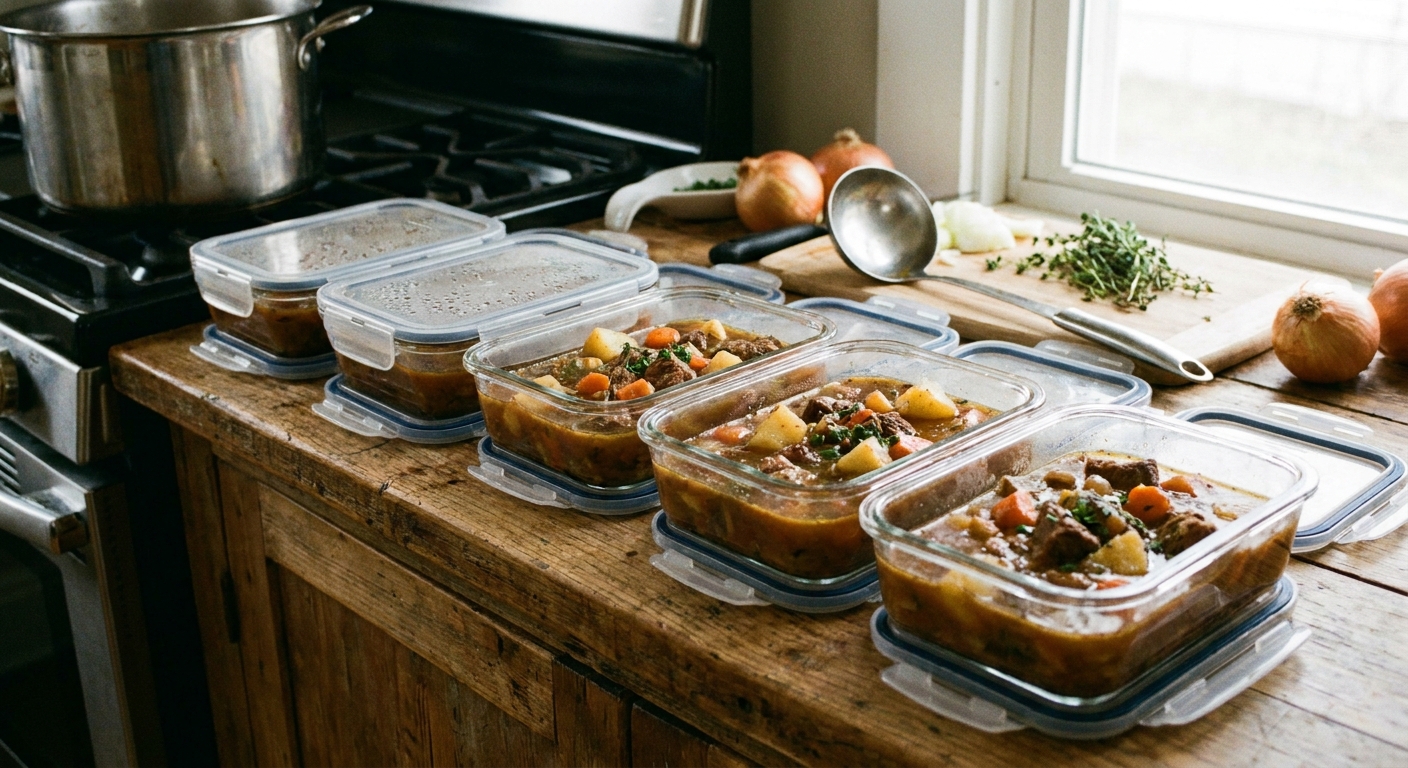
  • Freezer: Freeze in portion containers for up to 3 months (best quality within 2 to 3 months). Leave a little headspace since stew expands.
  • Reheat: Warm gently on the stovetop over medium-low, stirring occasionally. If the gravy thickened a lot in the fridge, loosen with a splash of low-sodium beef broth or water.
  • Best leftover move: Serve over buttered egg noodles or mashed potatoes to stretch it into a whole new dinner.

A real photograph of beef stew portioned into glass meal prep containers with lids on a kitchen counter

Common Questions

Common Questions

What cut of beef is best for stew?

Chuck roast is the classic for a reason. It has enough fat and connective tissue to turn meltingly tender after a long simmer. Avoid extra-lean stew meat if you can. It dries out and gets stubborn.

Why is my beef stew meat tough?

Two usual suspects: it did not cook long enough, or it boiled too hard. Stew needs a gentle simmer and enough time for collagen to break down. If it is tough, keep cooking. It will get there.

How do I make stew thicker?

This recipe thickens from flour on the beef. If you want it thicker at the end, simmer uncovered for 10 to 15 minutes. You can also mash a few potato chunks into the broth for a natural thickener.

Can I make this in a slow cooker?

Yes. You still want to brown the beef and sauté the aromatics first, then add everything to the slow cooker. Cook on LOW 8 hours or HIGH 4 to 5 hours. Add potatoes and carrots for the last 2 to 3 hours on LOW (or until just tender) so they do not turn to mush.

Can I skip the wine?

Absolutely. Use extra broth in its place, then finish with a tablespoon of apple cider vinegar or lemon juice if you want a little brightness.

Beef stew is one of those meals that taught me patience in the kitchen. When I was younger, I wanted everything fast, which is hilarious because stew is basically the opposite. The first time I nailed it, I remember tasting a spoonful and realizing the flavor was not from one magic ingredient. It was from a bunch of small moves that stacked up: browning the beef, scraping up the browned bits, letting it simmer until the meat finally stopped fighting back. Now it is my cold-weather reset dinner, especially on nights when I need something that feels like a hug but still lets me be a little chaotic while it cooks.