
Mom's Best Recipes
Recipe

Easy Classic Quiche

A creamy, cheesy quiche with a crisp crust and a foolproof custard, plus simple filling swaps for breakfast, brunch, or dinner.

Author By Matt Campbell
4.8
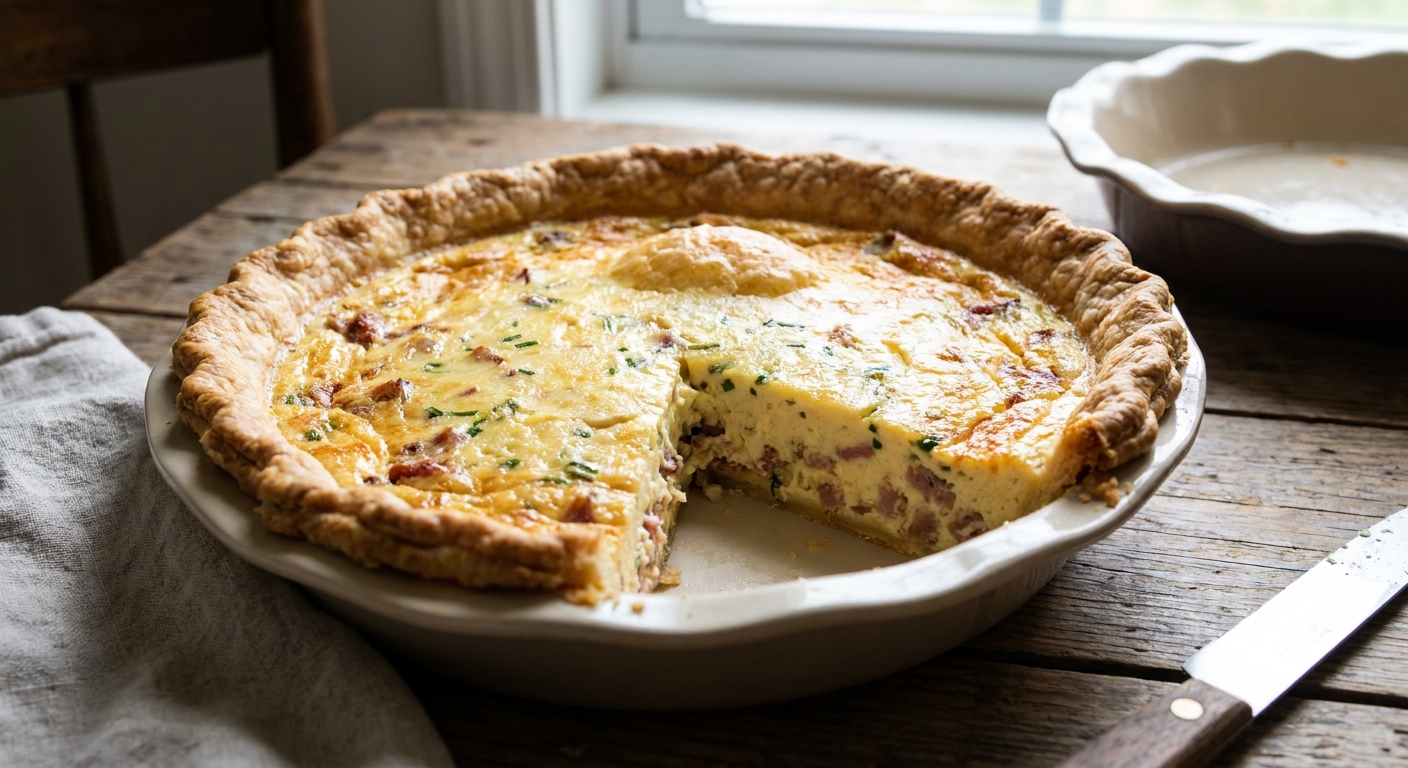
A single baked classic quiche with a golden-brown crust and lightly puffed center on a rustic wooden table, sliced to show the creamy custard inside, natural window light
Jump to Recipe

Quiche is one of those dishes that looks like you hosted a very put-together brunch. Meanwhile, you’re in comfy clothes, sipping coffee, and letting the oven do the heavy lifting. That’s the magic. A good quiche has three things going on: a crisp crust, a silky egg custard, and enough seasoning to keep it from tasting like plain breakfast.

This version is my go-to classic. It’s intentionally flexible for real life. Use a store-bought pie crust if that’s your vibe. Swap in whatever cheese you have. Toss in leftover veggies or a handful of ham. The only thing I’m bossy about is the custard ratio, because that’s what gives you a quiche that slices clean and stays creamy instead of turning into rubbery scrambled eggs in a pie shell.
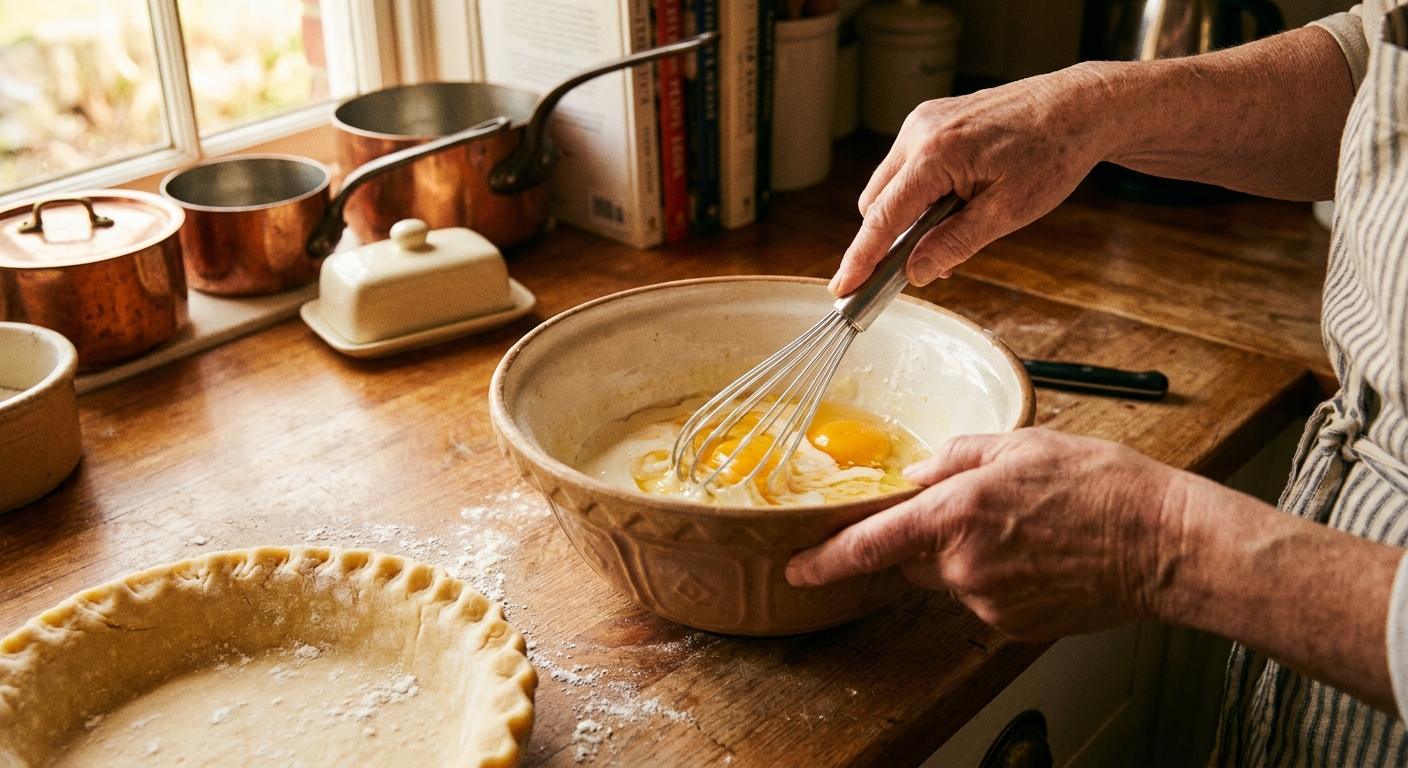
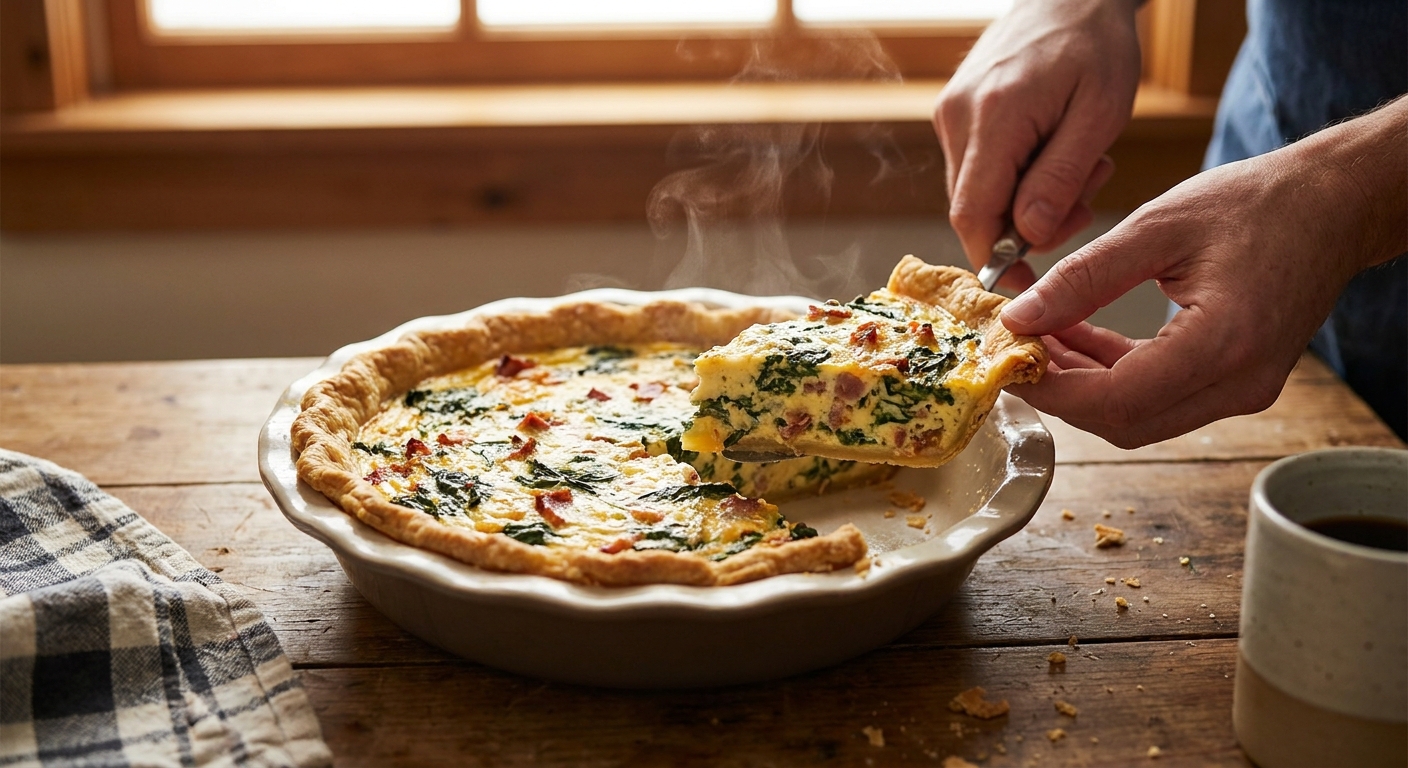
A close-up photo of hands whisking eggs and cream in a mixing bowl on a kitchen counter with a pie crust nearby, warm home kitchen lighting

Why It Works

  • Custardy, not eggy: Whole eggs plus yolks and enough dairy create a tender set.
  • No soggy bottom: A quick blind-bake helps the crust stay crisp even with juicy fillings.
  • Make-it-your-own: The base welcomes bacon, veggies, greens, or whatever’s hanging out in the fridge.
  • Great hot or room temperature: Perfect for school mornings, brunch, or a low-drama dinner with a salad.

Pairs Well With

Storage Tips

How to Store Leftovers

  • Refrigerate: Cool completely, then store in an airtight container (or wrap the dish well) and refrigerate for up to 4 days.
  • Freeze: Wrap individual slices tightly and freeze up to 2 months for best quality. Thaw overnight in the fridge for best texture.
  • Reheat (best method): Oven or toaster oven at 325°F until warmed through, about 10 to 15 minutes. If it’s browning too much, cover loosely with foil. For food safety, reheat leftovers to 165°F if you want to be extra sure.
  • Microwave (fast method): Works in a pinch, but the crust will soften. If you microwave, pop the slice into a toaster oven for 2 to 3 minutes afterward to revive the edges.

Common Questions

Common Questions

What is the secret to a good quiche?

A steady, gentle bake and the right custard ratio. Too much egg and it gets spongy. Too much liquid and it can turn loose. This recipe uses whole eggs plus yolks with half-and-half, which sets creamy and sliceable.

Do I have to pre-bake the crust?

You don’t have to, but I strongly recommend it. A quick blind-bake prevents the dreaded soggy bottom, especially if you’re adding moisture-heavy vegetables.

Can I use milk instead of half-and-half?

Yes. Whole milk works best. It’ll be a little less rich but still tasty. Skim milk can bake up thinner and is more likely to weep a bit, so if that’s what you have, just keep fillings on the drier side.

How do I keep my quiche from getting watery?

Cook moisture-heavy fillings first. Sauté mushrooms, spinach, onions, and zucchini until the liquid cooks off, then cool slightly before adding. Also, don’t overfill the crust with add-ins.

How do I know when quiche is done?

The edges should be set and the center should have a small jiggle, like set Jell-O. If the center looks like a liquid wave, it needs more time. It’ll finish setting as it cools. If you like a numbers-based answer, aim for about 175°F in the center.

I started making quiche when I realized it’s basically the most forgiving way to turn “random fridge stuff” into a meal that feels intentional. Half an onion, a couple sad mushrooms, the last handful of cheese. Toss it in a crust with a creamy custard, and suddenly it’s brunch. My favorite part is the moment it comes out of the oven all puffed and golden, like it’s showing off. Then it relaxes as it cools, and honestly, same.