Do I have to use day-old rice?
It is strongly recommended. Fresh rice holds more surface moisture, which makes fried rice clump and steam instead of fry. If you only have fresh rice, spread it on a sheet pan and chill it in the fridge for 30 to 60 minutes to dry out a bit. For best results, make sure the rice is fully chilled, then break up any clumps with your hands before it hits the pan.
Why did my fried rice turn out soggy?
Common culprits: the pan was not hot enough, the pan was crowded, or the rice was warm and freshly cooked. Use a wide skillet or wok, cook in stages, and keep everything moving over high heat. If you are doubling the recipe, cook in two batches for better browning.
What is the best pan for fried rice?
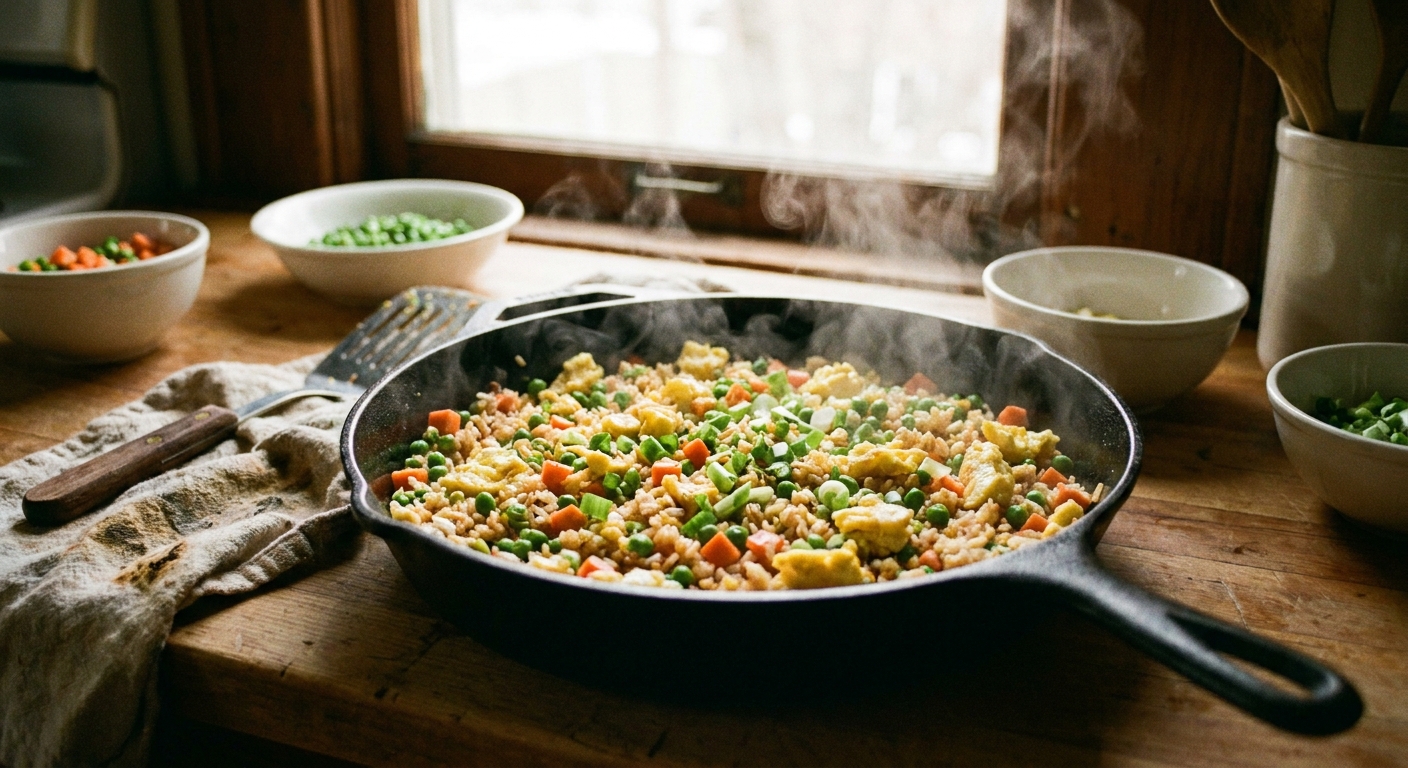
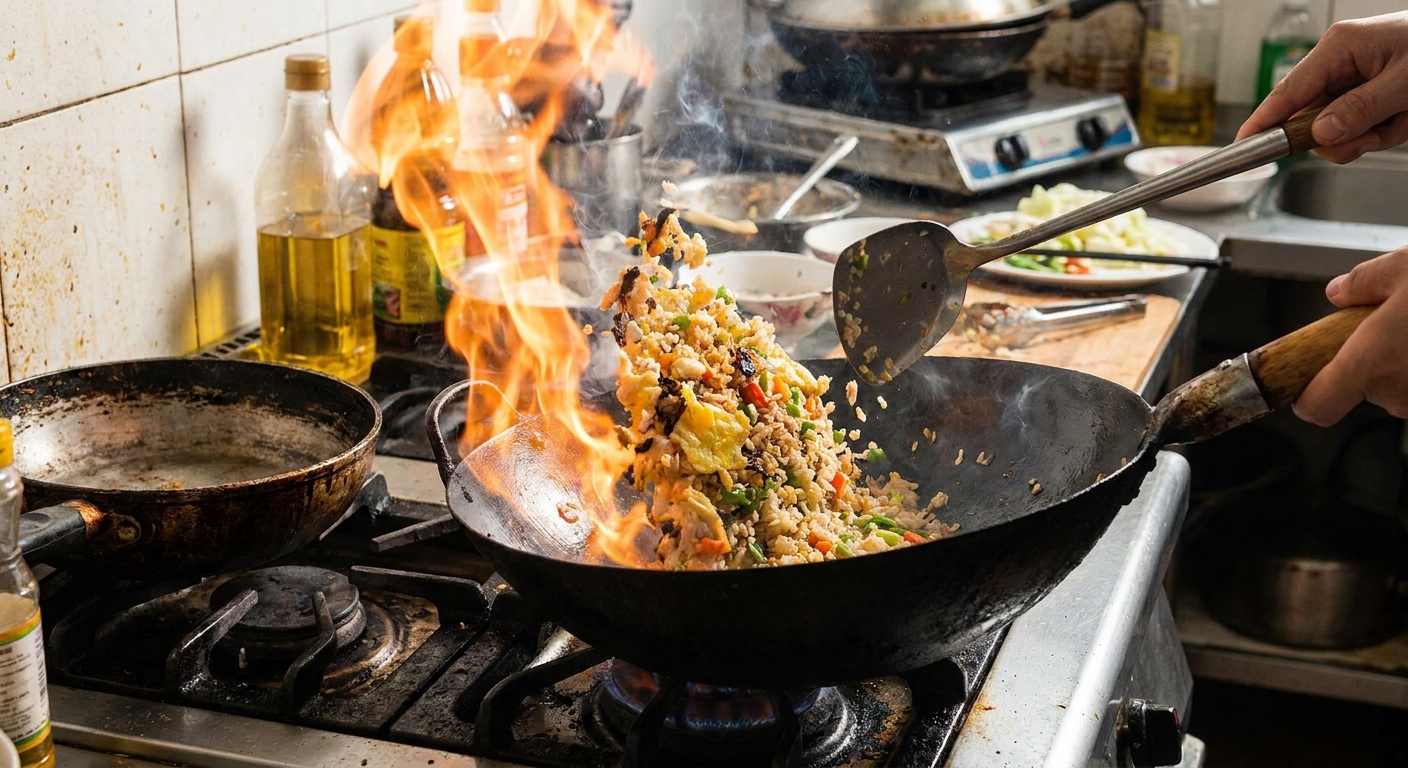
A wok is great, but a large stainless steel or cast-iron skillet works perfectly. The biggest upgrade is surface area. More space means better browning.
Can I make it vegetarian?
Yes. Use tofu or just extra egg, and skip the oyster sauce. If you want more depth, add a teaspoon of miso to the sauce or toss in a handful of chopped mushrooms.
How do I add chicken, shrimp, or leftover meat?
Cook raw protein first, remove it, then add it back at the end to warm through. If your protein is already cooked, add it near the end so it does not dry out.
Is fried rice gluten-free?
It can be. Use certified gluten-free tamari or certified gluten-free soy sauce, and check any add-ins like oyster sauce or seasoning blends.
What kind of rice works best?
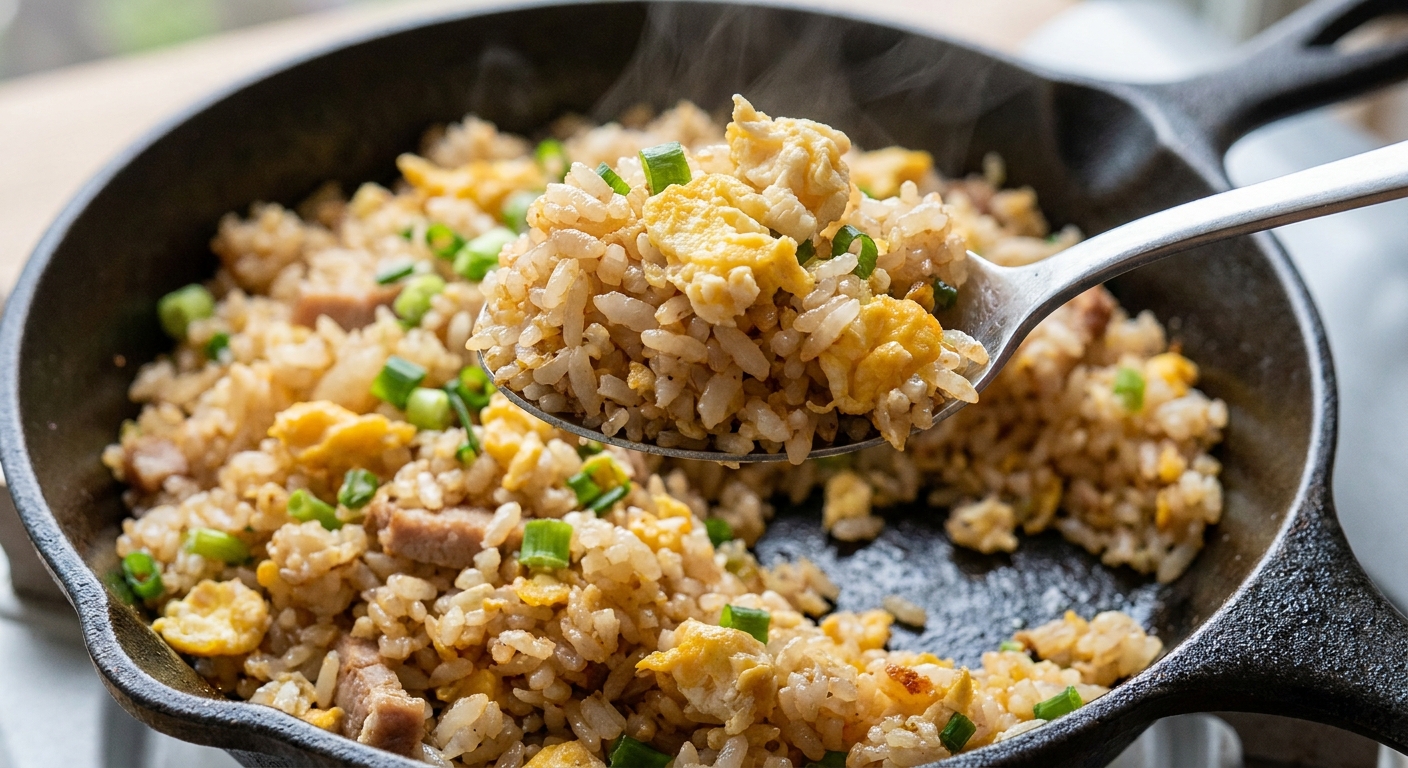
Long-grain rice (like jasmine or basmati) tends to fry up with the most separated grains. Medium- and short-grain rice can work, but they are naturally stickier, so you may need a little more heat and a little more patience to get crisp edges.