Do I have to use self-rising flour?
For a true 3-ingredient biscuit, yes. Self-rising flour already contains leavening and salt. Different brands can vary a bit, so if your biscuits taste slightly more or less salty than expected, that is usually why. Also, check the expiration date. Older self-rising flour can lose some lift over time.
Can I use all-purpose flour instead?
Yes, you just will not be at three ingredients anymore. For each 1 cup all-purpose flour, whisk in 1 1/2 teaspoons baking powder and 1/4 teaspoon fine salt. For this recipe (2 cups flour), use 3 teaspoons baking powder (1 tablespoon) and 1/2 teaspoon fine salt, then proceed as written.
Why does the butter need to be cold?
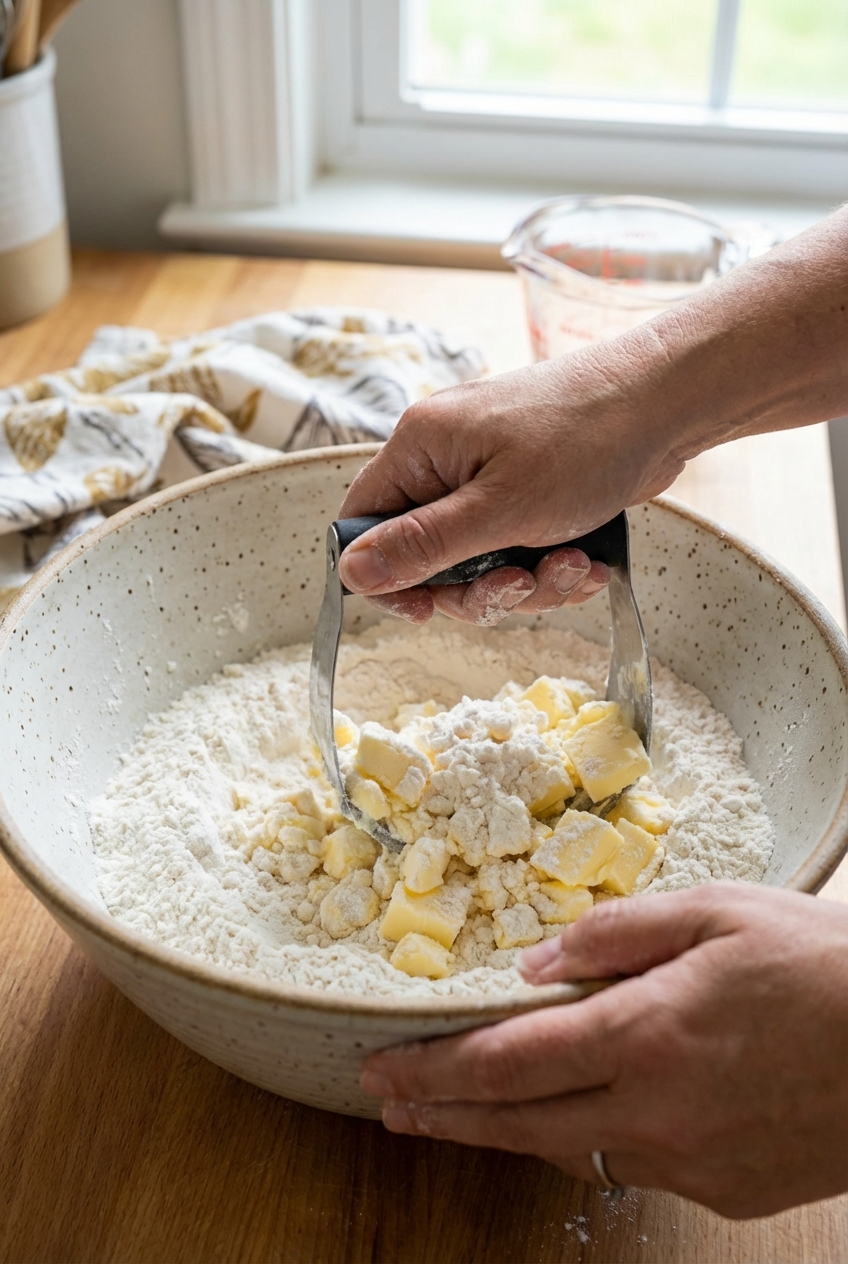
Cold butter stays in little pieces in the dough. In the oven, those pieces melt and release moisture, which helps create steam and lift. Pair that with gentle folding, and you get flaky layers. Warm butter blends in and you lose that boost.
Can I use buttermilk instead of milk?
Absolutely. Buttermilk adds tang and tenderness. Use it 1:1 in place of milk. If the dough looks dry, splash in an extra tablespoon.
How do I keep biscuits from turning dense?
Two big rules: do not overmix and do not overwork the dough. Stir just until it holds together, then fold a couple times for layers and stop.
What if my dough is super sticky?
Sticky is normal. Lightly flour your hands and counter. If it is truly wet and won’t hold shape, add 1 tablespoon of self-rising flour at a time until manageable.
Can I make the dough ahead?
You can, but biscuits rise best when baked right after mixing. If needed, shape the biscuits, cover, and refrigerate up to 2 hours. Bake straight from the fridge.