Mom's Best Recipes
Recipe

Easy Antipasto Salad

Crunchy romaine, salami, provolone, olives, pepperoncini, and a bright Italian vinaigrette that tastes like your favorite deli case in salad form.

Author By Matt Campbell
4.8
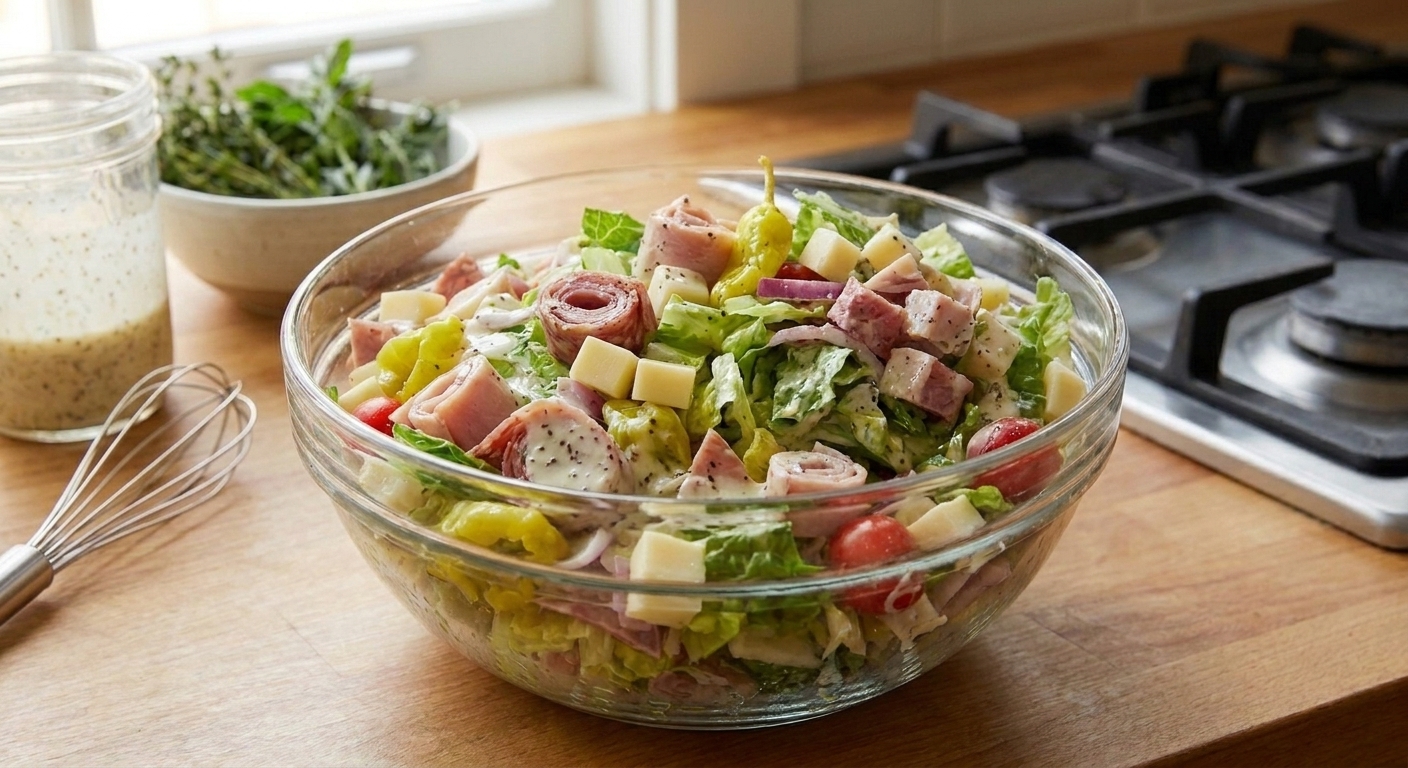
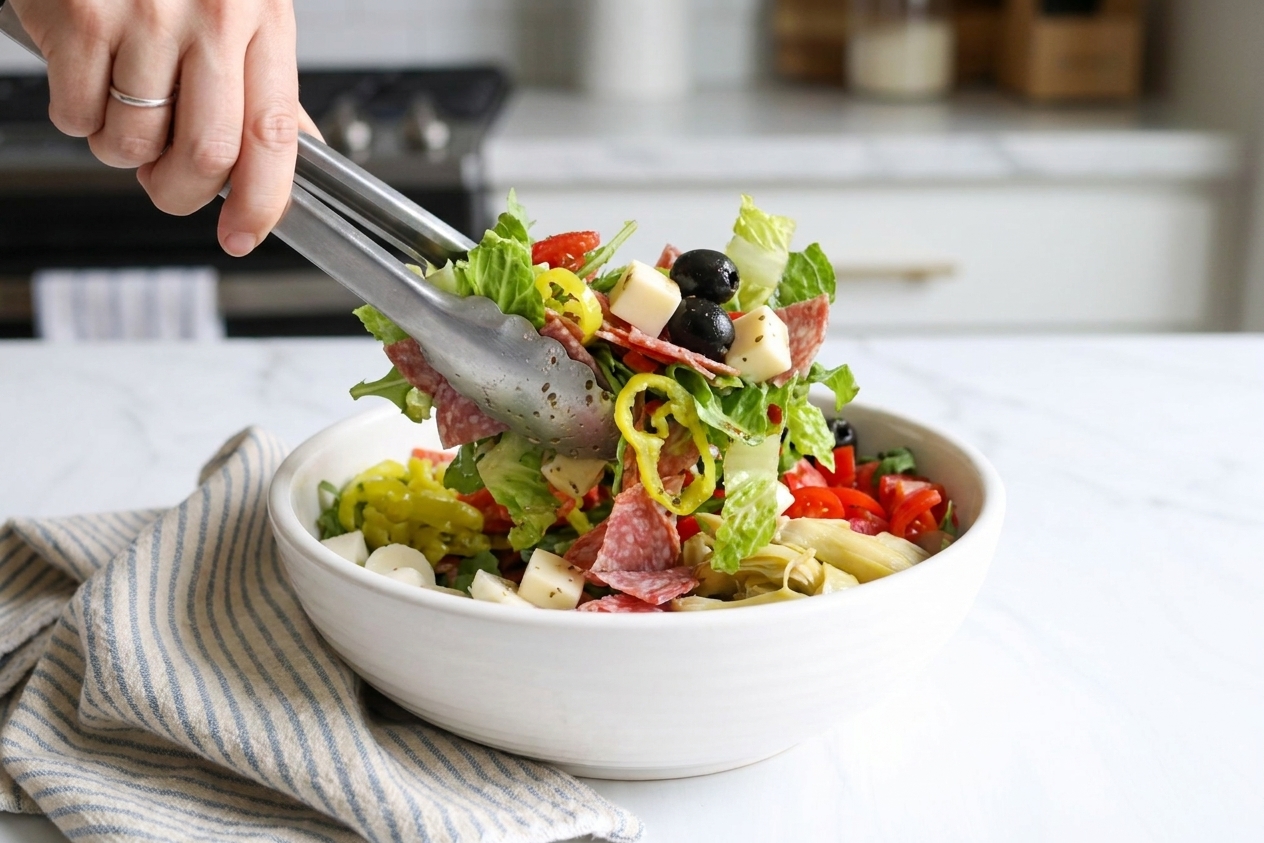
A large white serving bowl filled with antipasto salad including chopped romaine, salami ribbons, provolone cubes, cherry tomatoes, pepperoncini, olives, and red onion on a bright kitchen counter

Antipasto salad is what I make when I want big flavor with low drama. It is crunchy and salty and tangy, with enough cozy deli energy to feel like a meal, not a side.

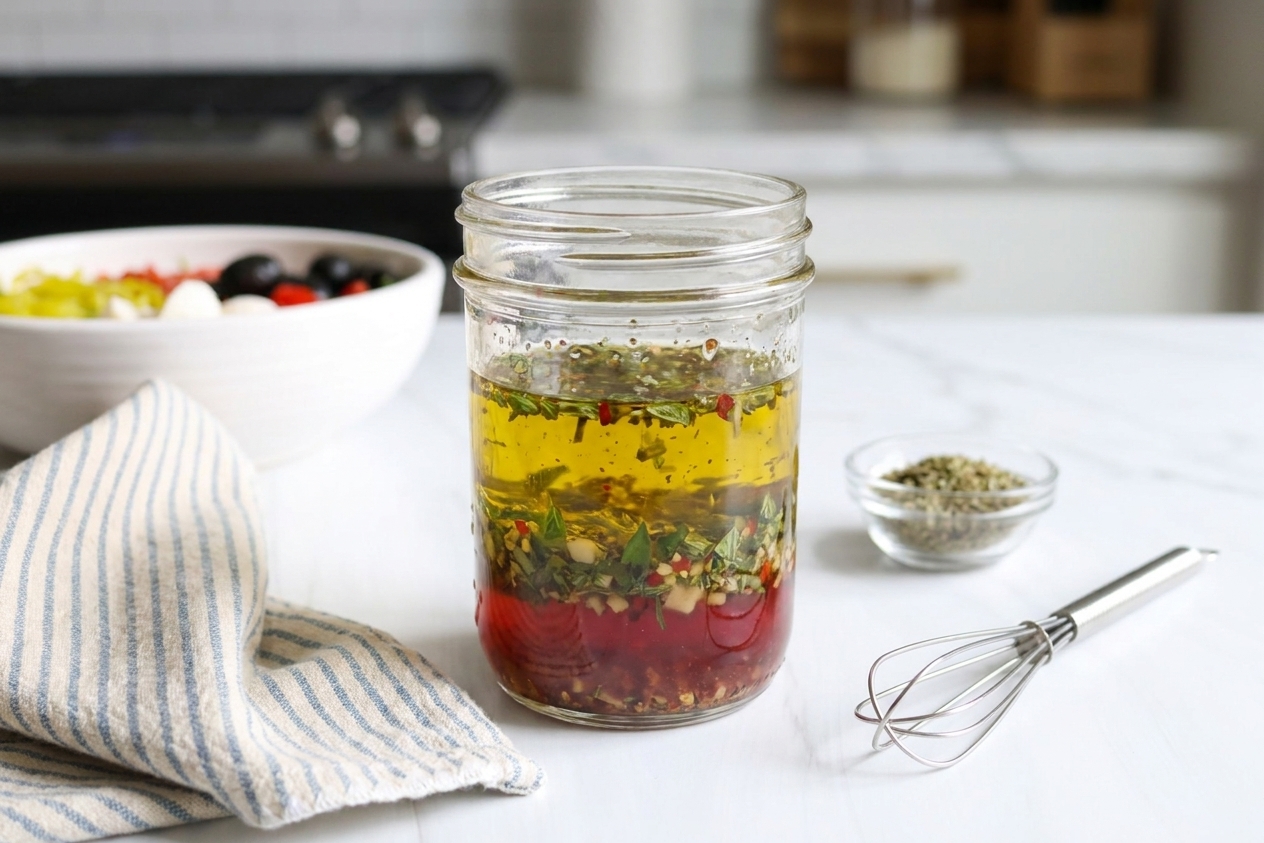
This version keeps the ingredients easy to find and the steps even easier. We make a quick Italian vinaigrette (bright, not greasy), pile in the good stuff (salami, provolone, olives, pepperoncini), and finish with a few smart moves that keep everything crisp. Taste as you go. It is not only allowed, it is encouraged.

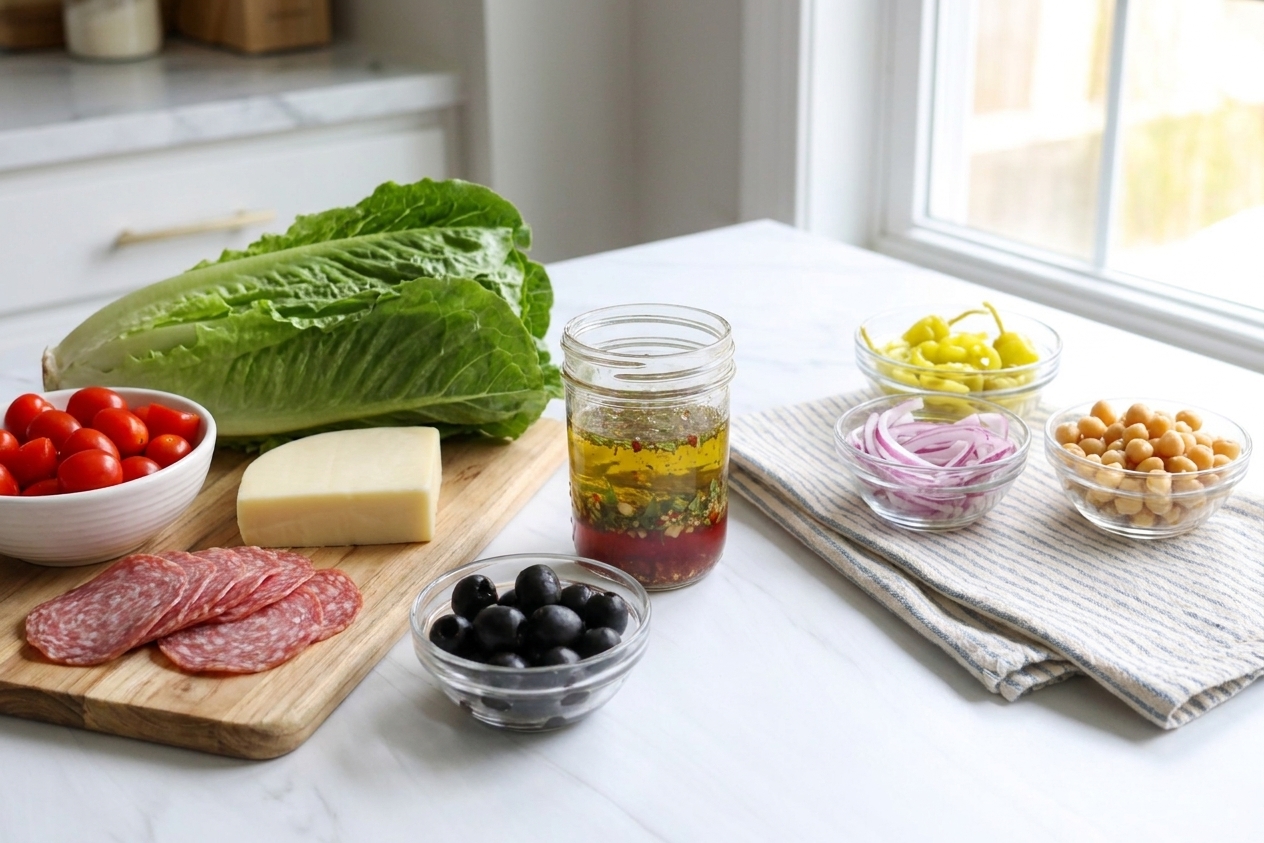
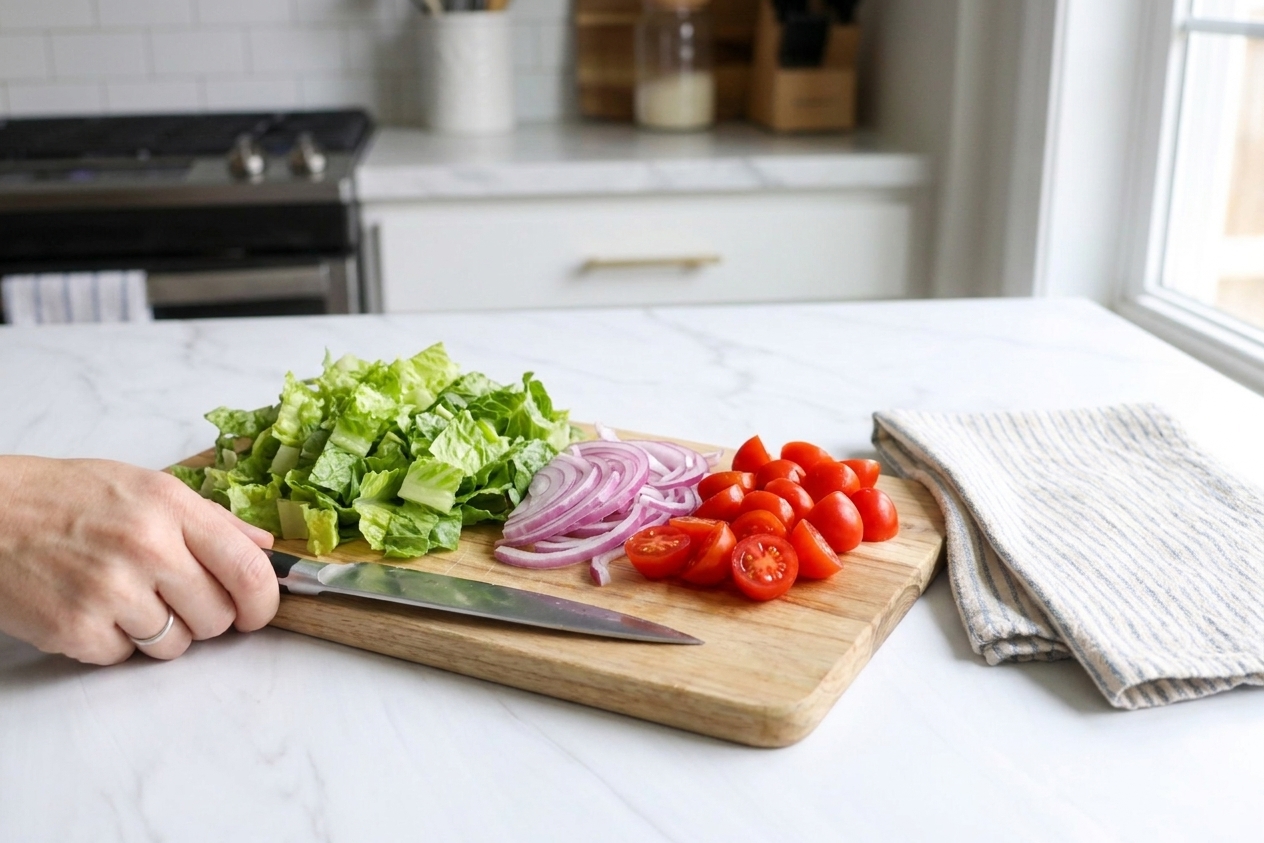
Antipasto salad ingredients arranged on a kitchen counter including romaine, salami, provolone, cherry tomatoes, olives, pepperoncini, red onion, chickpeas, and a small jar of vinaigrette

Why It Works

  • Bold, balanced flavor: salty meats and cheese with a bright vinaigrette that wakes everything up.
  • Crisp texture that holds: a few small prep choices keep the lettuce from going soggy fast.
  • Flexible by design: swap in what you have, as long as you keep the salty, briny, crunchy, and fresh categories covered.
  • Meal prep friendly: store components separately and you have lunches ready for days.

Pairs Well With

Storage Tips

Best move: store salad components and dressing separately. Toss right before eating.

Fridge

  • Dressing: refrigerate 5 to 7 days in a sealed jar. Shake before using. Garlic can intensify as it sits. Discard if it smells or looks off.
  • Lettuce: 2 to 3 days, wrapped in a paper towel inside a container or bag.
  • Cured and brined add-ins (salami, cheese, olives, pepperoncini, artichokes): 3 to 4 days in airtight containers.
  • Watery produce (tomatoes, cucumbers): best within 1 to 2 days once cut. They are still safe a bit longer if kept cold, but they get soft and weepy fast, so pack them separately if you can.
  • Fully dressed salad: it is still edible the next day, but expect softer lettuce. If you know you will have leftovers, dress only what you plan to eat.

Quick crisp-rescue tip

If leftovers got a little wet, pour off any pooled dressing and blot damp ingredients with a paper towel. Then add a handful of fresh chopped romaine (or a few extra cucumbers) and toss. Season to taste right before serving.

Common Questions

What is antipasto salad made of?

Think of an Italian antipasto platter turned into a salad: crisp greens plus cured meat (salami, pepperoni), cheese (provolone or mozzarella), briny bits (olives, pepperoncini), and fresh crunch (tomatoes, onion). The whole thing gets a tangy Italian vinaigrette.

Can I make antipasto salad ahead of time?

Yes. Prep everything and keep it in separate containers, especially the lettuce and dressing. When you are ready to eat, toss and go.

What dressing goes with antipasto salad?

A classic Italian vinaigrette is the move: red wine vinegar, olive oil, Dijon, garlic, oregano, and a little honey or sugar to round it out. If you love a creamy vibe, add 1 to 2 tablespoons mayonnaise to the dressing for a deli-style “creamy Italian” twist.

How do I keep it from getting soggy?

Dry your lettuce really well, do not over-dress, and keep juicy ingredients like tomatoes from sitting in dressing for hours. If meal prepping, pack dressing on the side.

Is antipasto salad healthy?

It can be a very balanced meal, especially with lots of veggies and a reasonable amount of meat and cheese. If you want it lighter, use more greens and vegetables, slightly less cured meat, and go easy on the cheese.

Can I make it vegetarian?

Absolutely. Skip the salami and add marinated artichokes, roasted red peppers, extra chickpeas, and maybe a handful of toasted walnuts or pine nuts for that hearty bite.

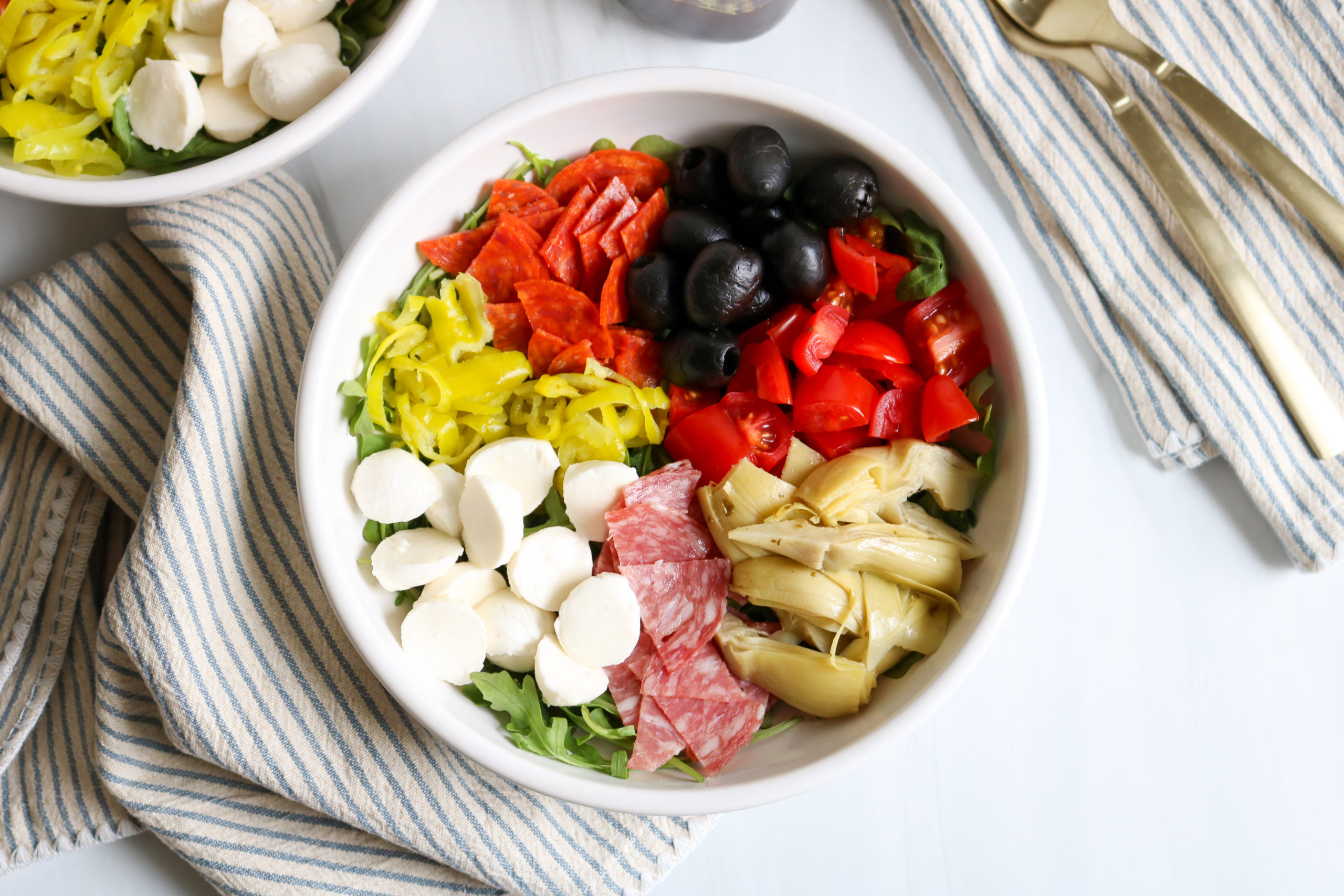
I used to think antipasto salad was strictly a restaurant side situation, something that showed up before the real food. Then I started making it at home on nights when I wanted maximum flavor with minimum effort. It is basically the fridge clean-out that still feels intentional. My favorite part is that first bite where you get cold, crunchy romaine, salty salami, a pop of pepperoncini, and that vinegar bite that makes you sit up straighter.