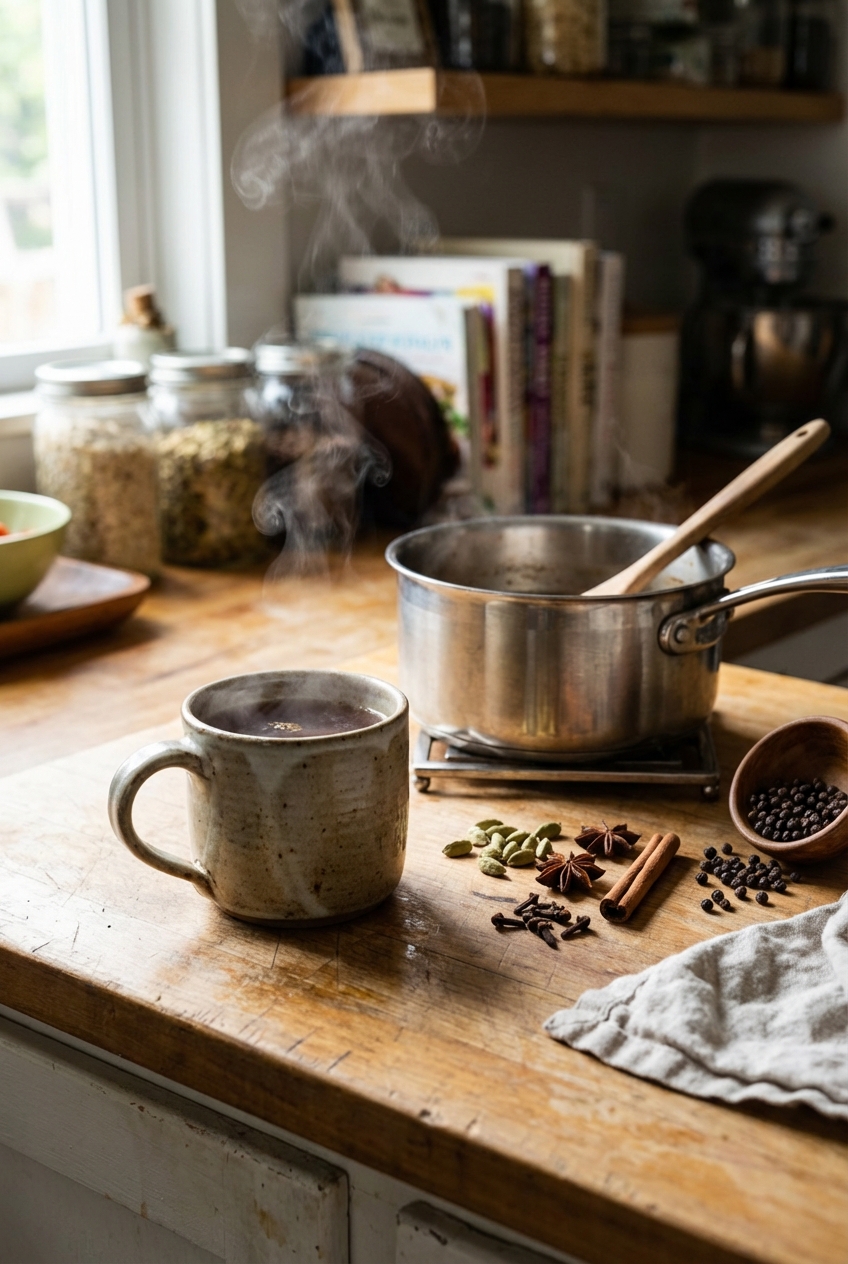
Is chai the same thing as “chai tea”?
In Hindi, chai just means tea. What most of us call “chai tea” is typically masala chai, meaning tea brewed with a spice blend. I still use “chai tea” in the title sometimes because the internet is going to internet.
What is the best tea for masala chai?
A strong black tea is traditional. If you can find it, Assam is the classic choice because it stays bold under milk and spices. English breakfast also works great. If you want to be extra consistent, look for “strong” black tea bags.
Can I make it caffeine-free?
Yes. Use rooibos instead of black tea for a naturally caffeine-free chai vibe. For the smoothest flavor, steep rooibos (instead of hard boiling it): add it after the spices have simmered, keep the heat low, and steep for about 5 minutes before adding milk and sweetening. The flavor will be softer and slightly honey-like.
How do I make it healthier without losing the cozy factor?
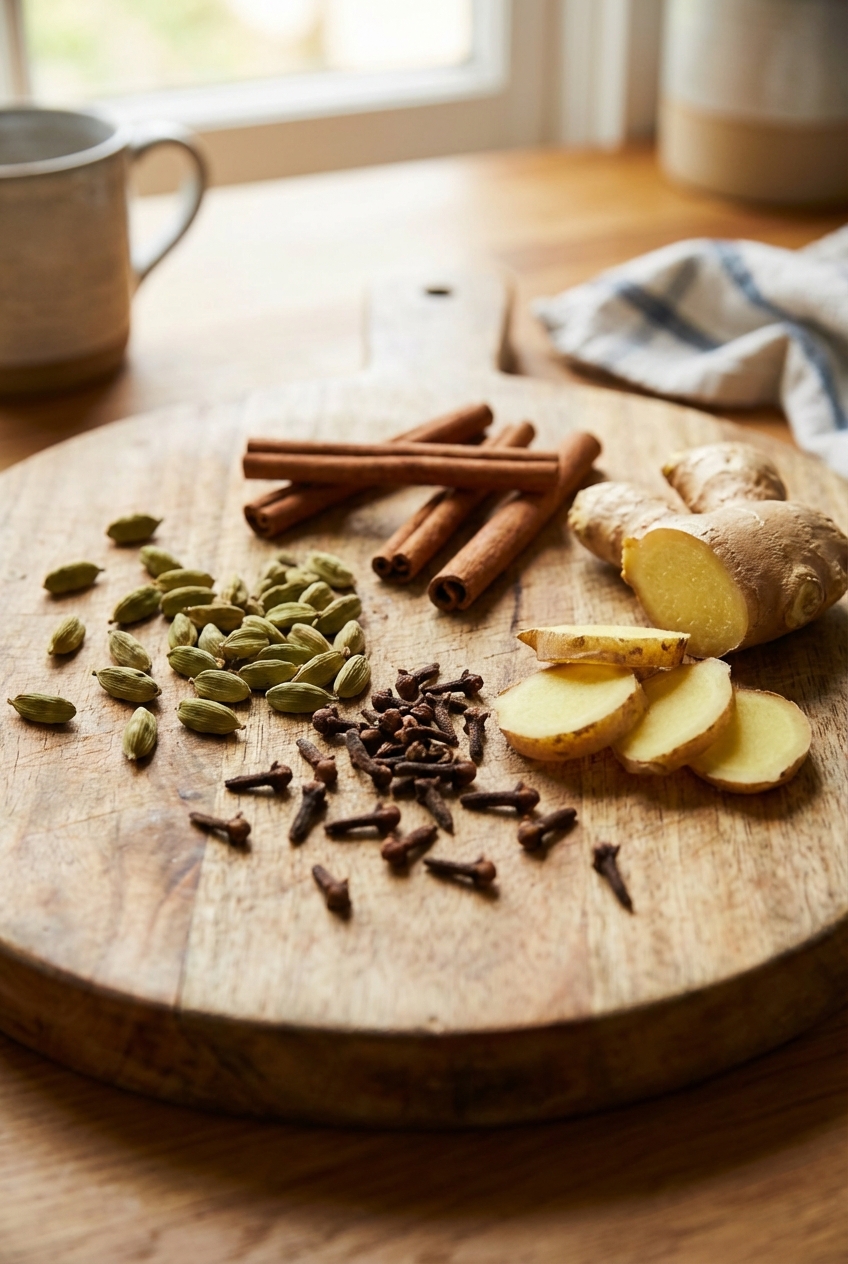
Two easy levers: reduce added sugar and choose a milk that fits your needs. The spices do a lot of the heavy lifting, especially cinnamon, ginger, and cardamom, which are traditionally used for warmth and comfort. If you want sweetness, try 1 to 2 teaspoons maple syrup or honey per mug, not half a cup.
Why did my chai turn bitter?
Usually it is over-steeped tea or too high heat after the tea goes in. Fix it by lowering the heat and shortening the tea steep time. If it is already bitter, add a splash more milk and a tiny pinch of salt to round it out.
Can I use ground spices?
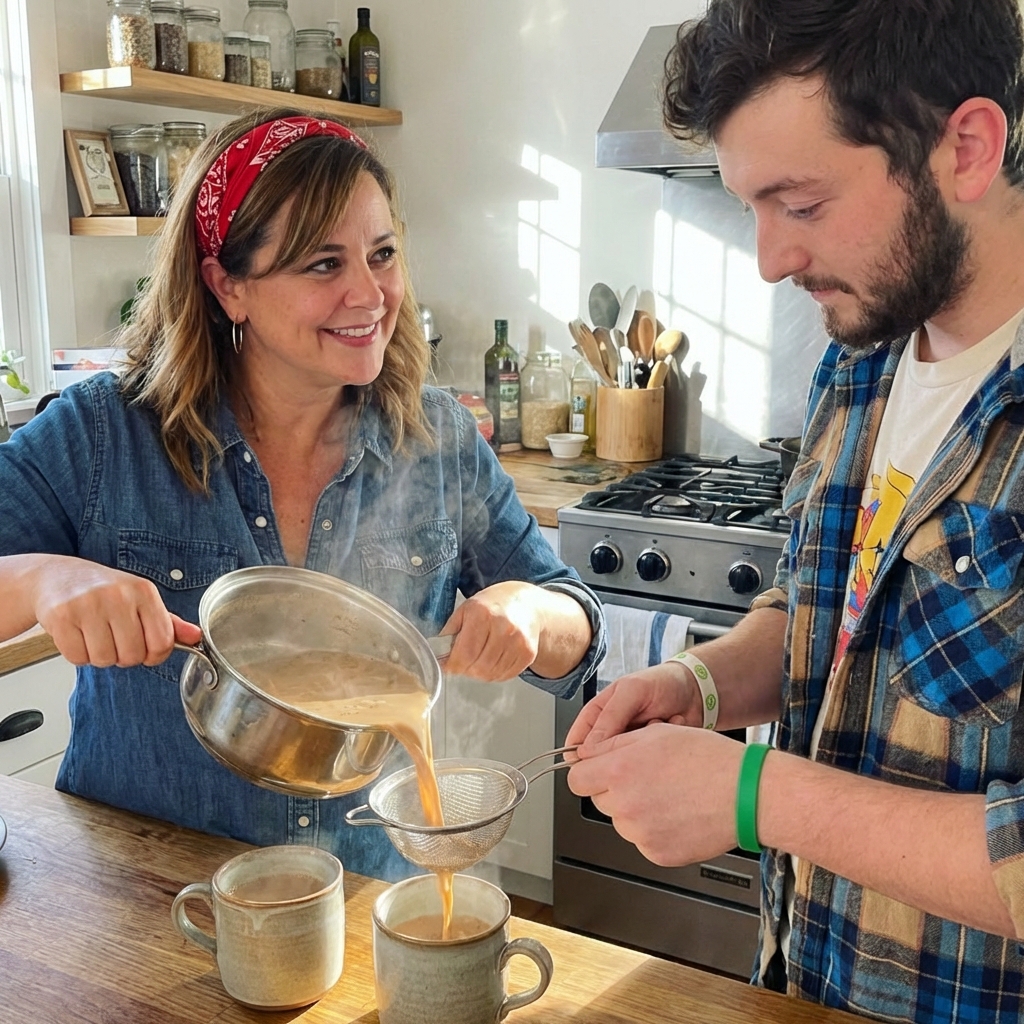
You can, but whole spices taste cleaner and strain easier. If using ground spices, use about 1/4 teaspoon total per mug (a mix), simmer briefly, and expect a slightly gritty finish unless you strain through a coffee filter.