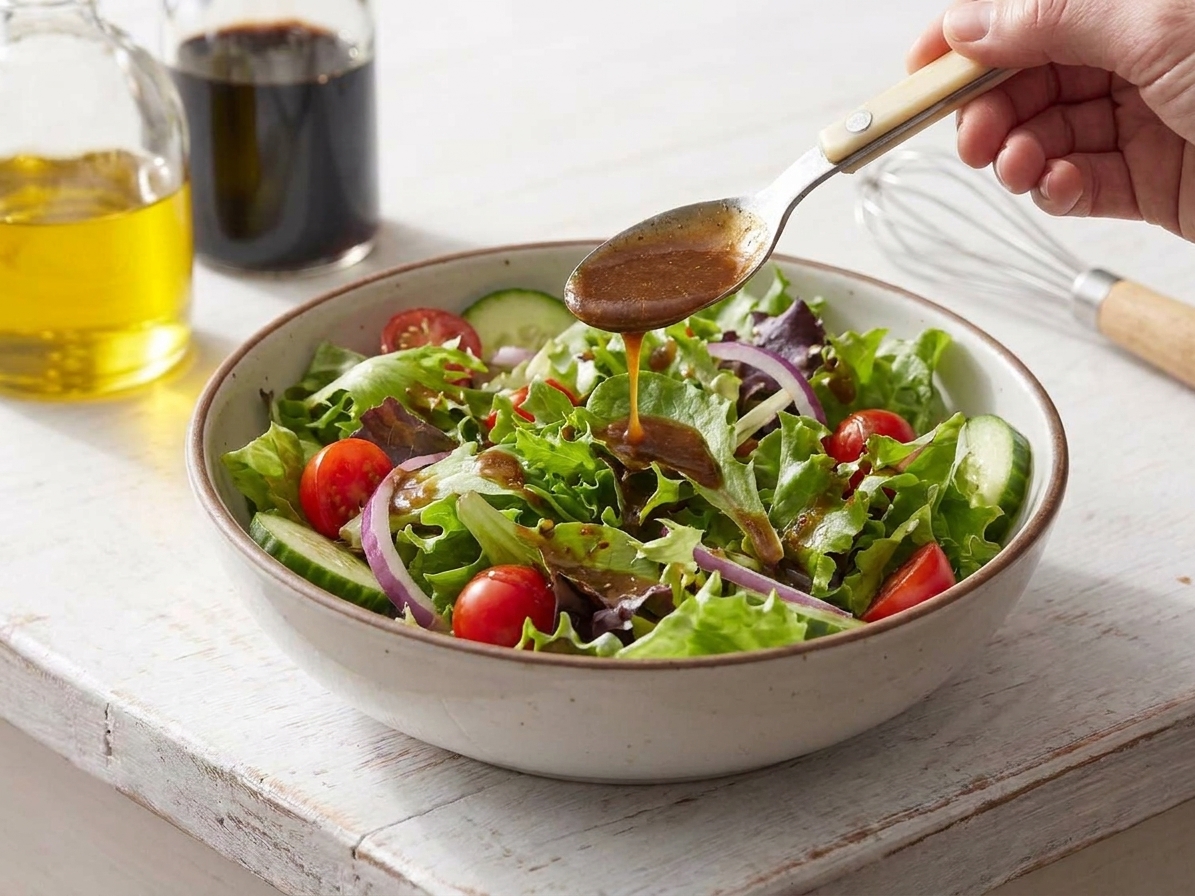
What is the best ratio for balsamic dressing?
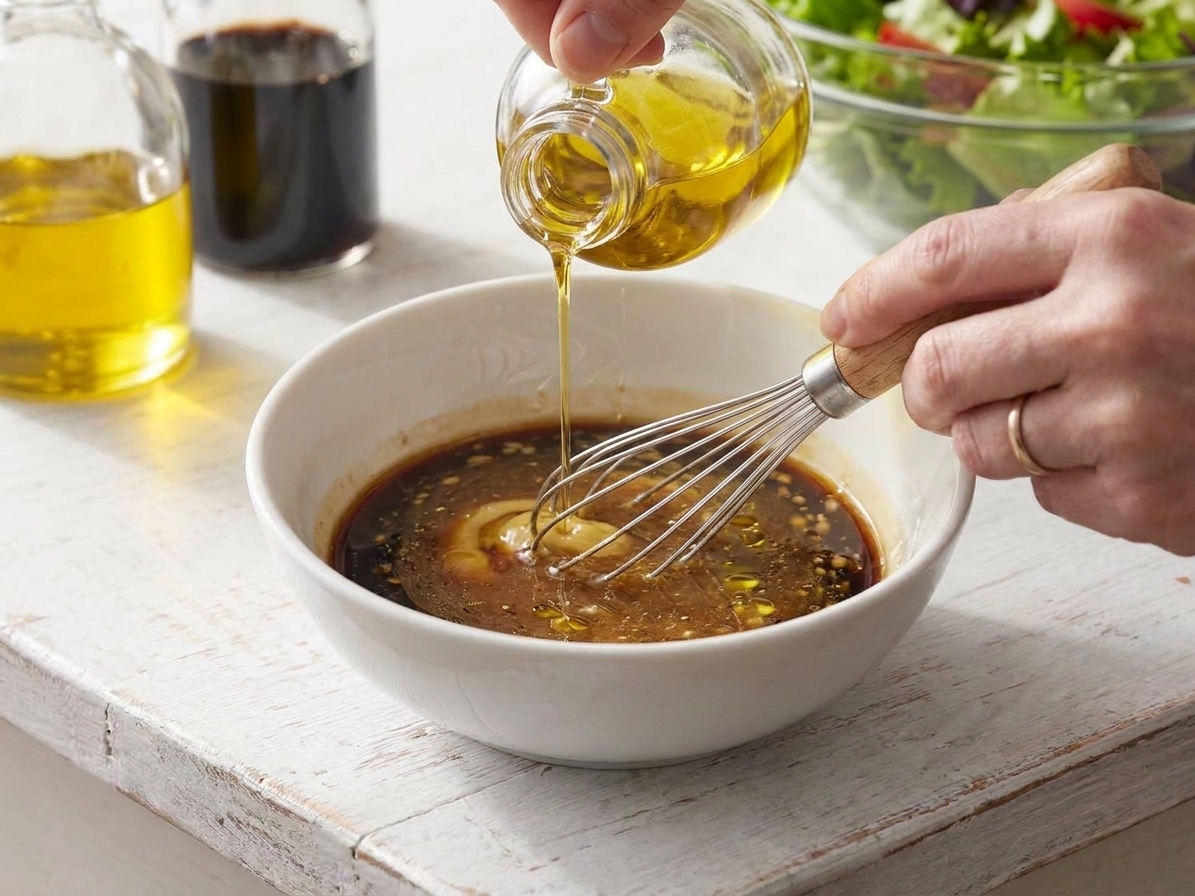
A classic starting point is 3 parts oil to 1 part vinegar. I land closer to about 2.7:1 here because balsamic is mellow and I like a brighter punch. If your balsamic is extra sharp, add a touch more oil or honey.
Why does my balsamic vinaigrette separate?
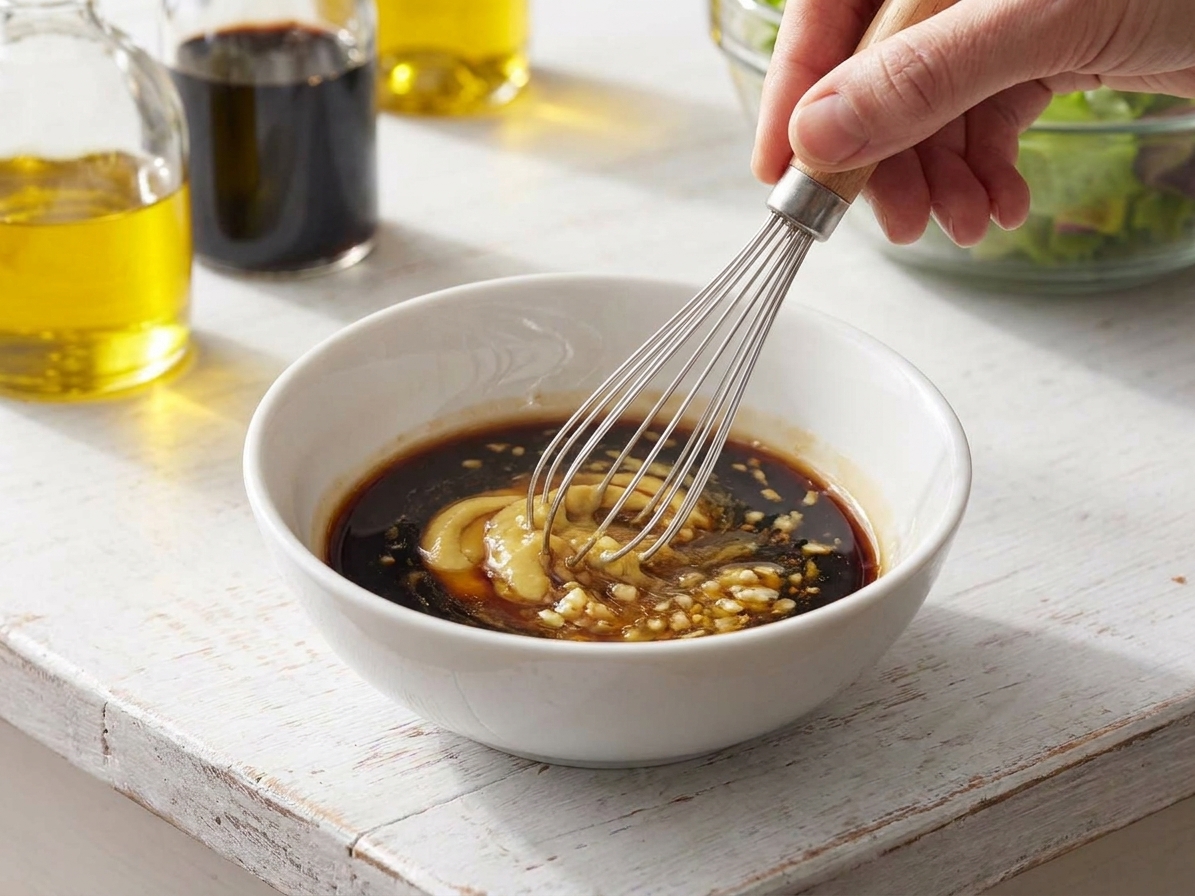
Oil and vinegar naturally split. Dijon mustard helps emulsify and slows the separation, but it will still separate over time. Shake right before serving and you are back in business.
Can I make it without Dijon?
Yes, but it will be thinner and separate faster. If you have it, swap in 1 to 2 teaspoons mayo or even a spoon of Greek yogurt for a creamier, more stable dressing.
How do I make it less acidic?
Add 1 more tablespoon olive oil or 1 teaspoon honey. Also make sure you have enough salt. Under-salted dressing tastes harsher than it should.
Can I use balsamic glaze instead of vinegar?
You can, but it is sweeter and thicker. If using glaze, start with 1 tablespoon, then add water a teaspoon at a time to thin, and reduce or skip the honey.
My balsamic is already sweet. Do I still need honey?
Maybe not. Some balsamic vinegar is naturally sweeter and rounder, while others are sharper. Start with 1 teaspoon honey, taste, and only add more if it needs it.
What can I use balsamic dressing on besides salad?
Try it on roasted Brussels sprouts, grilled chicken, caprese-style tomatoes, grain bowls, lentil salads, or as a quick marinade for steak tips or portobello mushrooms.
Is this dressing gluten-free?
Usually, yes, but it depends on your Dijon. Most are gluten-free, but check the label if you are sensitive.