Why do I need to rest banh xeo batter?
Resting hydrates the rice flour and cornstarch so the batter loosens up, spreads thinner, and fries up crisp instead of turning gummy. Aim for 30 minutes, and up to 2 hours is great. Give it a quick stir before cooking because the flour will settle.
My banh xeo is not crispy. What went wrong?
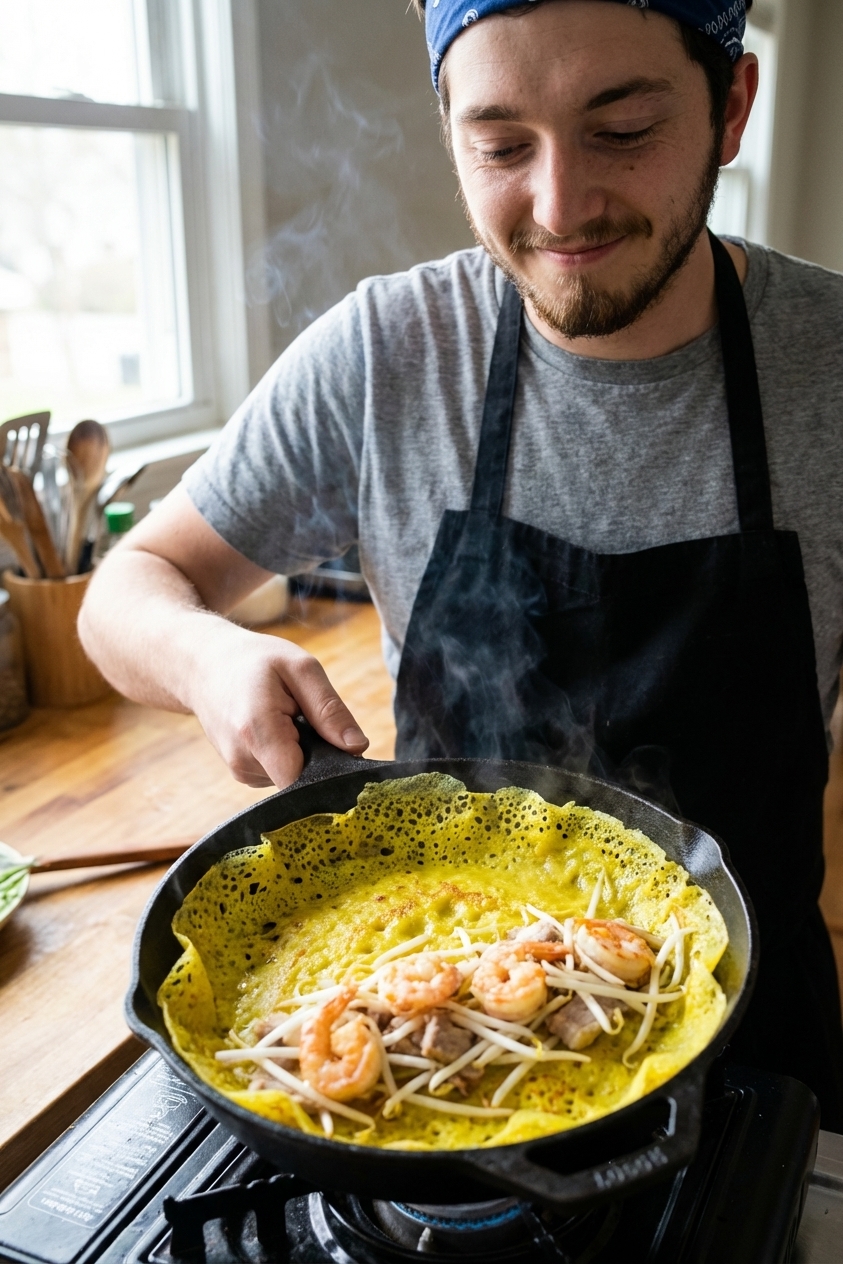
Usually one of three things: the pan was not hot enough, you did not use enough oil, or the batter was too thick. Preheat until the oil shimmers and a drop of batter sizzles on contact, add enough oil to clearly coat the pan, and thin the batter with 1 to 3 tablespoons water as needed. You are going for a batter that pours like heavy cream and runs easily when you tilt the pan.
What pan is best for banh xeo?
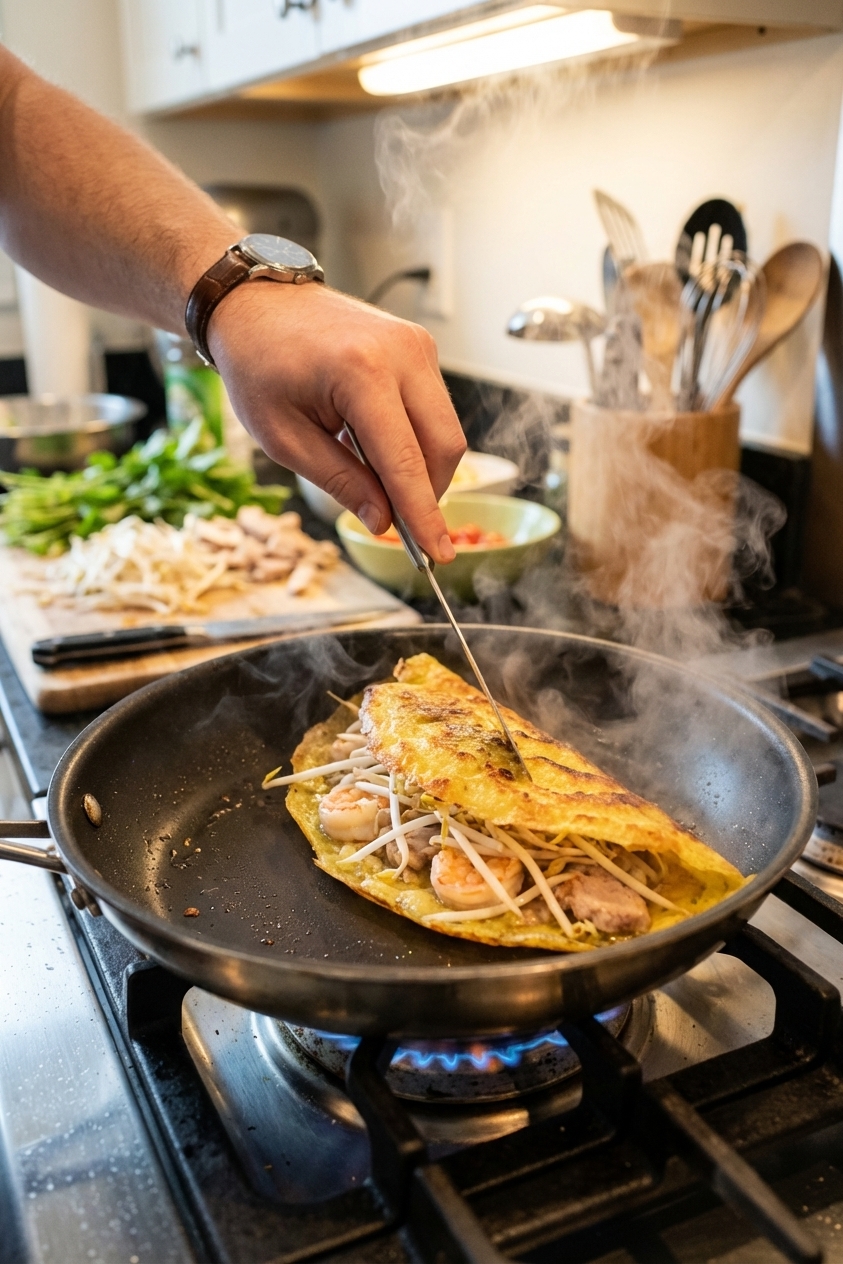
A 10 to 12-inch nonstick skillet is the easiest path to success at home. Carbon steel also works well if it is well-seasoned. Avoid stainless steel unless you love scraping.
Can I make banh xeo without coconut milk?
Yes. Coconut milk adds richness and can help with color and a slightly crisper bite, but you can swap it for more water. If you want a similar vibe, use half water and half unsweetened oat milk.
What herbs should I serve with banh xeo?
Mint and cilantro are the most accessible. If you can find them, add Thai basil and perilla (tía tô). The more herby crunch in the wrap, the better.
Is banh xeo gluten-free?
It can be. Rice flour and cornstarch are gluten-free, but check your fish sauce label and any packaged rice flour for additives or cross-contamination if you are sensitive. If you swap in soy sauce anywhere, note that regular soy sauce is not gluten-free (use tamari if needed).
Can I make the batter ahead?
Yes. Mix the batter, cover, and refrigerate up to overnight. Before cooking, let it sit at room temperature for 15 to 20 minutes, then stir well and thin with a splash of water if it has thickened.