Mom's Best Recipes
Recipe

Beef Rendang (Slow-Cooked Malaysian–Indonesian Curry)

Authentic-style dry coconut curry with a toasted spice paste and long, cozy simmer until the beef is fork-tender and caramelized.

Author By Matt Campbell
4.8
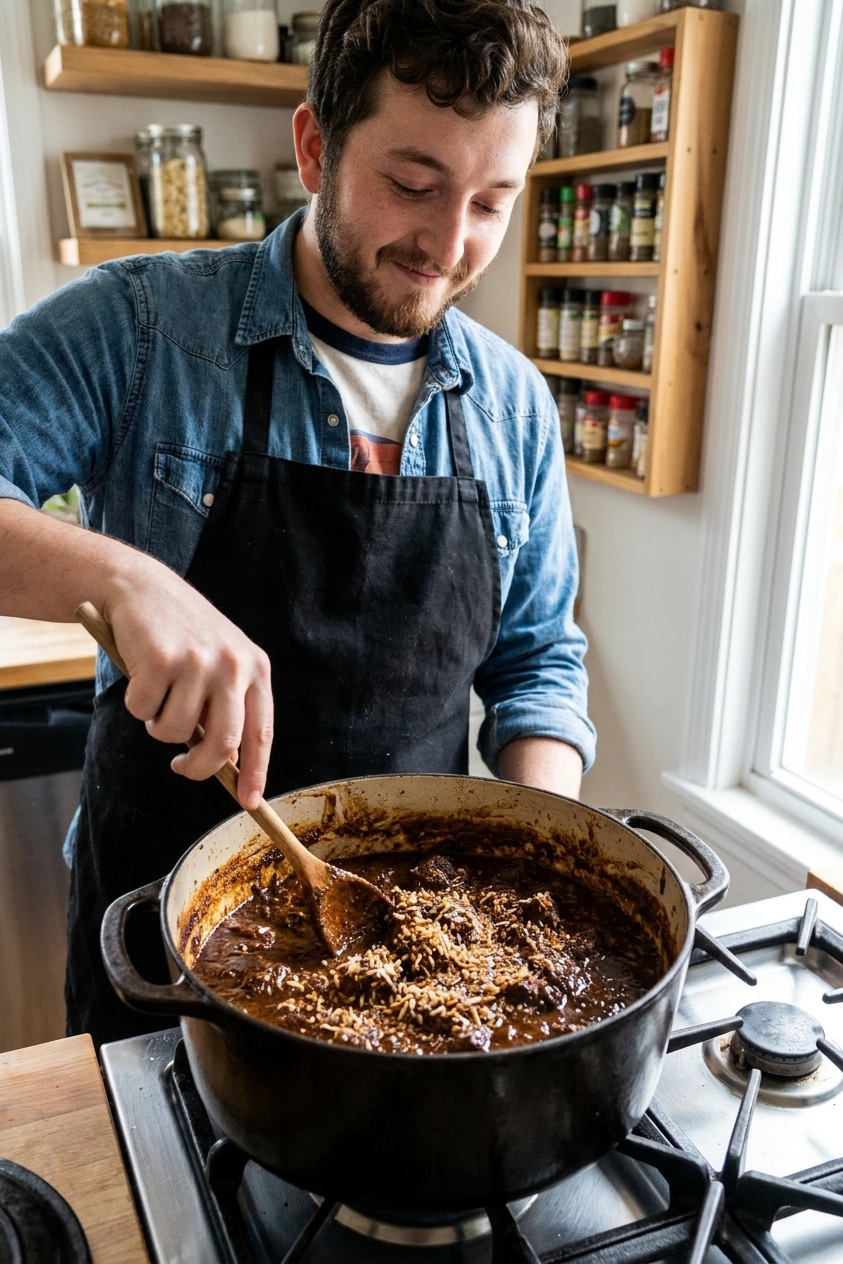
Dark, glossy beef rendang in a Dutch oven on a stovetop with toasted coconut flecks and a wooden spoon resting in the pot

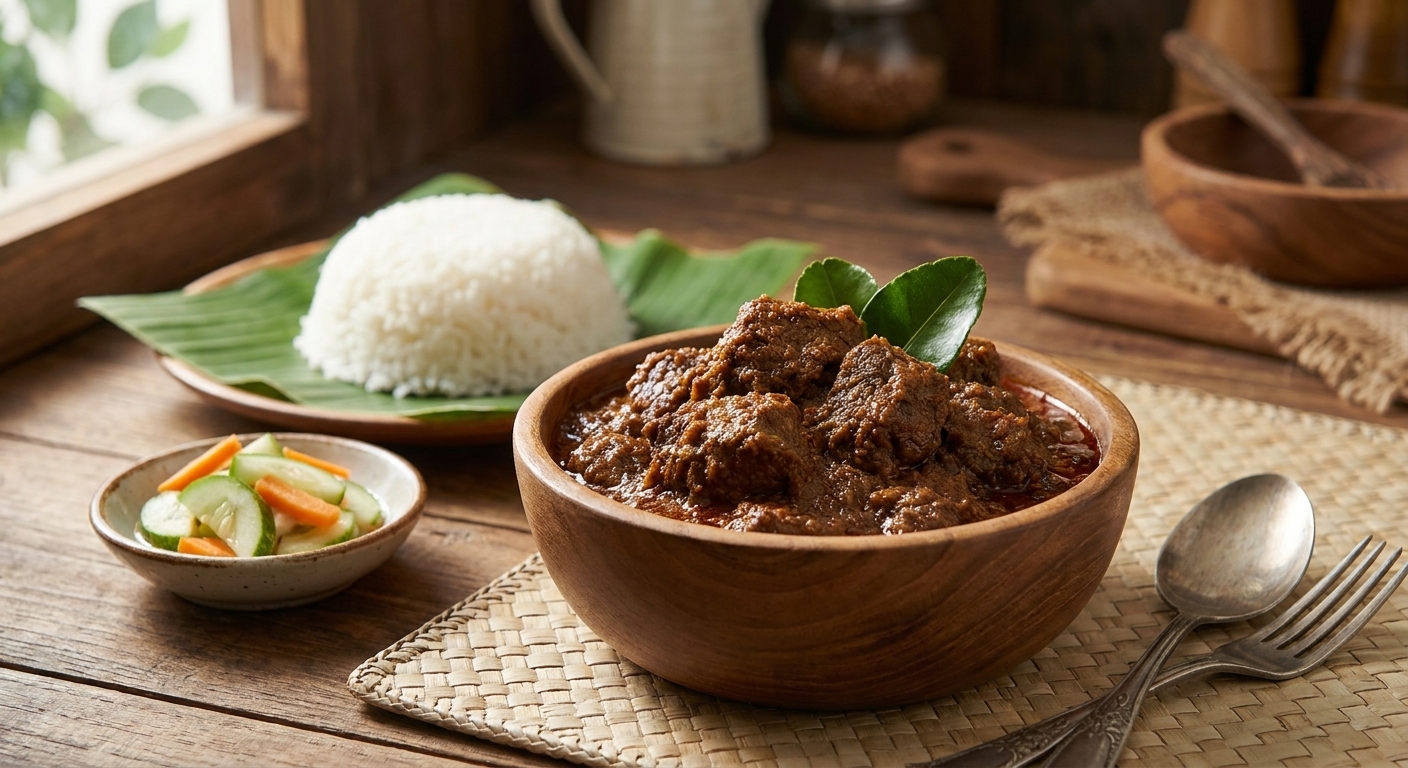
Rendang is the kind of dish that rewards patience like a golden retriever rewards attention. You start with a bright, punchy spice paste and coconut milk, then you let time do its thing until the sauce goes from soupy curry to a thick, clingy, dark caramel that hugs every chunk of beef. It is not a quick dinner. It is, however, the kind of dinner that makes everyone in the house mysteriously wander into the kitchen asking, “What smells like that?”

This version keeps the ingredient list realistic for a home cook while staying true to the slow-cooked, dry-style rendang vibe you want: toast the paste, braise beef chuck or shank until fork-tender, then reduce low and slow until the coconut and spices toast in the pan and the edges start to caramelize. Serve it with rice and something sharp and pickled, because rendang loves a little contrast.
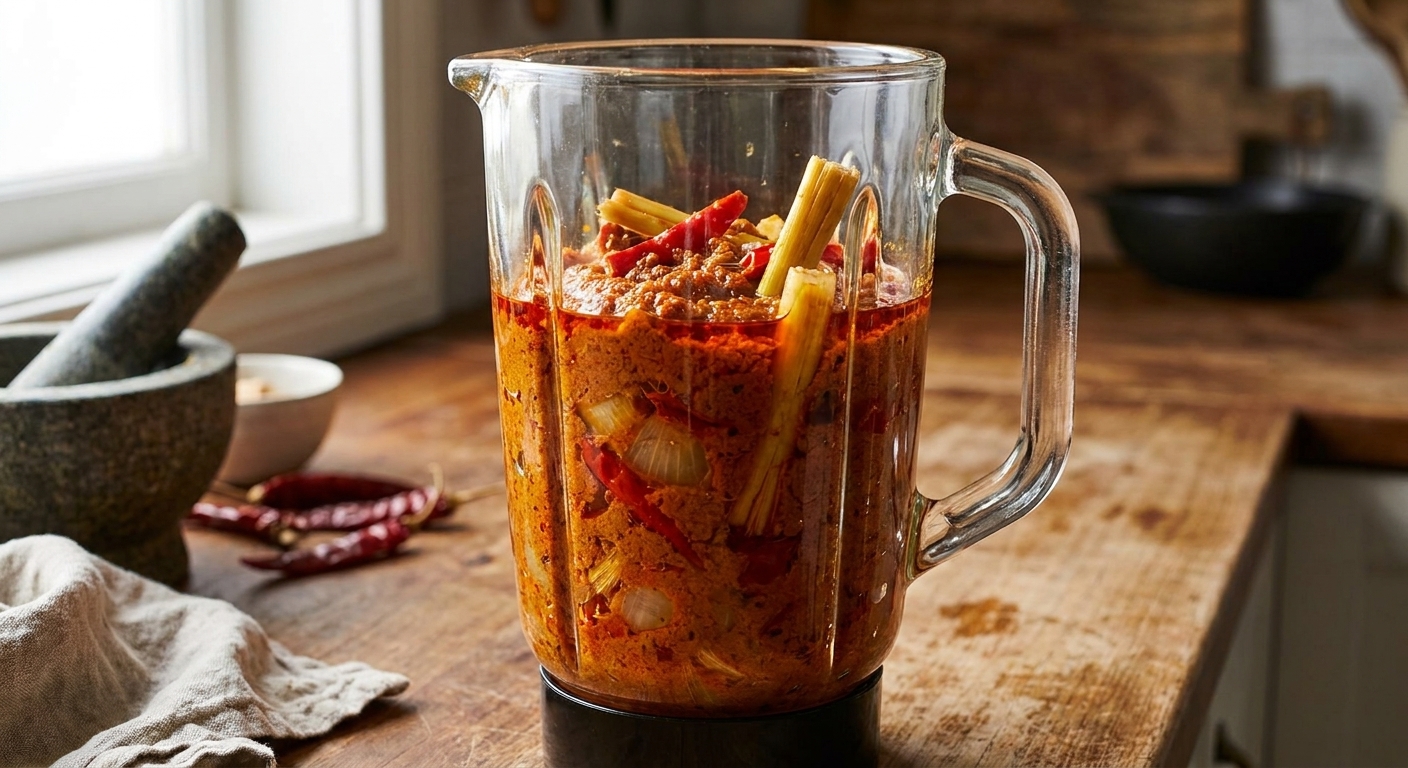
Thick red-orange rendang spice paste in a blender jar with visible chili, lemongrass, and onion

Why It Works

  • Big flavor without mystery steps: You will toast the spice paste first, which deepens the aroma and keeps the final rendang from tasting flat or raw.
  • That authentic dry curry finish: Rendang is not meant to be brothy. We simmer uncovered at the end so the coconut milk reduces, then the oils separate and the spices lightly fry for a glossy, caramelized coating.
  • Fork-tender beef: Chuck or shank gets the long, gentle braise it deserves, so it turns buttery without falling apart into stringy sadness.
  • Balanced heat and sweetness: A little palm sugar (or brown sugar) rounds out the chiles, and tamarind brings a quiet tang that makes the whole pot taste more alive.
  • Meal-prep friendly: Rendang tastes even better the next day, which is basically the nicest thing a recipe can do for you.

Pairs Well With

Storage Tips

How to Store Rendang

  • Refrigerate: Cool completely, then store in an airtight container for up to 4 days. The fat may solidify on top. That is flavor insurance, not a problem.
  • Freeze: Freeze in portions for up to 3 months. Rendang freezes beautifully because the sauce is already reduced and concentrated.
  • Reheat: Warm gently in a saucepan over low heat with a splash of water or coconut milk to loosen. Stir often so the spices do not catch on the bottom.
  • Best leftover move: Chop leftover rendang and fold it into fried rice, or pile it into a grilled cheese situation if you are feeling chaotic in the best way.

Common Questions

Common Questions

Is rendang supposed to be dry?

Traditional rendang is a dry-style curry. It starts wet, then reduces until the sauce clings to the meat and the coconut and spices begin to toast and lightly fry in the separated oil. If your pot still looks soupy, keep simmering uncovered and stir more often.

What cut of beef is best?

Chuck roast is the easiest win: good marbling, tender results. Beef shank is also fantastic for flavor and gelatin, but it can take longer and may need a bit more trimming around the bone.

Do I need kerisik (toasted coconut paste)?

It is traditional, but not required. This recipe uses toasted unsweetened coconut stirred in near the end to mimic that nutty depth. If you can find kerisik, use it. If not, your rendang will still be wildly good.

Can I make it less spicy?

Yes. Use fewer dried chiles, remove the seeds, and lean on paprika for color. Rendang should be warmly spiced, not painful.

Why is my rendang bitter or burnt tasting?

Usually it means the pot got too hot during the final reduction. Once the sauce thickens, it can go from “toasting” to “scorching” fast. Lower the heat, stir more often, and add a splash of water if it starts catching.

Can I do this in a slow cooker?

You can braise the beef and paste in a slow cooker, but you still need a stovetop step at the end to reduce and caramelize. Rendang’s signature finish does not really happen in a slow cooker alone.

The first time I made rendang at home, I treated it like a normal curry. I walked away. I came back. The pot had opinions about that decision. Rendang is not hard, but it is a relationship. Once you accept that the last hour is basically you, a spoon, and a low simmer, it becomes one of the most satisfying things you can cook. The smell alone is worth the time, and the moment the sauce turns dark and glossy and starts clinging to the beef is the culinary version of sticking the landing.