Mom's Best Recipes
Recipe

Beer Brats

Brats simmered in beer with onions, then seared until browned and snappy. A low-drama classic that tastes like you tried harder than you did.

Author By Matt Campbell
4.8
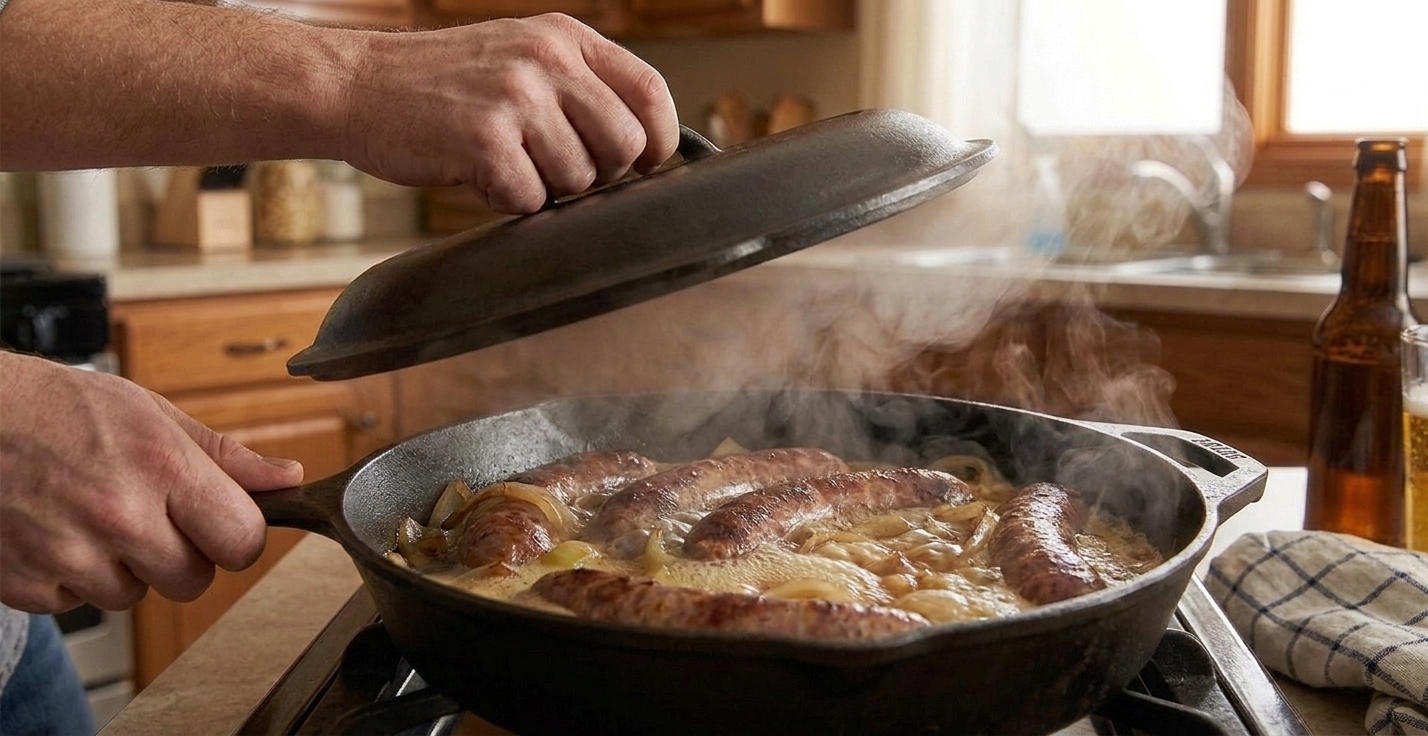
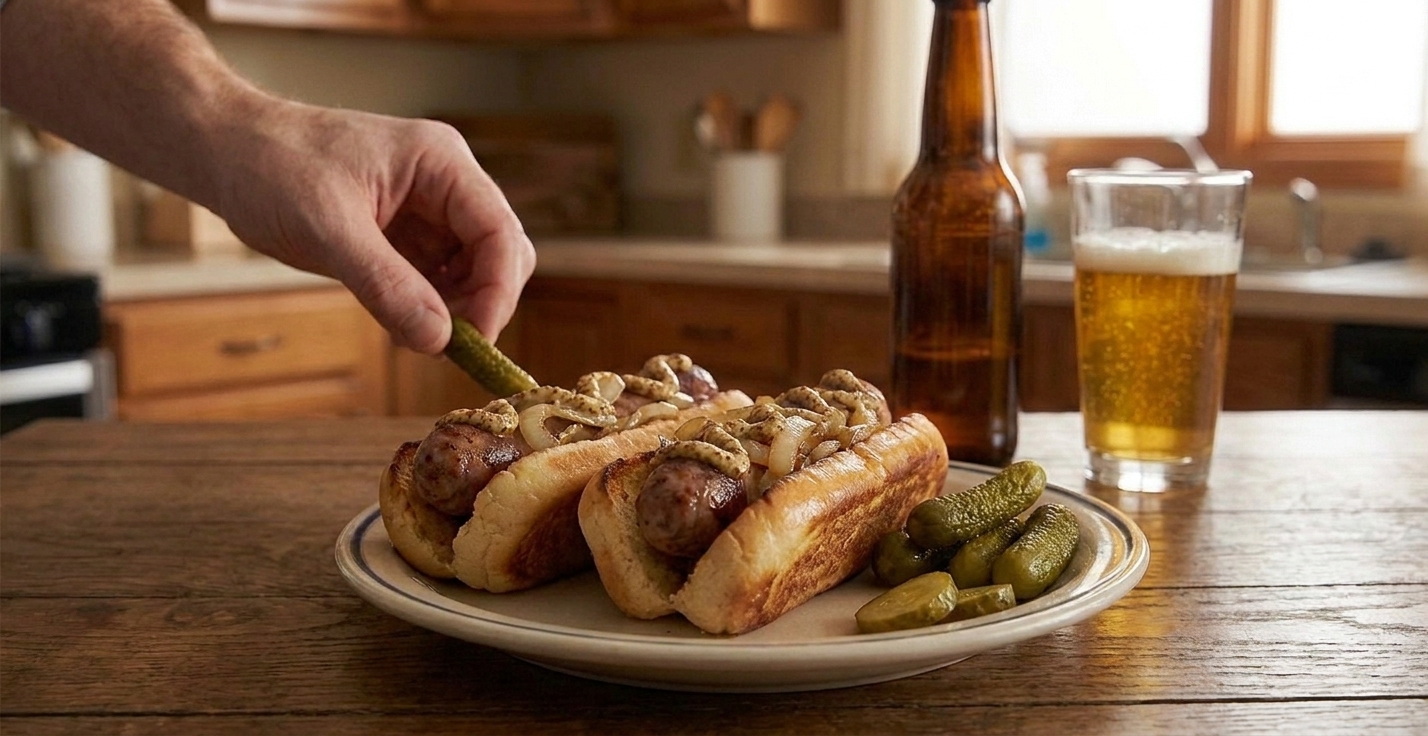
Beer brats browned in a cast iron skillet with caramelized onions, served on toasted buns with mustard on a wooden table

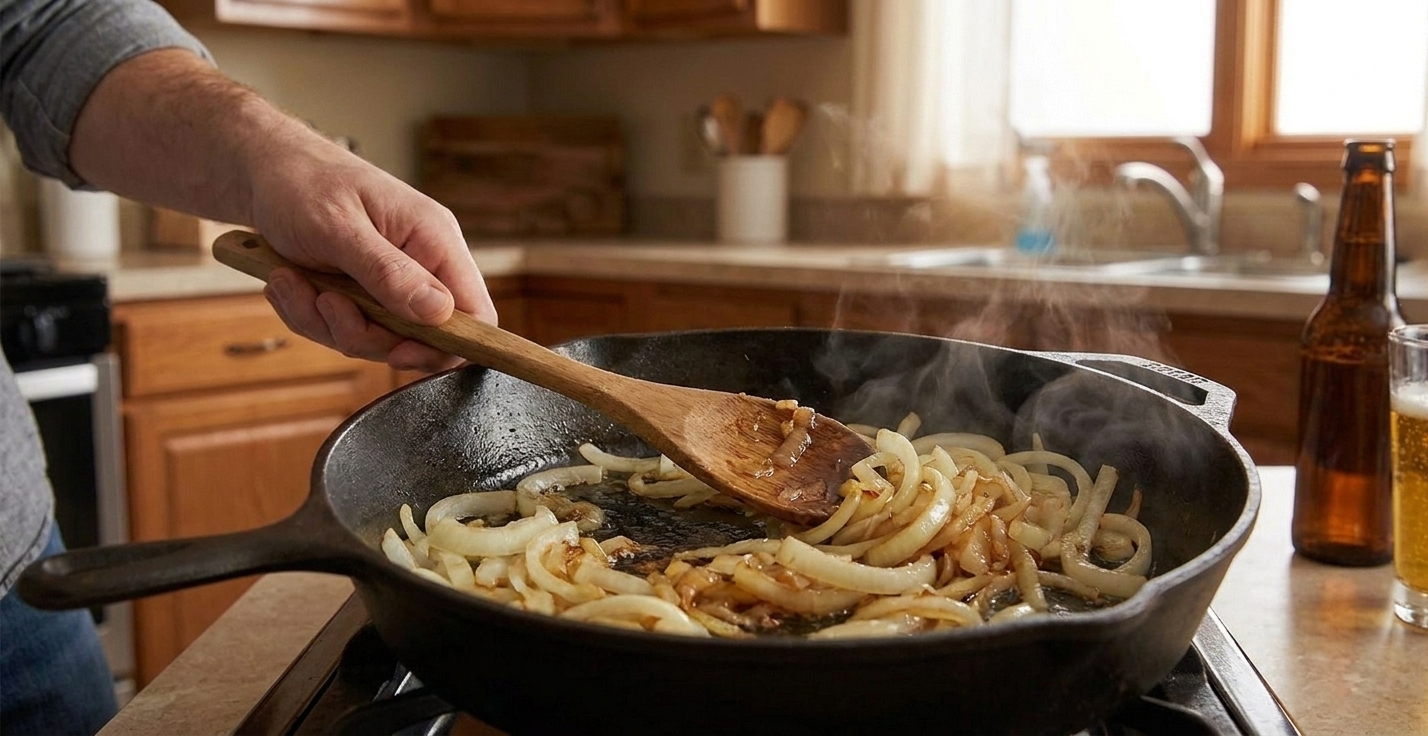
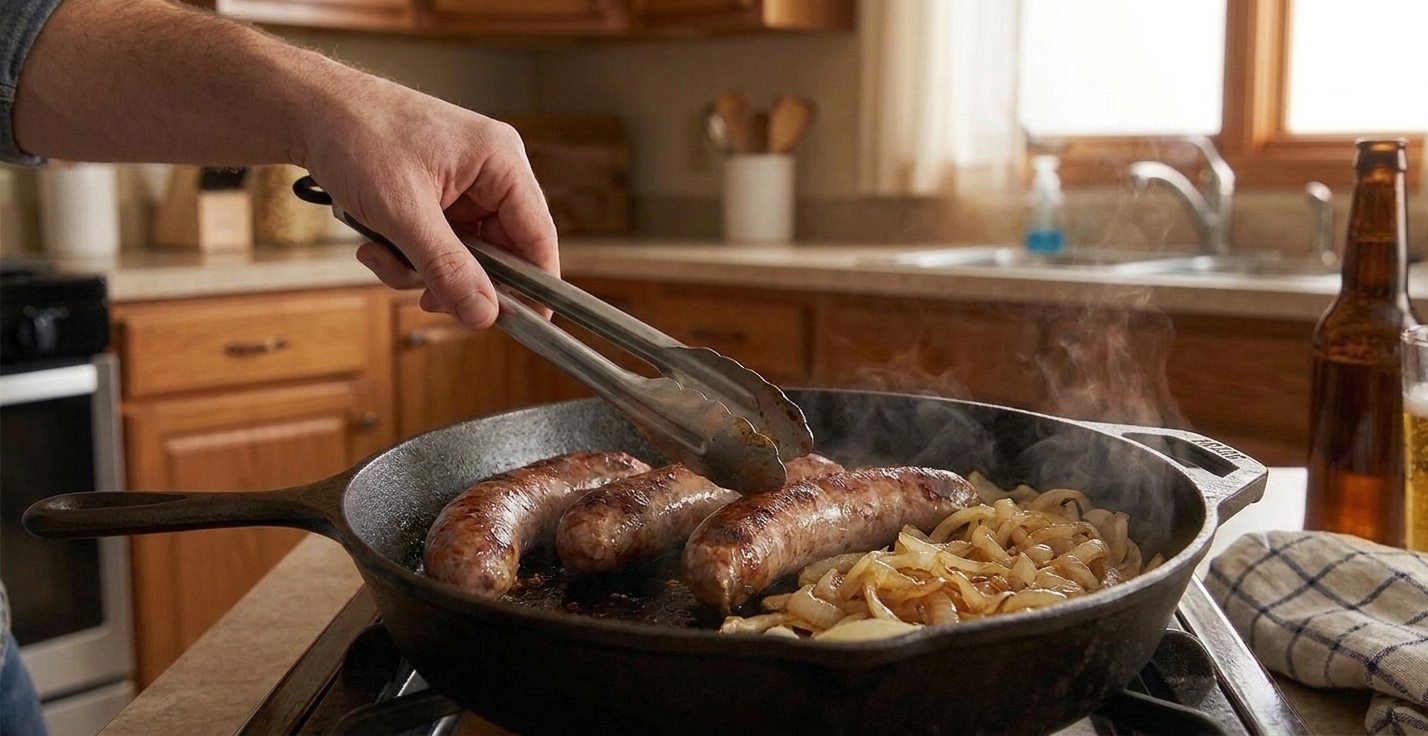
Beer brats are one of those meals that feel like a whole vibe with very little effort. You do the gentle thing first, which is a quick simmer in beer with onions so the sausages cook through and pick up flavor. Then you do the loud thing, which is a hot sear so the casing gets that crisp snap and the onions turn jammy and sweet.

My favorite part is that this is forgiving. Use the beer you actually have, use the pan you actually own, and taste as you go. If your onions get a little darker than planned, congratulations, you just discovered deeper flavor.

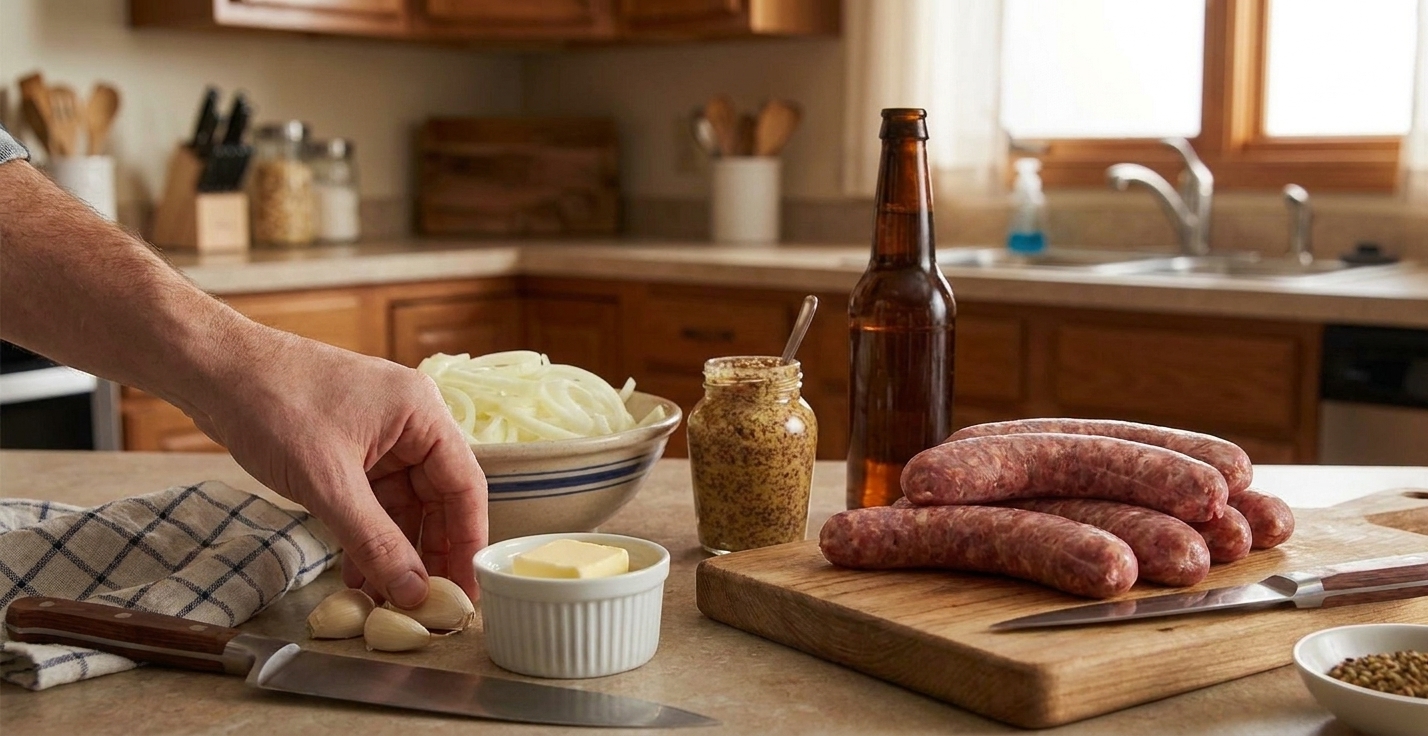
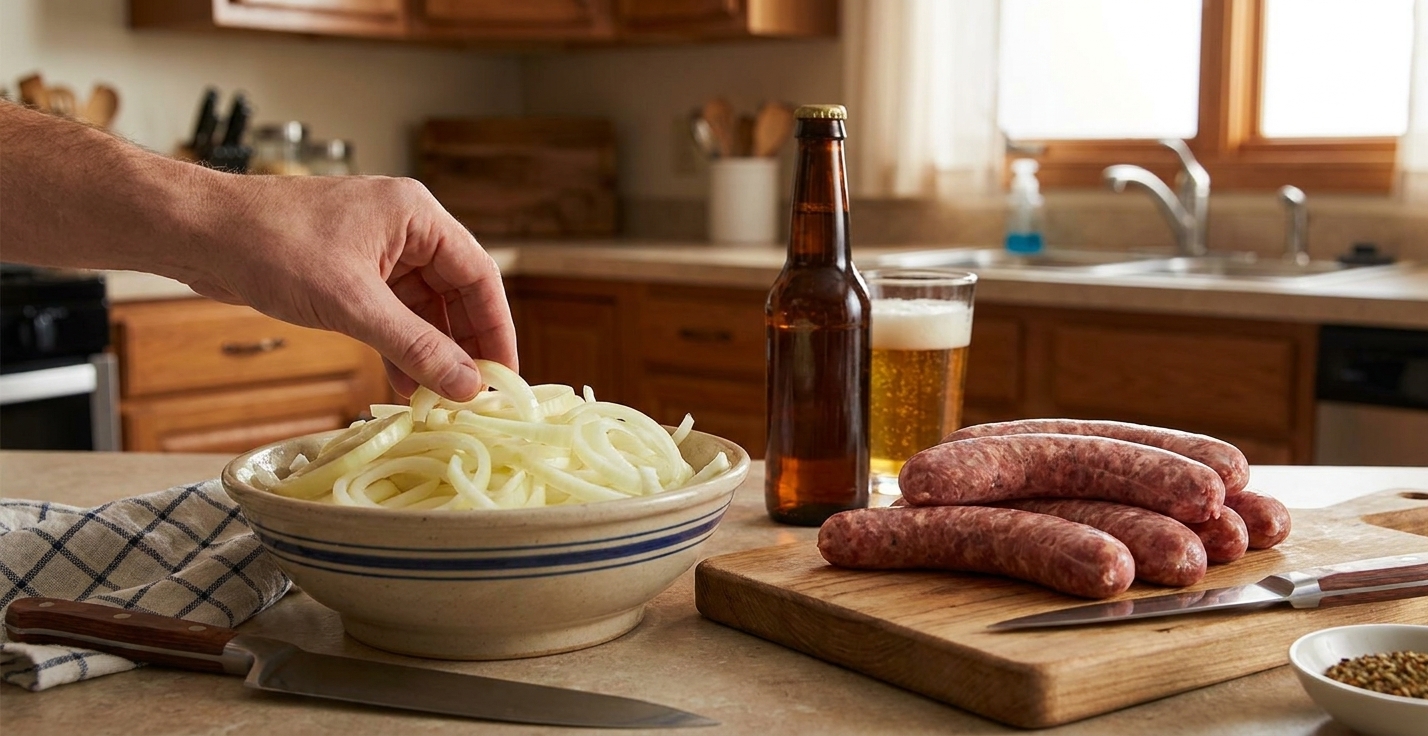
Raw bratwurst links, sliced onions, garlic, mustard, butter, and a bottle of beer arranged on a kitchen counter with a cutting board

Why It Works

  • Juicy brats that stay plump: Simmering in beer cooks them through gently before the sear, so you do not split the casings or dry them out.
  • Onions with real personality: They soften in the beer, then caramelize in the pan drippings and butter.
  • Bold, balanced flavor: Beer brings malt sweetness and a tiny bitter edge, mustard adds bite, and a quick sear adds that browned, savory finish.
  • One-pan friendly: Stovetop method is fast and reliable, with an optional grill finish if you want extra char.

Pairs Well With

Storage Tips

Refrigerate: Store brats and onions together in an airtight container for up to 4 days. Add a splash of beer or water to keep things juicy.

Freeze: Cool completely, then freeze brats with onions in a freezer bag for up to 2 months. Thaw overnight in the fridge.

Reheat: Warm in a covered skillet over medium-low with a tablespoon or two of water or beer until steaming hot throughout (or 165°F in the center), then uncover and crisp the outside for 1 to 2 minutes. Microwave works, but the skillet brings back the snap.

Cooked beer brats and onions packed in a glass meal prep container on a kitchen counter

Common Questions

Common Questions

What kind of beer is best for beer brats?

A lager, pilsner, or wheat beer is the easiest win. They are crisp, not too bitter, and play nice with onions. Avoid super hoppy IPAs unless you love that bitterness, because it can concentrate as the liquid reduces. Also, skip very dark, roasty beers (like some stouts or porters) unless you want that flavor front and center. Use a beer you would actually drink.

Do you have to boil brats in beer?

Not a hard boil. A gentle simmer is the goal. Boiling can split casings and push fat out of the sausage. Keep it at a low bubble and you will be rewarded.

Can I make beer brats without a grill?

Absolutely. This recipe is written for the stovetop. If you have a grill, consider it a bonus finishing step for extra char, not a requirement.

Should I poke holes in the brats?

Nope. Keep them intact so the juices stay inside. If they split, it is usually from too much heat too fast.

How do I know the brats are done?

Safest is a thermometer and the package instructions. For raw brats, a good target is 160°F for pork and 165°F for chicken or turkey. Some bratwursts are pre-cooked, so you are reheating and browning instead of cooking from raw. Either way, the simmer-then-sear method is reliable as long as the brats are hot all the way through.

Can I use non-alcoholic beer?

Yes. It still brings malt flavor. If it tastes a little sweet, add an extra teaspoon of mustard or a splash of vinegar at the end to balance it.

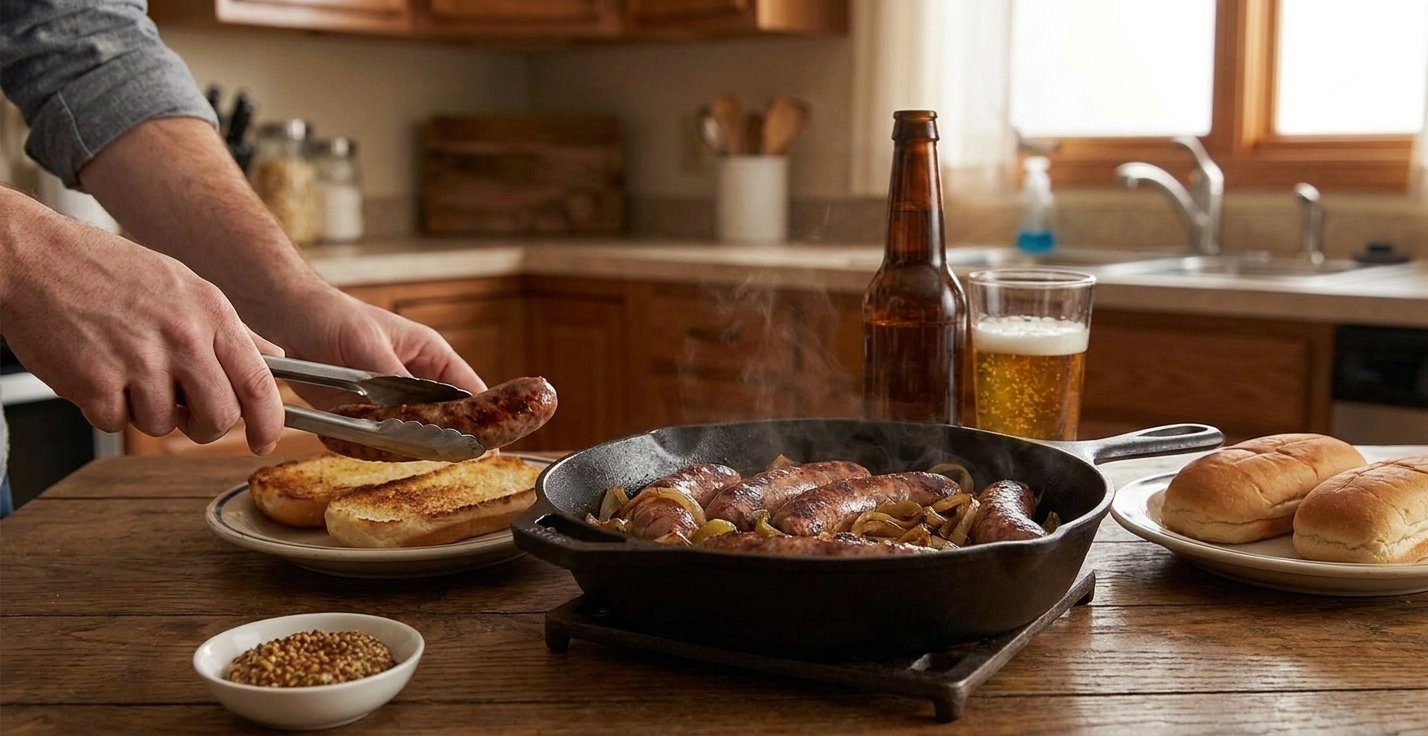
Beer brats are my go-to when I want dinner to feel social, even if it is just me in a hoodie at the stove. The simmer smells like a backyard cookout, and the sear sounds like you know what you are doing. I started making them this way because I wanted grill flavor without babysitting a grill, and now I honestly prefer the control. Plus, those onions. If you have ever eaten a brat and thought, “I need more of whatever is happening under the sausage,” this is that.