Mom's Best Recipes
Recipe

Best Sourdough Bread Recipe

A crackly, golden loaf with a chewy crumb, bold tang, and that bakery-style ear, made with simple ingredients and clear, low-drama steps.

Author By Matt Campbell
4.9
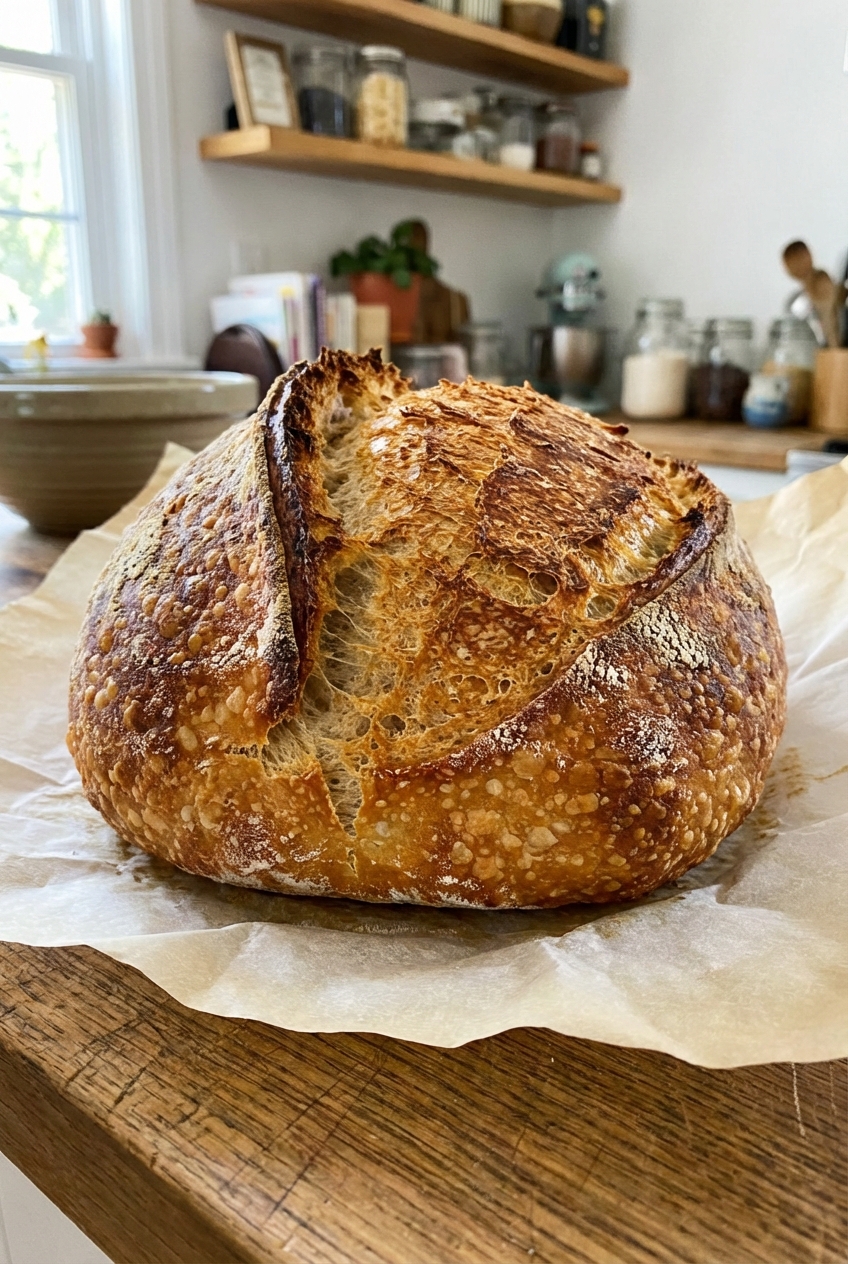
A real photo of a golden artisan sourdough boule on parchment paper with a deep score and crisp blistered crust on a wooden counter

Let’s make the kind of sourdough that makes you feel like you own a linen apron you definitely do not own. You know the loaf: crisp, shattery crust, a springy crumb, and that subtle tang that makes butter taste like a full personality.

This is my go-to artisan sourdough for real life. No weird ingredients. No 2 a.m. panic. Just a solid schedule, a few sensory cues to watch for, and a dough that rewards you for paying attention. You will learn how to build strength without overworking it, how to know when bulk fermentation is actually done, and how to get that dramatic oven spring even if your kitchen is doing its own thing.

Heads up: sourdough is mostly waiting. But it is the satisfying kind of waiting where the dough gets better while you do literally anything else.

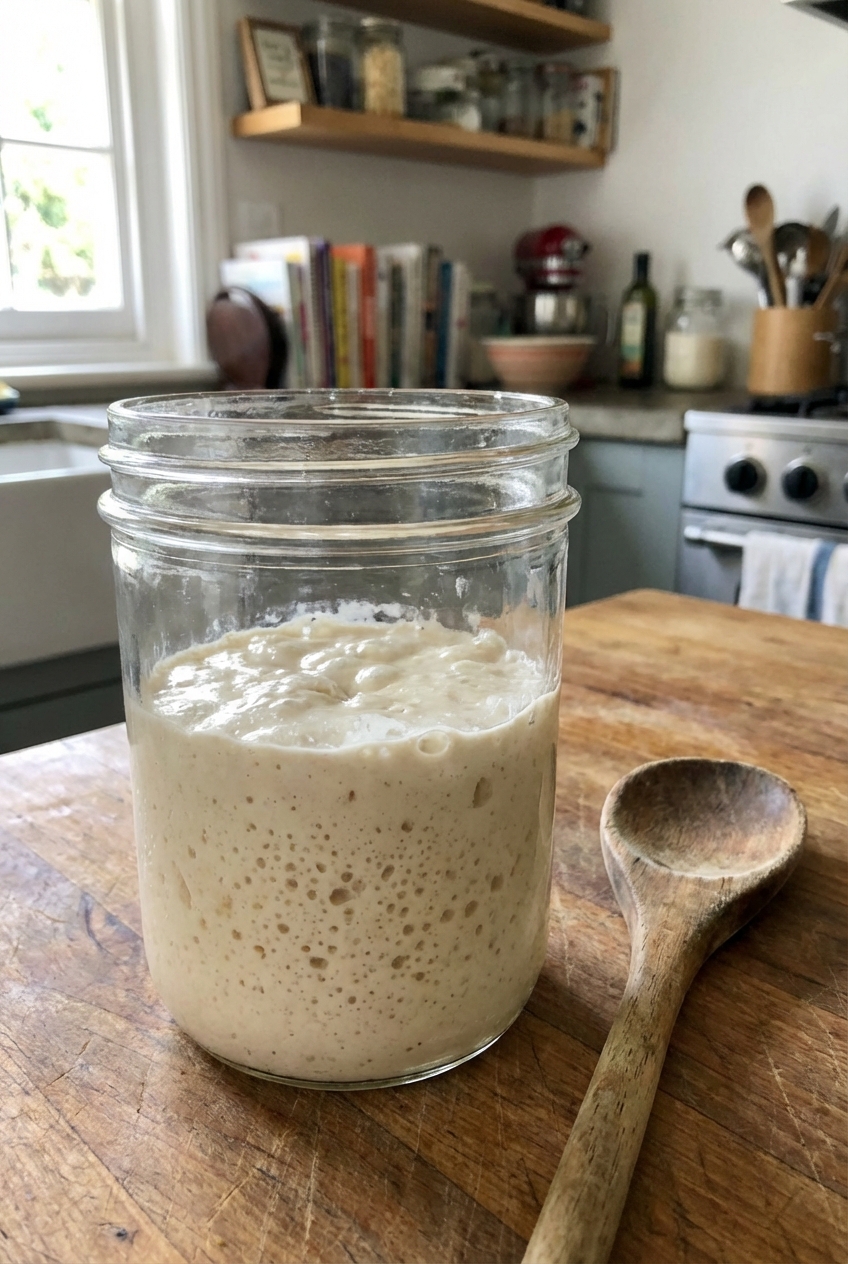
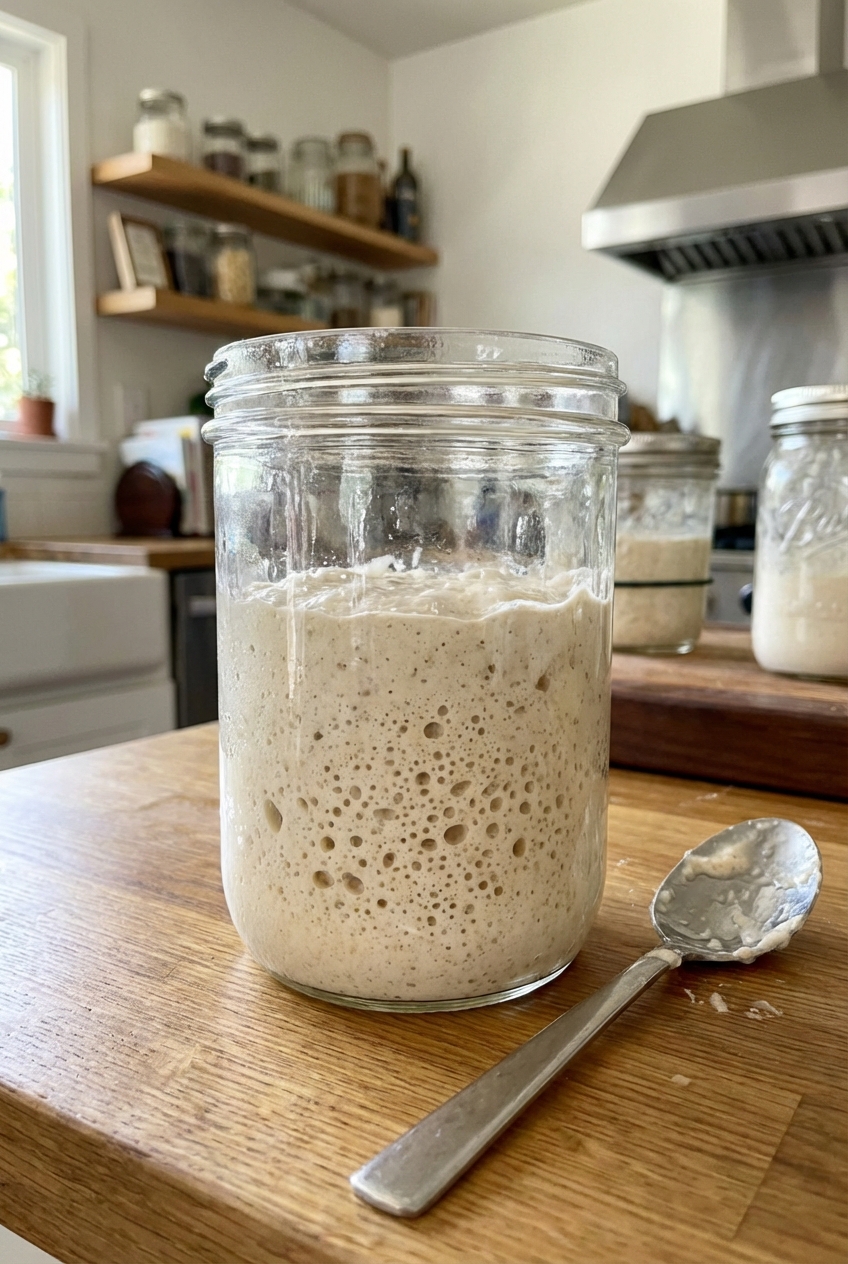
A real photo of a bubbly active sourdough starter in a glass jar on a kitchen counter with a spoon resting beside it

Why It Works

  • Bakery-style crust: High heat plus steam (hello, Dutch oven) gives you crisp edges and that deep caramel color.
  • Open, chewy crumb: A moderate hydration dough keeps it airy without turning shaping into a sticky wrestling match.
  • Big flavor with less stress: A long, cold proof builds tang and structure, and it also makes the bake day easier.
  • Clear fermentation cues: You will use visual and touch signals, not just the clock, so the recipe works across different kitchens.

Pairs Well With

Storage Tips

Day 1 to 2: Keep the loaf cut-side down on a cutting board, or wrap in a clean kitchen towel. This protects the crumb without making the crust go soft.

Day 3 to 4: Move to a paper bag or a loosely closed bread box. Avoid airtight plastic at room temp unless you like a chewy crust in the wrong way.

Freeze for later: Slice the cooled loaf, then freeze slices in a freezer bag. Toast straight from frozen.

Revive a tired crust: Spritz the outside lightly with water, then bake at 375°F for 8 to 12 minutes. It comes back to life like it had a nap and a coffee.

Best leftover move: Thick slices for grilled cheese, croutons, panzanella, or French toast.

Common Questions

Do I need a Dutch oven?

It is the easiest way to trap steam and get great oven spring. If you do not have one, bake on a preheated sheet pan or baking steel and place a sturdy metal pan on the lower rack. Right after loading the bread, carefully pour 1/2 to 1 cup boiling water into the lower pan and quickly close the oven. Use oven mitts and keep your face and hands back, steam burns are no joke.

My dough feels sticky. Did I mess up?

Probably not. Sourdough starts sticky and becomes smoother as gluten develops and fermentation progresses. Use wet hands for folds, and give it time. If it is still soup after a couple folds, your flour may be lower protein or your kitchen is warm. You can hold back 25 to 50 g water next time.

How do I know my starter is active enough?

Look for a starter that doubles in 4 to 6 hours after feeding at around 75°F, with a domed top and lots of bubbles. The float test is optional and not always reliable, but the rise and bubbly structure are.

How do I know bulk fermentation is done?

Look for about a 30% to 50% rise, a slightly domed top, bubbles along the sides, and a dough that jiggles like it has secrets. It should feel airy and lighter, not dense. Bulk time can swing a lot with starter strength and dough temperature, so trust the cues more than the clock.

Why didn’t my loaf spring in the oven?

Most common causes are over-proofing, under-proofing, a weak starter, or not enough steam and heat. Use an oven thermometer if you can. Also, make sure your Dutch oven is fully preheated.

Can I use all-purpose flour instead of bread flour?

Yes. The crumb may be a bit tighter and the dough can feel stickier. If using all-purpose, consider holding back 25 g water and add it only if the dough feels strong.

How do I make it more tangy?

A longer cold proof (think 16 to 24 hours) often boosts tang. You can also nudge flavor by using a lower inoculation (a bit less starter), keeping bulk fermentation slightly cooler, or using a starter that is a touch more acidic. Time helps, but it is not the only lever.

The first time I tried to make artisan sourdough, I treated the dough like it was on a deadline and I was its manager. I over-kneaded, over-proofed, and then acted personally offended when I baked a dense little frisbee. The turning point was realizing sourdough is less about force and more about timing. Once I started watching the dough instead of the clock, everything clicked. Now this loaf is my Sunday reset. I mix it with coffee, fold it between chores, and bake it when the kitchen finally gets quiet. It feels like teamwork with yeast, which is honestly the best kind.