Beef stew is one of those cozy, forgiving meals that makes the whole kitchen smell like you have your life together. But the cut of beef is the difference between spoon-tender bites and a pot full of stubborn little rubber cubes.
Stew success comes down to two things: fat for flavor and mouthfeel, and collagen (connective tissue) that slowly turns into gelatin and makes the broth silky. The best stew cuts have enough of both.
The quick answer
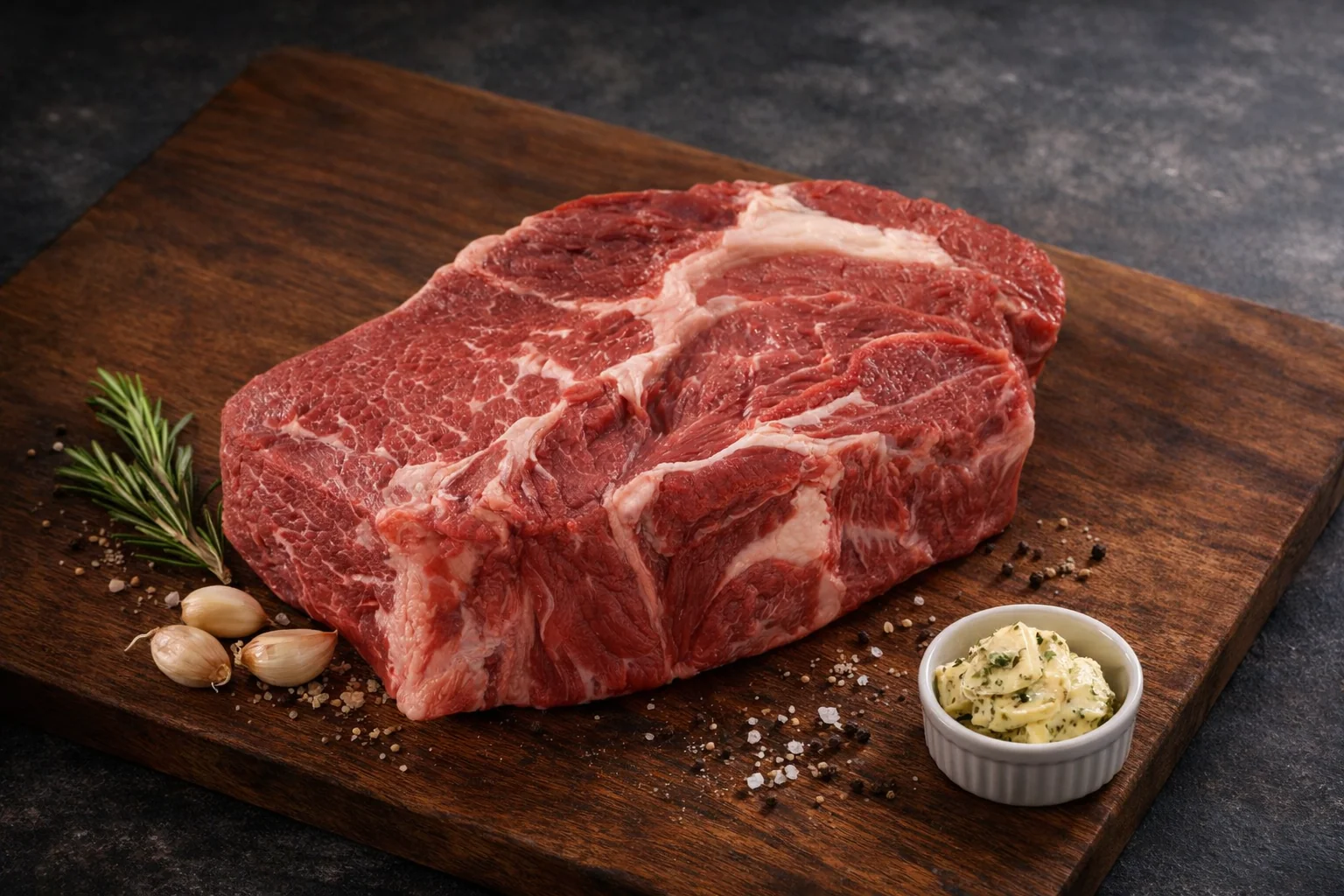
If you want one dependable pick that works for most beef stews, it is chuck roast. It has the right mix of marbling and collagen, and it stays beefy and rich after a long cook.
- Best all-around: Chuck
- Leaner option: Bottom round (with the right method)
- Big beefy flavor: Brisket (excellent, but can be spendy)
- Most luxurious: Short ribs (rich and gelatinous, often one of the priciest)
- Most unpredictable: Pre-cut stew meat (can be great or can be tough)
What makes beef good for stew
Fat (marbling)
Fat melts into the cooking liquid and carries flavor. In stew, a little marbling is your friend. Very lean beef can turn stringy or feel dry even when it is technically “cooked through.”
Collagen (connective tissue)
Collagen is what makes tough cuts worth the wait. With time and gentle heat, collagen converts into gelatin, which gives stew that glossy, rich body and makes meat feel tender and lush.
Translation: The best stew beef usually comes from hardworking parts of the cow, not the already-tender steak cuts.
Chuck: the classic stew winner
Chuck comes from the shoulder. It is well marbled and full of connective tissue, which is exactly what stew wants.
- Flavor: Deep, beefy, classic “stew taste”
- Texture: Turns tender and juicy, especially when cut into larger cubes
- Cost: Usually moderate, often the best value for results
Chuck in a long simmer
Chuck is happiest with low and slow cooking. Given enough time, it becomes fork-tender without drying out.
Gentle simmer cue: Look for just a few lazy bubbles and a little steam, not a rolling boil that bangs the meat around.
Chuck in a pressure cooker
Also excellent. Pressure cooking speeds up collagen breakdown, so you can get stew-like tenderness in a fraction of the time. The main trick is to avoid overcooking into crumbly shreds if you want distinct chunks.
Pip’s little nudge: Look for chuck labeled chuck roast, boneless chuck, or shoulder roast.
Bottom round: leaner, but trickier
Bottom round is from the rear leg. It typically has less marbling and often less connective tissue than chuck, so it is less forgiving.
- Flavor: Beefy, but less rich than chuck
- Texture: Can turn tight or chalky if the cubes are too small or cooked too hard
- Cost: Often cheaper than chuck, good when budgets are doing the cooking too
Bottom round in a long simmer
It can work, but treat it gently. Keep the simmer low (bare bubbles), keep cubes a bit larger, and give it enough time to soften. It will not get quite as succulent as chuck, so the broth and seasoning matter more.
Bottom round in a pressure cooker
Round can go from tough to tender quickly, and then right past tender into stringy or chalky if overdone. If you are using a pressure cooker, aim for larger chunks and avoid extra-long pressure times.
Shopping tip: Avoid anything labeled round steak cut paper-thin. You want a roast-style piece you can cube yourself.
Brisket: big flavor, sliceable tenderness
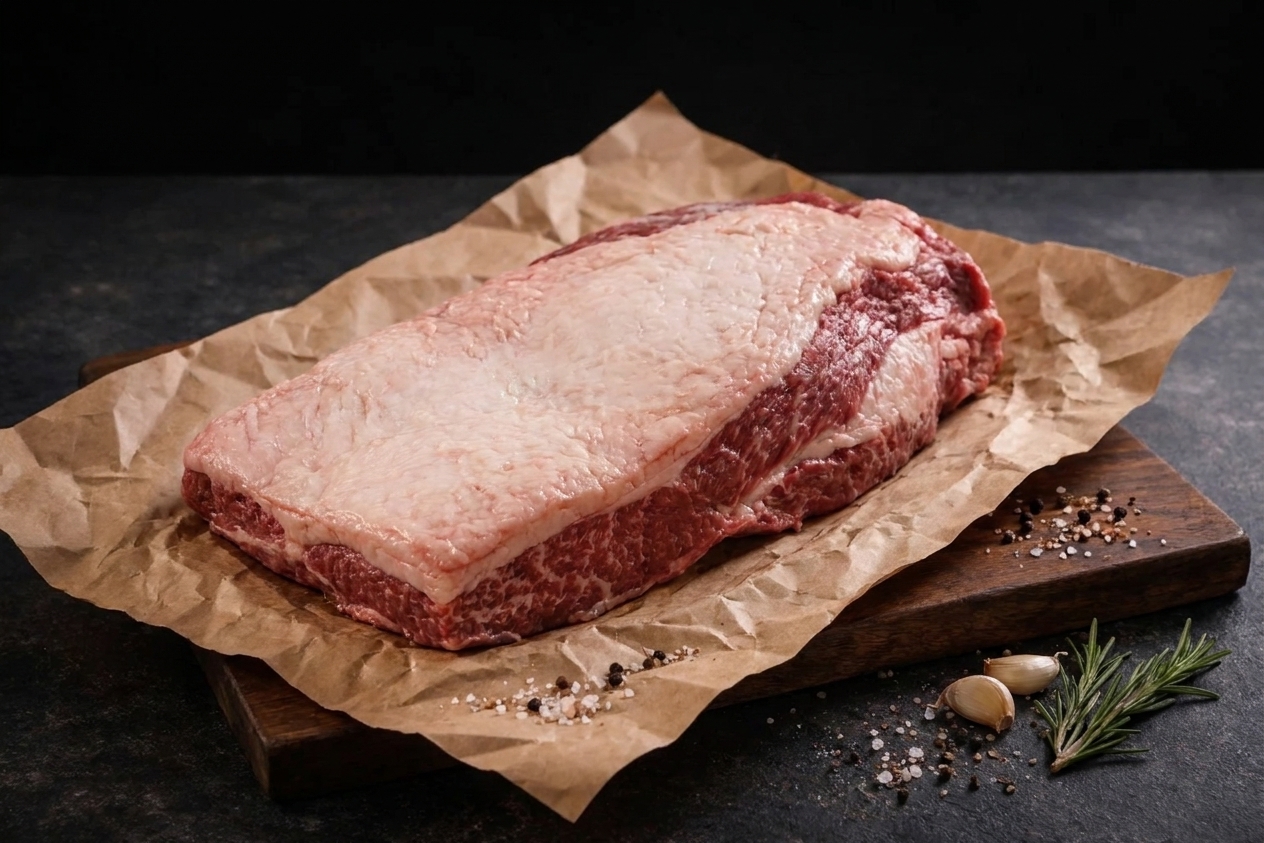
Brisket comes from the lower chest (breast area). It is known for barbecue, but it is also a wonderful stew cut when you want a hearty, beef-forward pot.
- Flavor: Strong beef flavor, especially if well browned
- Texture: Tender but a bit more “sliceable” than chuck’s plush bite
- Cost: Varies a lot by store and season, often higher than chuck
Brisket in a long simmer
Great choice. It loves time and rewards patience with a rich, beefy broth. Brisket also has a pronounced grain, so cut it across the grain for the most tender bite.
Brisket in a pressure cooker
Very pressure-cooker friendly. It softens beautifully, and the cooking liquid becomes rich and full-bodied. For the nicest texture, cut across the grain when you portion it.
Short ribs: the most luxurious stew
Short ribs are loaded with collagen and fat. They make stew taste like it has been simmering since morning, even if you started at noon.
- Flavor: Extremely rich and beefy
- Texture: Silky, gelatinous, fall-apart tender when cooked long enough
- Cost: Often one of the most expensive options on this list
Short ribs in a long simmer
Perfect for a weekend pot. They need time for all that connective tissue to melt down. Skim excess fat if needed, or chill the stew and lift the fat cap later.
Short ribs in a pressure cooker
Pressure cooking does a fantastic job extracting gelatin fast. You will still want to degrease if the broth turns overly fatty.
Little note: Bone-in short ribs bring extra flavor, but you will need to pick bones out. Boneless short ribs are easier for classic “chunk stew.”
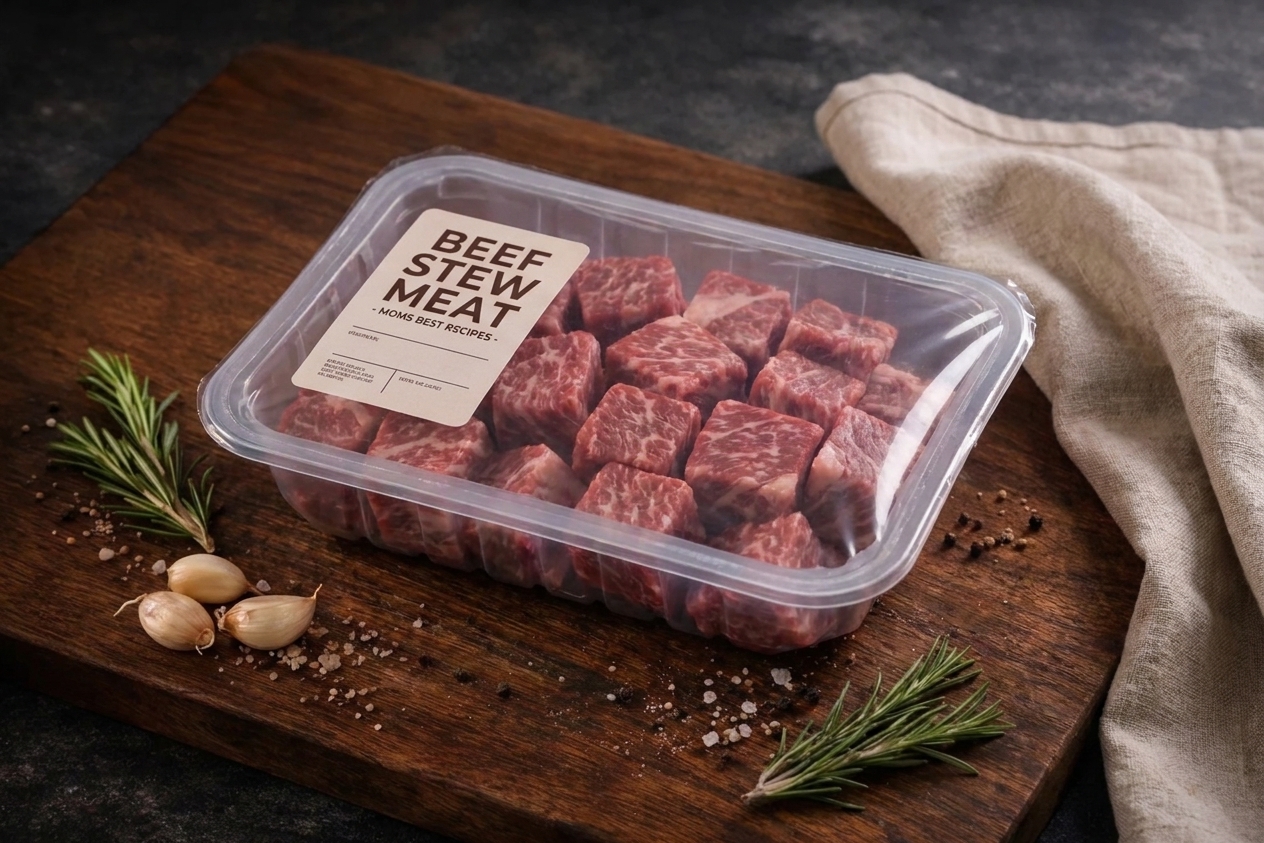
Pre-cut stew meat: convenient, but a gamble
Packages labeled stew meat can be anything from chuck trimmings (great) to lean round pieces (less great) to a random mix. It is not just about tenderness, either. Different muscles soften at different rates, so a mixed package can cook unevenly, with some pieces buttery and some pieces still arguing with your spoon.
The cubes are also often cut small, which makes them more likely to get tight and chewy.
When stew meat works well
- The pieces have visible marbling
- The cubes are uniform in size
- The butcher can tell you it is mostly chuck
When to skip it
- The cubes are very lean and look smooth with almost no fat
- The package has lots of tiny scraps and odd shapes
- You are making stew for guests and want consistent results
Pip’s honest take: If you have time, buying a roast and cubing it yourself is usually the best path to tender, evenly cooked bites.
Other good stew cuts
If you are staring at the meat case thinking, “Okay, but what about that other thing I always see,” you are not wrong. These can be wonderful in stew too.
- Beef shank (cross-cut shank): Very collagen-rich, which means a deeply gelatinous broth. It takes time, and it is often bone-in, but the payoff is serious cozy.
- Arm roast (bone-in chuck): Still chuck, just a different presentation. Great flavor, great stew texture, sometimes an even better value.
- Shoulder clod: Leaner than classic chuck roast but still stew-friendly when cooked low and slow. If you see it on sale, it can be a smart pick.
How the cuts compare
Here is the cozy cheat sheet for choosing based on cooking method and what you care about most.
- Want the safest, most classic stew texture: Chuck
- Want leaner stew and do not mind slightly less richness: Bottom round
- Want bold beef flavor and do not mind slicing across the grain: Brisket
- Want restaurant-level richness: Short ribs
- Want convenience and are willing to inspect the package: Stew meat
Long simmer vs pressure cooker
Long simmer (stovetop or oven)
Low heat plus time slowly softens muscle fibers and converts collagen into gelatin. This is where chuck, brisket, and short ribs really shine. Leaner cuts can work, but they need gentle heat and careful timing.
Pressure cooker (Instant Pot style)
Pressure cooking accelerates collagen conversion, so tough cuts can become tender faster. The tradeoff is that it is easier to overshoot the “tender” stage and end up with meat that shreds or turns stringy and chalky, especially with lean cuts like round.
General rule: The fattier and more collagen-rich the cut, the more forgiving it is in both methods.
Buying tips that help
- Choose a roast, not a steak: Roasts from chuck, brisket, and round are easier to cube and usually better priced.
- Look for marbling: Thin white streaks of fat running through the meat are your tenderness insurance.
- Avoid huge surface fat slabs: Some is fine, but you do not want to pay for inches of fat you will trim off.
- Ask what “stew meat” is: If the butcher says chuck, you are in good paws. If they are unsure, consider choosing your own roast.
- Plan for shrinkage: Meat loses volume as it cooks. If you want a very meaty stew, buy a bit extra.
- Freshness basics: Choose beef that smells clean and looks bright, then keep it cold until you are ready to brown it.
Best cube size for stew
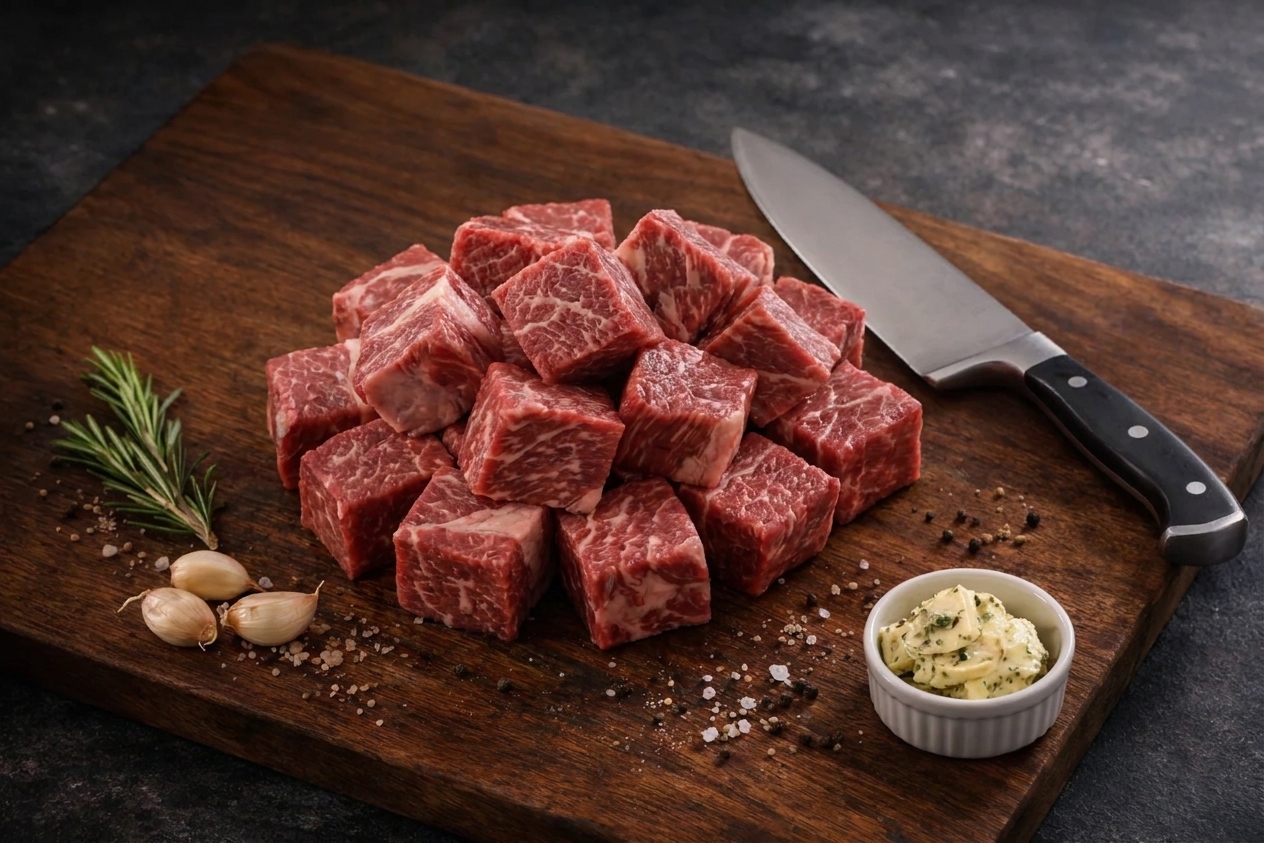
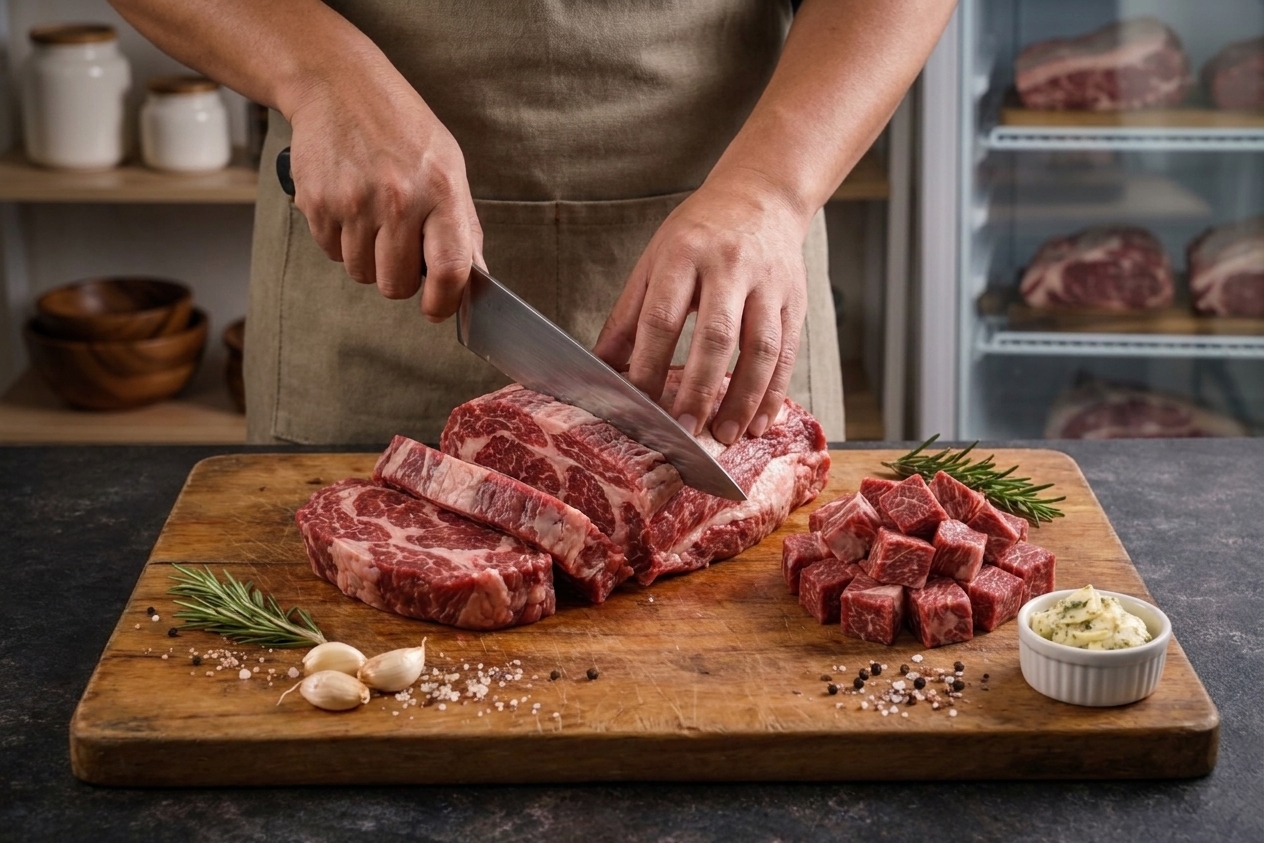
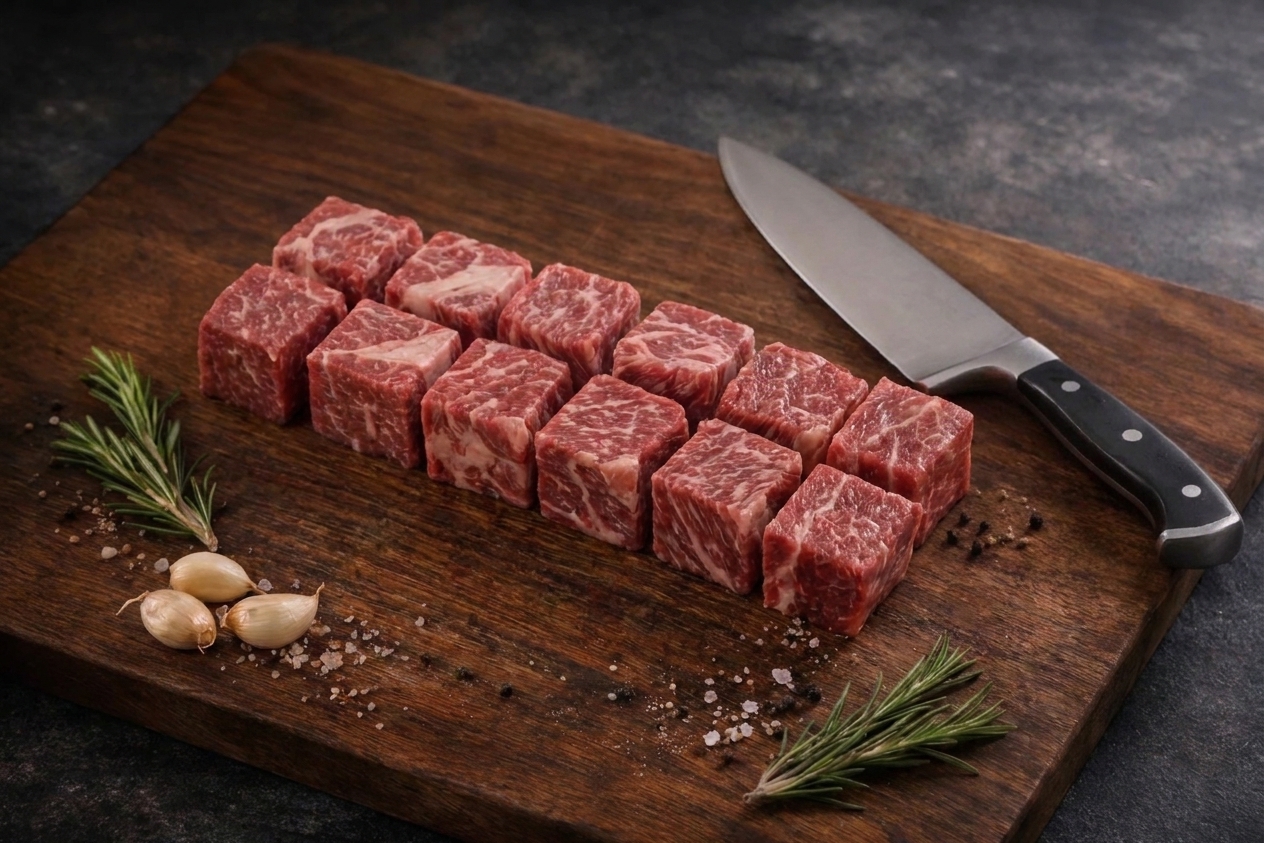
For most stews, aim for 1.25 to 1.5 inch cubes. This size stays juicy, browns well, and does not disappear into the broth.
- Too small: cooks fast, tightens up, and can turn tough
- Too large: takes longer to become tender and can cook unevenly
Two cutting tips for better texture
- Cut against the grain when you can (especially important for brisket and round).
- Keep pieces consistent so everything gets tender at the same time.
Cuts to avoid for stew
These are not “bad” cuts, they are just not built for long stewing, especially if you want chunks that stay tender and juicy.
- Very lean steak cuts like top sirloin steak, eye of round steak, or anything cut very thin. They can tighten up and turn chewy.
- Filet mignon or tenderloin, which is tender but too lean and delicate for long cooking, and far too expensive for stew duty.
- Flank steak, which has strong grain and can be chewy unless handled very specifically.
- Pre-marinated “tips” or seasoned packets of meat, which can make your stew overly salty or oddly flavored.
If you already have one of these on hand, you can still make a tasty stew, but it becomes a different strategy. Add the meat later, keep the cook time shorter, and treat it more like a quick braise than an all-day simmer.
FAQ
Is “stew meat” the same as chuck?
Sometimes, but not always. Some stores use chuck trimmings, while others use round or a mix. If you want consistency, buy chuck roast and cube it yourself.
Do I need to trim the fat?
Trim thick outer fat and any silverskin you can easily grab, but leave some marbling. Fat helps flavor and tenderness. You can always skim excess fat from the pot later.
Why is my stew meat tough even after hours?
Usually one of two things happened: the cut was too lean with not enough marbling and collagen, or the stew never truly had enough time at gentle heat for collagen to convert. Some cuts need longer, not hotter.
Can I mix cuts?
Yes, and it can be delicious. Chuck plus a few short rib pieces makes an extra-rich pot. Just keep cube sizes similar so everything finishes together.
My pick for most stews
If you are standing at the meat case wondering what to grab, my little hedgehog heart says: choose chuck roast. It is affordable enough for weeknights, forgiving in both a long simmer and a pressure cooker, and it gives you that cozy, spoon-tender bite we all want from a proper beef stew.
Now scoot the onions over, warm up the pot, and try not to “taste test” all the browned beef before it makes it into the stew. I never said I was perfect.