Mom's Best Recipes
Recipe

Best Guacamole Recipe

Creamy avocados, bright lime, a little heat, and just enough salt to make it pop. This is the easy, no-fuss guac you will make on repeat.

Author By Matt Campbell
4.9
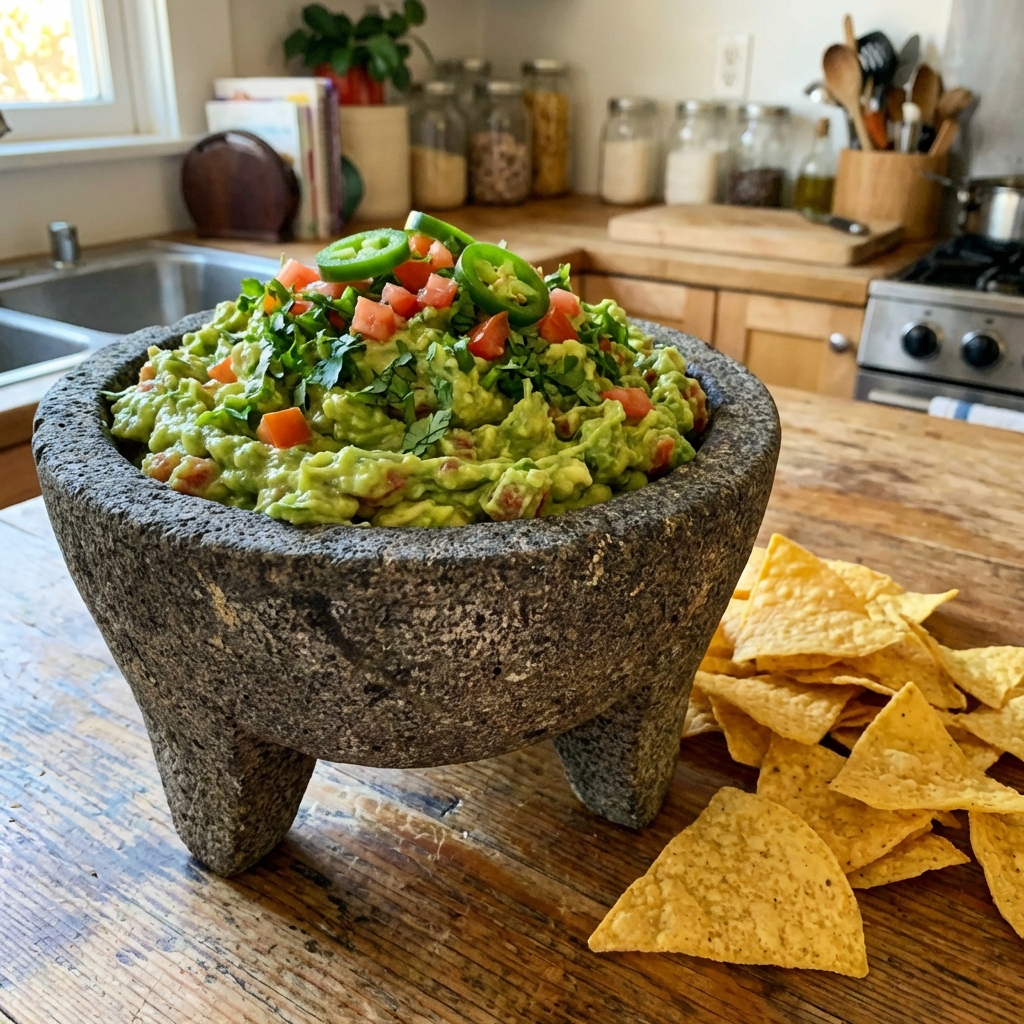
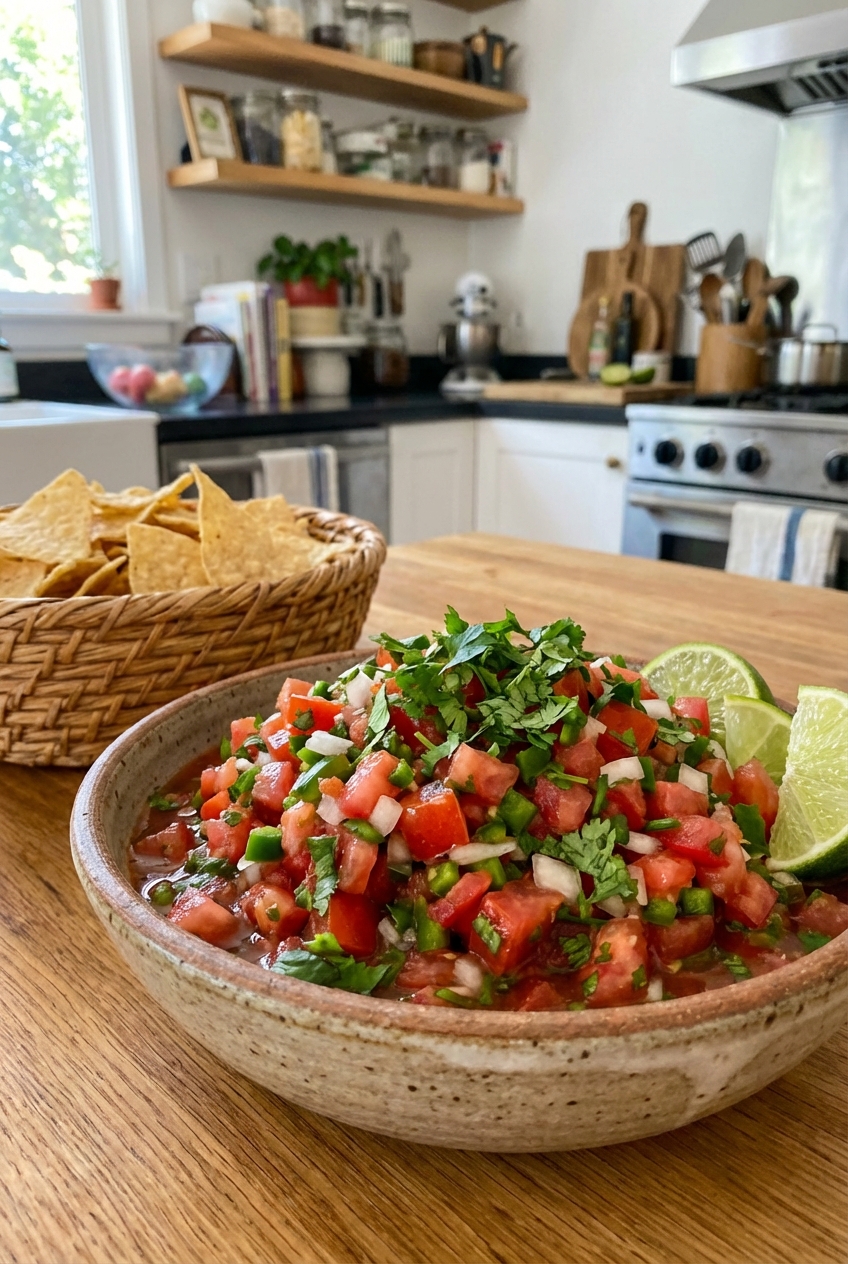
A stone bowl filled with chunky fresh guacamole topped with cilantro, diced tomato, and jalapeño on a wooden table with tortilla chips nearby

Guacamole is one of those foods that should taste like you made it five minutes ago, because you basically did. The best versions are not complicated. They are fresh, a little chunky, boldly limey, and properly salted so the avocado actually tastes like something.

This recipe keeps the ingredients accessible and the steps simple, but still gives you that restaurant-style punch. It is the kind of guac that makes people hover around the bowl “just to taste” and then suddenly the chips are gone. Taste as you go. Adjust with confidence.
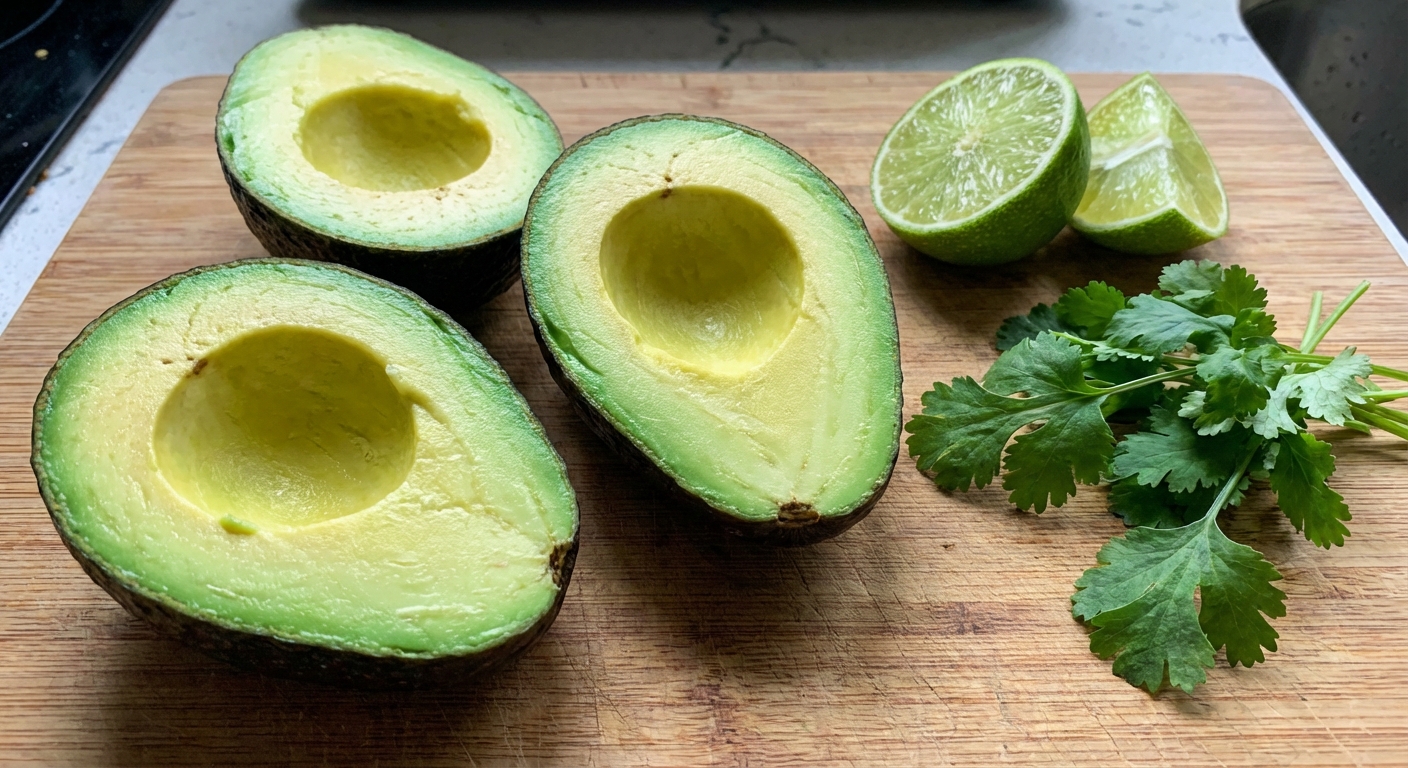
A close-up of ripe Hass avocados cut in half with pits removed on a cutting board with a lime and cilantro nearby

Why It Works

  • Big flavor with minimal effort: Lime, onion, jalapeño, and cilantro do the heavy lifting so the avocado stays the star.
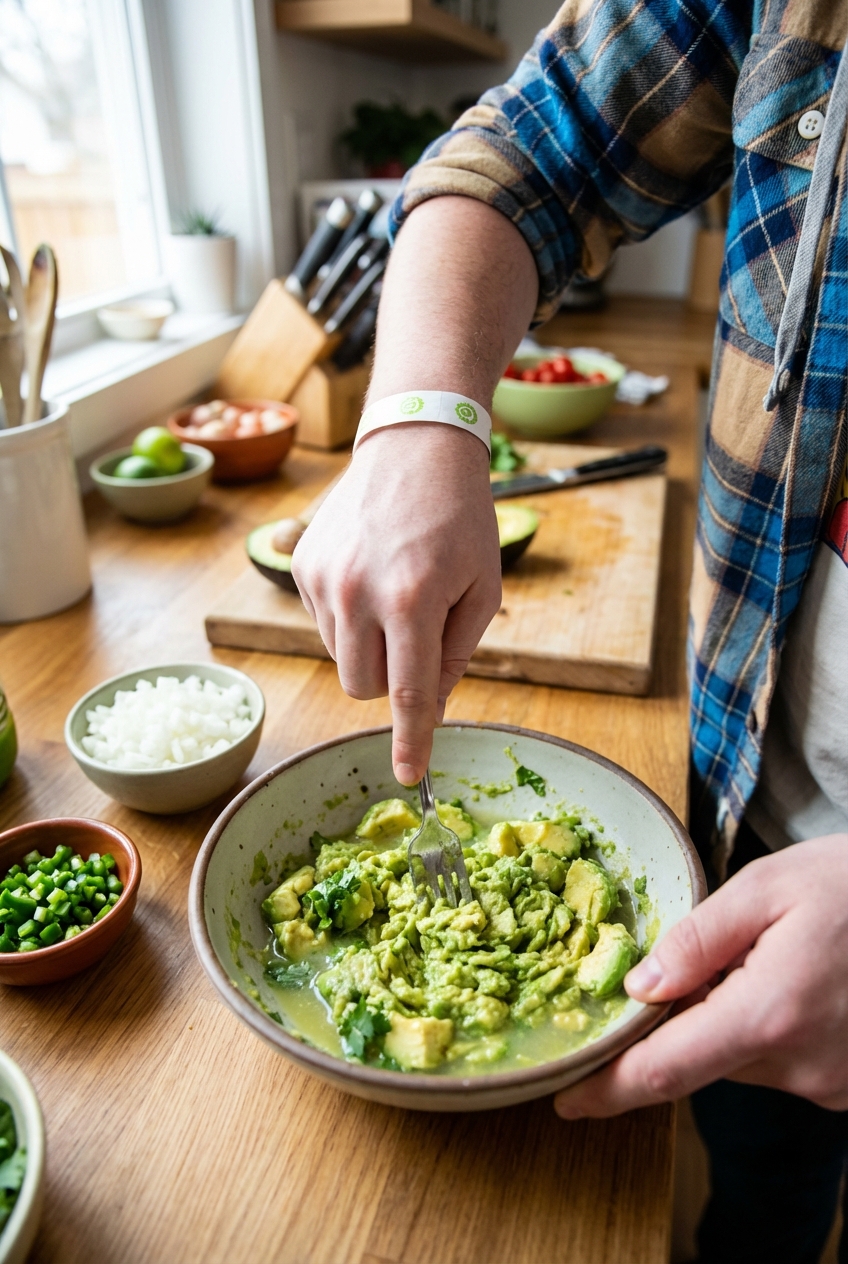
  • The right texture: Mashed with a fork for creamy plus chunky, not baby food smooth.
  • Balanced heat: Jalapeño brings a clean kick without overpowering.
  • Not bland: Proper salting and a short rest let everything meld fast.

Pro tip: Guac needs more salt than you think, but salt brands vary. Add a pinch, taste, repeat until it tastes “finished.”

Pairs Well With

Storage Tips

Guacamole is best right away, but leftovers can still be great if you store them like it matters.

Most reliable method (helps it stay greener)

  • Press guac into a small container so the top is flat.
  • Lay plastic wrap directly on the surface (no air bubbles).
  • Seal with the lid and refrigerate.

How long does it last?

  • Up to 1 day: best flavor and color.
  • Up to 2 days: usually still tasty, some browning and extra liquid is normal.

Quality and safety note: If it smells off, tastes fermented, or has heavy browning throughout, toss it.

About the water-on-top trick

You can add a thin layer of cool water on top, then pour it off and stir before serving. It can reduce browning, but the plastic-wrap-on-the-surface method is usually simpler and less messy.

Make ahead

If you are making guac a few hours ahead, mix everything except tomato and cilantro, then store with plastic wrap pressed to the surface. Stir in tomato and cilantro right before serving for the freshest texture.

Revive leftovers: Stir in a squeeze of lime and a pinch of salt. If it tastes flat, add a tablespoon of finely diced onion or tomato to brighten it up.

Common Questions

How do I pick avocados for guacamole?

Look for avocados that give slightly when you press near the stem end, like a gentle handshake. If they are rock hard, they need time. If they feel mushy or leave dents, they are likely overripe inside.

My guac tastes bland. What should I fix first?

Salt, then lime. Most “meh” guacamole is simply under-salted. Add a pinch, mix, taste. Repeat until it tastes bright and savory. Then adjust lime for zing.

Should I use garlic?

You can, but go easy. One small clove, finely grated, is plenty for this amount. Too much garlic overpowers the avocado.

Can I make it without cilantro?

Absolutely. Swap in sliced green onions or a small handful of chopped parsley for freshness.

How do I keep guacamole from turning brown?

Air is the enemy. Use enough lime, and for storage press plastic wrap directly on the surface so there is no air trapped. The “leave the pit in” trick helps only if it reduces exposed surface area, so it is not a magic fix on its own.

How do I make it spicier?

Use serrano instead of jalapeño, keep more of the seeds and ribs, or add a pinch of cayenne. Taste as you go. Heat builds fast.

Why is restaurant guacamole so smooth?

Some restaurants use a molcajete (stone mortar) or simply mash more aggressively. For smooth guac at home, mash the avocado first until creamy, then fold in the chunky mix-ins.

I used to treat guacamole like a vibe. Toss some avocado in a bowl, splash lime, call it a day. And honestly, that works sometimes. But the first time I watched someone make it with intention, like actually tasting and dialing in the salt and heat, it clicked. Guac is simple, but it is not automatic.

Now I make it the same way every time: a quick mash, a short rest, and a final taste right before it hits the table. It is relaxed cooking, but with one rule: if it does not make you pause mid-bite and go “Okay, wow,” it needs another pinch of salt.