Mom's Best Recipes
Recipe

Best Homestyle Hamburger

Juicy skillet burgers with crisp edges and a creamy pan sauce that tastes like comfort food grew up and learned how to season.

Author By Matt Campbell
4.8
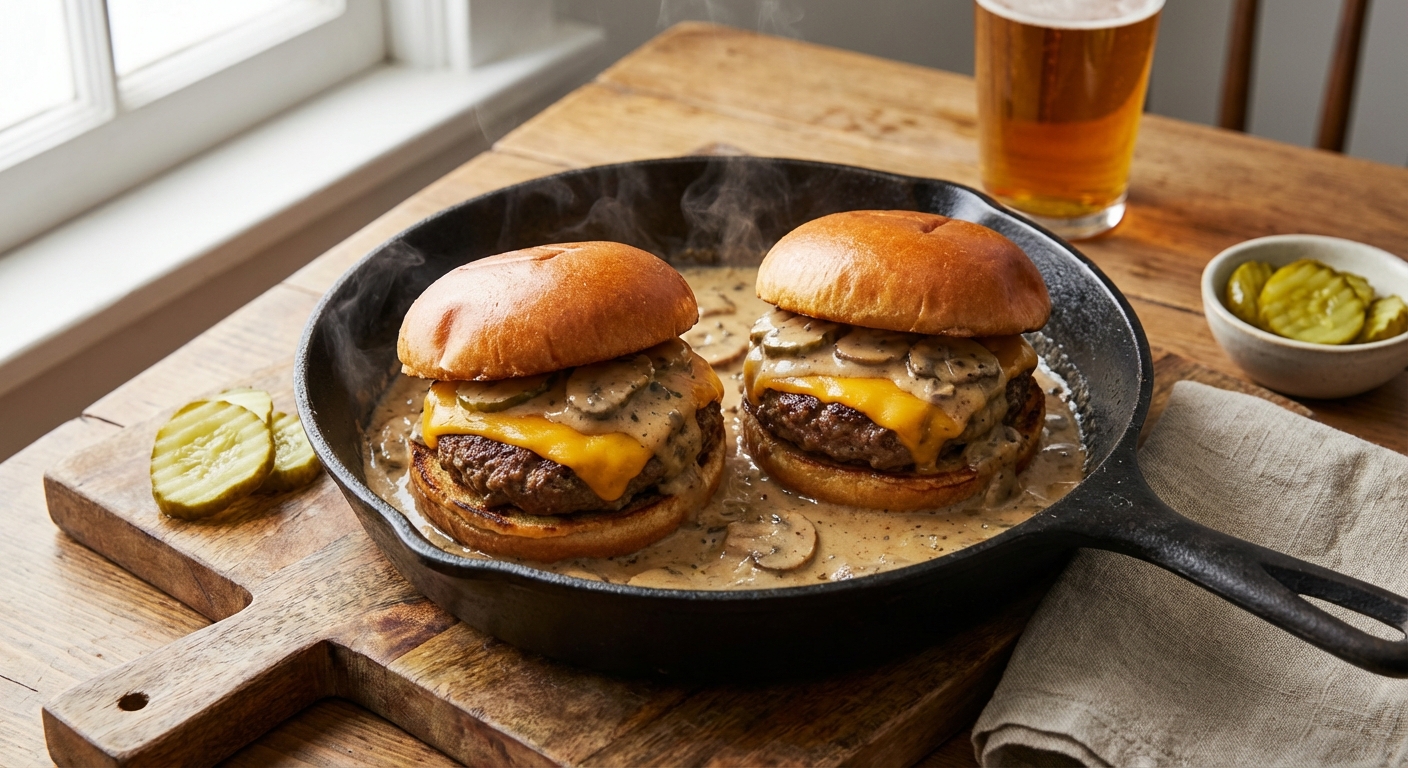
A real photograph of two juicy skillet-cooked hamburgers with melted cheese in a creamy pan sauce, served on toasted buns with pickles on a wooden board

Some nights you want a burger that behaves. No grill drama, no stacks taller than your jaw, no mystery dry puck in the middle. Just a juicy, homestyle skillet hamburger with crisp edges, a tender center, and a creamy, oniony pan sauce that makes you want to drag a fry through the skillet like it is your job.

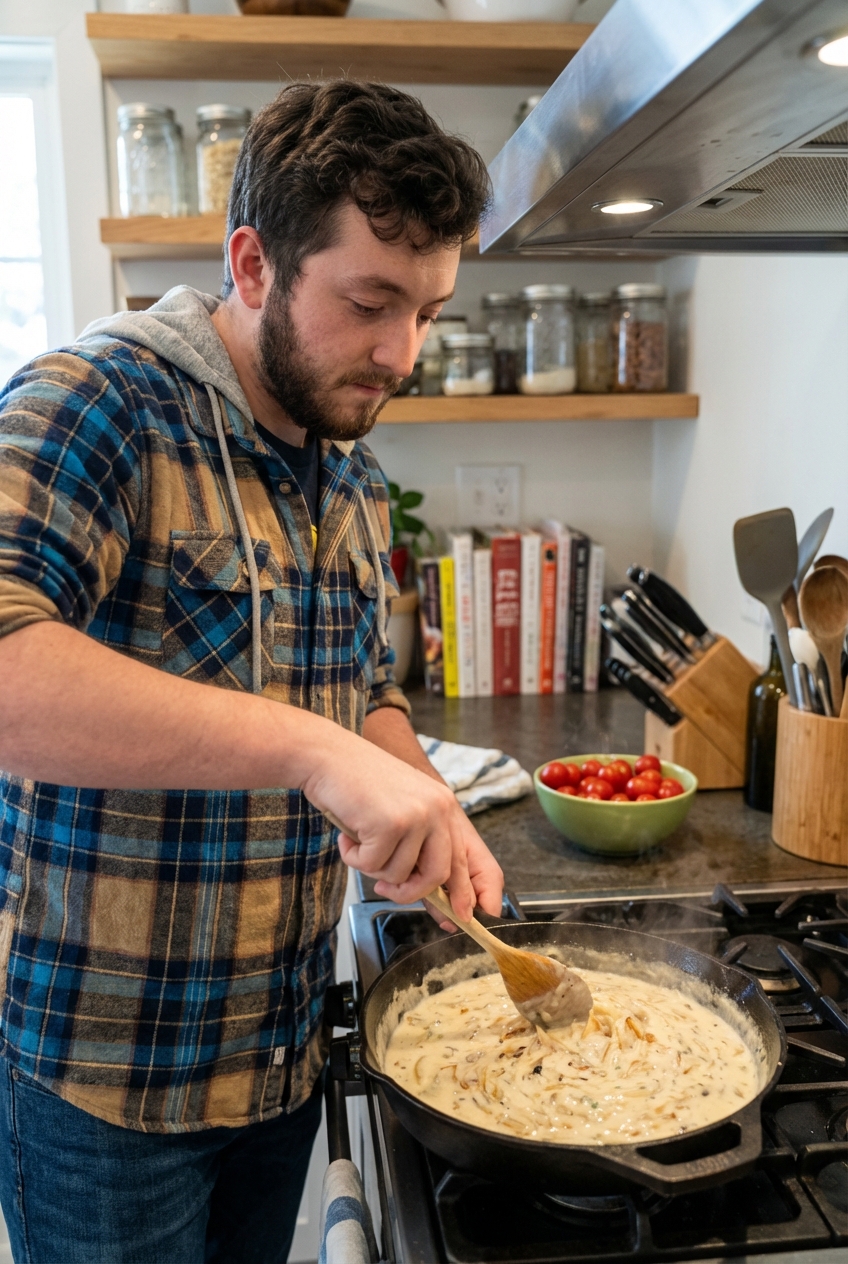
This is my weeknight answer to “I want comfort food, but I also want it to taste like I tried.” We are pan-searing burgers for that browned crust, then building a quick creamy sauce right in the same skillet. Accessible ingredients, clear steps, and plenty of tasting as you go because that is how you land the flavor.
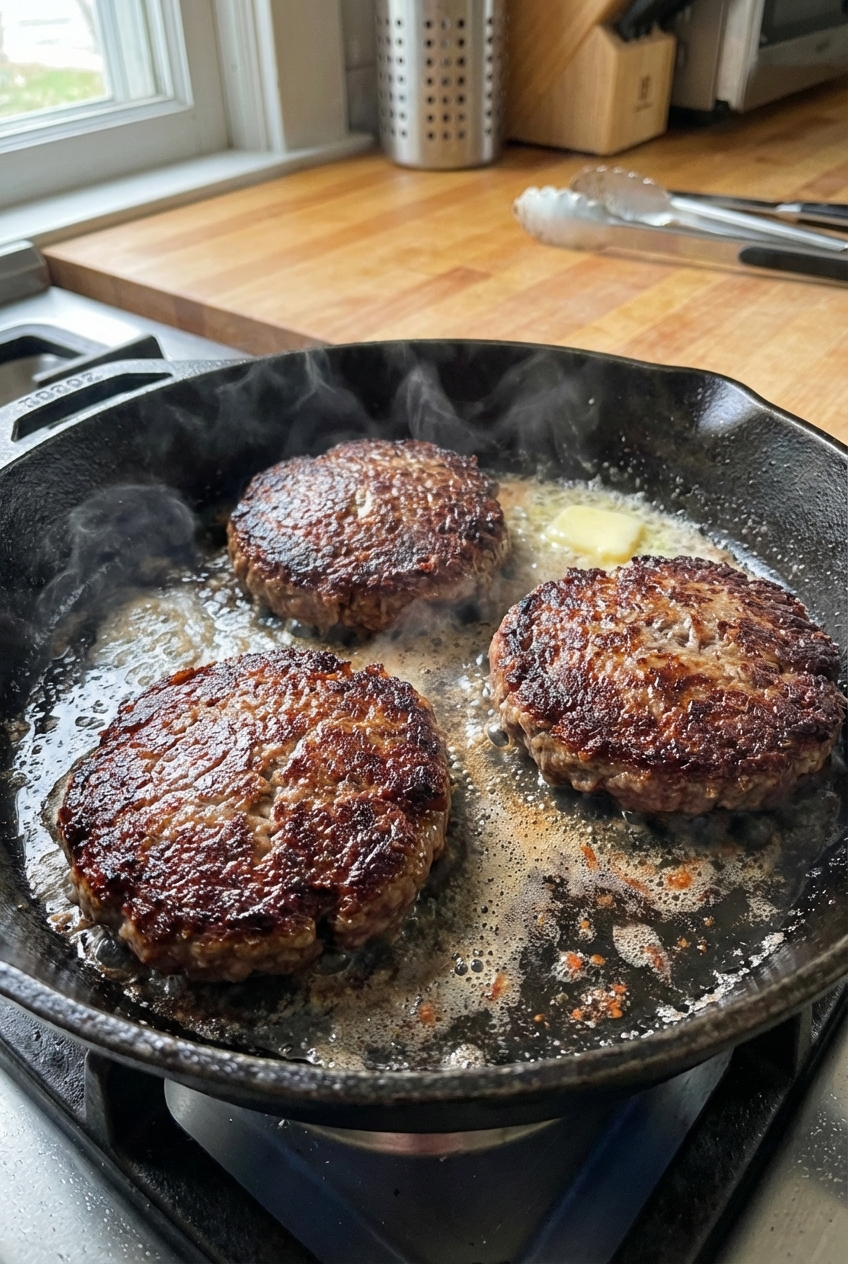
A real photograph of burger patties searing in a cast iron skillet with browned edges and sizzling butter

Why It Works

  • Crisp, browned edges: A hot skillet and good contact give you that diner-style crust without drying out the inside.
  • Juicy texture: 80/20 beef plus gentle handling keeps the burgers tender, not tight.
  • Creamy, savory sauce: The pan drippings turn into a simple sauce with onions, a little broth, and a splash of cream.
  • Flexible build: Turn it into a classic burger, a smothered burger, or even a “burger steak” situation over mashed potatoes.

Pairs Well With

Storage Tips

How to Store Leftovers

  • Fridge: Store patties and sauce in an airtight container for up to 3 days. If possible, keep buns separate so they do not get soggy.
  • Reheat: Warm gently in a skillet over medium-low with a splash of water or broth to loosen the sauce. Microwave works, but go in short bursts so the beef stays tender.
  • Freeze: Freeze cooked patties (with or without sauce) for up to 2 months. Thaw overnight in the fridge before reheating.
  • Leftover magic: Chop a patty and fold it into the warmed sauce, then spoon over toast, rice, egg noodles, or mashed potatoes.

Common Questions

Common Questions

What beef is best for juicy hamburgers?

Go for 80/20 ground beef. The fat is what keeps the burger juicy and helps form those crisp, browned edges in the skillet.

How do I keep burgers from shrinking or puffing up?

Make patties slightly wider than the buns and press a shallow thumbprint in the center. Also, do not overwork the meat. Mix just until combined.

Can I make the sauce without cream?

Yes. Use half-and-half for a lighter sauce, or stir in Greek yogurt or sour cream off heat so it does not curdle. You can also use extra broth and a little butter for a non-creamy but still rich pan gravy.

What cheese works best here?

American melts the smoothest, cheddar brings sharper flavor, and provolone gives a mellow, stretchy finish. Use what you love.

How do I know the burgers are done?

Best tool is an instant-read thermometer. For ground beef, 160°F is the widely recommended target for safety. Cooking ground beef below that can carry risk, so choose your comfort level and cook accordingly. Either way, let the burgers rest a couple minutes before serving.

I did not go the traditional culinary-school route. I wanted reps, real-time problem solving, and the kind of practical cooking instincts you only get by doing. This burger is one of those “learn it once, use it forever” recipes. I started making it on busy nights when I wanted something familiar, but still wanted a little edge, like a better crust, a brighter hit of mustard in the sauce, and onions cooked just long enough to go sweet. It is the kind of meal that makes a kitchen feel like a kitchen again, even if you are tired and the sink is not empty.