Mom's Best Recipes
Recipe

Juicy Meatballs Recipe

Tender, browned meatballs with crisp edges and a soft, juicy center. One simple mix, one pan, and a few small tricks that make them restaurant-good.

Author By Matt Campbell
4.9
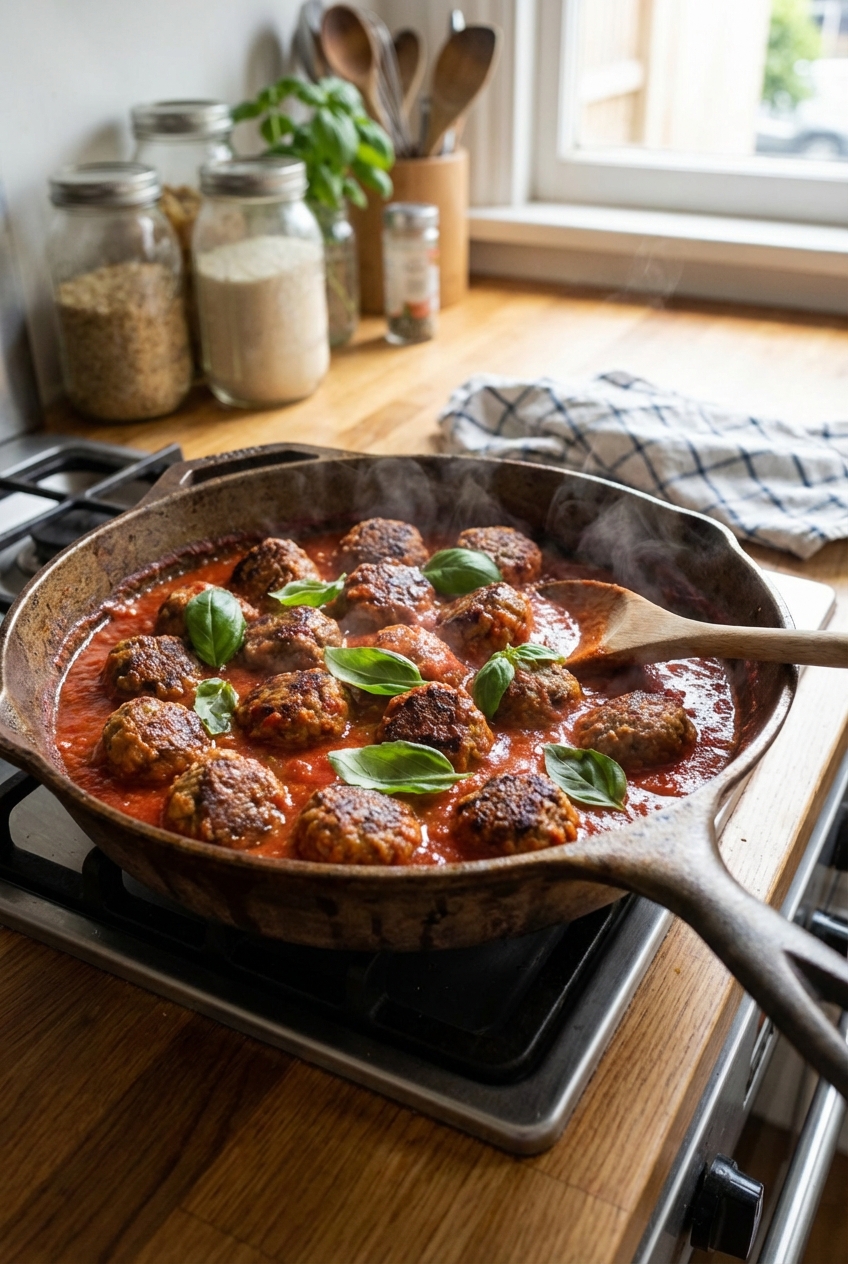
A cast iron skillet filled with browned, juicy meatballs simmering in tomato sauce with fresh basil on top

There are two kinds of meatballs: the ones that look good, and the ones that make you go quiet for a second because they are so ridiculously juicy. This recipe is for the second kind.

We are building a mix that stays tender (hello, panade), seasoning it like we mean it, then browning hard for those crisp edges before finishing in sauce. The result is cozy, weeknight-friendly, and still feels like you did something a little special.

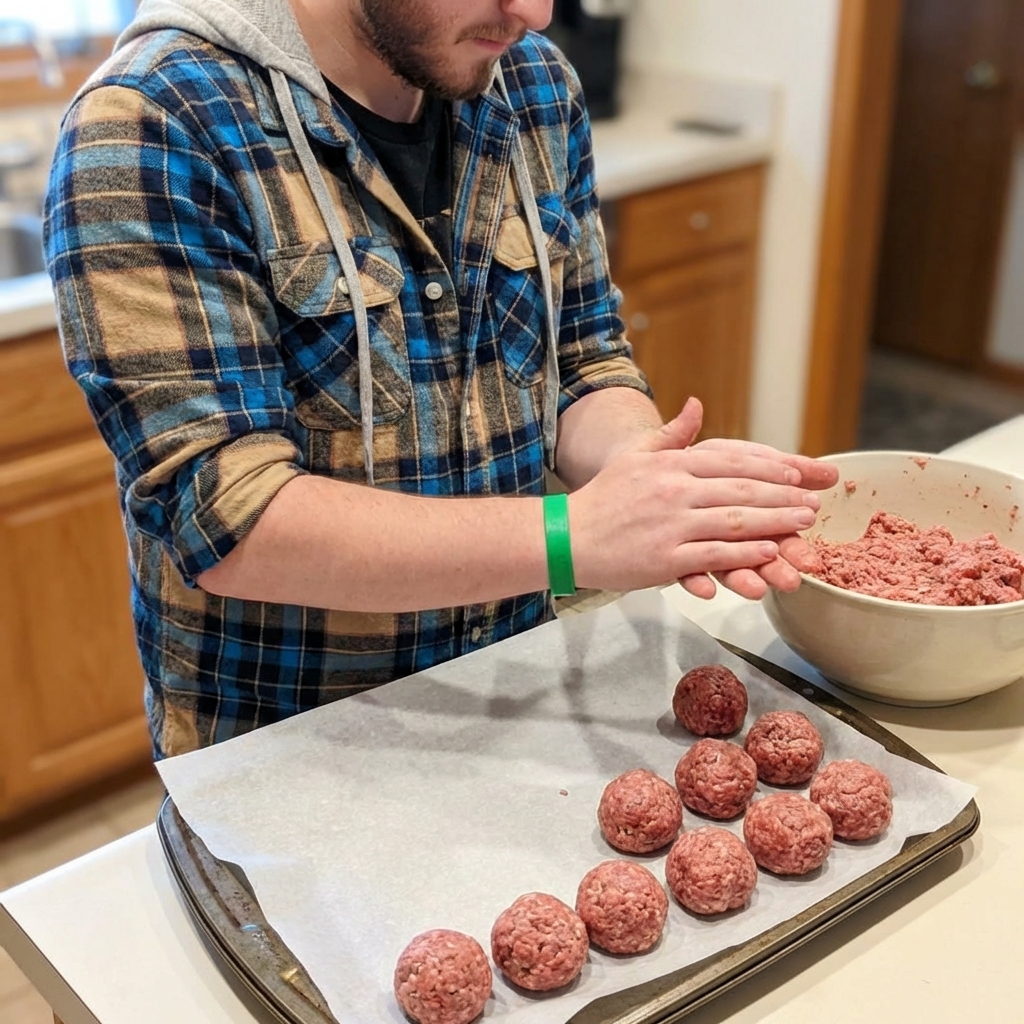
Hands gently shaping raw meatball mixture into uniform balls on a parchment-lined sheet pan

Why It Works

  • Juicy texture without guesswork: A quick panade (bread plus milk) holds moisture so the meatballs stay tender instead of tight and dry.
  • Big flavor in every bite: Parmesan, garlic, parsley, and a touch of Worcestershire bring that savory, can-not-stop energy.
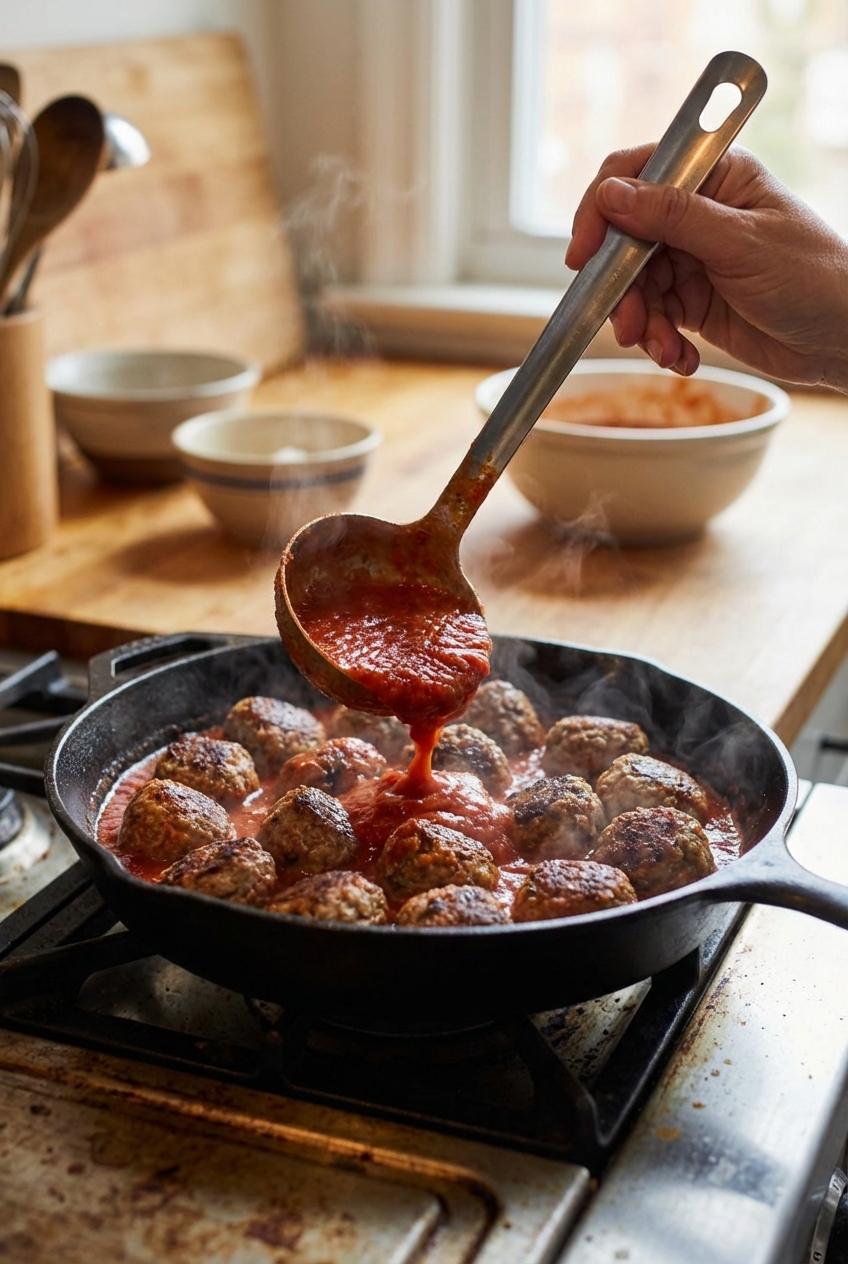
  • Crisp edges, soft center: A hot skillet gives you real browning, then the sauce finish keeps everything succulent.
  • Flexible: Works with spaghetti, subs, rice bowls, or meal prep boxes. You can also bake them if you want less stovetop babysitting.

Pairs Well With

Storage Tips

Fridge: Cool meatballs quickly, then store in an airtight container with sauce for up to 4 days. Keeping them in sauce helps them stay moist.

Freezer: Freeze meatballs (with or without sauce) for up to 3 months. For best results, freeze on a sheet pan until firm, then transfer to a freezer bag so they do not stick together.

Reheat: Warm gently in a covered saucepan with a splash of water or extra sauce over low heat until hot throughout. Microwave works too, but use 50 to 70% power and cover them so they do not dry out.

Meal prep tip: Store meatballs and pasta separately if you can. Pasta drinks sauce, and your leftovers will be better on day three if you keep them apart.

Common Questions

What makes meatballs juicy?

Three things: panade (bread plus milk), gentle mixing, and not overcooking. The panade traps moisture, gentle mixing prevents a dense texture, and finishing in sauce keeps them tender.

Should I use breadcrumbs or fresh bread?

Fresh bread torn into pieces is the move for the juiciest texture. If you only have breadcrumbs, use them, but add a little extra milk and let the mixture sit for a few minutes before shaping.

Can I bake these instead of pan-frying?

Yes. Bake at 425°F for about 15 to 18 minutes for 1 1/2-inch meatballs, checking at 15 minutes, until browned and cooked through (160°F). Then simmer in sauce for 10 minutes. You will lose a little of that skillet crust, but it is still very good.

How do I know meatballs are done?

The most reliable way is a thermometer: 160°F for beef and pork blends. If you are using poultry, cook to 165°F.

Why did my meatballs fall apart?

Common culprits: not enough binder (egg and panade), mixture too wet, or turning too early. Let them sear until they release easily, and use a gentle touch when turning.

Can I make them ahead?

Absolutely. You can shape the meatballs and refrigerate them covered for up to 24 hours, then cook when you are ready.

Can I swap the meats or make them gluten-free?

Yes. You can swap the pork for ground veal, turkey, or more beef. For gluten-free, use your favorite gluten-free soft bread. For dairy-free, use an unsweetened milk alternative in the panade and either skip the Parmesan or use a dairy-free alternative.

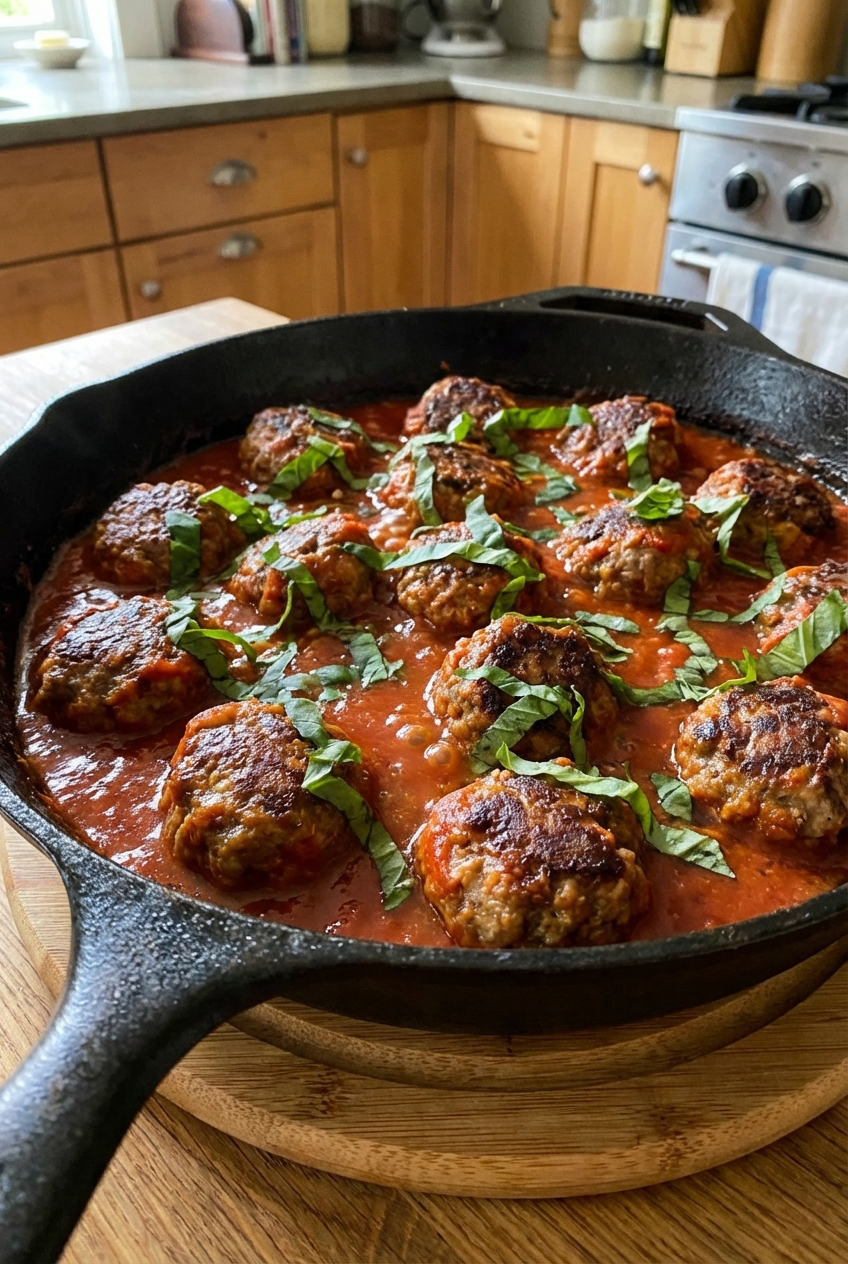
I started making meatballs the way a lot of us do: tossing everything in a bowl, mixing like I was mad at it, then wondering why they came out a little tough. The first time I learned the panade trick, it felt like a cheat code. Suddenly the same simple ingredients tasted like something you would order at a neighborhood Italian spot, the kind with warm lights and a server who calls you “hon.” Now these are my default when I want comfort food that does not require a whole production, but still gets a dramatic “who made these?” at the table.