Mom's Best Recipes
Recipe

Best Lasagna Recipe

Saucy, cozy, and stacked with mozzarella, ricotta, and Parmesan in every bite. This is the no-drama lasagna that slices clean, tastes even better the next day, and makes your kitchen smell like you absolutely have your life together.

Author By Matt Campbell
4.9
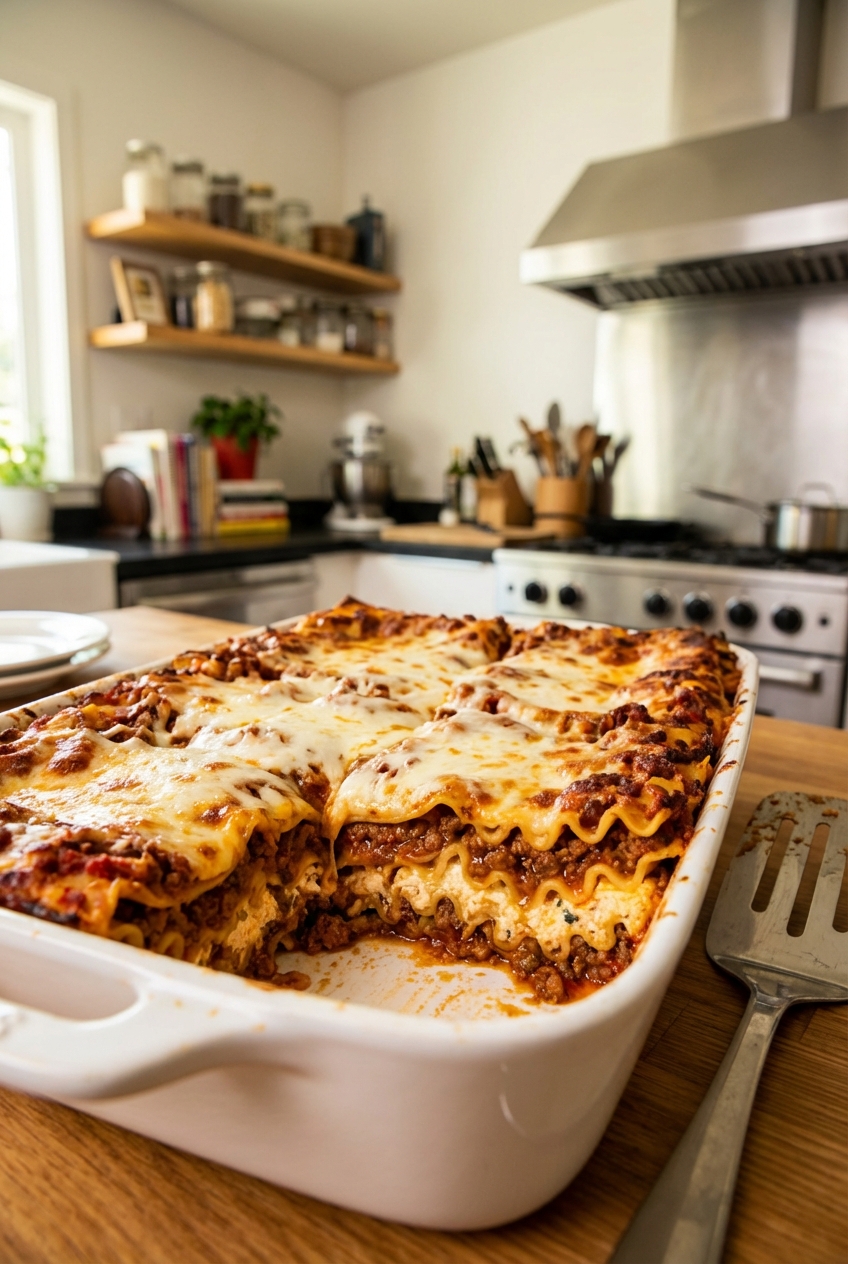
A baked lasagna in a white casserole dish with visible layers of meat sauce, noodles, ricotta, and melted mozzarella, resting on a wooden counter

Lasagna is one of those dishes that feels like a big hug, but it can also feel like a whole weekend project if the recipe is fussy. This one is not. It is classic, deeply flavorful, and built around the best part: real layers of cheese that melt into the sauce, cling to the noodles, and give you that dreamy pull when you lift a slice.

We are going for balanced and bold: a simmered meat sauce with garlic and Italian seasoning, a creamy ricotta layer that stays fluffy (not watery), and a top that bakes into bubbly browned edges. You can make it for Sunday dinner, stash leftovers for weeknights, or bring it to a potluck and watch it disappear like magic.
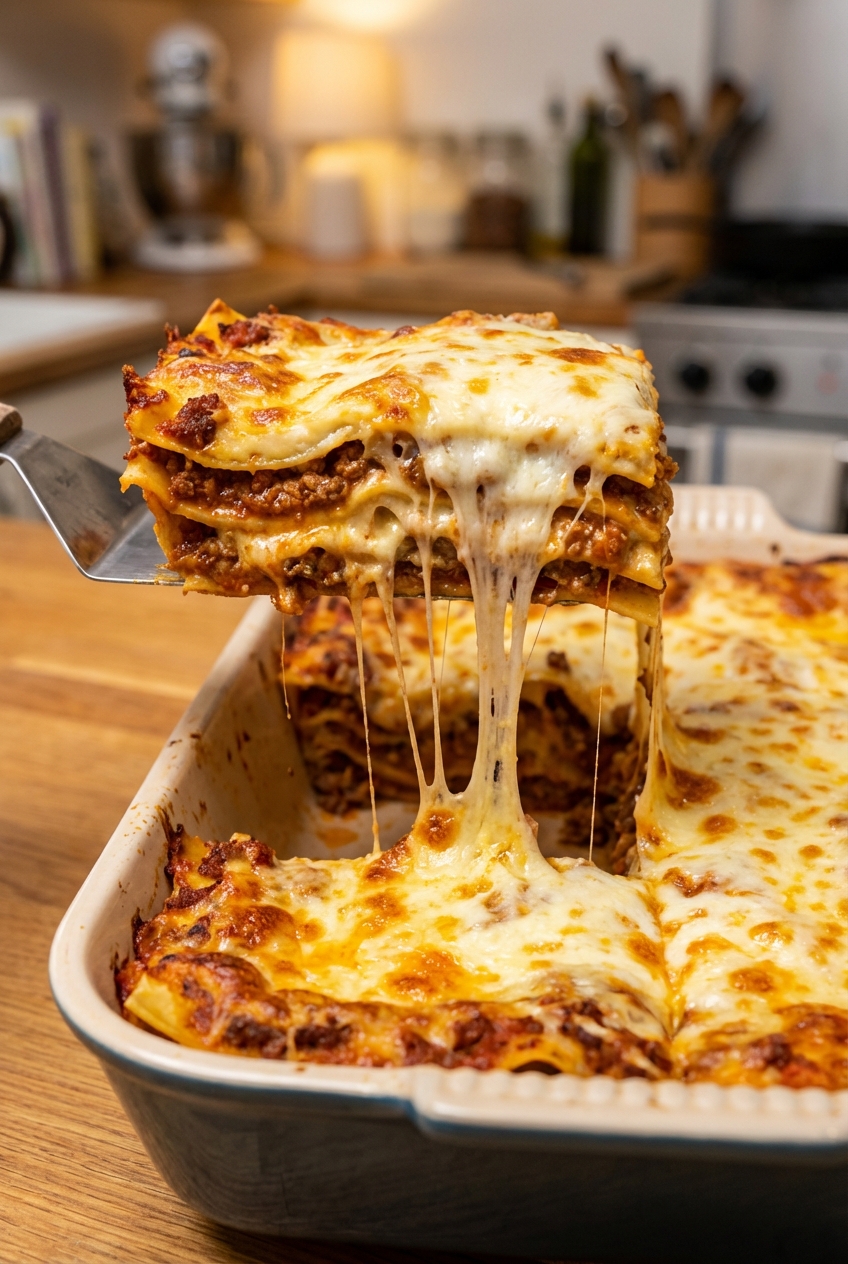
A single slice of lasagna lifted from the pan with stretchy melted mozzarella and distinct cheese layers

Why It Works

  • Cheese layers that actually taste like something: ricotta gets seasoned, Parmesan brings salty depth, and mozzarella delivers the melt.
  • A sauce that carries the whole pan: tomato paste plus a simmer gives you that slow-cooked vibe without babysitting all day.
  • No watery lasagna problems: we drain the ricotta if needed, cool the sauce slightly, and rest the bake before slicing.
  • Clean slices, crisp edges: covered bake to melt everything, then uncovered to brown the top like it means it.

Pairs Well With

Storage Tips

How to Store Leftovers

  • Refrigerator: Cool completely, then cover the pan tightly or transfer slices to airtight containers. Keeps well for 4 to 5 days.
  • Freezer: Freeze individual slices wrapped in foil, then placed in a freezer bag. Or freeze the whole pan (well wrapped). Best within 2 to 3 months.
  • Reheat (best texture): Oven at 350°F covered with foil until hot, about 20 to 30 minutes for a slice. For faster, microwave in 60 to 90 second bursts, then finish uncovered for a few seconds to keep the cheese from getting rubbery.
  • Pro tip: Lasagna gets better overnight. The layers set, the sauce soaks in, and you get that perfect fork-friendly bite.

Common Questions

FAQ

Do I have to boil the noodles?

If you use no-boil lasagna noodles, you can skip boiling. Just make sure your sauce is a little looser (this recipe is) so the noodles have enough moisture to soften.

If you use regular noodles, cook them just to al dente, drain very well, and consider simmering the sauce an extra 5 to 10 minutes so it is a bit thicker since the noodles will not soak up as much liquid as no-boil noodles.

How do I keep lasagna from getting watery?

Three big fixes: use whole-milk ricotta (and drain if it looks wet), simmer your sauce until thick, and rest the lasagna 15 to 20 minutes before slicing so the layers can set.

Can I make it ahead?

Yes. Assemble up to 24 hours ahead, cover, and refrigerate. Bake covered straight from the fridge, adding 10 to 15 minutes to the bake time.

What is the best cheese combo for lasagna?

Ricotta for creaminess, mozzarella for melt, and Parmesan for salty depth. If you want to level up, swap some mozzarella for low-moisture provolone or add a little fontina for extra richness.

Can I make it vegetarian?

Absolutely. Skip the meat and add sautéed mushrooms, zucchini, or spinach. Just cook off moisture first so the lasagna stays sturdy.

I learned pretty quickly that lasagna is less about perfection and more about rhythm: sauce, noodles, cheese, repeat, then let the oven do the heavy lifting. The first time I made a “serious” lasagna, I overfilled it with watery ricotta and tried slicing it five minutes after it came out. It looked like a delicious landslide.

Now I do what I should have done then: season the ricotta like it matters, simmer the sauce until it coats a spoon, and give the pan a little quiet time before cutting in. It is still relaxed, still forgiving, and somehow always tastes like you cooked with way more effort than you actually did.