Mom's Best Recipes
Recipe

Best Mac and Cheese Recipe

Ultra creamy, boldly cheesy mac and cheese with a silky sauce that clings to every noodle and bakes into golden, crisp edges.

Author By Matt Campbell
4.9
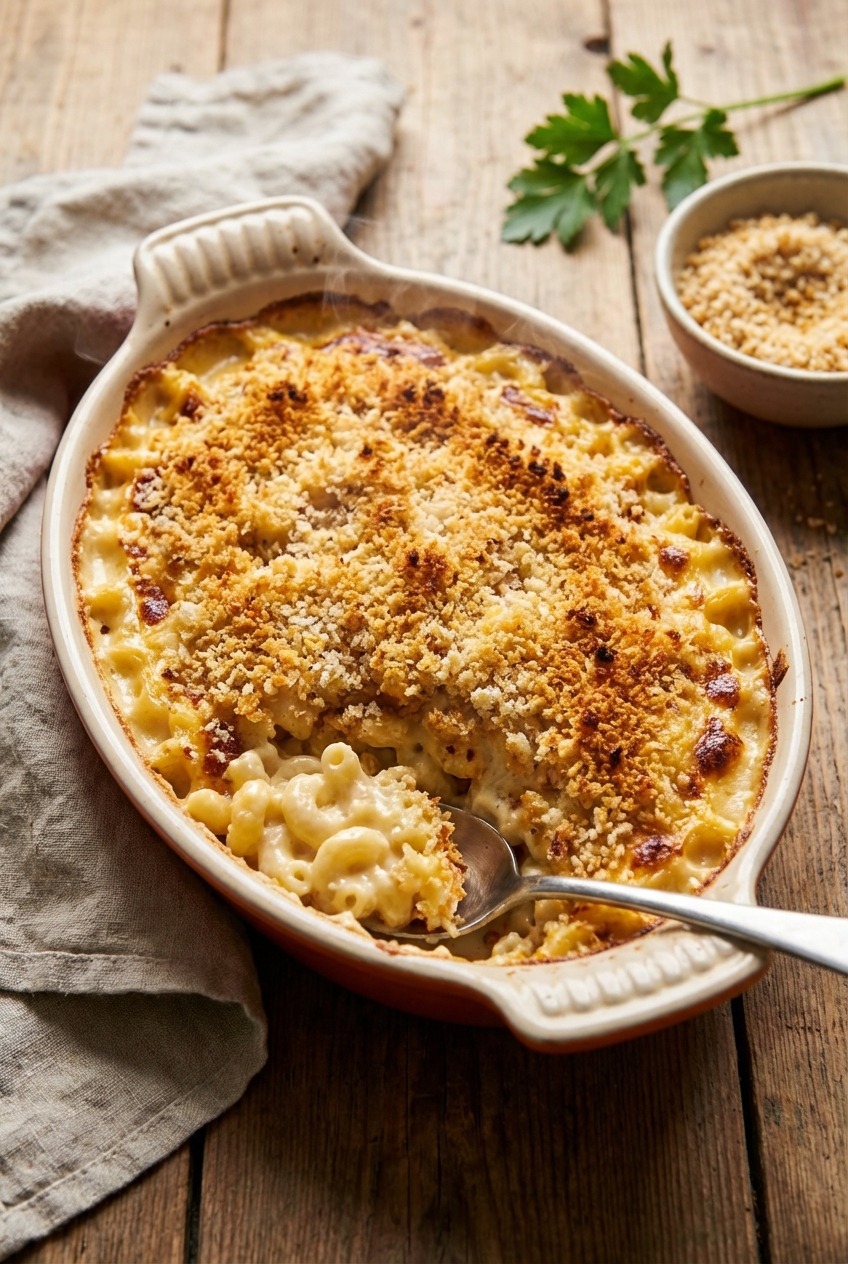
A bubbling baking dish of creamy baked mac and cheese with a golden toasted breadcrumb top on a wooden table

Mac and cheese should feel like a cozy hoodie and taste like you did something impressive, even if you made it on a Tuesday. This is my go-to creamy and cheesy baked mac, built on a smooth stovetop cheese sauce that actually stays silky, then finished in the oven for those crisp, bronzed edges that everyone fights over.

No weird ingredients, no powdered mysteries, no sauce that turns grainy the moment you look away. Just a handful of easy cheeses, a simple roux, and a couple small tricks that make it taste like the best version of itself.

Cheese tip: Grate it yourself if you can, and let it sit out for 10 to 15 minutes while you prep so it melts more smoothly.
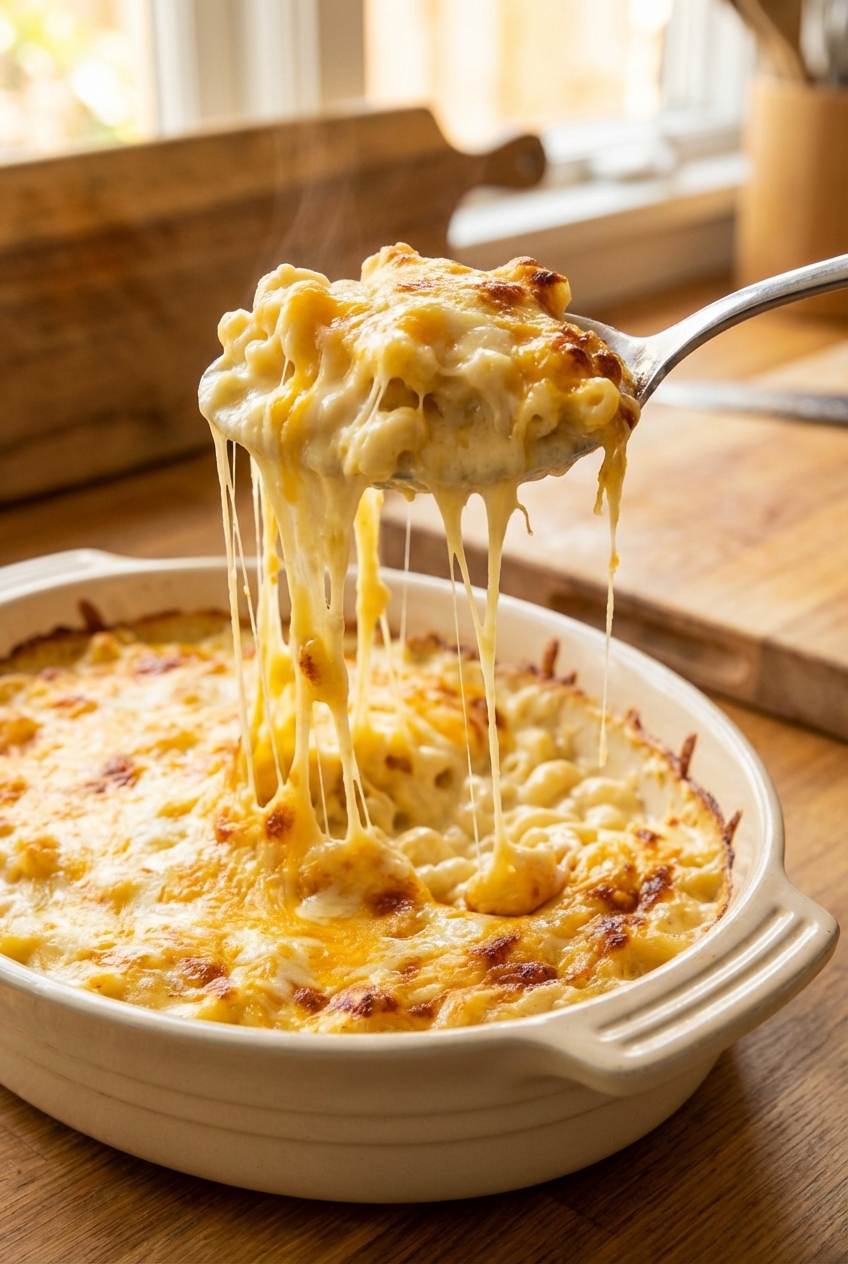
A close-up of a spoon lifting stretchy, creamy mac and cheese from a casserole dish

Why It Works

  • Smooth, stable cheese sauce: We build a quick roux, then melt the cheese off the heat so it stays glossy, not gritty.
  • Big flavor without drama: Dijon, garlic powder, and a little smoked paprika make it taste extra-savory with pantry staples.
  • Perfect texture contrast: Creamy noodles underneath, toasted buttery topping on top, and crispy corners all around.
  • Reliable bake: Just long enough to set and brown, not so long that it dries out.

Pairs Well With

Storage Tips

Refrigerate: Cool completely, then store in an airtight container for up to 4 days.

Freeze: For best texture, freeze in individual portions. Wrap tightly and freeze up to 2 months. Thaw overnight in the fridge before reheating.

Reheat (best method): Add a splash of milk, cover, and warm in a 350°F oven until hot, about 15 to 25 minutes depending on portion size.

Reheat (quick method): Microwave in 45-second bursts, stirring between, with a splash of milk to bring the sauce back to life.

Pro tip: If the sauce looks tight, it is not ruined. It just needs a little liquid and gentle heat.

Common Questions

Why did my cheese sauce turn grainy?

Usually it is one of two things: the heat was too high, or the cheese was melted while the sauce was boiling. Keep the sauce hot but not bubbling, and melt the cheese off the heat in handfuls.

What cheeses are best for mac and cheese?

A mix is the move. You want sharp cheddar for flavor, Gouda (or Monterey Jack) for melt, and a little Parmesan for savory depth. If you can, skip using only pre-shredded cheese, since anti-caking agents can sometimes make the sauce less smooth.

Do I rinse the pasta?

No. Rinsing washes off the starch that helps the sauce cling. Drain it and go straight into the cheese sauce.

Can I make it without baking?

Yes. Stop after the sauce and noodles are combined, then serve right away as stovetop mac. If you still want crunch, toast the breadcrumbs in a skillet with butter and sprinkle on top.

How do I keep baked mac and cheese from drying out?

Do not overbake. You are just heating through and browning the top. Also, slightly undercook the pasta so it finishes in the oven without getting mushy.

Can I make it ahead?

Yes. Assemble, cover, and refrigerate up to 24 hours. Bake covered at 350°F for 20 minutes, then uncover and bake 10 to 15 minutes more until hot and browned. Add a splash of milk around the edges if it looks tight.

I started making mac and cheese the way a lot of us do: toss pasta in something creamy, hope it works out, and pretend the grainy bits are “texture.” Then I got stubborn. I wanted that glossy, spoon-coating sauce that clings to the noodles like it has a job. After a lot of test runs and a few overly browned casseroles, I landed here. It is dependable, bold, and just chaotic enough in the best way, because the last step is tasting and deciding if it needs one more pinch of salt. It usually does.