Mom's Best Recipes
Recipe

Better-Than-Takeout Fried Rice

Crispy-edged rice, glossy sauce, and a fridge-cleanout attitude. This is the fast, flexible fried rice that beats delivery on flavor and texture.

Author By Matt Campbell
4.9
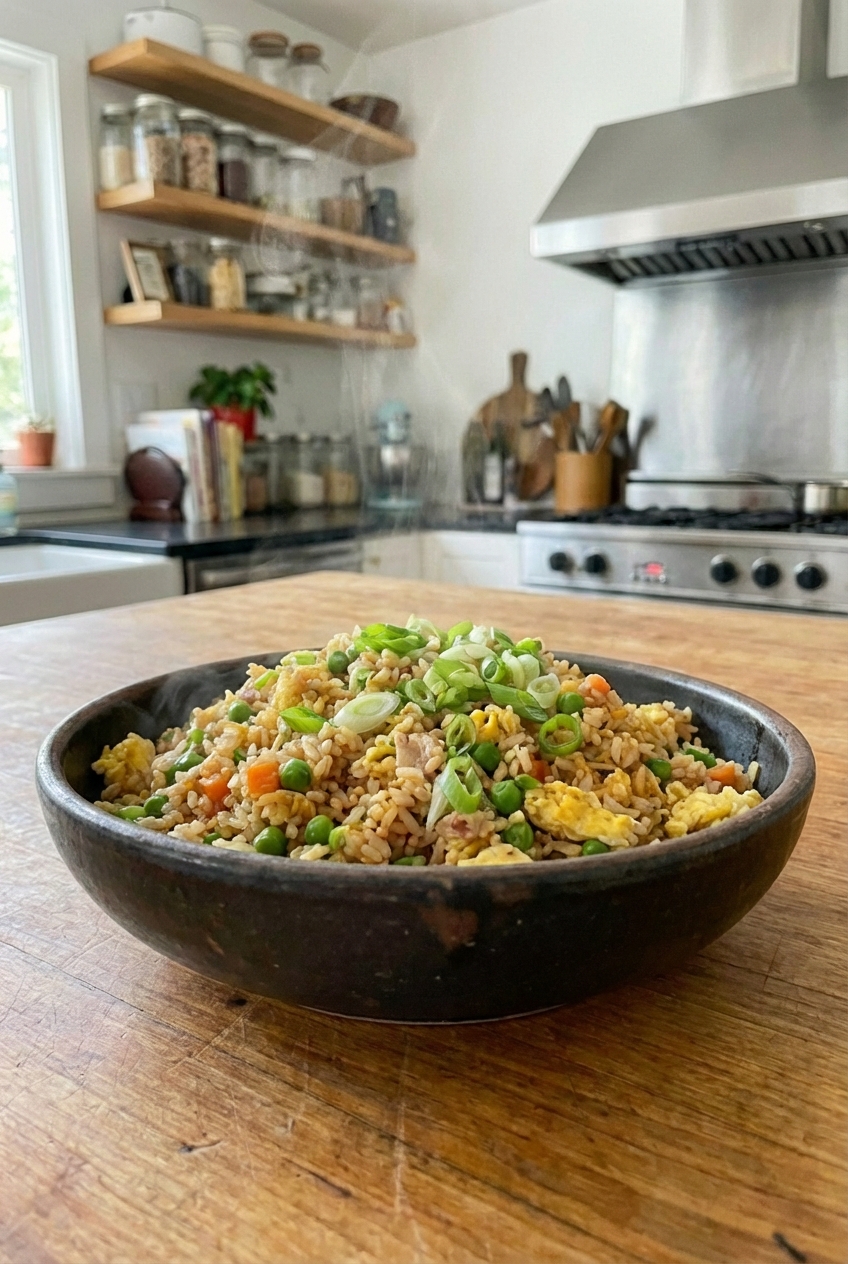
A steaming bowl of homemade fried rice with peas, scrambled egg, and scallions in a dark bowl on a wooden table

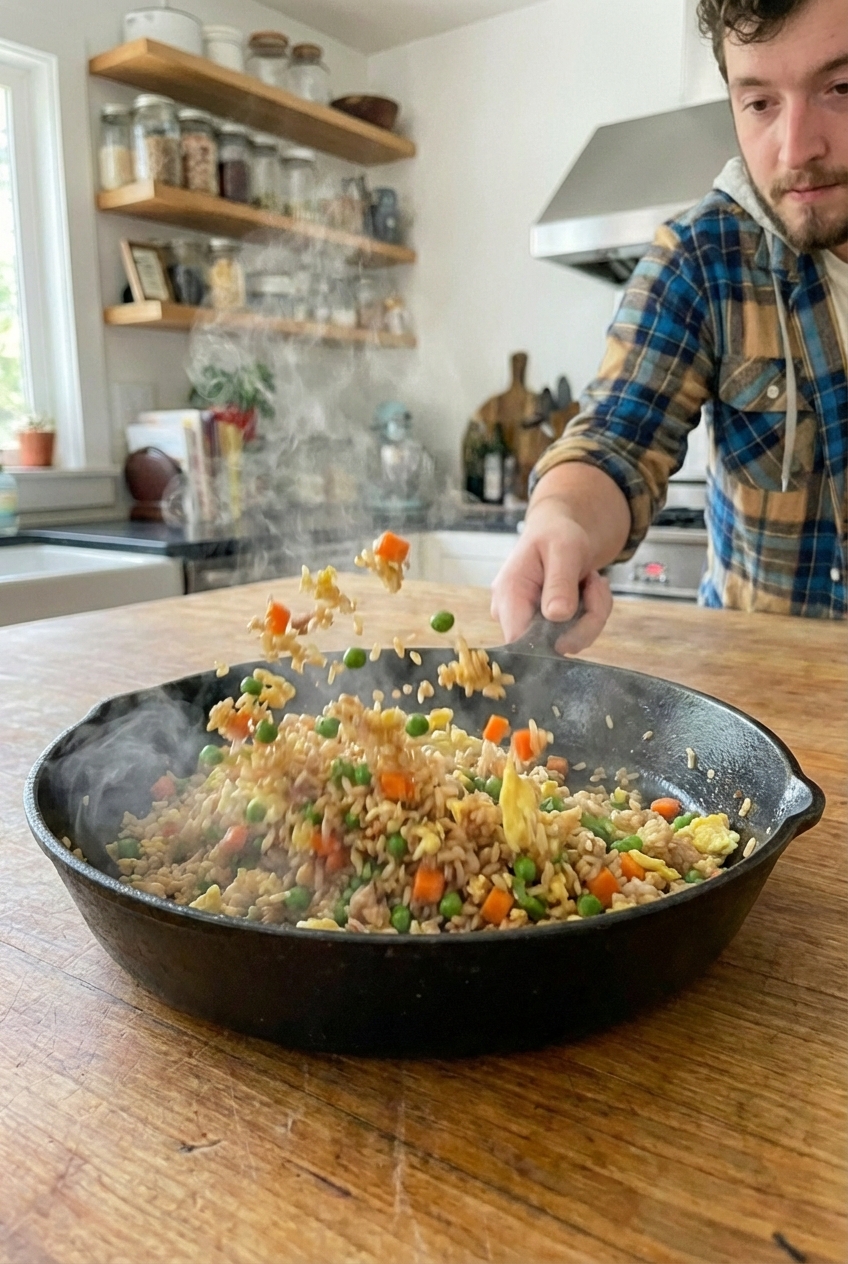
If takeout fried rice is your comfort-food autopilot, I get it. But the secret is, the version you want is absolutely doable at home, and it is usually faster than waiting for delivery. The goal is not fancy. The goal is hot pan, cold rice, and a sauce that hits that salty-savory sweet spot without turning everything soggy.

This better-than-takeout fried rice is built for real life: leftover rice, a bag of frozen veggies, whatever protein is hanging around, and a few pantry staples that make it taste like you meant to do this all along. Expect crisp edges, fluffy grains, and those little bursts of sesame and scallion that make you go back in for “one more bite” and accidentally clean the pan.
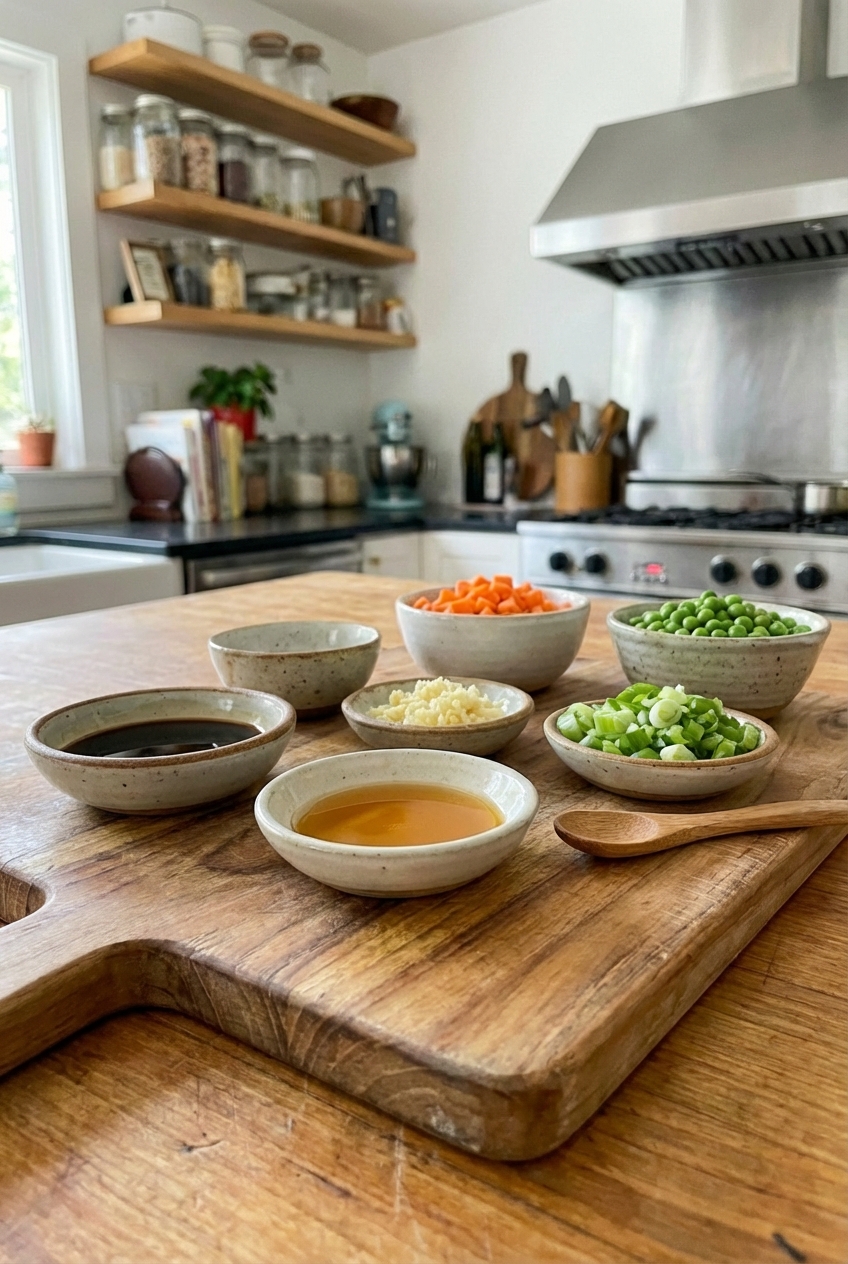
A wooden cutting board with bowls of soy sauce, sesame oil, garlic, diced carrots, peas, and chopped scallions prepped for fried rice

Why It Works

  • Cold rice + hot pan means separate grains and crisp bits, not a steamed rice puddle.
  • Sauce goes in around the edges so it sizzles and reduces fast instead of soaking everything.
  • Egg cooked first keeps it tender and clearly eggy, not disappearing into the rice.
  • Frozen veggies are typically prepped to cook fast. They are a weeknight cheat code and keep this whole thing moving.
  • Sesame oil at the end keeps it fragrant. Cook it too long and it gets muted.

Pairs Well With

Storage Tips

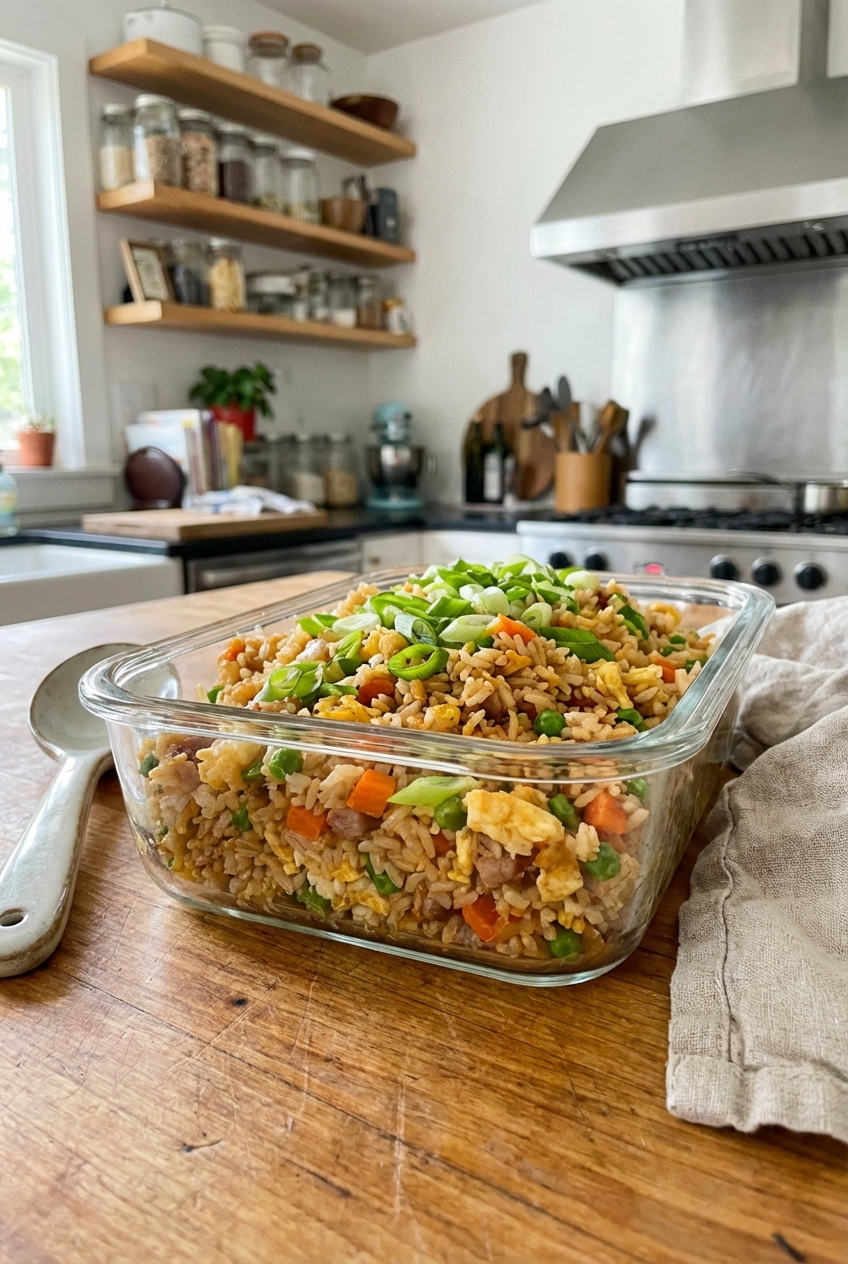
Refrigerate: Cool leftovers quickly and refrigerate within 1 to 2 hours, then store in an airtight container for up to 4 days.

Reheat (best texture): Use a skillet over medium-high heat with a small splash of oil. Spread the rice out and let it sit for 60 to 90 seconds before stirring so it can re-crisp.

Microwave (still good): Add a teaspoon of water, cover loosely, and heat in 45-second bursts, stirring between.

Freeze: Freeze in flat portions for up to 2 months. Thaw overnight in the fridge or reheat from frozen in a covered skillet with a tablespoon of water, then uncover and crisp.

A glass meal prep container filled with fried rice and topped with sliced scallions, sitting on a kitchen counter

Common Questions

What kind of rice is best for fried rice?

Day-old jasmine rice is my favorite for that classic takeout vibe, but any long-grain rice works. The key is that it is cold and a little dry. Freshly cooked rice tends to clump and steam.

I only have freshly cooked rice. Can I still make this?

Yes. Spread hot rice on a baking sheet in a thin layer and chill it in the fridge for 20 to 30 minutes (or the freezer for 10 to 15) to dry it out fast.

How do I keep fried rice from getting soggy?

Use cold rice, crank the heat, and do not overcrowd the pan. If your skillet is small, cook in two batches. Also, add sauce gradually and let it sizzle on contact.

Can I make it gluten-free?

Yes. Use tamari or a gluten-free soy sauce, and double-check your oyster sauce. Many brands are not gluten-free. You can substitute with a little extra tamari plus a pinch of sugar.

What protein works best?

Anything. Diced leftover chicken, shrimp, ham, tofu, or even just extra egg. If using raw shrimp, cook it first, remove it, then add it back at the end so it stays juicy.

Fried rice is my go-to when I want something that feels like a reward but still uses what I already have. I started making it back when I was chasing practical kitchen skills over classroom time, and it taught me one of the best lessons in cooking: texture is a decision. Cold rice, hot pan, patience for the sizzle. The first time I nailed those crispy edges at home, I stopped treating fried rice like a “leftovers meal” and started treating it like the main event.