Mom's Best Recipes
Recipe

Blackened Chicken Breasts with Cajun Butter

Cast-iron blackened chicken with a homemade Cajun spice blend, crispy edges, and a fast lemon-garlic butter finish.

Author By Matt Campbell
4.8
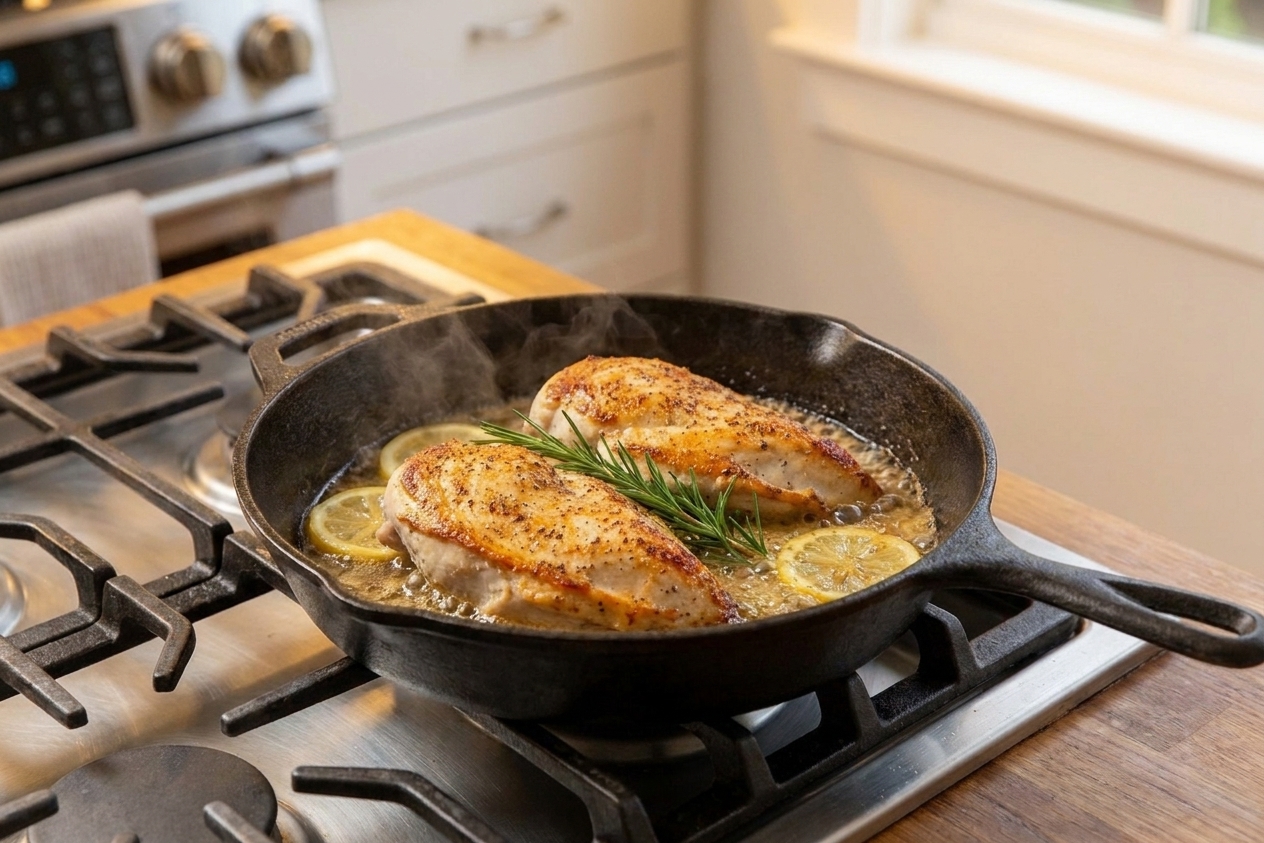
Blackened chicken breasts with dark, crisp seasoning crust in a cast-iron skillet, topped with melting lemon-garlic Cajun butter, warm kitchen lighting, real food photography

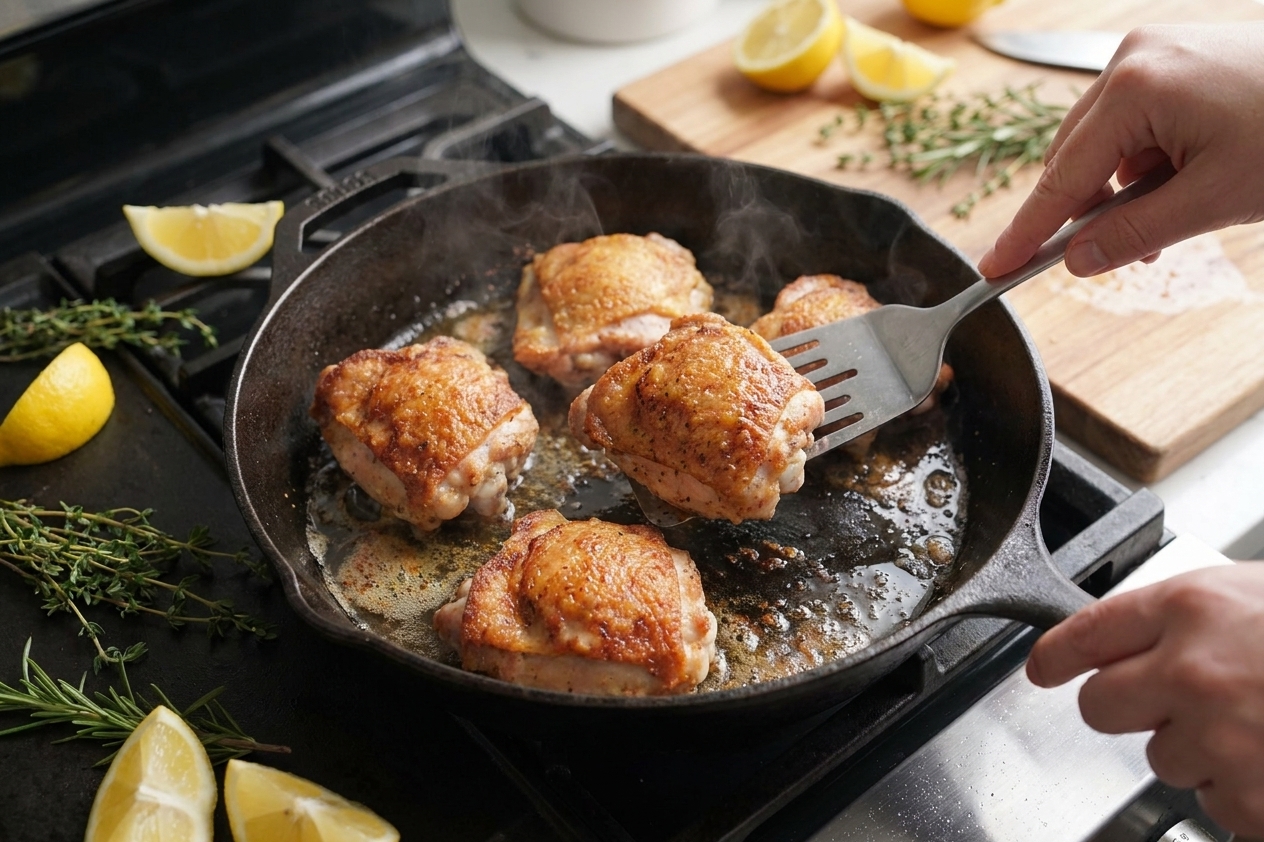
Blackened chicken is one of those meals that looks like you really did something, but it is basically just: hot pan, bold seasoning, a little smoke, and the confidence to let the chicken sit there and sizzle.

This version keeps the ingredients easy to find, and the method clear. You will make a quick Cajun-style spice blend (no weird stuff, no mystery packets), sear the chicken in a ripping-hot cast-iron skillet, then finish with a lemon-garlic Cajun butter that melts into every crisp edge. It is spicy, bright, and cozy all at once, which is basically my favorite kind of dinner.

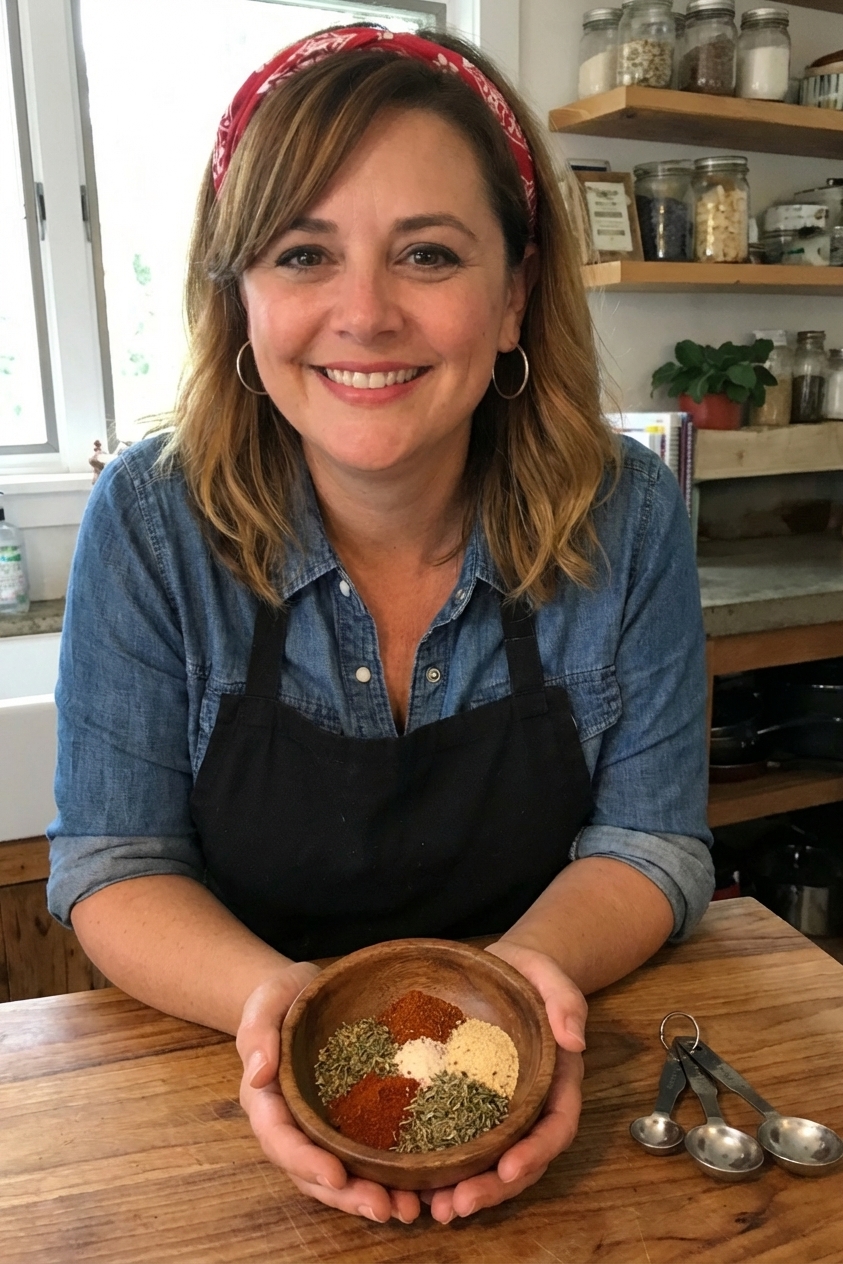
A small bowl of homemade Cajun seasoning blend with paprika, garlic powder, and dried herbs on a wooden counter next to measuring spoons, real kitchen photo

Why It Works

  • Real blackened crust without bitter scorch: the spice blend is paprika-forward, and we manage heat and timing so the pan does not torch the spices.
  • Juicy chicken breasts: a quick pound to even thickness plus an optional short dry brine helps the center stay tender.
  • Big flavor with a fast finish: lemon juice cuts through the richness, garlic brings the punch, and butter turns everything glossy.
  • Weeknight flexible: make extra seasoning, cook once, then repurpose leftovers for salads, wraps, and rice bowls.

Pairs Well With

Storage Tips

How to Store Leftovers

  • Refrigerate: Store chicken in an airtight container for up to 4 days. Keep any extra Cajun butter separate if you can, so you can refresh the flavor when reheating.
  • Freeze: Freeze cooked chicken for up to 2 months for best quality (it is often still safe longer, but texture is best within that window). Wrap tightly or use a freezer bag with as much air removed as possible.
  • Reheat without drying out: Slice the chicken, then warm it in a skillet over medium-low with a splash of water or broth and a little leftover Cajun butter. Cover for 1 to 2 minutes to steam, then uncover to finish.
  • Cold leftover move: Slice thin and toss into a salad with citrus, avocado, and a creamy dressing. The blackened edges are even better cold than they have any right to be.

Common Questions

Common Questions

What does “blackened” mean, and is it burnt?

Blackened is a cooking technique where a heavily seasoned protein is cooked in a very hot pan so the spices toast and darken into a crust. It should be very dark brown with a few darker spots, not acrid or ashy. If it tastes bitter, the pan was too hot for too long, or the spices scorched.

How do I avoid burning the spices in a cast-iron skillet?

  • Use medium-high heat, not max-high, on most home stoves.
  • Preheat the pan well, then add oil and start cooking right away.
  • Flip as soon as the crust is set and dark, then let the second side finish with the thermometer, not the clock.
  • If the pan starts smoking aggressively, lower the heat a notch.

Should I use butter or oil to sear?

Use a high smoke point oil (avocado, canola, grapeseed) for the sear. Butter can burn fast at blackening temps. We bring butter in at the end, where it belongs, melting and tasting amazing.

Can I make this with chicken thighs?

Absolutely. Boneless skinless thighs are very forgiving. They are safe at 165°F, but they usually get their best texture around 175°F to 185°F. They will take a little longer than breasts depending on size.

Is this super spicy?

It is a solid warm heat. For mild, cut the cayenne in half. For spicy, add more cayenne or a pinch of crushed red pepper.

Do I need a meat thermometer?

Highly recommended. For breasts, you can pull at 160°F if you expect a few degrees of carryover while resting, but if your pieces are smaller or your kitchen is chilly, just cook to 165°F in the thickest part to be safe without stressing.

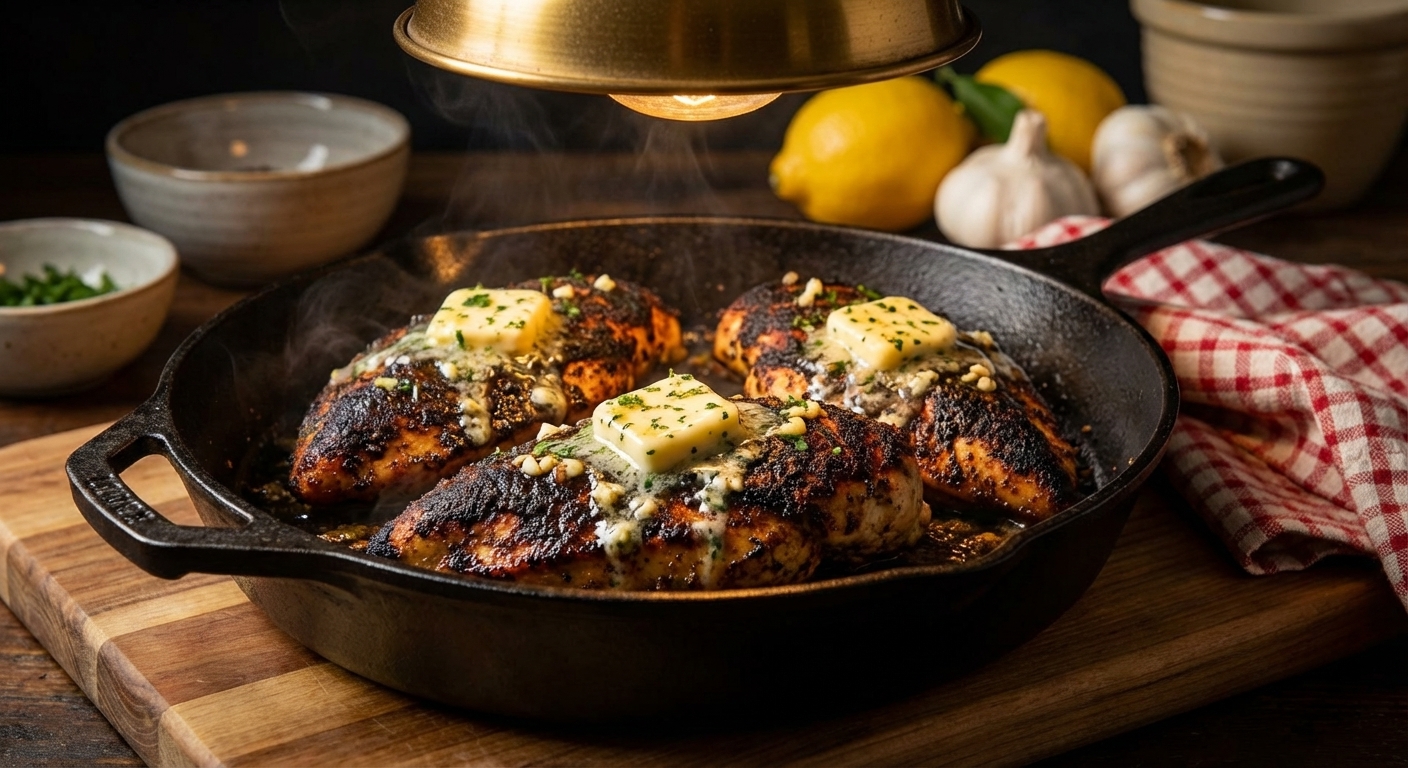
I started making blackened chicken when I wanted “restaurant energy” on a random Tuesday but did not want a sink full of dishes. Cast iron, spice, and a fast sauce always felt like a cheat code. The first time I nailed it, I remember slicing in and seeing that juicy center under that dark crust and thinking, okay, so this is why people get attached to a skillet.

Now I treat it like a little kitchen ritual: open a window, turn on the fan, accept a bit of sizzle chaos, and finish with lemon butter because I want the flavor to pop, not just punch.