Is blackened salmon burnt?
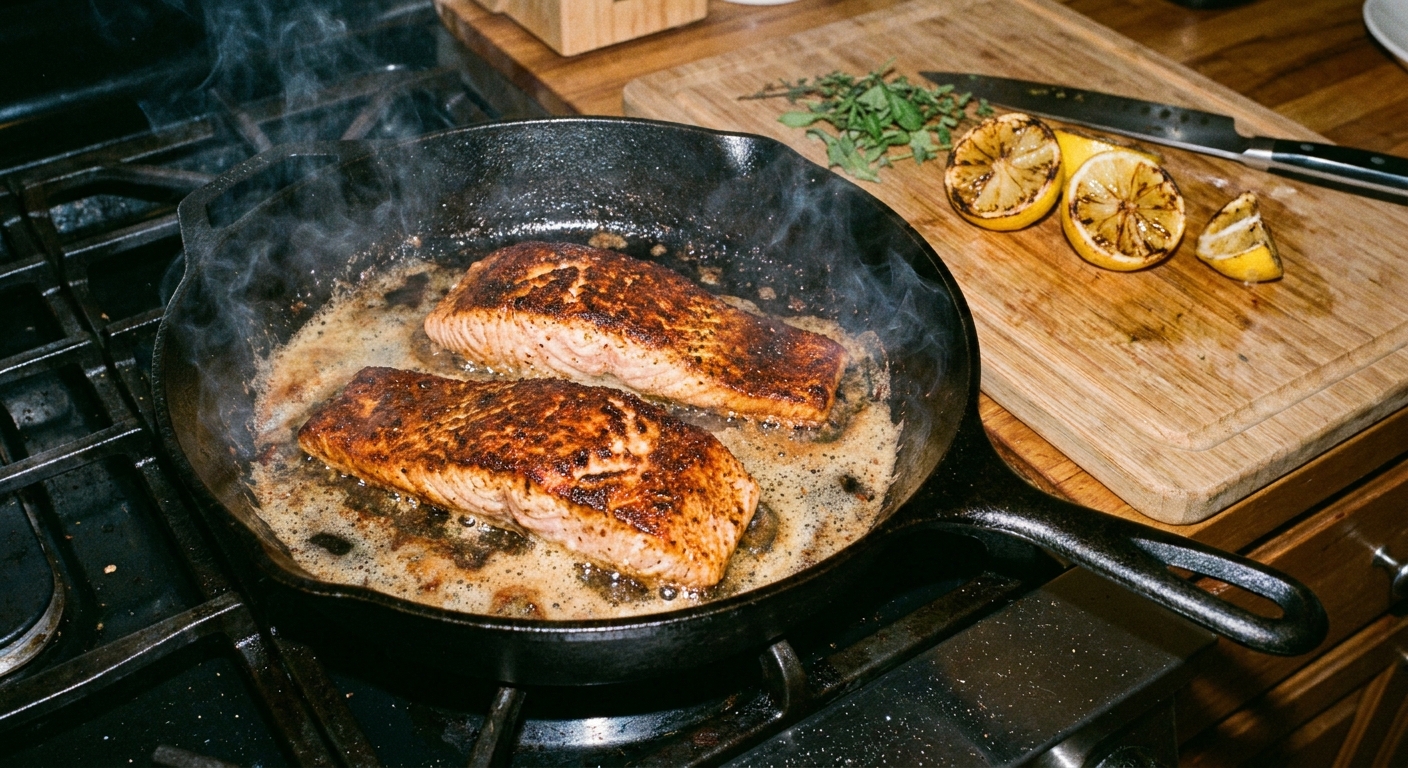
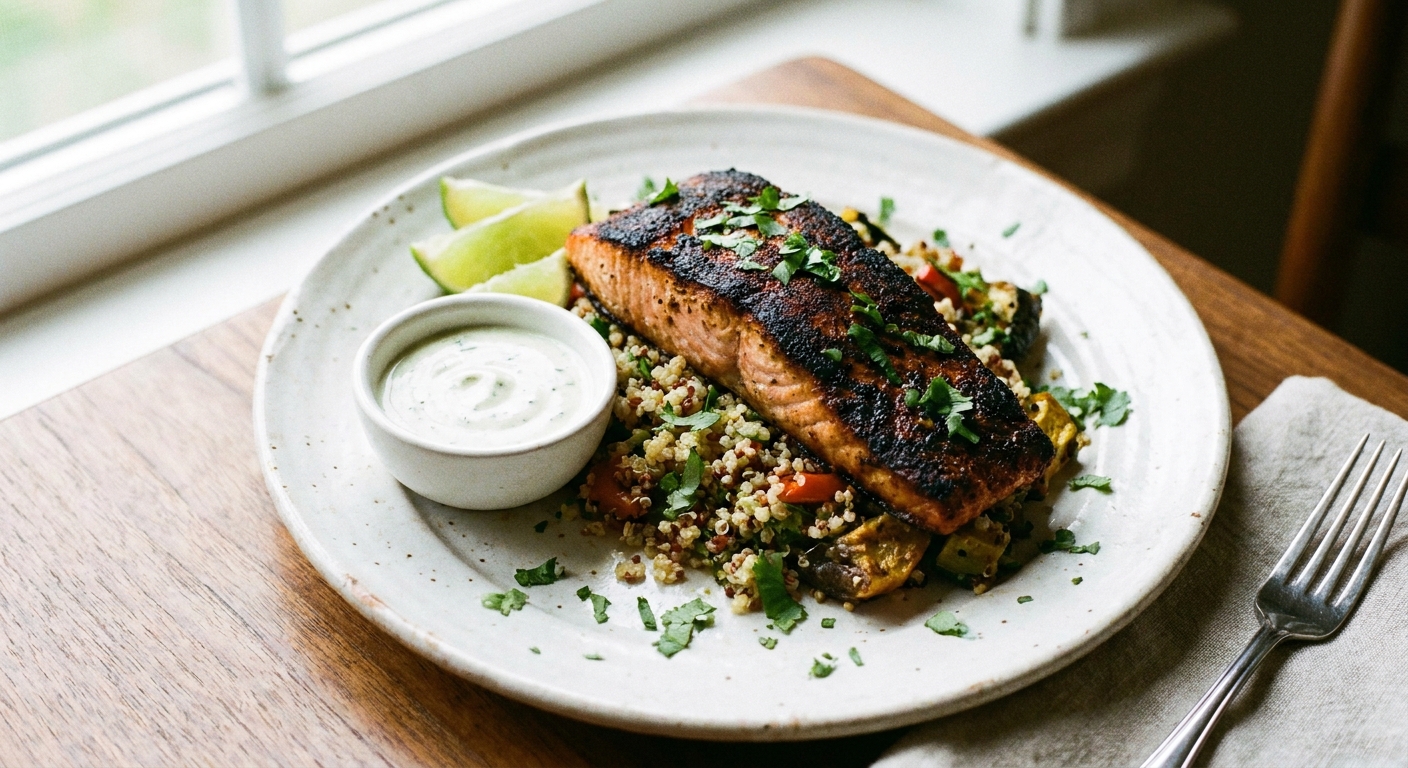
No. “Blackened” means the spices toast hard in a very hot pan and form a dark crust. It should taste smoky, spicy, and savory, not bitter. If it tastes bitter, your heat was too high for too long, your pan was overheated, or your spices were old and scorched.
Do I need cast iron?
Cast iron is ideal because it holds heat and gives you a more even crust, but a heavy stainless-steel skillet works too. Avoid thin pans that lose heat fast when the fish hits the surface.
Should I use skin-on or skinless salmon?
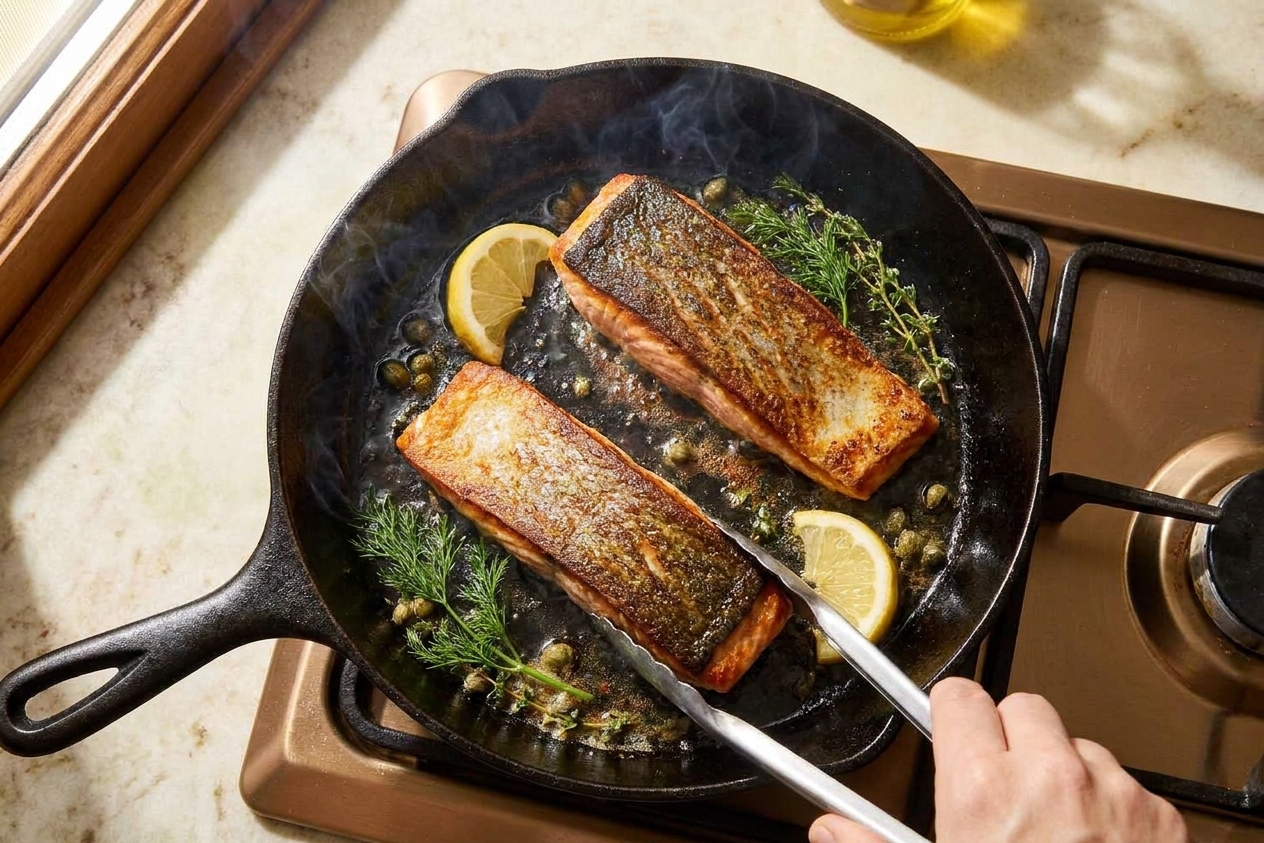
Either works. Skin-on can get crispy if you start skin-side down. Skinless gives maximum spice contact. For this recipe, both are great. Choose your priority: crust on the flesh or crisp on the skin.
What internal temp should I aim for?
For moist salmon, many cooks pull it at 125°F to 130°F in the thickest part and let it rest. If you prefer more well-done, go to 135°F to 140°F. Food safety note: The USDA recommends 145°F for fish. Use the temperature that matches your comfort level.
How do I know when salmon is done without a thermometer?
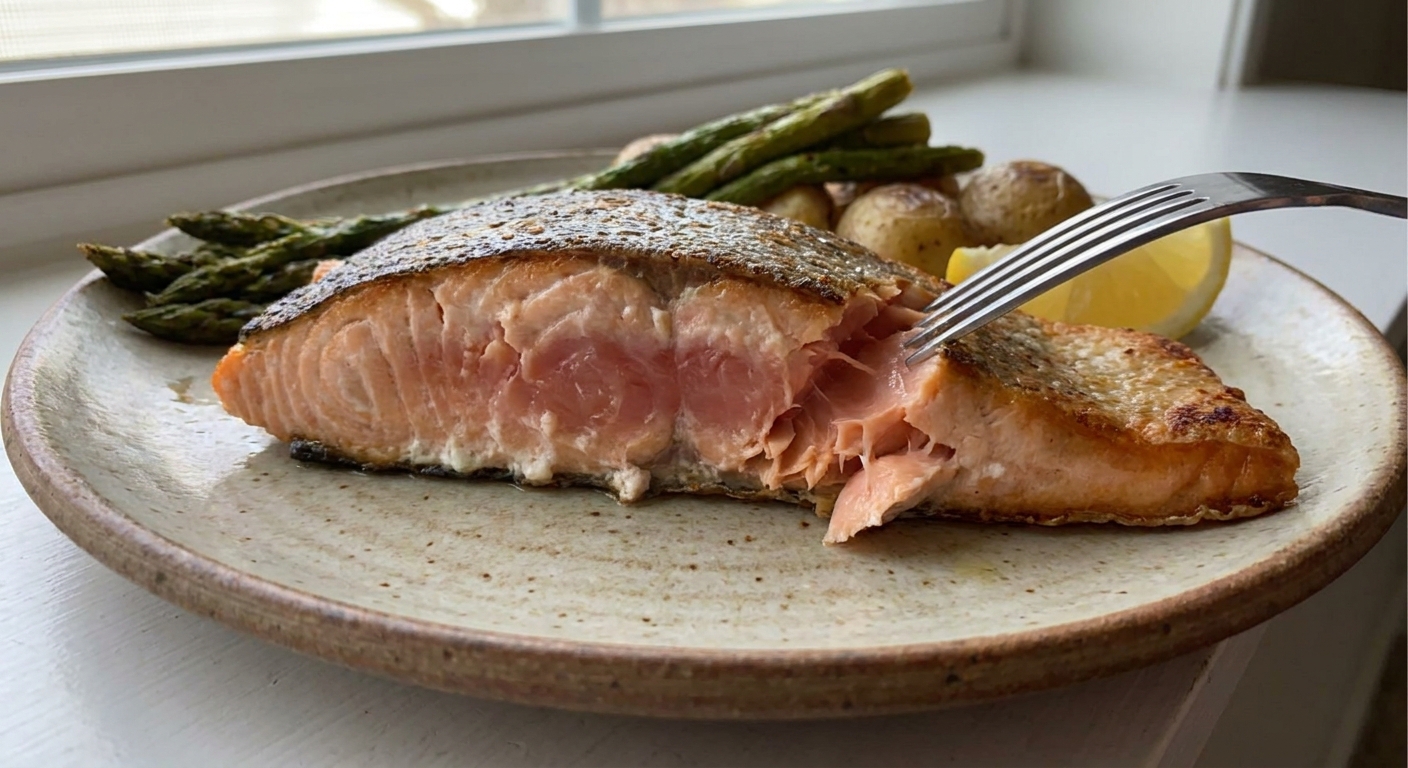
Look for the color change creeping up the side. When the salmon is mostly opaque with a small translucent band on top and it flakes with gentle pressure, you are there. Resting finishes the job.
Will this smoke up my kitchen?
It can. Use your vent and open a window. Also manage the heat: if your stove runs hot, go with medium-high instead of high. Preheat the pan properly so you get a fast sear, then you can back the heat off slightly if the spices are threatening to scorch. Avoid butter at the start. We add it later to reduce burning.
Why not olive oil?
Blackening wants a high smoke point. Stick with avocado, canola, or grapeseed. Extra virgin olive oil can smoke too quickly at these temps.