Mom's Best Recipes
Recipe

Bright Citrus Fish

Flaky white fish with a punchy lemon orange pan sauce, quick blistered tomatoes, and crisp-edged garlic greens. Weeknight-easy, restaurant-energy.

Author By Matt Campbell
4.8
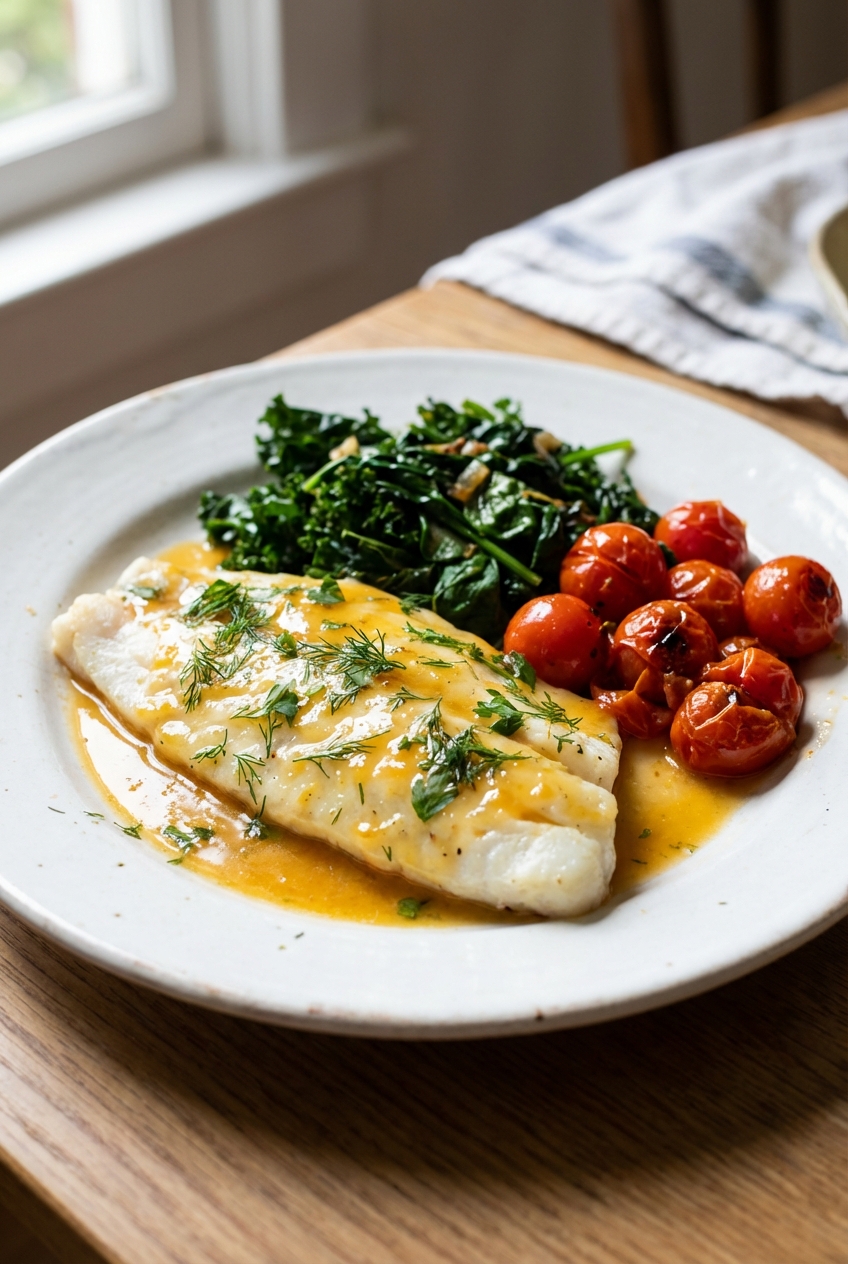
A plated lemon and orange glazed white fish fillet topped with fresh herbs, served with sautéed greens and blistered cherry tomatoes on a white plate in natural window light

Some nights you want fish that feels light and fresh, but not sad. This is that recipe. We are talking flaky white fish with a quick citrus pan sauce that tastes like you tried harder than you did, plus blistered tomatoes for sweetness and a pile of garlicky greens for the “yes, this is a solid weeknight move” part.

The vibe is bright, cozy, and a little fancy without being fussy. Everything cooks fast, and the sauce does the heavy lifting. If you have a skillet, a citrus fruit, and the ability to taste as you go, you are in great shape.
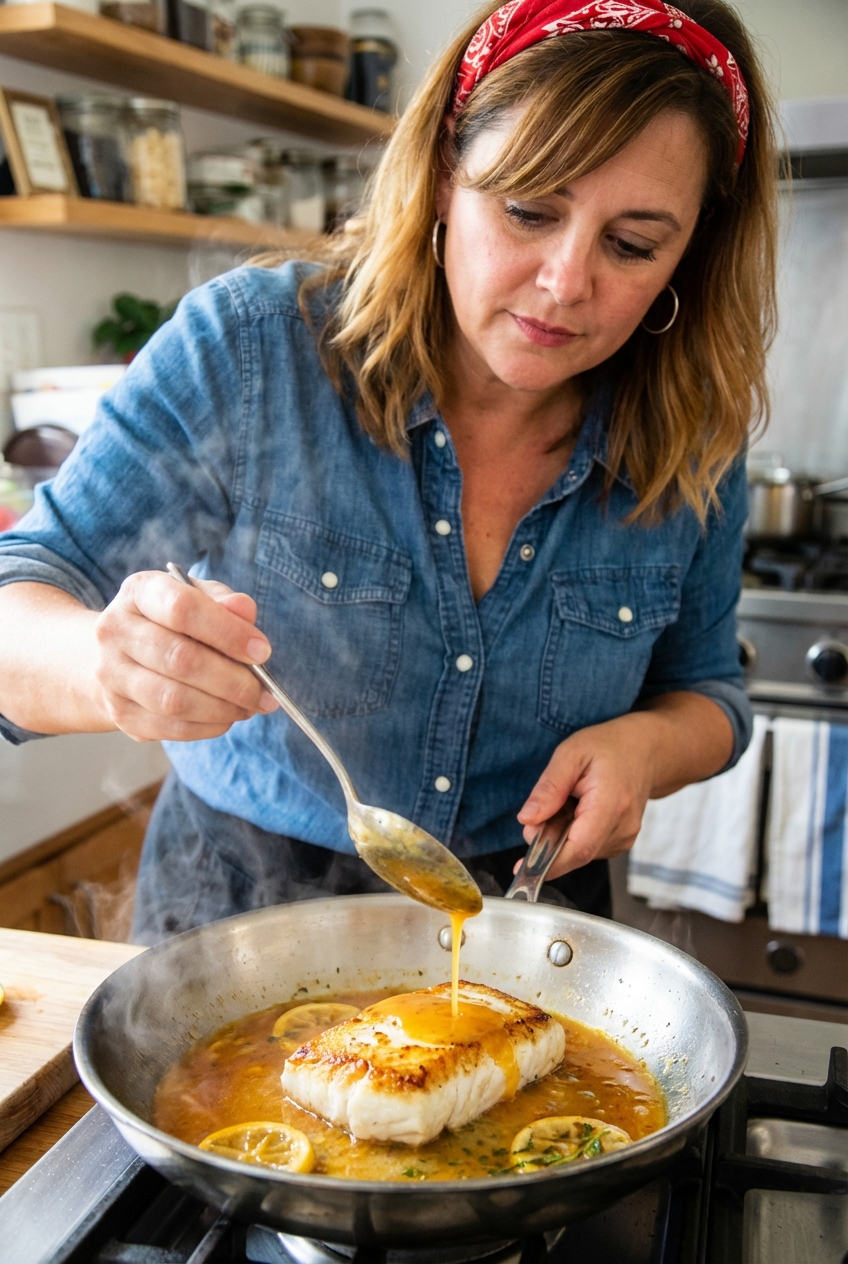
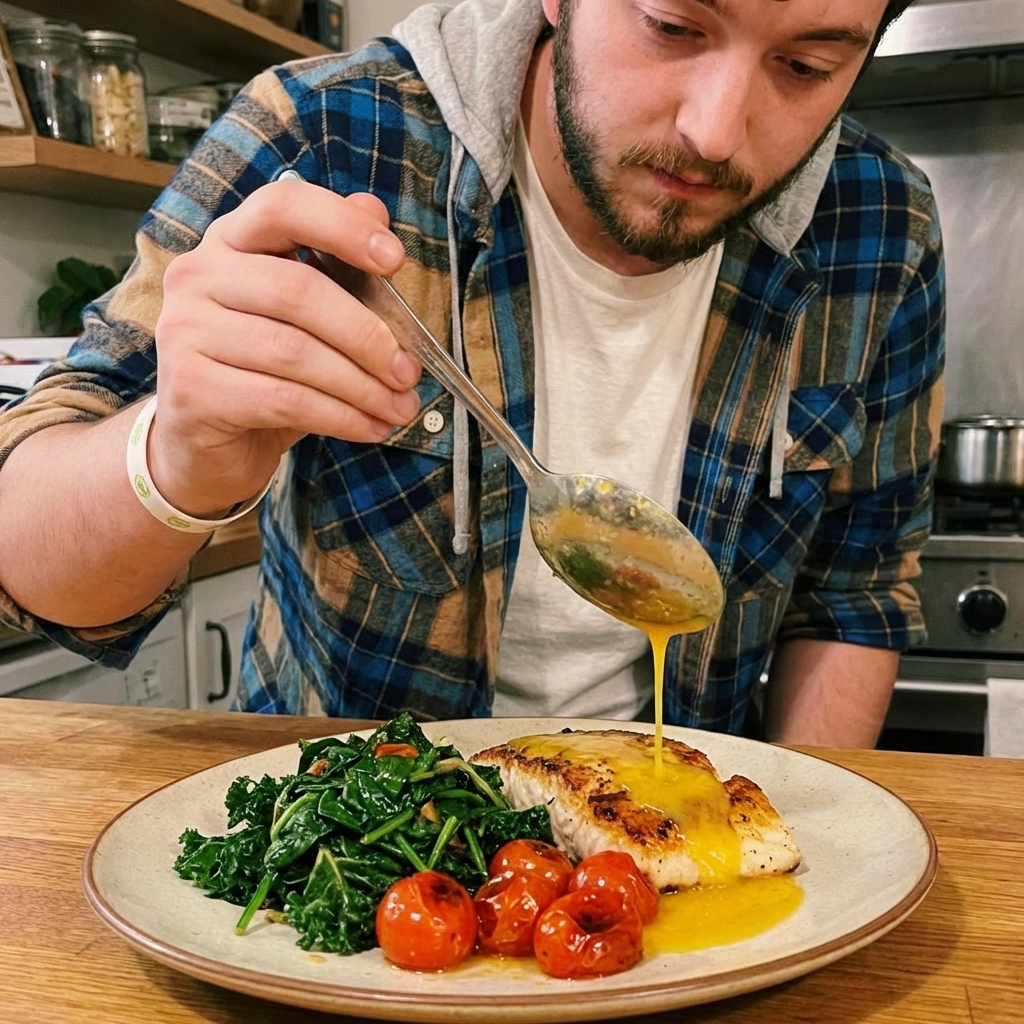
A cook spooning glossy citrus pan sauce over a seared fish fillet in a stainless steel skillet on a stovetop

Why It Works

  • Big flavor with simple ingredients: citrus zest, juice, and a little honey create a balanced sweet-tangy sauce.
  • Great texture: a quick sear gives the fish crisp edges while the inside stays tender.
  • One skillet energy: sauce builds in the same pan, so you keep all the browned bits.
  • Light, protein-forward dinner: fish plus greens and tomatoes keeps things fresh and satisfying, with butter optional for extra gloss.

Pairs Well With

Storage Tips

Keep It Fresh

  • Refrigerate: Store fish and vegetables in an airtight container for up to 2 days. If possible, store extra sauce separately so the fish stays less soggy.
  • Reheat gently: Warm in a skillet over low heat with a small splash of water, broth, or extra citrus juice. Cover for a minute to keep it moist. Microwaving works, but use 50 percent power to avoid rubbery fish.
  • Cold option: Flake leftover fish and toss into a salad with arugula, cucumber, and a squeeze of lemon. It is shockingly good.
  • Freezing: I do not love freezing cooked fish with sauce. If you must, freeze for up to 1 month and thaw overnight in the fridge. Expect softer texture.

Common Questions

What fish works best?

Any mild, flaky white fish is perfect: cod, halibut, haddock, or pollock. If you want a firmer, steak-like option, mahi-mahi also works, but it will not flake the same way and may need a slightly longer cook time. Aim for fillets that are about 1 inch thick so they do not overcook.

How do I know the fish is done without overcooking it?

When it is ready, the fish will flake easily with a fork and look opaque in the center. If you use a thermometer, you can cook to the USDA guideline of 145°F, but for the most tender texture many cooks pull white fish a little earlier, around 135 to 140°F, then let it rest 1 to 2 minutes for carryover cooking.

Can I make the sauce without butter?

Yes. The butter adds gloss and rounds out the acidity, but you can swap in extra olive oil or skip it entirely. If you skip, simmer the sauce 30 to 60 seconds longer so it reduces slightly.

Is this recipe gluten-free?

It can be. Use a gluten-free broth and make sure your Dijon mustard is gluten-free. Everything else is naturally gluten-free.

My sauce tastes too sharp. How do I fix it?

Add a pinch more salt and a small drizzle of honey. If it still feels aggressive, whisk in a little more butter or olive oil. Acid needs fat and salt to feel balanced.

I started making versions of this when I wanted “restaurant fish” at home without turning my kitchen into a science lab. Citrus was the cheat code. It wakes everything up, even when you are running on fumes. The first time I nailed the balance, bright juice, a little sweetness, a salty hit, I literally paused mid-bite like, okay, wow. Now it’s my go-to when I want something lighter that still has crisp edges and a sauce worth dragging bread through.