Mom's Best Recipes
Recipe

Bright & Herbal Rye Bread

A soft, bakery-style rye with lemon zest, fresh herbs, and an olive oil finish. Cozy, aromatic, and built for sandwiches, toast, and soup nights.

Author By Matt Campbell
4.8
A golden loaf of rye bread on a wooden cutting board with visible caraway seeds, lemon zest, and chopped herbs scattered nearby in a sunlit kitchen

This is rye bread for people who think rye can feel a little too serious. We are keeping the earthy, toasty vibe, but we are inviting in a whole citrusy herb garden and letting it throw a small party. The result is a loaf that smells like a cozy deli crossed with a sunny kitchen counter: warm caraway, bright lemon zest, and fresh dill and parsley baked right into the crumb.

It is tender enough for everyday toast, sturdy enough for sandwiches, and the crust gets a golden, glossy finish that makes you tear off “just one more piece” while it cools. Ingredients stay accessible, steps stay clear, and your kitchen is going to smell unfairly good.

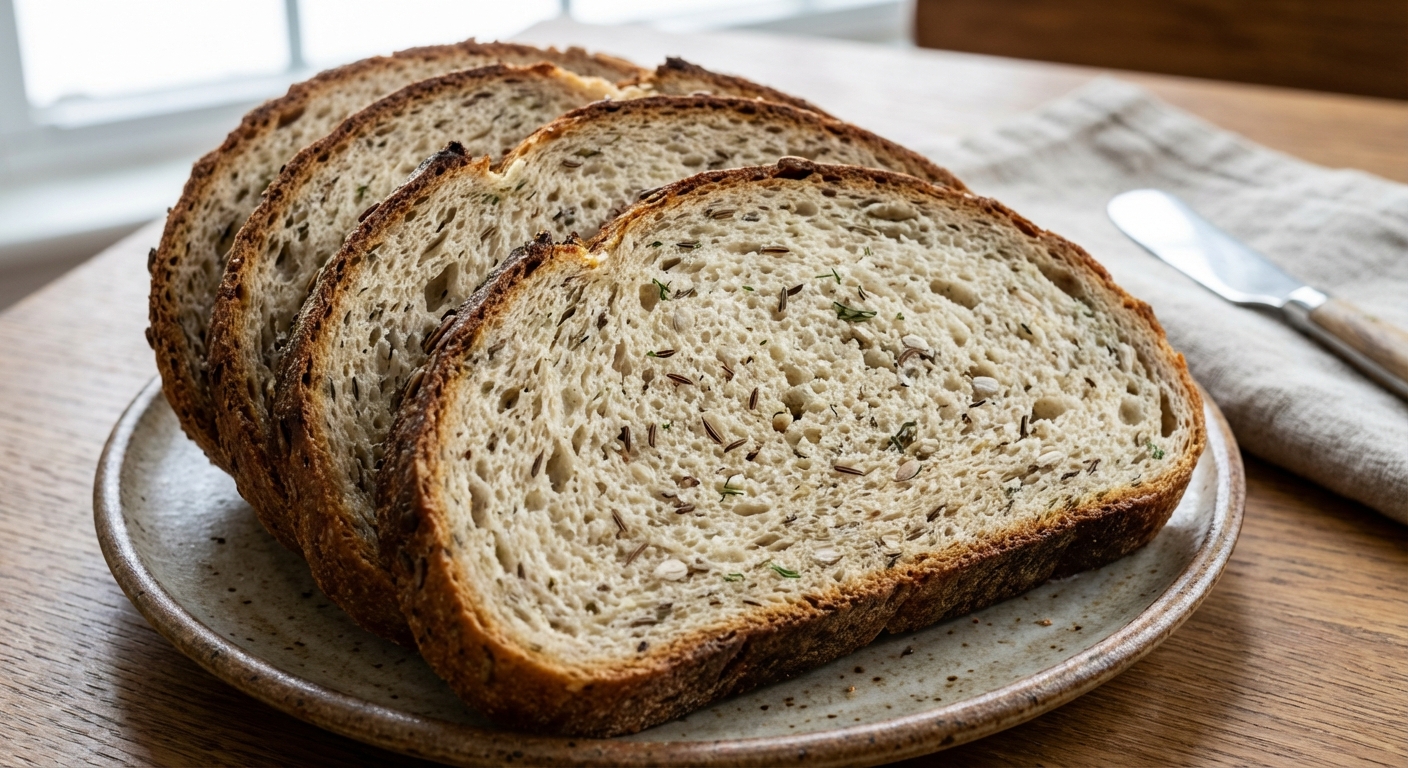
A close-up of sliced rye bread showing a soft, pale interior flecked with herbs and seeds on a plate

Why It Works

  • Bright flavor without being weird: Lemon zest and a touch of honey wake up rye’s natural earthiness.
  • Soft, sliceable crumb: A mix of bread flour and rye keeps it tender, not dense.
  • Herbal aroma in every bite: Dill and parsley (plus optional chives) make it taste fresh even on day two.
  • Reliable rise: A short rest and solid kneading build structure so the loaf does not slump.
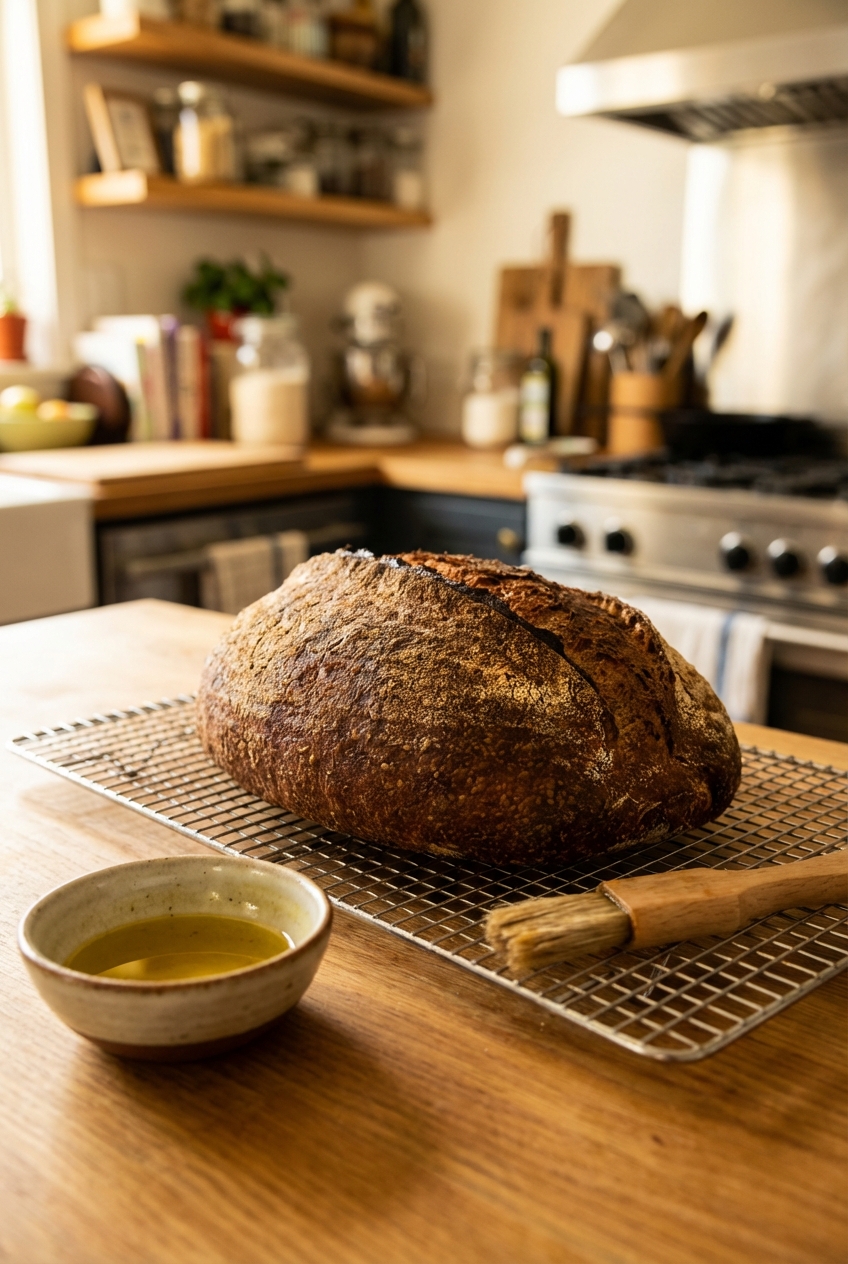
  • Golden crust, your way: Leave it as-is for a more classic bite, or brush with olive oil for a softer, glossy finish.

Pairs Well With

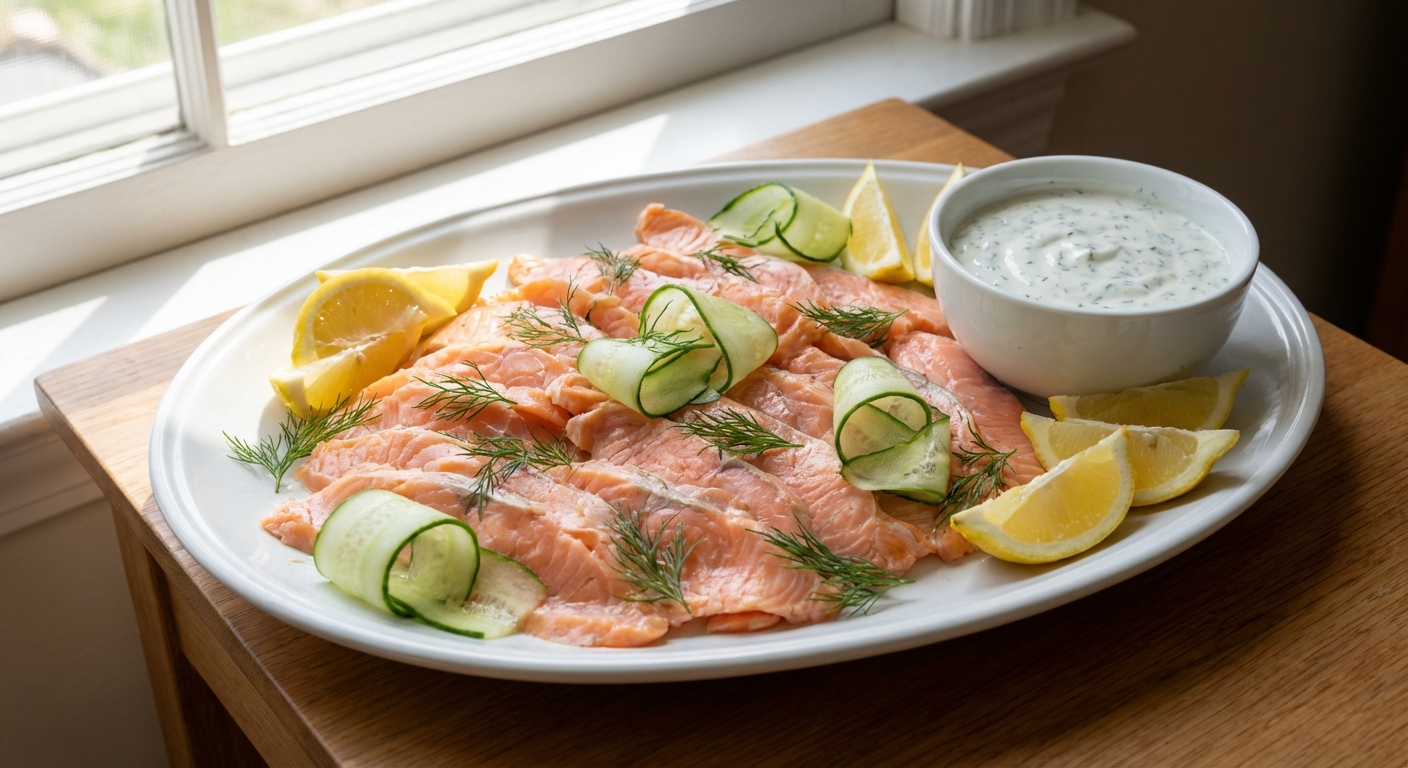
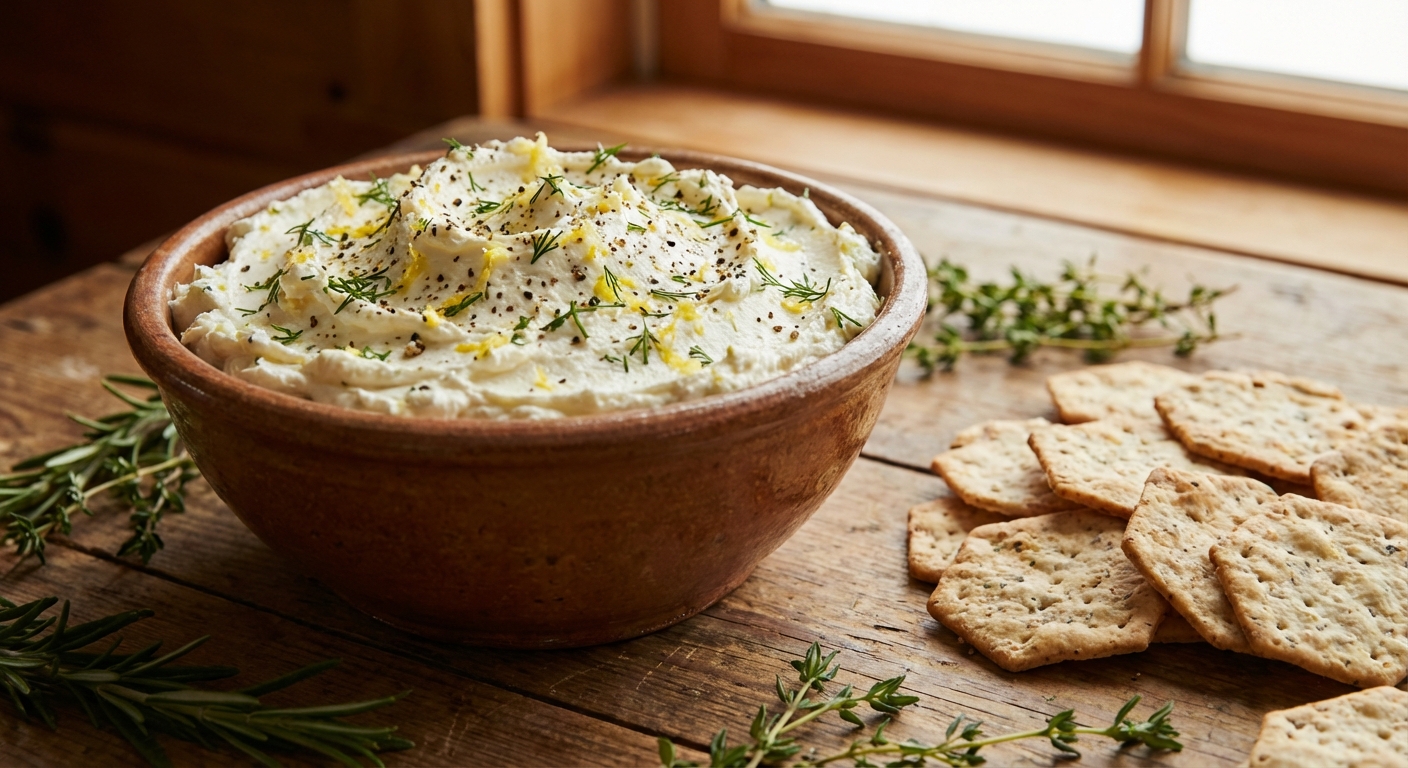
  • Smoked salmon with lemony cream cheese and cucumber

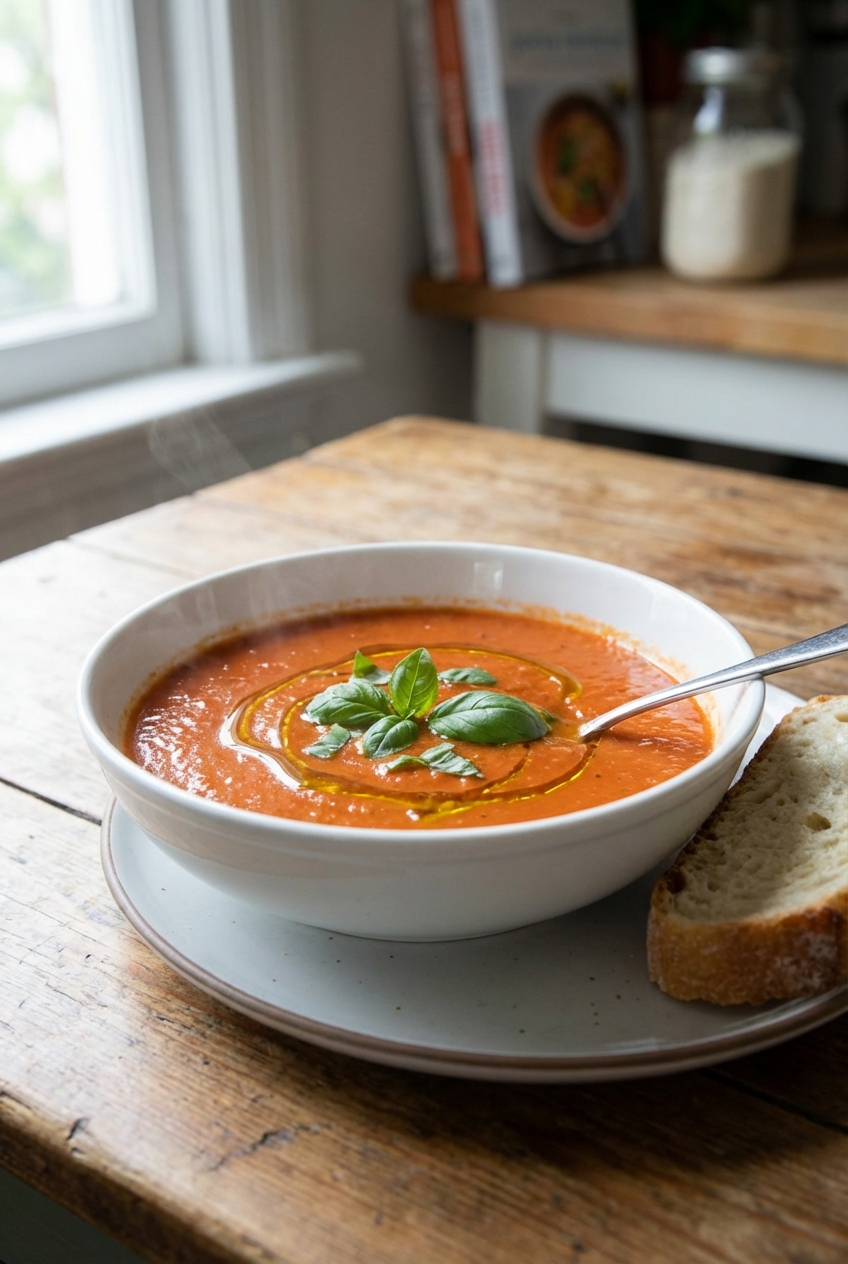
  • Tomato soup or roasted red pepper soup

  • Egg salad with dill and a little Dijon

  • Sharp cheddar with apple slices and mustard

Storage Tips

Room temp: Let the loaf cool completely, then store in a paper bag inside a loosely closed plastic bag, or in a bread box, for up to 3 days. This keeps the crust from going sad while protecting the crumb.

Freeze (best move): Slice the loaf once cooled. Freeze slices in a zip-top bag with parchment between a few slices so they do not glue themselves together. Toast straight from frozen for up to 2 months.

Revive a day-old loaf: Mist the crust lightly with water, then warm in a 350°F oven for 8 to 12 minutes. You will get that “fresh-baked” vibe back.

Common Questions

Is this bread very “rye-forward”?

No. It is rye-flavored but friendly. The bread flour keeps it light, and the lemon and herbs make it taste brighter than classic deli rye.

Can I make it without caraway seeds?

Absolutely. Swap in fennel seed for a different vibe, or skip seeds entirely. If you skip, bump the salt by a small pinch and consider adding 1 teaspoon cracked black pepper for personality.

Do I need a stand mixer?

Nope. This dough is totally doable by hand. If it feels sticky, oil your hands and use a bench scraper instead of adding lots of flour.

Can I use dried herbs instead of fresh?

Yes. Use about one third the amount. For this recipe, that is 1 tablespoon dried dill and 1 tablespoon dried parsley. Fresh tastes brighter, but dried still delivers.

Why is my rye dough sticky?

Rye flour is naturally stickier and absorbs water differently. Resist the urge to dump in lots of extra flour. Instead, oil your hands for folds and use a bench scraper for shaping.

My loaf is dense. What happened?

Usually one of four things: it did not rise long enough (cool kitchen), too much extra flour got worked in during kneading, the dough was under-kneaded, or the loaf was sliced before it cooled. Next time, let the first rise go until the dough is truly puffy and slowly springs back when pressed, and use oil on your hands instead of more flour.

How do I know it is done baking?

Best method: internal temp of 200°F to 205°F. Also, the loaf should sound hollow when tapped on the bottom and feel lighter than you expect.

Can I keep the crust a little crisper?

Yes. Skip the olive oil brush at the end, and cool the loaf uncovered on a rack. The oil finish is for a softer, glossy crust.

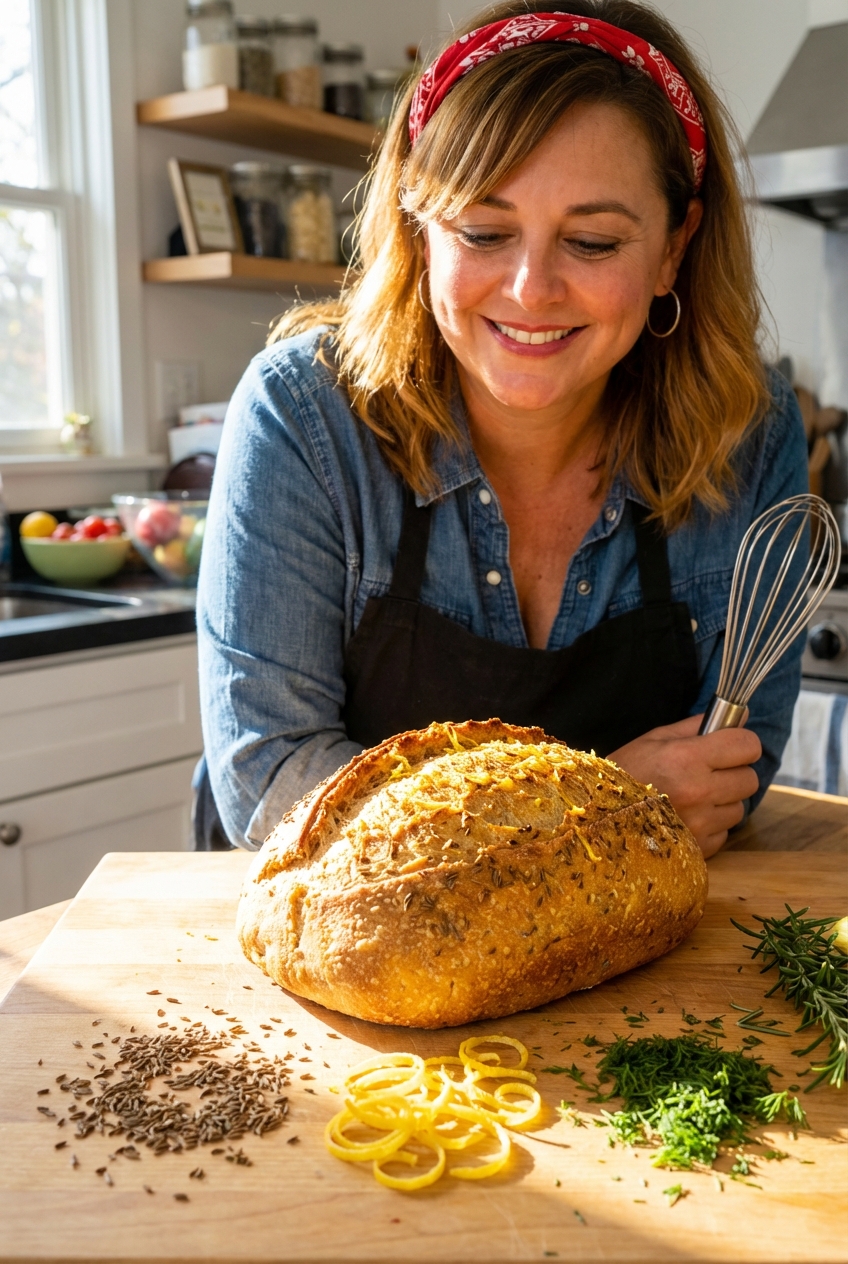
I started playing with “bright bread” when I realized half my favorite meals are basically an excuse to eat something warm and bready with a sharp little zing on top. Rye felt like the perfect canvas, but I wanted it less deli-counter and more “someone opened a window while the soup simmered.” The first time I tossed lemon zest into rye dough, it smelled like a fresh herb garden for my whole kitchen. Add dill, and suddenly the loaf was begging for smoked fish, egg salad, and big bowls of soup. Now it is my go-to when I want a loaf that tastes like effort without actually requiring you to babysit it.