Instructions
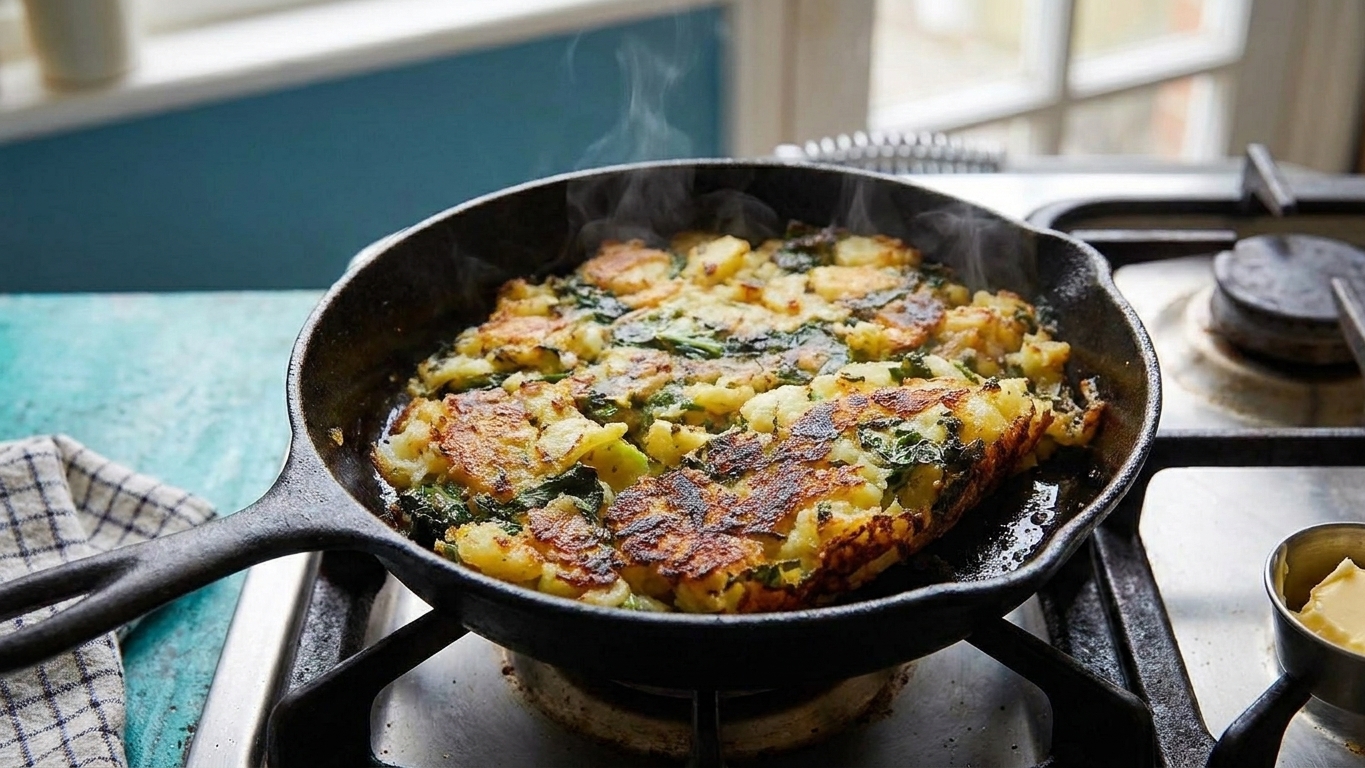
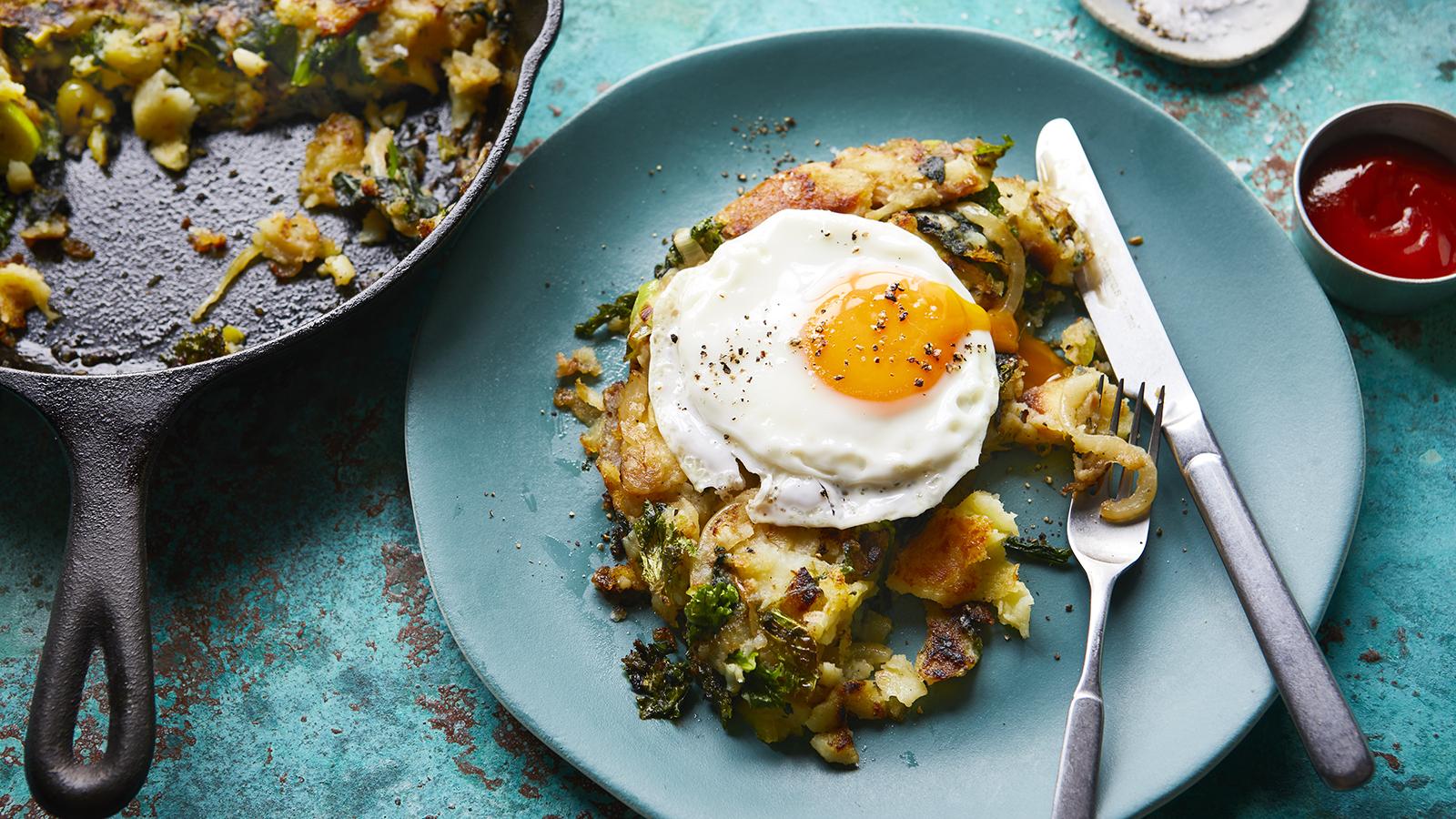
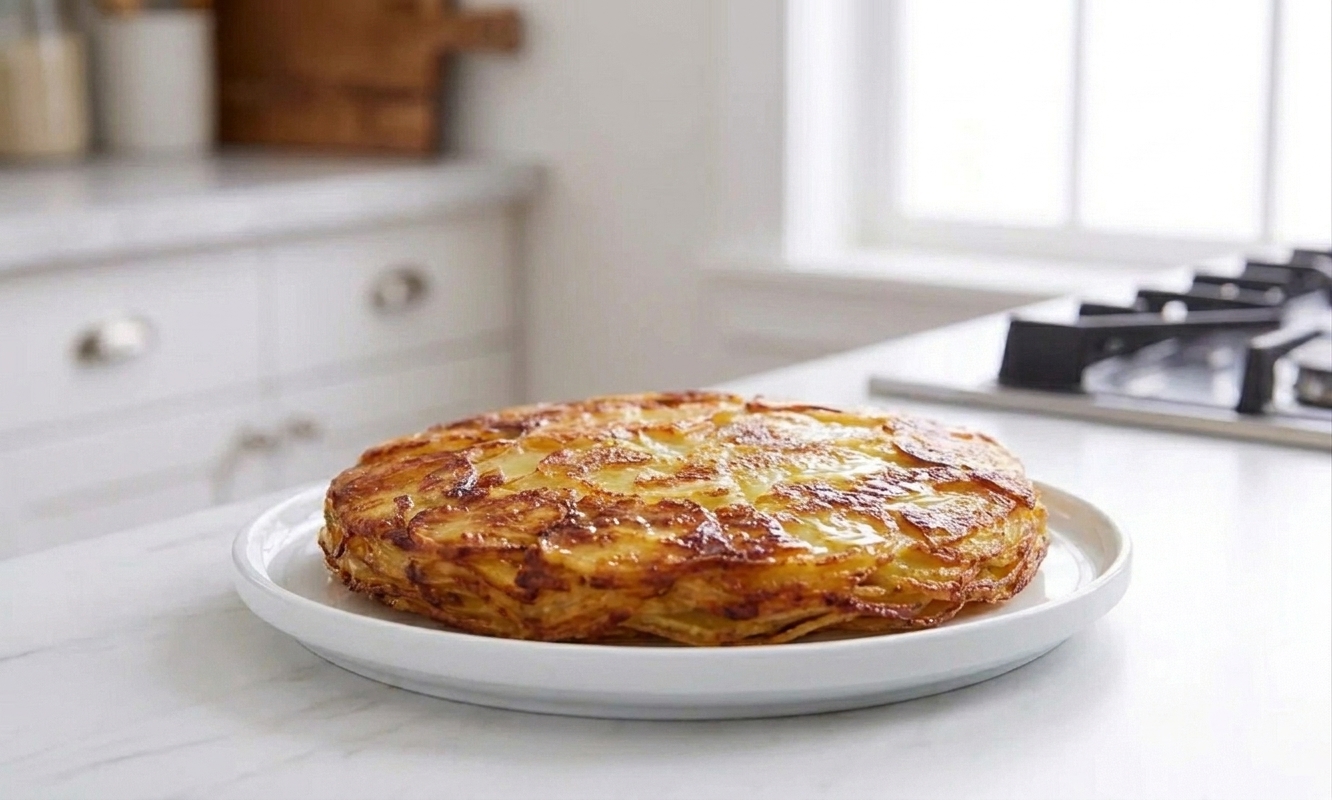
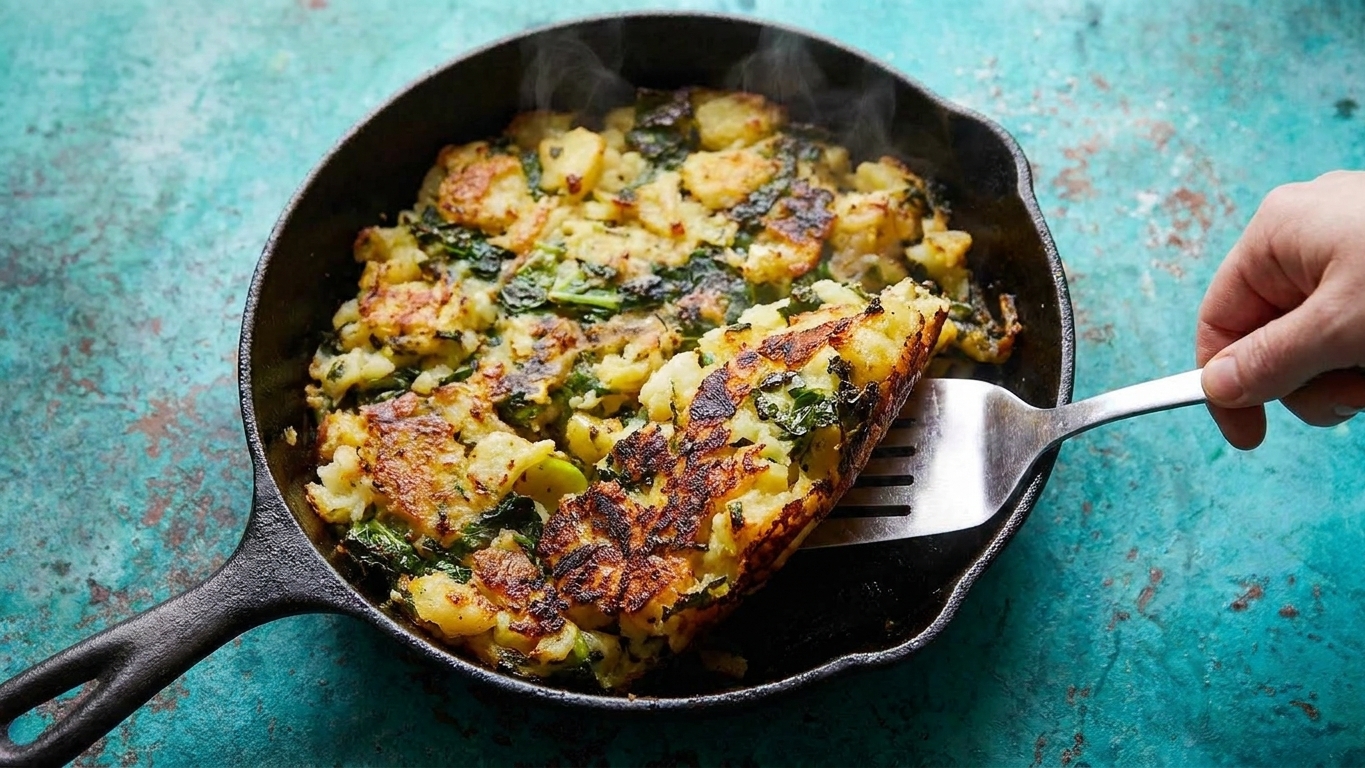
Goal: a thick potato and cabbage cake, fried until the bottom is lacy and brown, then flipped and browned on the other side.
Yield note: This makes one 10 to 12-inch cake, about 3/4 to 1 inch thick, which slices nicely into 4 wedges.
Step 1: Choose your path
If using leftovers: Skip to Step 2.
If cooking fresh:
- Boil the potatoes. Add potato chunks to a pot, cover with cold salted water, bring to a boil, then simmer until very tender, 12 to 15 minutes. Drain well.
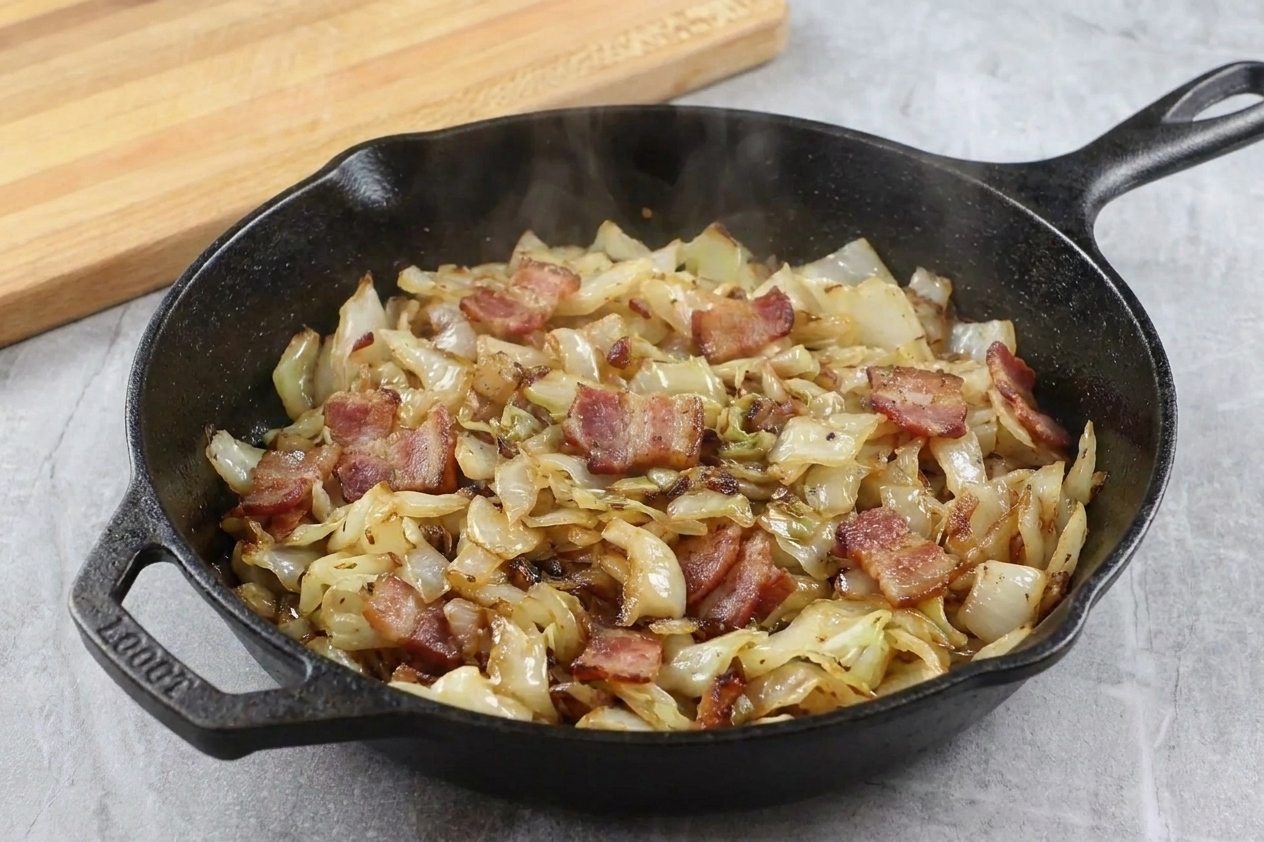
- Cook the cabbage. While the potatoes cook, simmer shredded cabbage in salted water until tender-crisp to tender, 5 to 10 minutes depending on how finely it is cut, or sauté in a little butter until soft. Drain and squeeze out excess water. Chop it a bit so it mixes evenly.
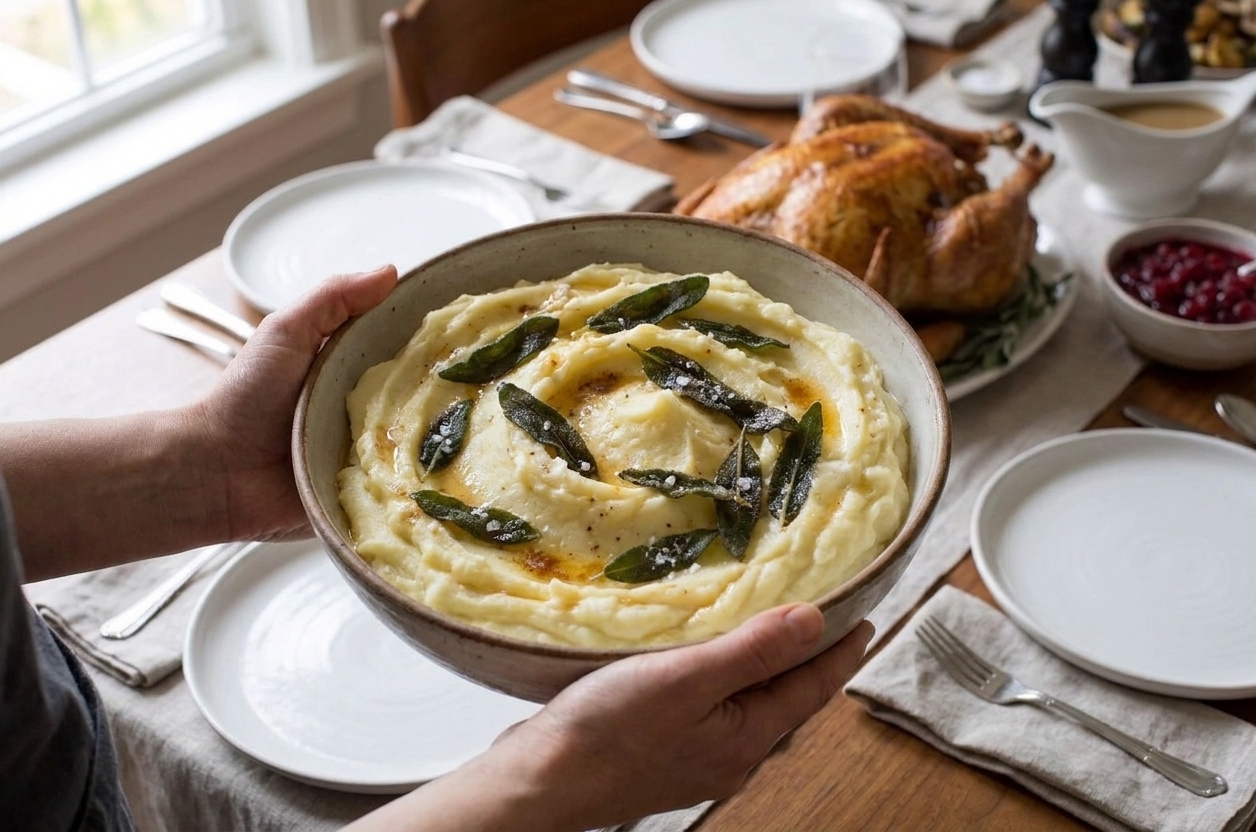
- Mash. Mash potatoes with 1 to 2 tablespoons butter, salt, pepper, and a splash of milk if needed. Cool the mash for 10 minutes so it firms up before frying.
Step 2: Mix the cake
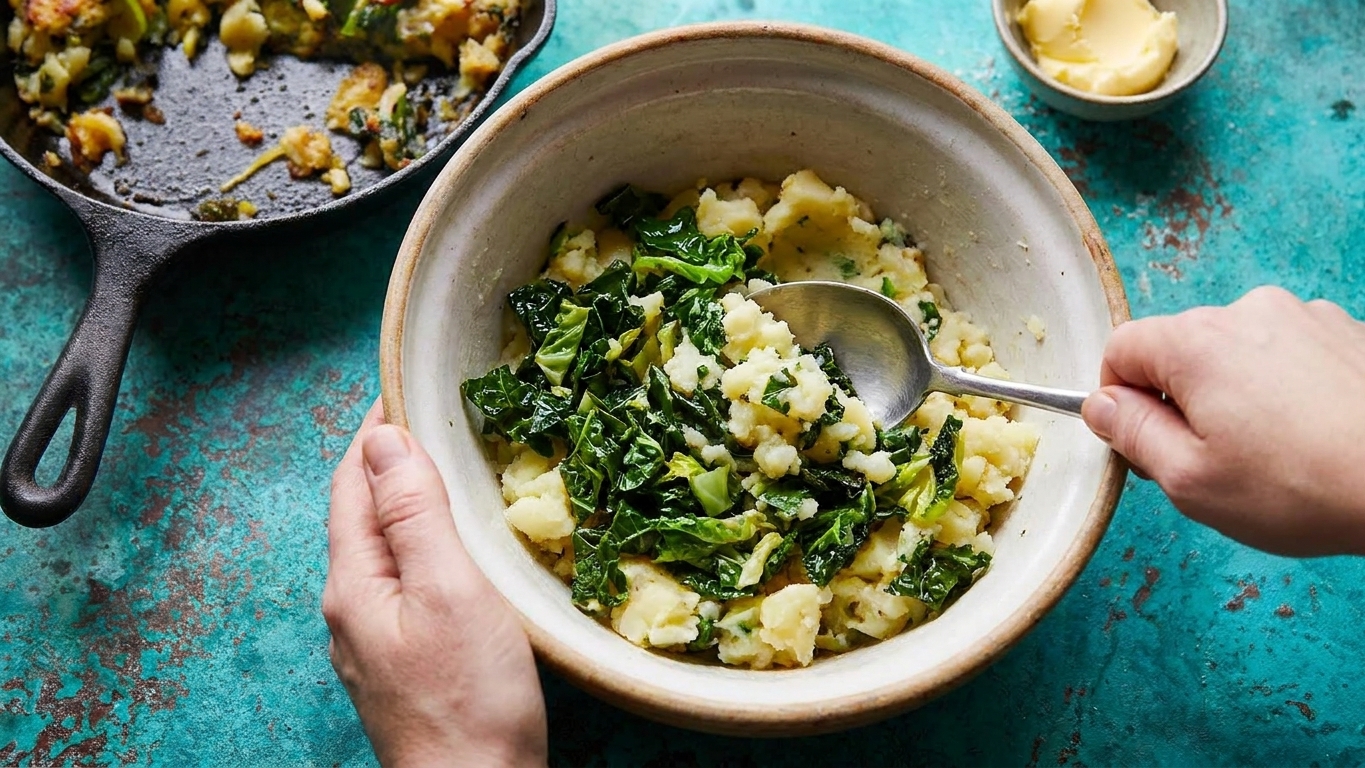
In a bowl, combine cold mashed potatoes and chopped cooked cabbage. Season with salt and pepper. Add scallions if using. Mix gently but thoroughly.
Pip tip: Around here, a Pip tip is our hedgehog host whispering the one thing that saves the day. If your mixture feels loose or wet, spread it on a plate for 5 minutes to steam off extra moisture. Drier mixture equals sturdier flipping.
Step 3: Fry the first side
- Heat the skillet. Set a 10 to 12-inch skillet over medium to medium-high heat. Add 2 tablespoons butter (and oil if using). When the butter melts and foams, you are ready.
- Press in the mixture. Add the potato-cabbage mix and press into an even cake about 3/4 to 1 inch thick. Smooth the top and press the edges firmly.
- Do not poke it. Cook 10 to 12 minutes. You want a deeply browned crust before you attempt the flip. Rotate the pan once or twice for even browning.
Step 4: Flip
This is the part where the cake tries to test your confidence. We will outsmart it.
- Check the set. Slide a spatula under the edge. If it lifts as one piece and the underside is a rich golden brown, it is ready. If it still looks pale, give it 2 to 3 more minutes.
- Loosen all around. Run the spatula around the full edge, then slide it under the cake in a few spots to make sure nothing is stuck.
- Use a plate. Place a large plate (or a flat lid) over the skillet. Hold the plate firmly to the pan with oven mitts or a towel.
- Flip in one confident motion. Quickly invert the skillet so the cake lands on the plate, browned-side up.
- Return to the pan. Add another small knob of butter to the skillet, then slide the cake back in so the second side can cook.
Pip tip: If you are nervous, cut the cake in half before flipping and flip in two pieces. It is still bubble and squeak, just with less suspense.
Step 5: Brown the second side
- Cook another 6 to 10 minutes until the second side is browned and crisp.
- If you want extra crunch, press down gently with a spatula for the last minute or two.
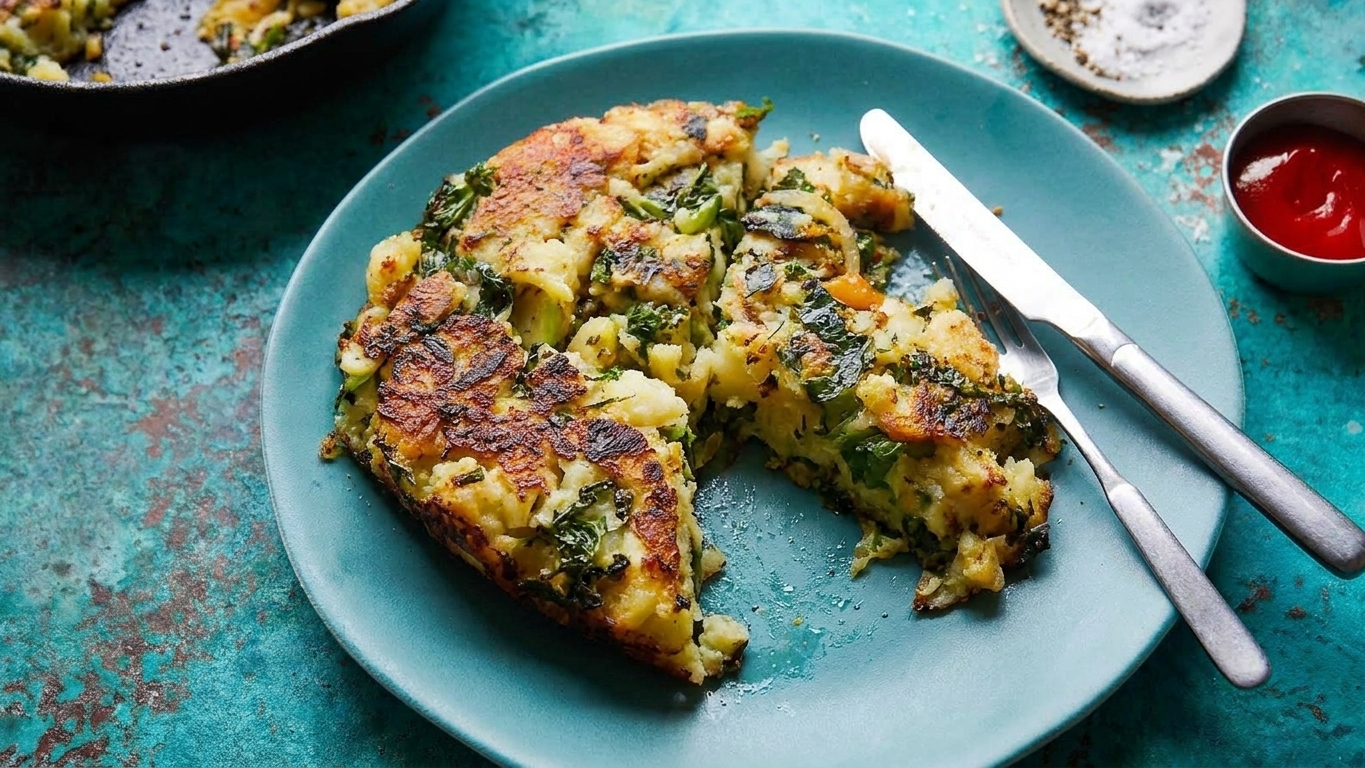
- Slide onto a cutting board and rest 2 minutes before slicing. This helps it hold together.
Serving note: gravy
Warm gravy is wonderful here, but to keep the crust crisp, try one of these:
- On the side: serve gravy in a small pitcher for dipping.
- Under the cake: spoon a thin layer of gravy onto the plate, then set a wedge of bubble and squeak on top so the upper crust stays crunchy.
- Just a stripe: drizzle a narrow line over the top instead of flooding the whole cake.