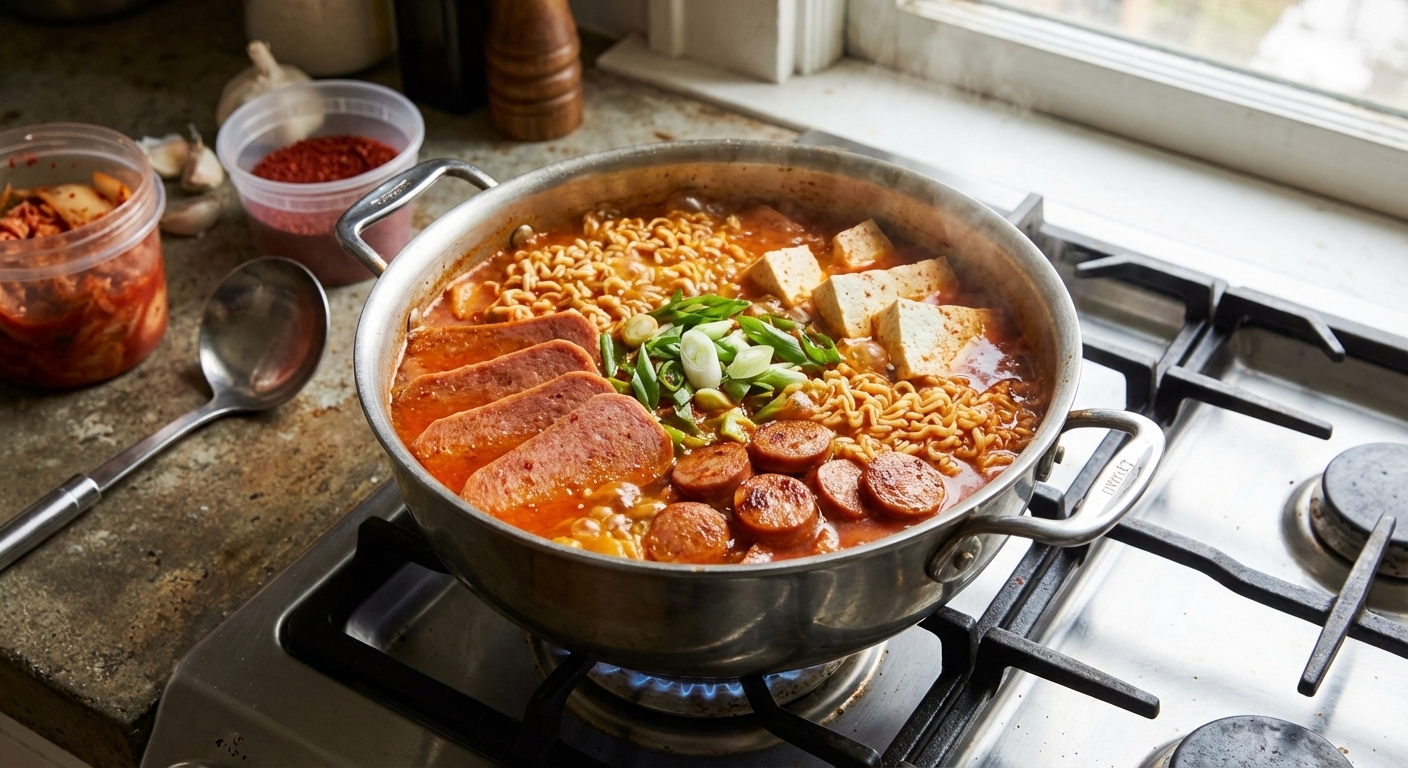
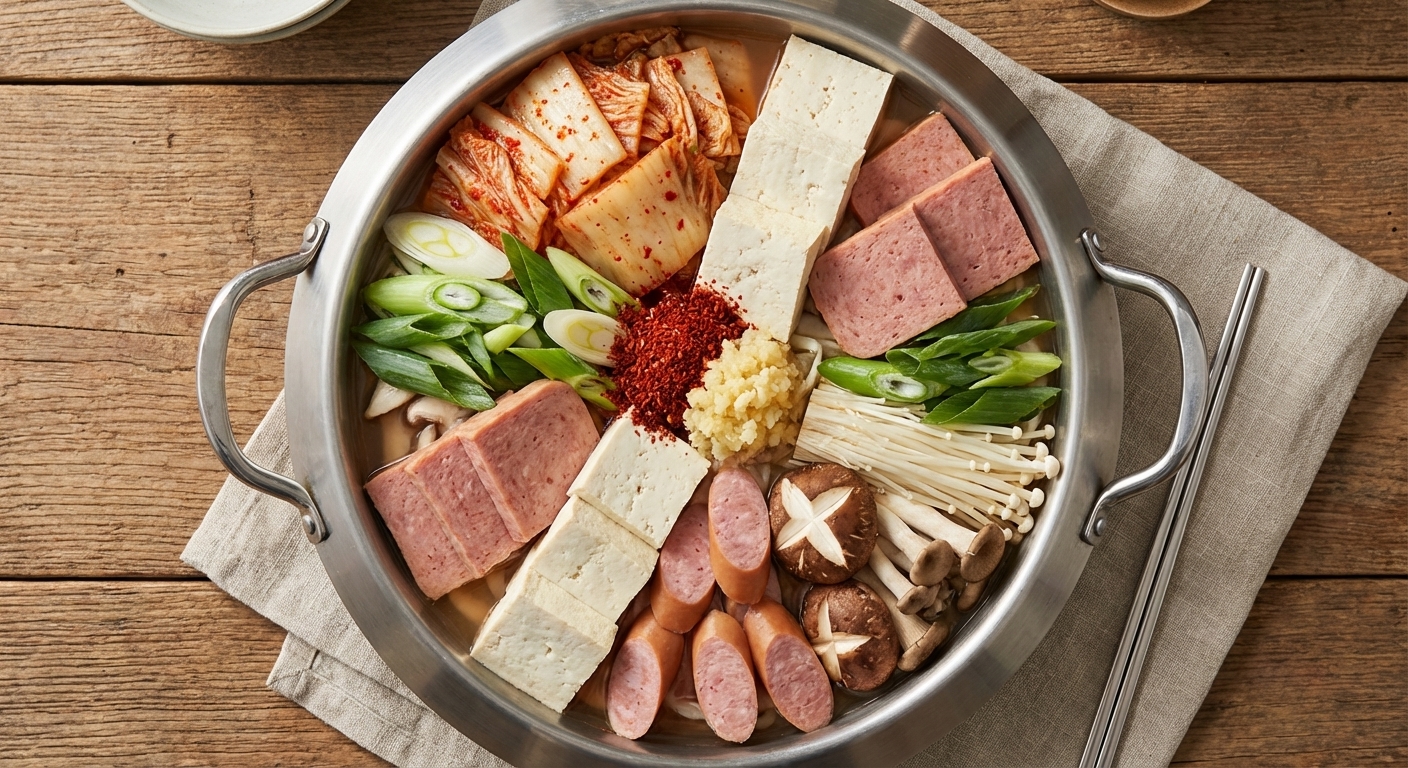
Common Questions
Is budae jjigae very spicy?
It can be, but it does not have to be. For mild, start with less gochugaru and gochujang, and add extra broth. For spicy, increase gochugaru, add more gochujang, and finish with a little sliced chili.
What if I cannot find gochugaru?
Gochugaru is worth grabbing if you can because it tastes fruity and not harsh. In a pinch, use a mix of crushed red pepper plus a tiny pinch of smoked paprika for color. Start small and adjust.
Do I have to use Spam?
No, but it is part of the classic vibe. Swap with ham, bologna, smoked sausage, or even shredded rotisserie chicken. If you skip processed meats entirely, add mushrooms and extra tofu, and bump up the broth seasoning.
Are baked beans really a thing in budae jjigae?
Yes. A spoonful of canned baked beans is one of the most iconic, old-school add-ins. It sounds odd until you try it. The sweetness rounds out the spicy, tangy broth in a very comforting way. Start with a small amount so it does not take over.
What are good add-ins besides ramen?
Tteok (Korean rice cakes) are a favorite if you want that chewy bite. Fish cake, extra mushrooms, or more cabbage are also great. Add quicker-cooking things (noodles) near the end, and give rice cakes a little more time to soften.
Can I make this in advance?
Yes. The broth tastes even better the next day. Prep all toppings and keep them separate, then layer and simmer right before serving so everything stays pretty and the noodles do not overcook.
What kind of kimchi works best?
Well-fermented kimchi is ideal because it brings tang and depth. If your kimchi is very fresh and mild, add a splash of kimchi juice or a little rice vinegar to wake it up.
My broth tastes too salty. What happened?
Spam, sausage, kimchi, and ramen seasoning packets all vary a lot in salt. Use low-sodium stock, go easy on the kimchi juice at first, and add soy sauce only after tasting. If it is already salty, dilute with more stock or water. You can also use less ramen seasoning, or skip it entirely.