Common Questions
Is cassava the same as yucca?
They sound identical, which is rude. Cassava is yuca, the starchy root you eat. Yucca is an ornamental plant (spiky, dramatic, not dinner).
Do I have to boil cassava before baking or air frying?
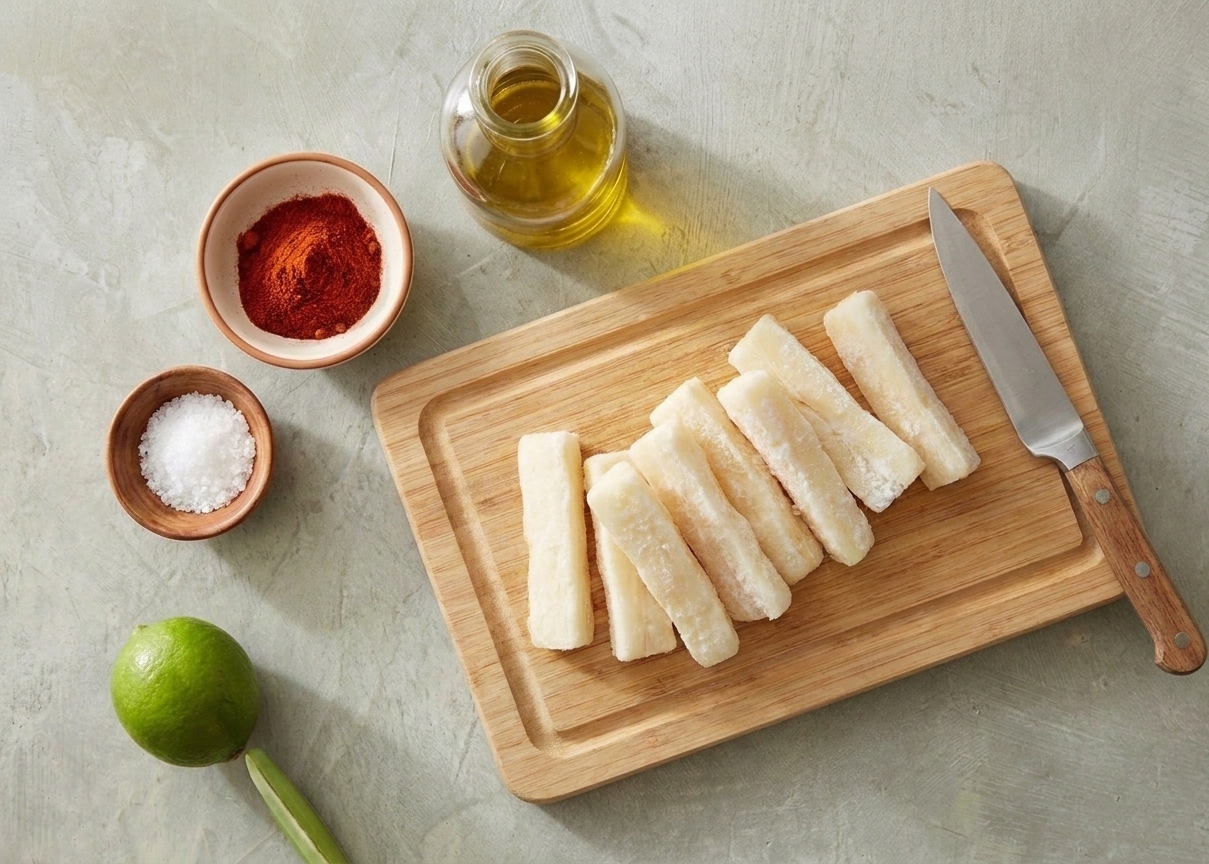
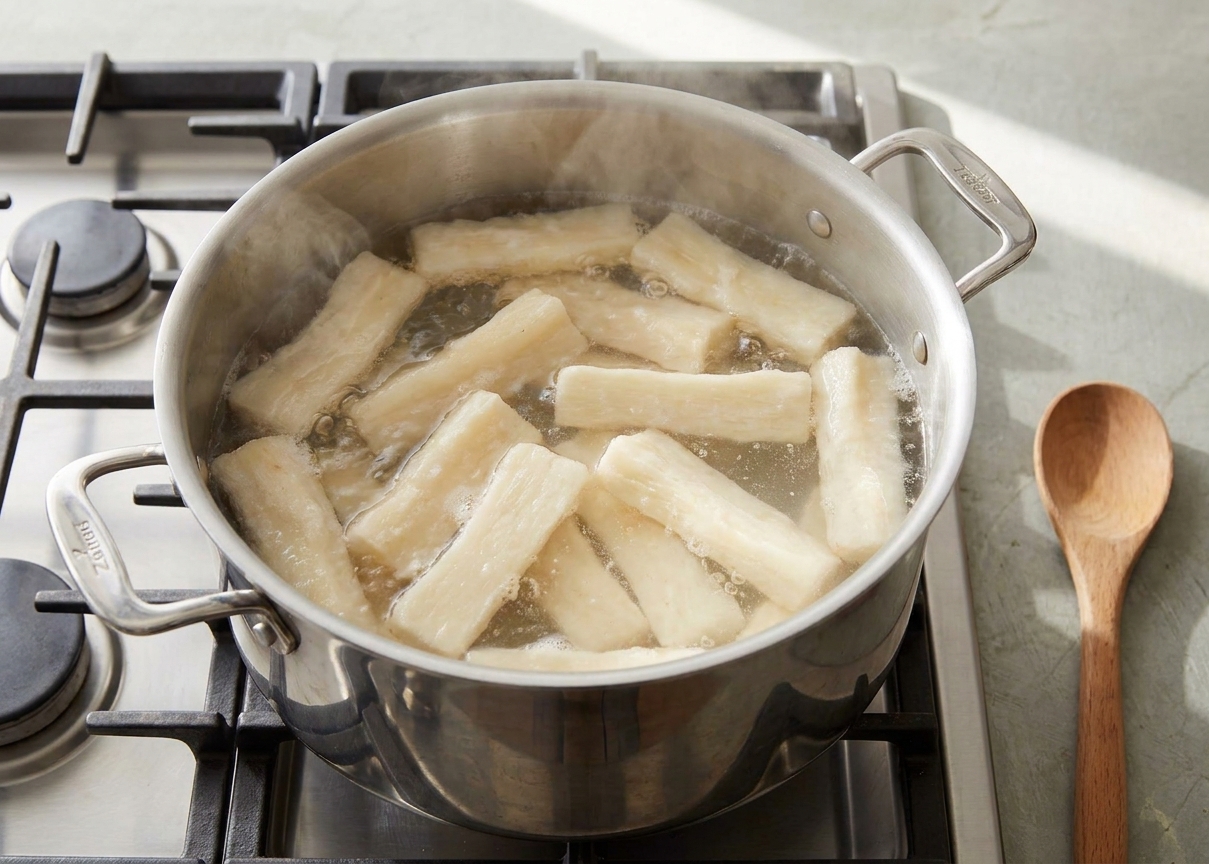
Yes. Frozen yuca is sometimes par-cooked, but it varies by brand and cut size. The real test is simple: boil it until fork-tender and a knife slides in easily. For fresh cassava, boiling is essential for tenderness and texture.
How do I prep fresh cassava?
Peel off the thick brown skin and the pinkish layer underneath, then cut into even batons. If you see a firm core running down the center, cut it out. Boil until truly tender, then drain and dry well before baking, air frying, or deep frying.
Why did my cassava fries turn gummy?
Usually one of three things: (1) the yuca was not cooked tender enough before frying, (2) you did not dry the pieces well, or (3) the pan was crowded so they steamed instead of crisped. Also, cassava is starchier than potatoes, so it needs a little more space and heat.
Is cassava safe to eat?
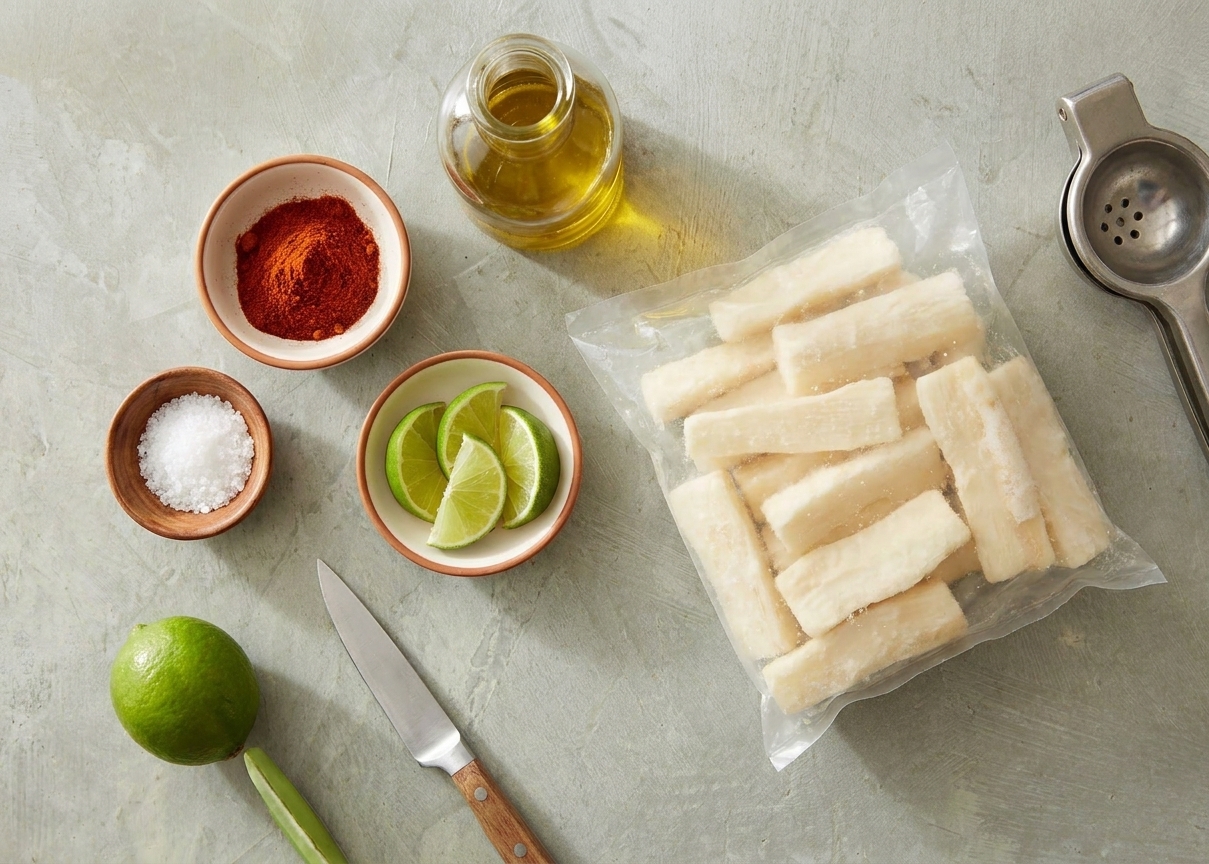
Yes, when it is properly processed and cooked. Cassava contains naturally occurring cyanogenic compounds that are reduced by proper peeling, soaking or boiling, and thorough cooking. Do not eat cassava raw. Store-bought frozen yuca is a very home-cook-friendly option because it is already peeled and prepared.
Can I deep fry these?
Absolutely. After boiling and drying, fry at 350°F until golden, about 4 to 8 minutes depending on thickness. Fry in batches and let the oil return to temperature between batches. Drain and salt immediately.
What should I serve with cassava fries?
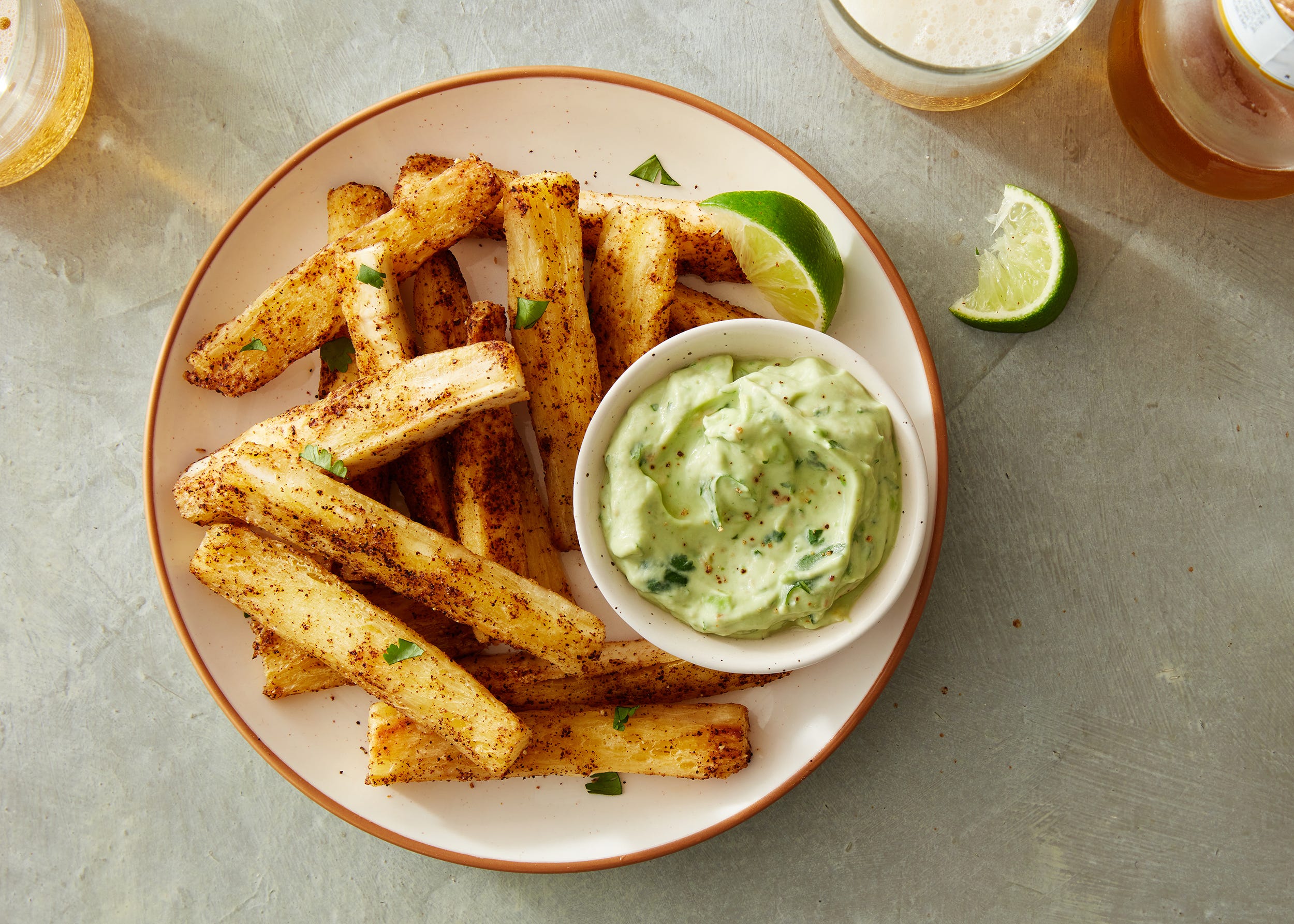
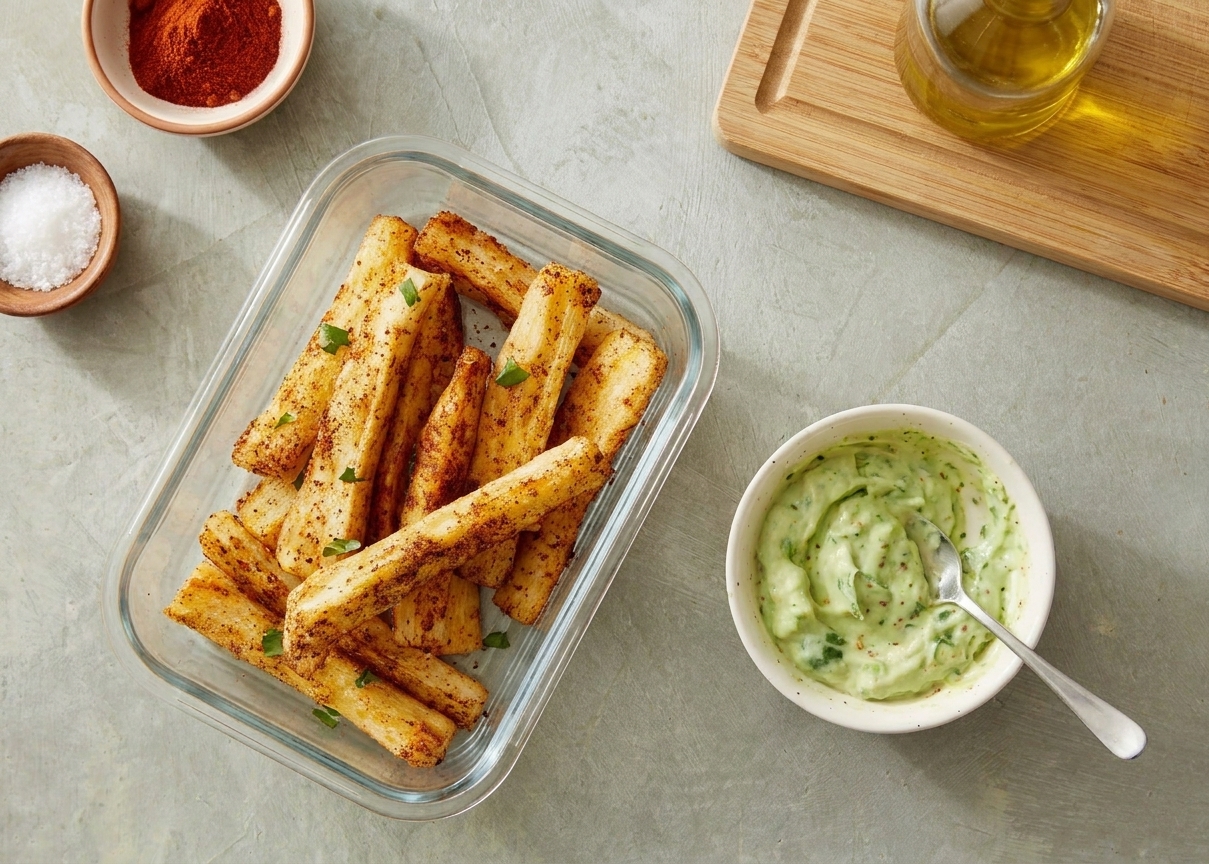
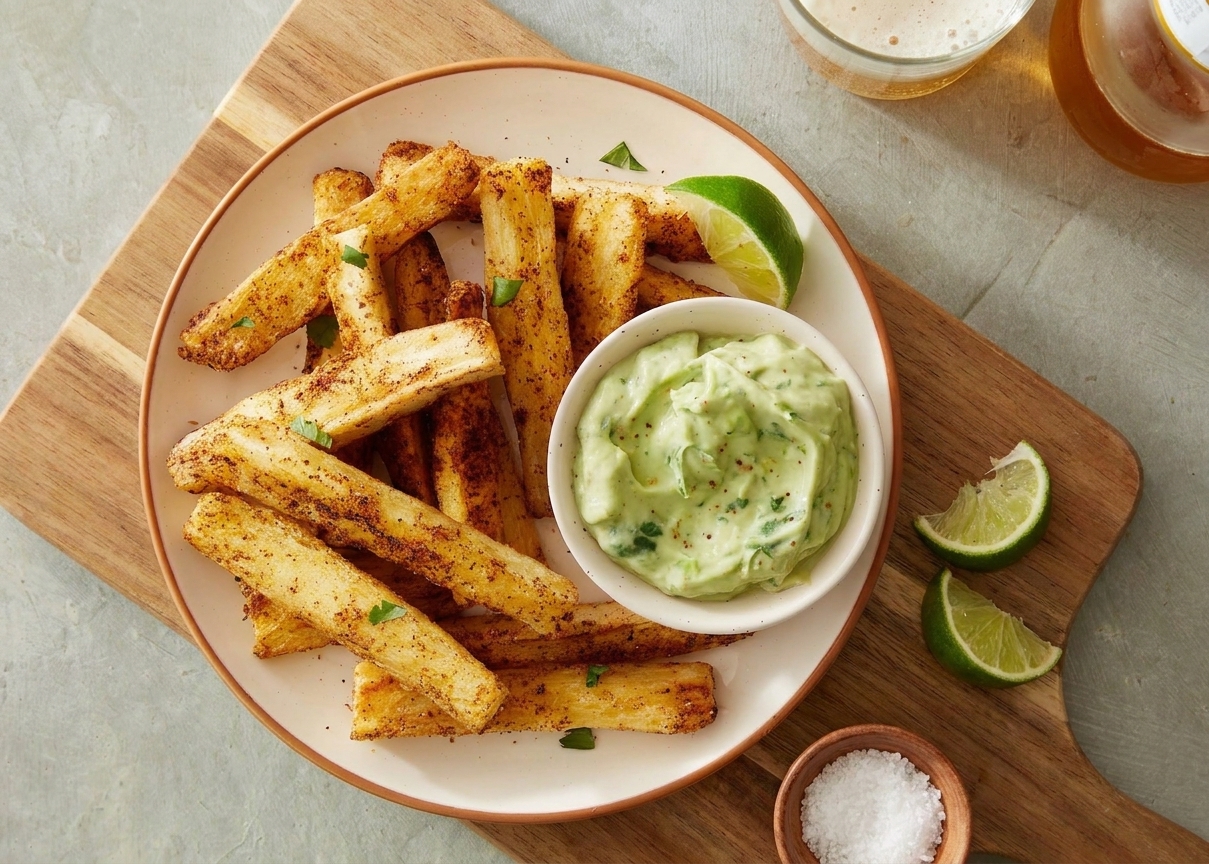
Anything you would pair with regular fries: burgers, grilled chicken, mojo-style pork, black beans, or a big crunchy salad. Or do my favorite move: fries for dinner with extra aioli and zero apologies.