Mom's Best Recipes
Recipe

Cast Iron Filet Mignon

A simple cast iron method for tender filet mignon with crispy edges and a fast garlic butter baste.

Author By Matt Campbell
4.8
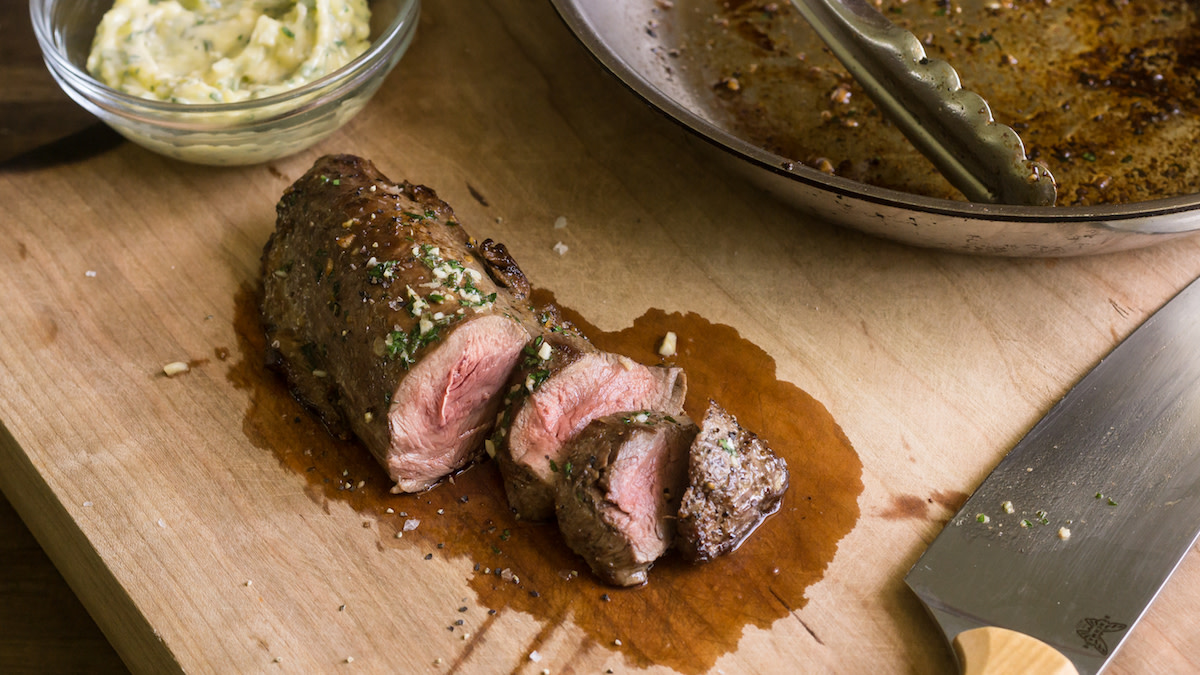
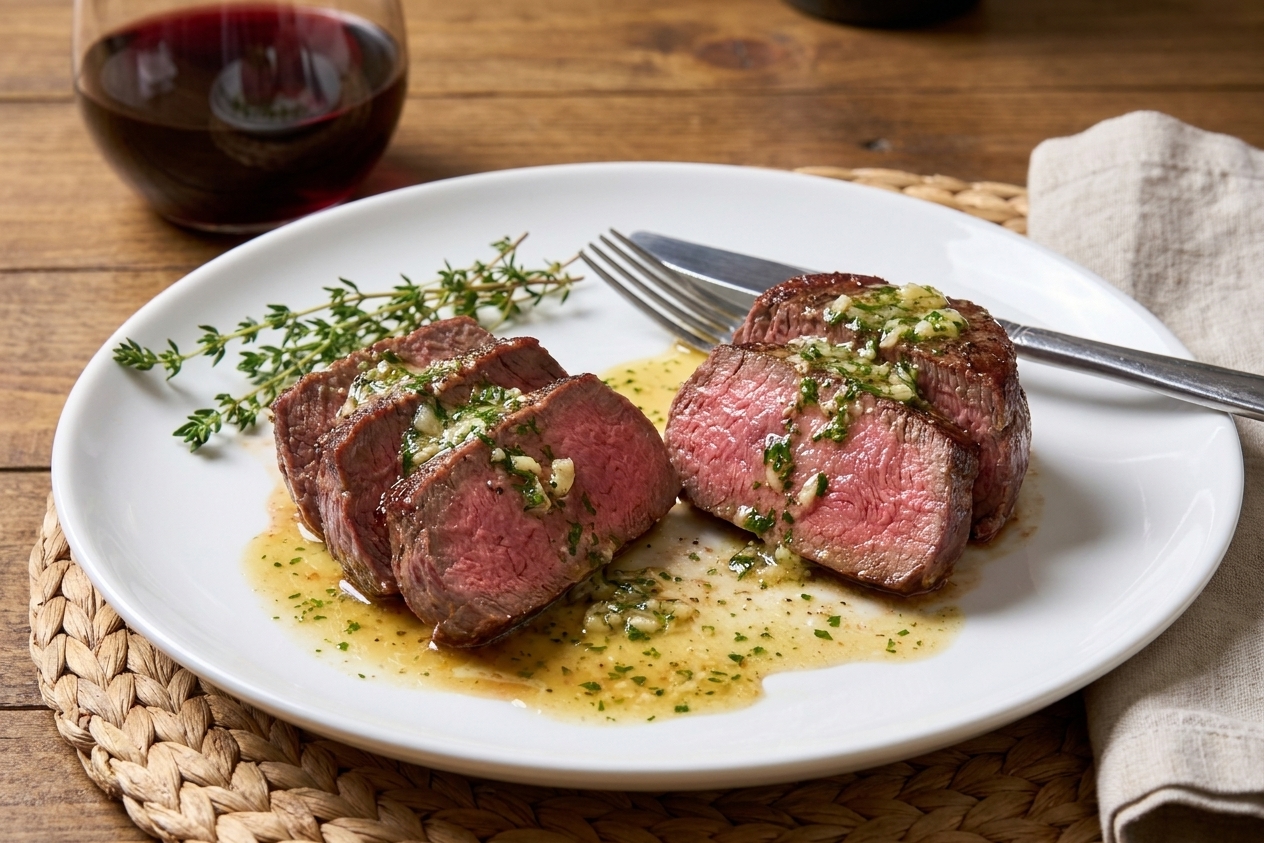
A plated cast iron seared filet mignon sliced and topped with melting garlic butter, served with flaky salt on a warm ceramic plate at a softly lit dinner table

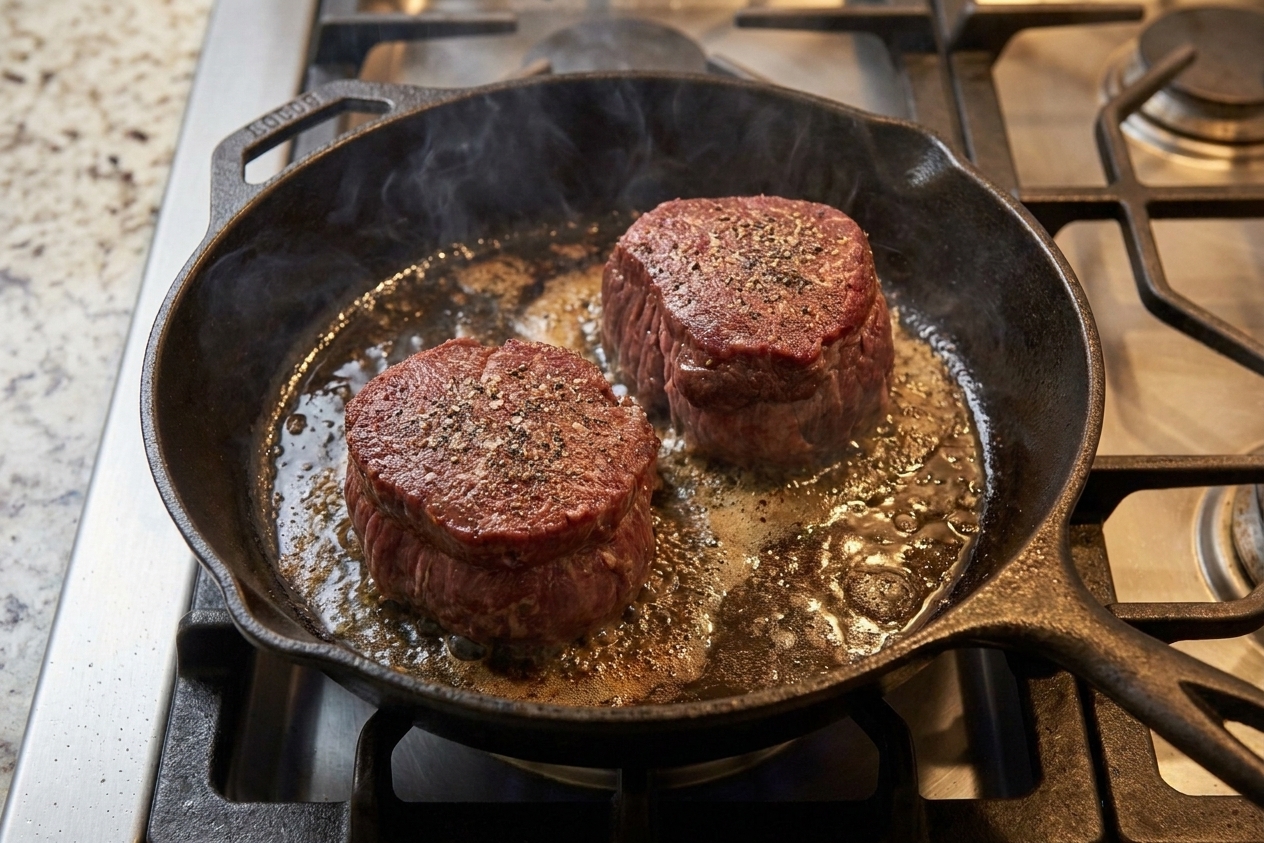
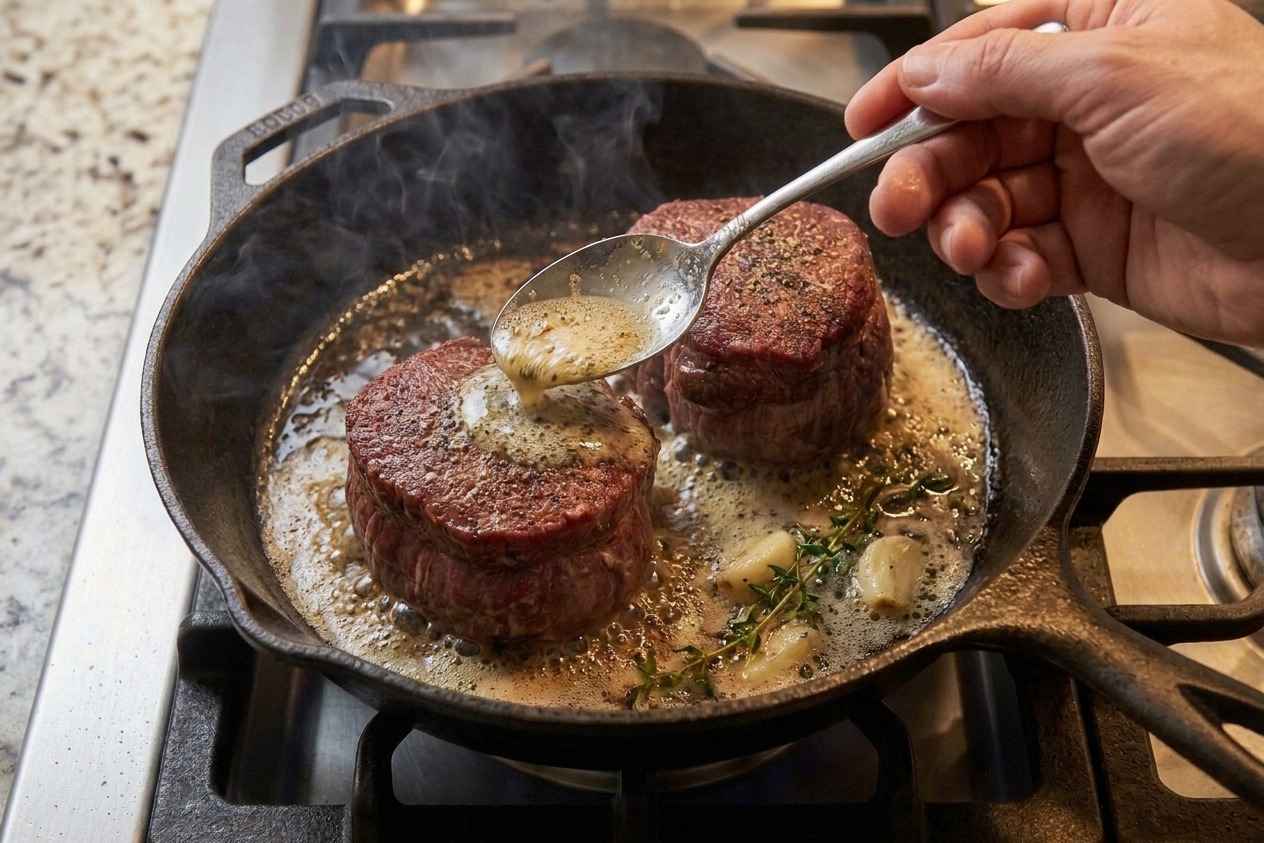
Filet mignon is the steak you cook when you want maximum tenderness with minimum drama. It is naturally lean, so the goal is not to bully it into submission. We are going for a hard, fast sear for those crisp edges, then a short oven finish to hit your exact doneness, then a rest so the juices stay where they belong.

This is my favorite weeknight-steakhouse move: cast iron, butter, garlic, thyme, and a little confidence. Taste as you go, keep a thermometer nearby, and do not be afraid to spoon hot butter over the top like you are painting a masterpiece.

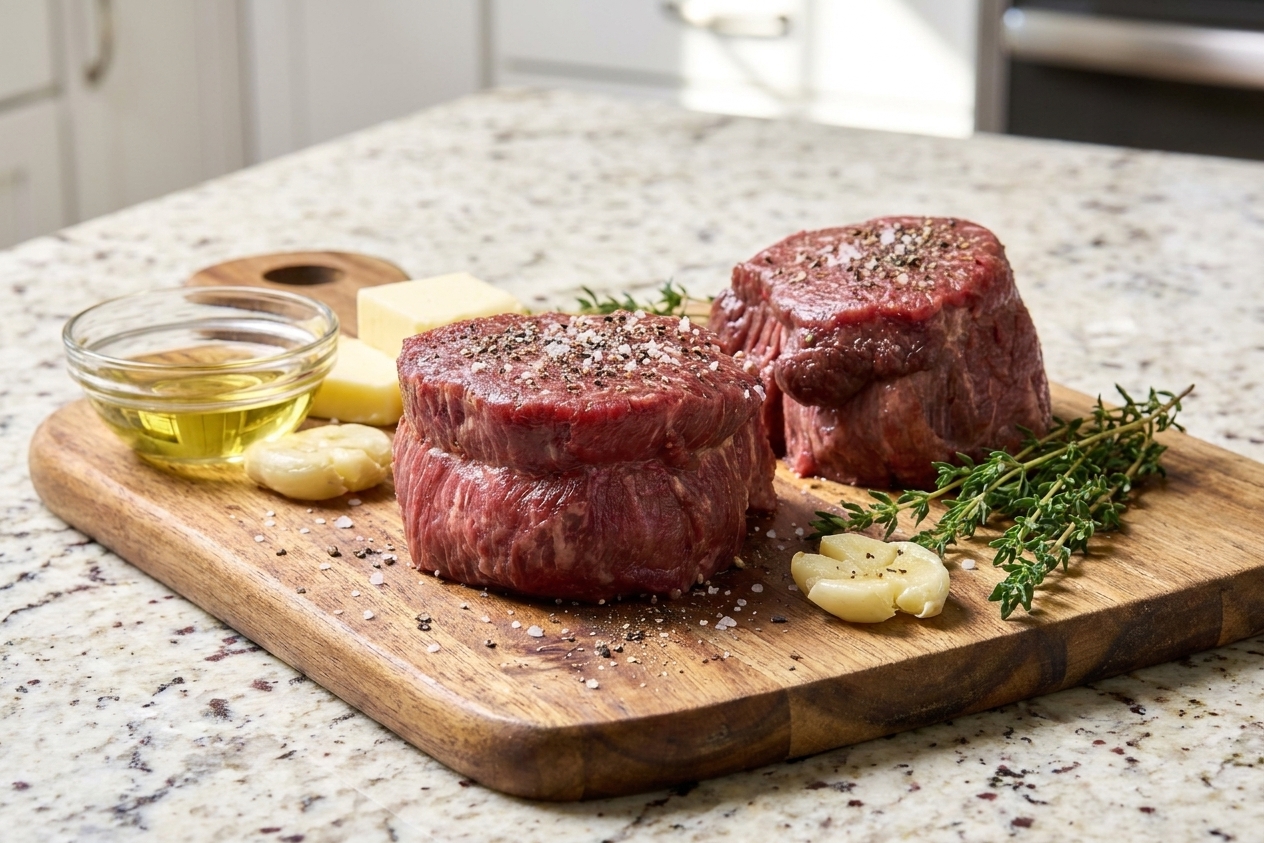
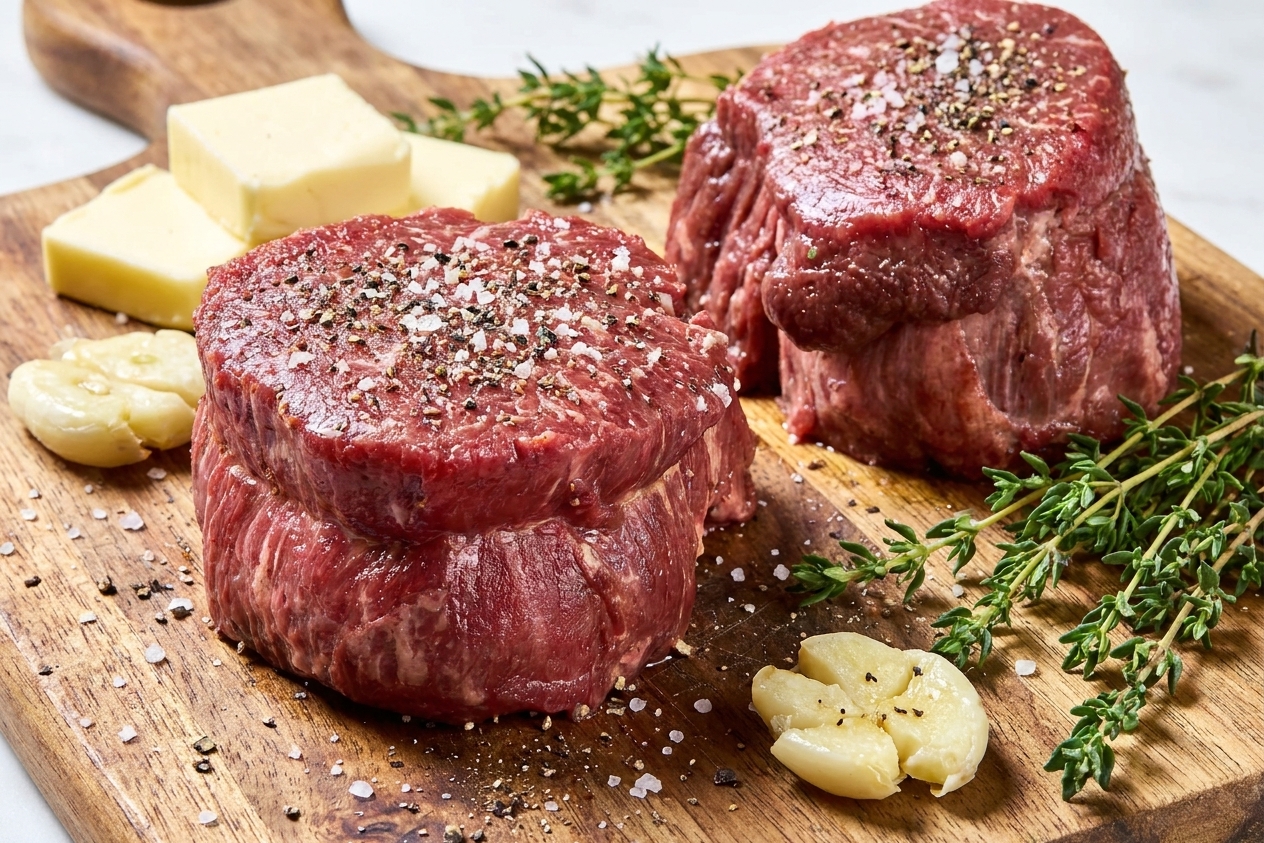
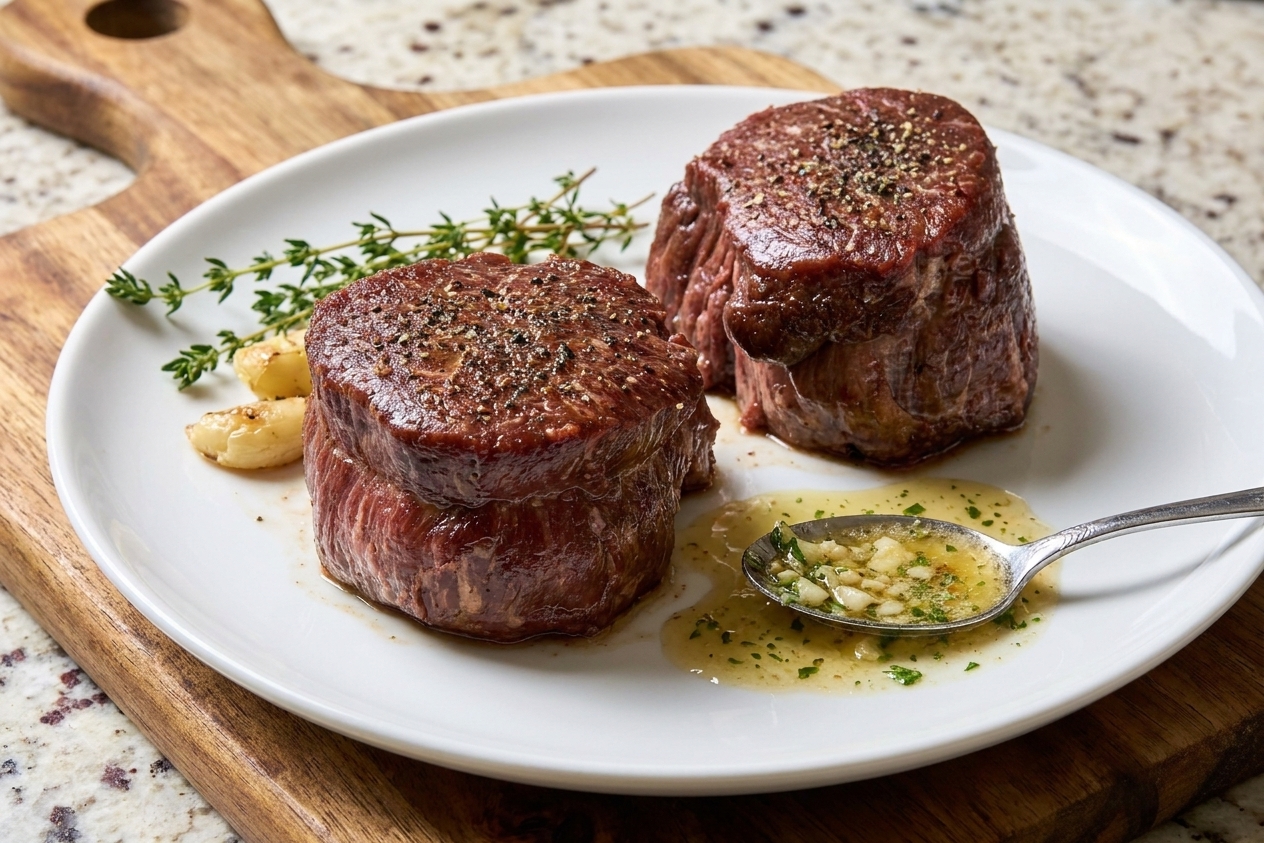
Raw filet mignon steaks on a cutting board with kosher salt, black pepper, garlic cloves, fresh thyme, butter, and a small bowl of neutral oil on a clean kitchen counter

Why It Works

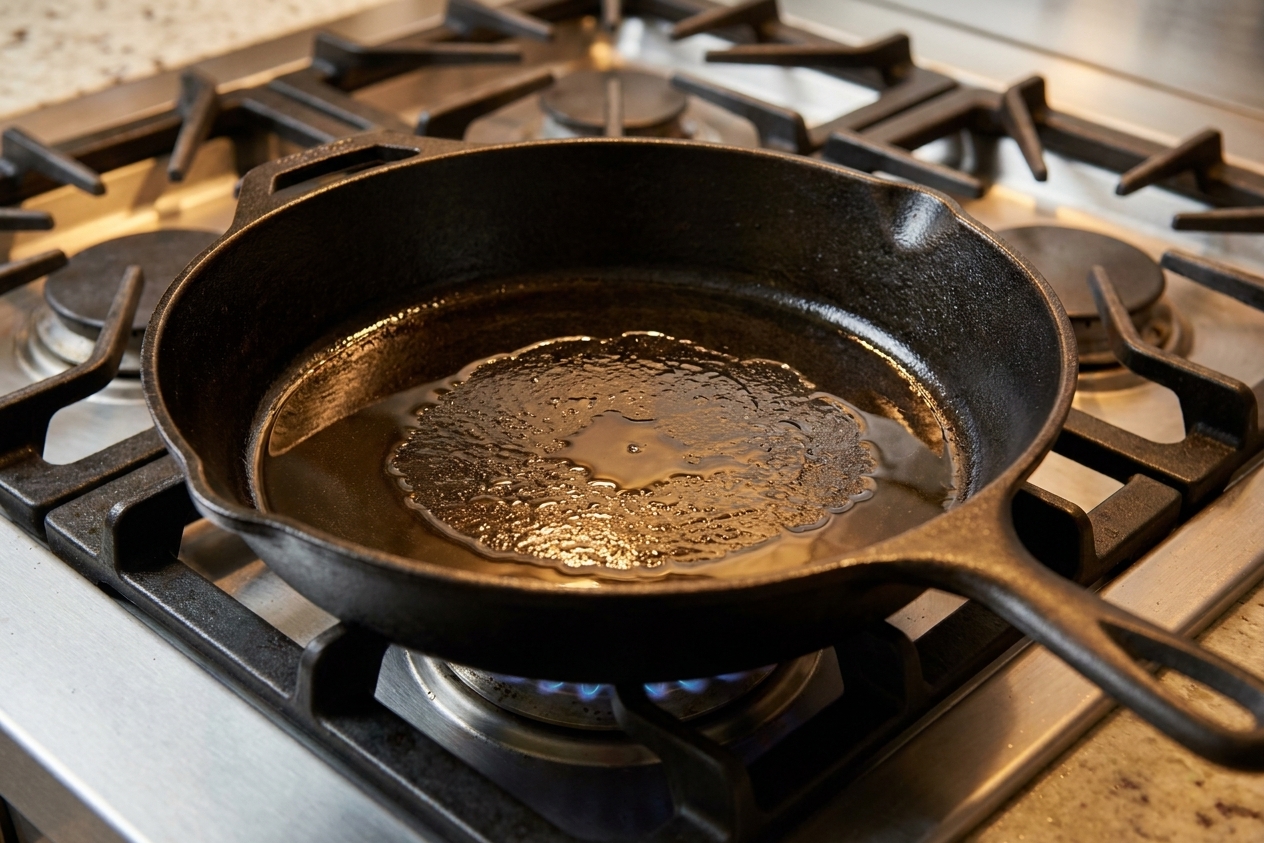
  • Steakhouse sear at home: Cast iron gets ripping hot, which means a browned crust without overcooking the center.
  • Perfect doneness on purpose: A quick oven finish plus a thermometer takes the guesswork out.
  • Big flavor for a lean cut: Butter basting with garlic and thyme adds richness without masking filet’s clean, beefy taste.
  • Low ingredient count: No marinades, no mystery rubs, just good basics used the right way.

Pairs Well With

Storage Tips

Refrigerate: Cool leftover filet, then store in an airtight container for up to 3 days.

Reheat gently (best method): Bring steak toward room temp for 15 minutes. Warm in a covered skillet over low heat with a teaspoon of water or a small pat of butter, flipping once, just until heated through.

Oven reheat option: Place steak on a sheet pan, cover loosely with foil, and warm at 250°F until it reaches about 95 to 105°F inside. Sear for 30 seconds per side if you want the crust to wake up again.

Skip the microwave if you can: Filet is lean, and the microwave loves turning it from tender to tight.

Leftover ideas: Slice thin for steak salad, tuck into a toasted baguette with horseradish mayo, or dice into an egg scramble with onions and mushrooms.

Common Questions

How do I know when filet mignon is done?

Use an instant-read thermometer and pull the steak a little early because carryover cooking is real. For filets around 1 1/2 inches thick, a good rule is to pull about 5°F early (sometimes up to 10°F, depending on thickness and how hot the pan is).

  • Rare: 120 to 125°F (pull at about 115 to 120°F)
  • Medium-rare: 130 to 135°F (pull at about 125 to 130°F)
  • Medium: 140 to 145°F (pull at about 135 to 140°F)

Then rest 5 to 10 minutes.

Should I marinate filet mignon?

Usually no. Filet is already tender, and most marinades are better for tougher cuts. Salt, pepper, and a butter baste deliver more “wow” with less fuss.

What is the best pan for filet mignon?

Cast iron is the classic because it holds heat and sears aggressively. Stainless steel also works. Nonstick is not ideal for high-heat searing.

Can I cook filet mignon without an oven?

Yes, especially if your filets are 1 to 1 1/2 inches thick. Sear, then lower the heat to medium-low and continue cooking, flipping every minute or so, until you hit your target internal temperature.

Why is my filet tough?

The usual culprits are overcooking, not resting, or starting with a steak that is too cold. Let it sit out for 20 to 30 minutes to take the chill off, and pull it at the right temperature.

Do I need to tie filet mignon?

If the steak is uneven or looks like it will “flop,” a simple loop of kitchen twine helps it cook more evenly. Many store-cut filets are already neat enough to skip it.

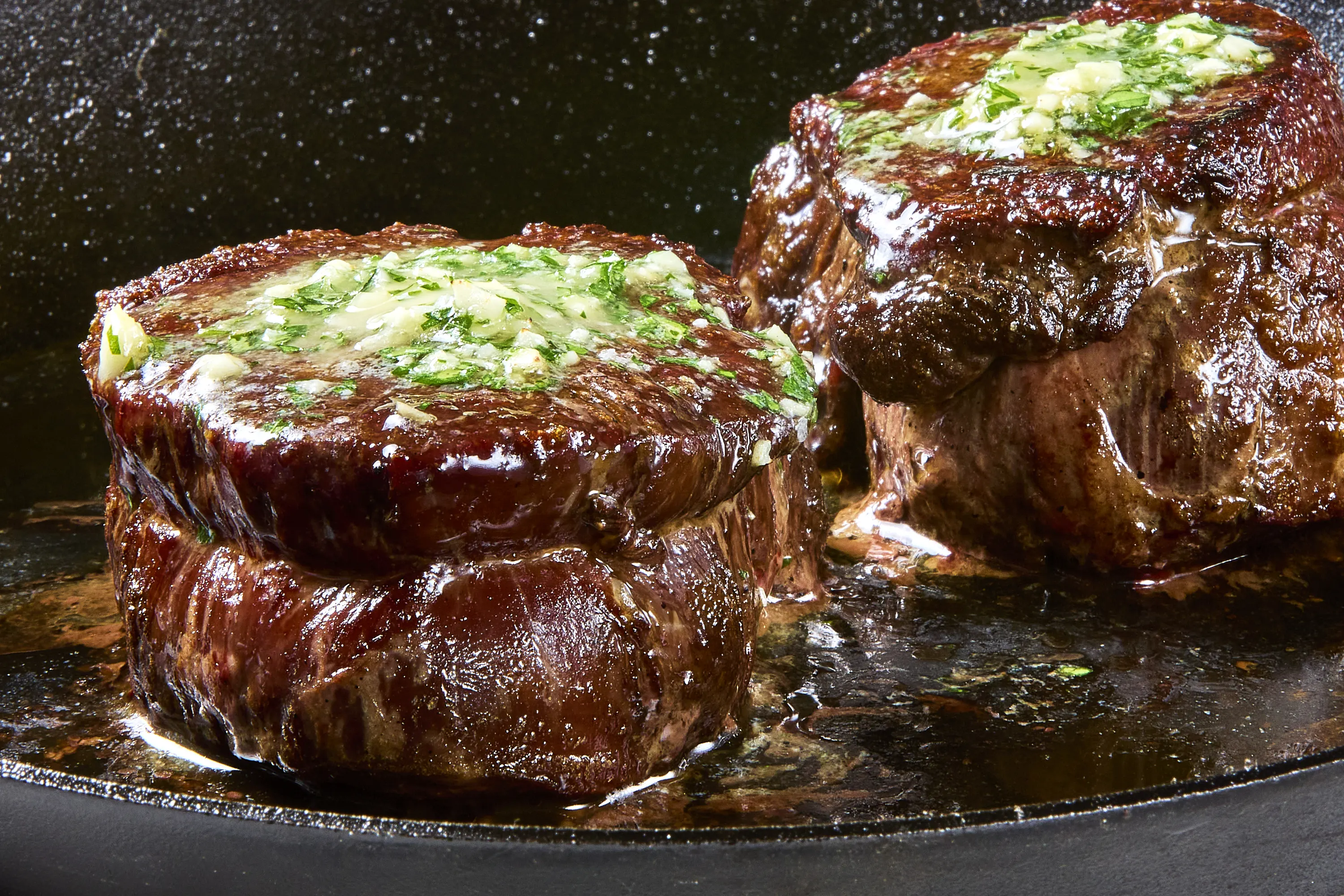
Filet mignon used to intimidate me because it is expensive and kind of quiet. It does not have the dramatic fat cap of a ribeye to bail you out. The first time I nailed it, it was honestly because I stopped trying to be clever and just focused on the basics: dry the surface, season like you mean it, sear hard, then let the oven do the gentle part. Now it is my go-to “I cooked, but also I did not ruin my evening” dinner. Butter basting is the fun part, like you are giving the steak a little spa treatment before you eat it.