Mom's Best Recipes
Recipe

Cast Iron Strip Steak

A steakhouse-style strip steak with a hard sear, quick garlic thyme butter baste, and doneness temps that keep it juicy.

Author By Matt Campbell
4.8
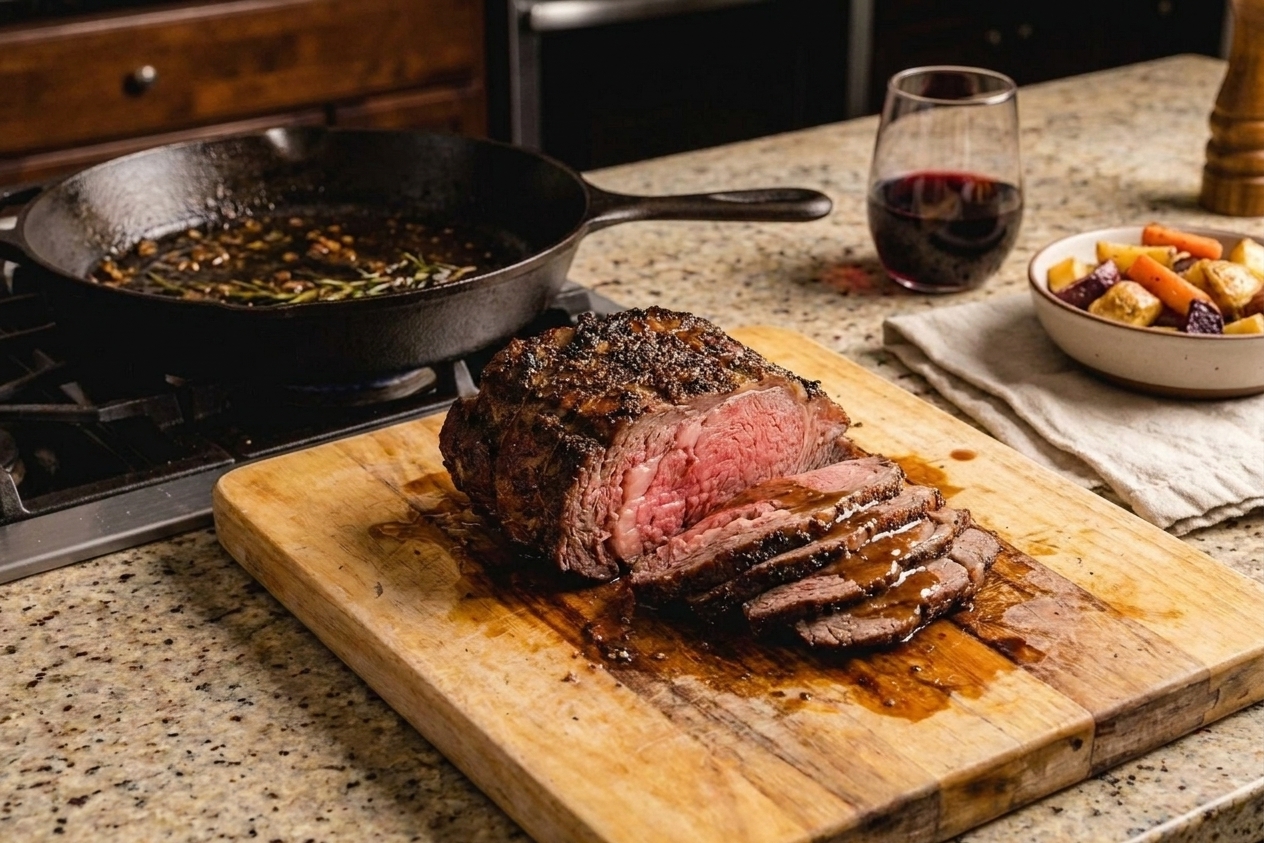
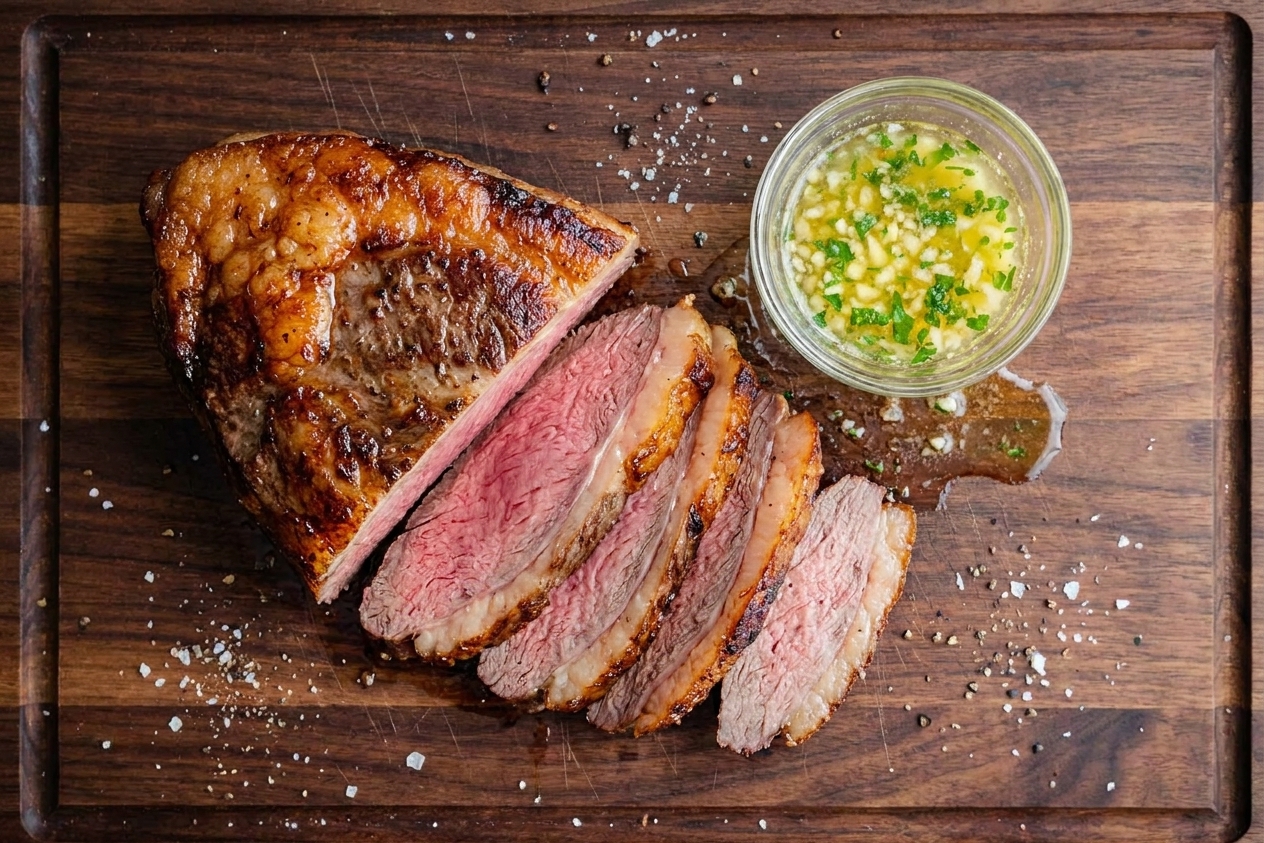
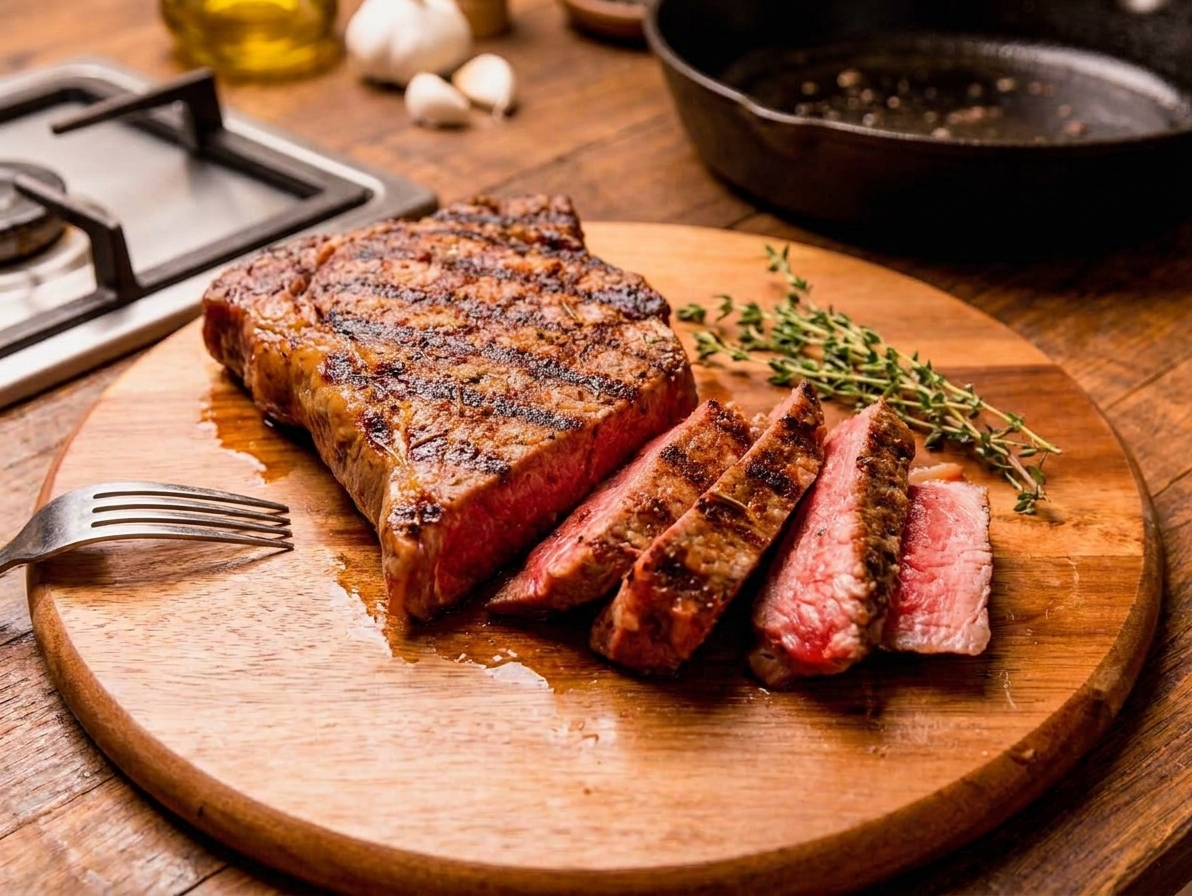
A sliced striploin steak with a deep brown crust on a cutting board, topped with melting garlic herb butter, with a cast iron skillet in the background on a home kitchen stove

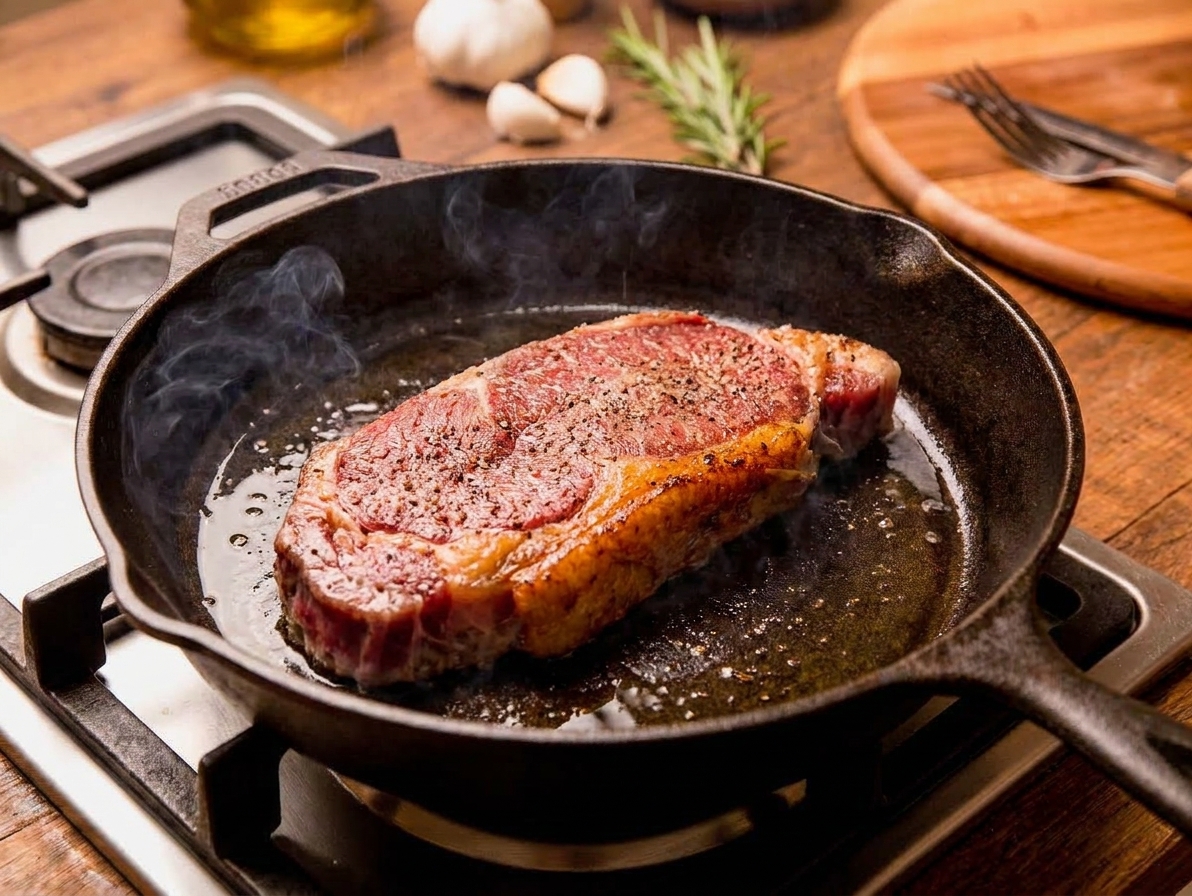
Striploin steak is my favorite kind of fancy that does not require a whole personality shift. It is bold, beefy, and forgiving enough to nail on a Tuesday, as long as you respect two things: dry surface and hot pan.

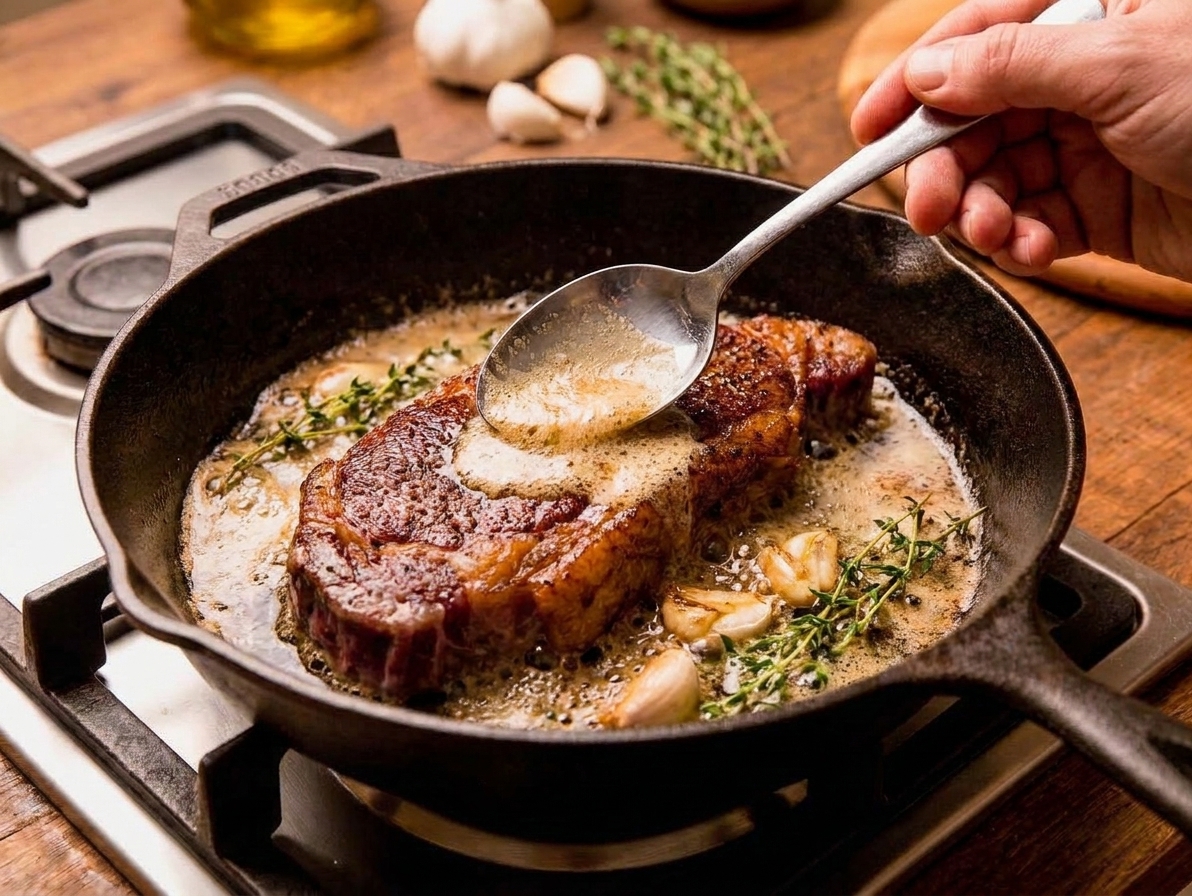
This recipe is my go-to cast iron method for a strip steak that gets those crisp edges and that "did you secretly order takeout" crust, with a quick garlic herb butter baste at the end. No complicated marinades, no weird gadgets, just a skillet, a thermometer if you have one, and the confidence to let the steak rest while you "casually" hover nearby.

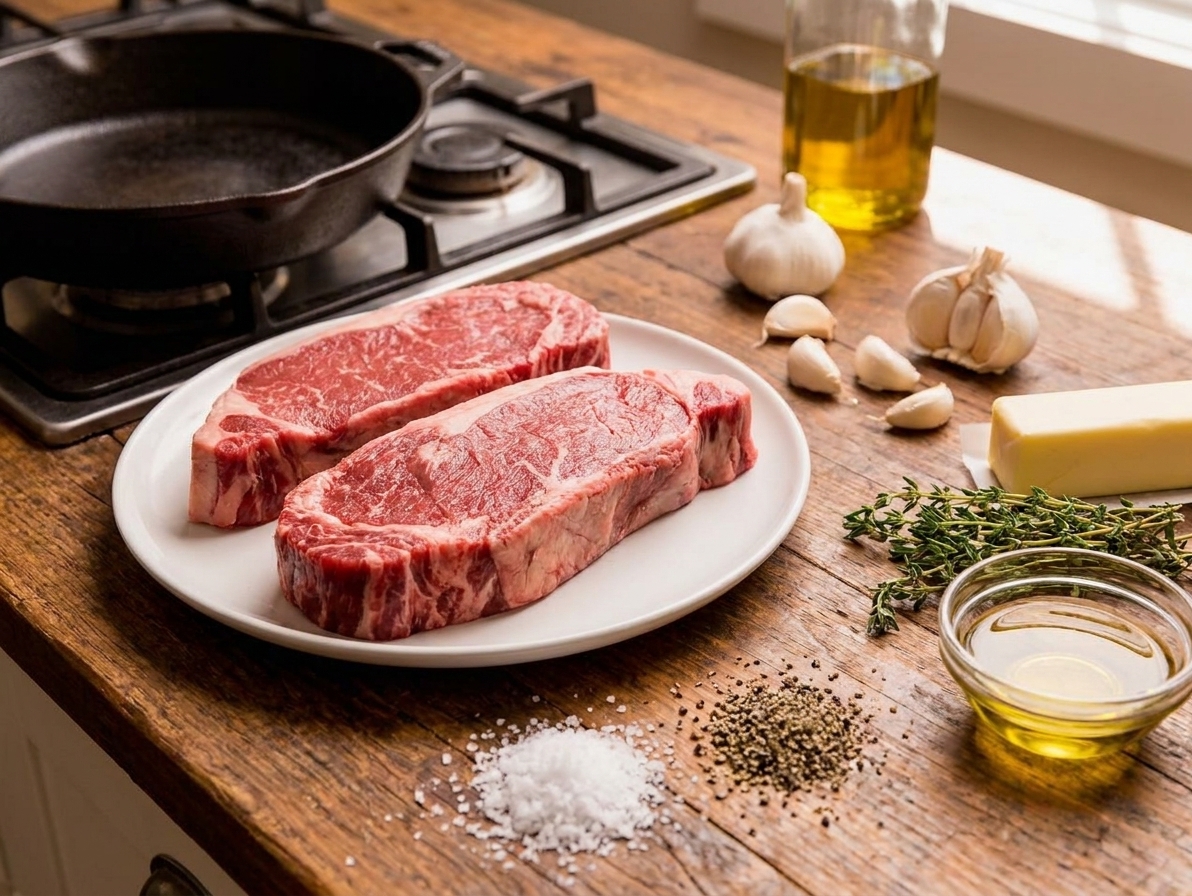
Raw striploin steaks on a plate with kosher salt, black pepper, garlic, butter, fresh thyme, and a small bowl of neutral oil arranged on a bright kitchen counter

Why It Works

  • Big crust, juicy center: Drying the steak and searing hard builds that golden brown exterior without overcooking inside.
  • Fast flavor boost: Garlic, thyme, and butter turn into an instant pan sauce you can spoon over every slice.
  • Reliable doneness: Simple internal temp targets so you can hit medium-rare or medium on purpose.
  • Works with what you have: Cast iron is ideal, but any heavy stainless skillet works too.

Pairs Well With

Storage Tips

Refrigerate: Cool leftover steak, then store in an airtight container for up to 3 to 4 days.

Freeze: Wrap tightly in plastic wrap, then foil (or a freezer bag). Freeze up to 2 months for best texture. It can be safe longer, but quality starts to slide.

Reheat without turning it into shoe leather:

  • Best: Slice cold steak, then warm gently in a skillet with a small splash of broth or water, covered, over low heat.
  • Also good: Microwave at 50% power in short bursts with a damp paper towel over the top.

Leftover move: Thin slices + toasted bread + mayo + mustard + arugula. Steak sandwich therapy.

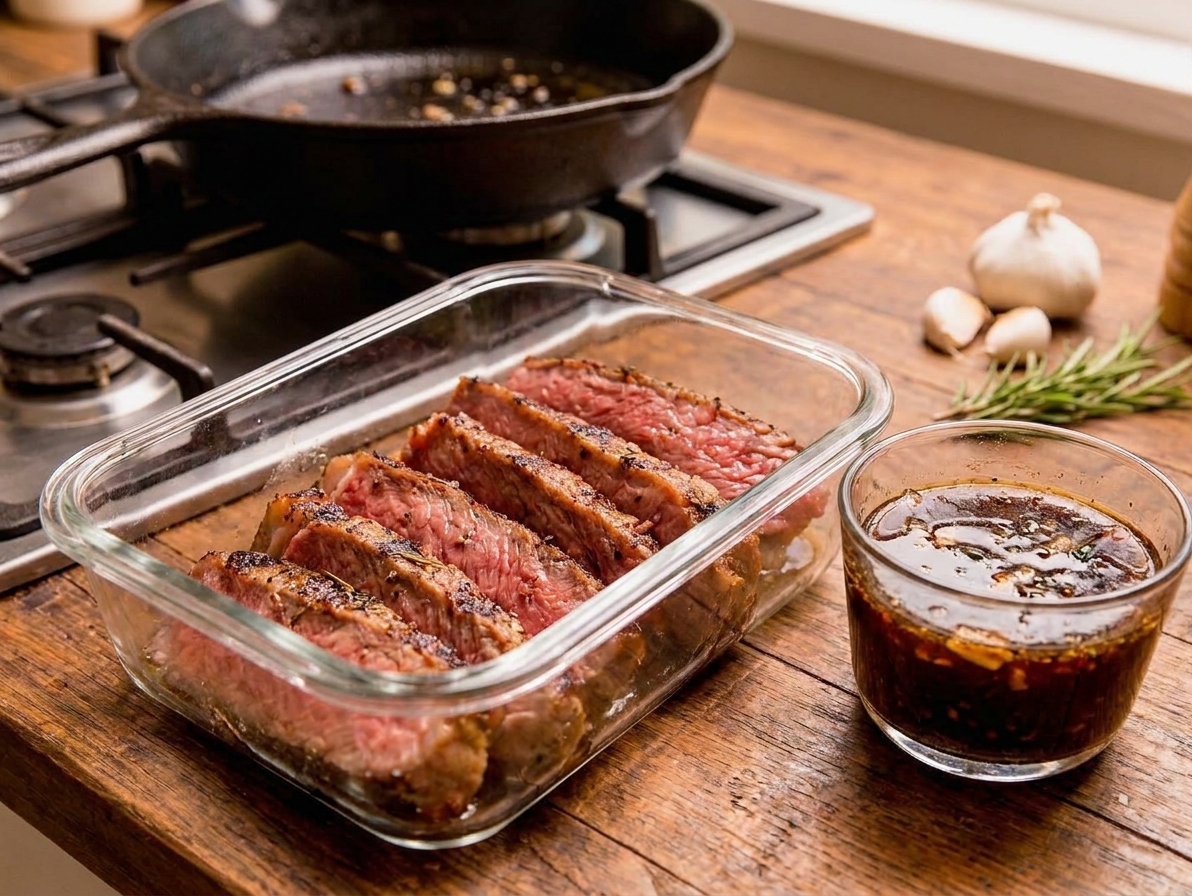
Sliced cooked striploin steak stored in a glass meal prep container with a small cup of pan juices beside it on a kitchen counter

Troubleshooting

  • Steak is thicker than 1.5 inches: After searing both sides, move the skillet to a 400°F oven and finish for 3 to 8 minutes, checking temp early. Then rest.
  • Pan is smoking like a campfire: Turn the heat down a notch, make sure you are using a high smoke point oil, and turn on your fan. A little smoke is normal. A full fog machine is not.
  • Why pull early? Carryover cooking is real, and it depends on thickness and how hot your pan is. Pulling a few degrees early plus resting helps you land on your target instead of blasting past it.

Common Questions

What is striploin steak?

Striploin is a common market term (especially in Canada) for the same general cut Americans often call a New York strip steak or strip steak. It comes from the short loin and is known for a bold beefy flavor and a fat cap along one edge that gets gloriously crisp when seared.

How thick should striploin be for pan searing?

Sweet spot is 1 to 1.5 inches. Thinner steaks cook fast and can overshoot. Thicker steaks are great, but you may want a short oven finish (see the troubleshooting note below).

Do I need to bring the steak to room temperature?

No. I do like taking it out for 15 to 20 minutes while you salt it and prep, but it is not mandatory. What matters more is a dry surface and a hot pan.

When should I salt the steak?

For this method, salt it at least 20 minutes before cooking (or up to overnight, uncovered in the fridge). That window helps the surface dry out and improves browning.

What internal temp should I cook striploin to?

  • Rare: pull at 120°F, rest to about 125°F
  • Medium-rare: pull at 125°F, rest to about 130°F
  • Medium: pull at 135°F, rest to about 140°F
  • Medium-well: pull at 145°F, rest to about 150°F

These are targets, not a test. Your pan and steak thickness change timing fast, so a thermometer is your best friend.

Food safety note: The USDA recommends 145°F with a 3-minute rest for whole cuts of beef. Many steak lovers intentionally cook below that for tenderness and juiciness. Use your judgment, and if you serve higher-risk folks (pregnant, elderly, immunocompromised), consider cooking to USDA guidance.

Can I cook this on the grill instead?

Absolutely. Grill over high heat, flip every 1 to 2 minutes for an even crust, then finish to temp. You can still melt the garlic herb butter over the sliced steak at the end.

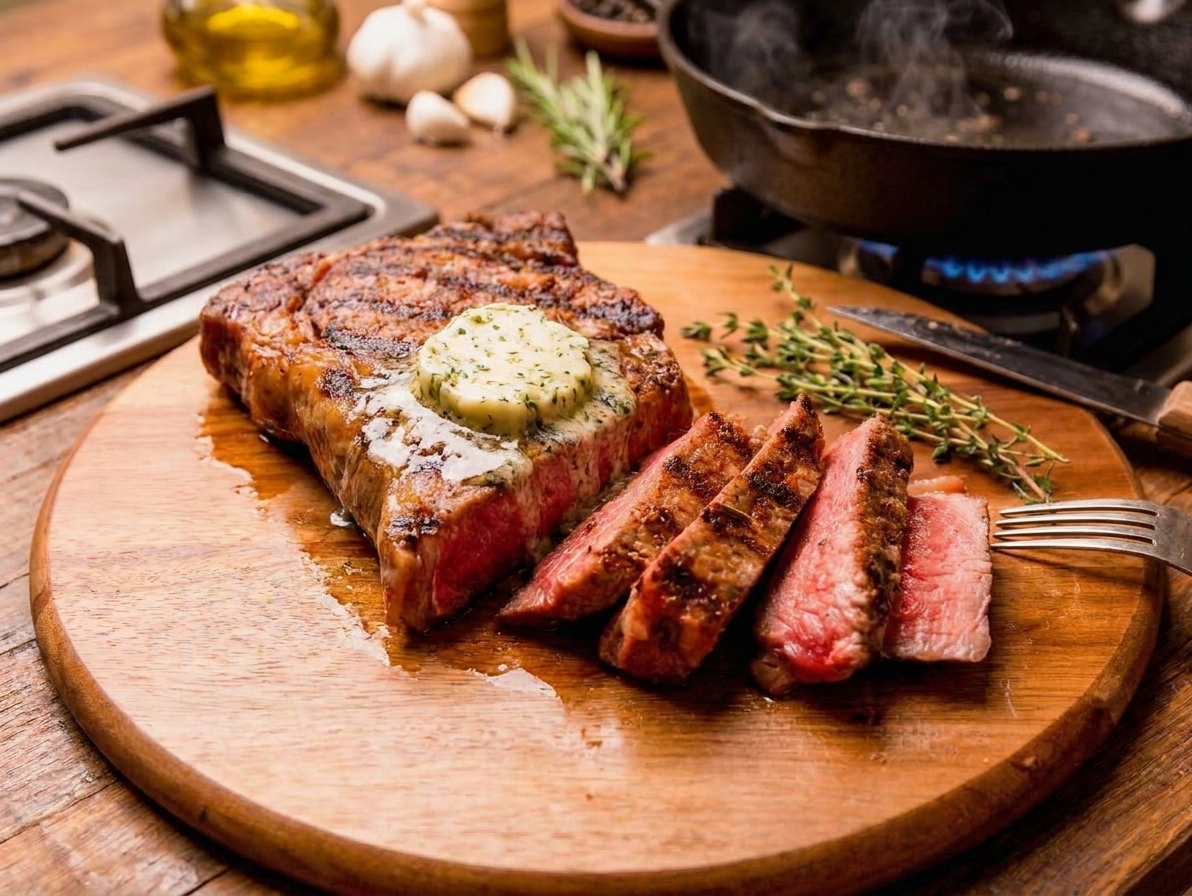
Striploin is the steak I make when I want something that feels like a restaurant night, but I still want to eat in sweatpants. The first time I really got it right, it was not some big chef moment. It was me realizing that most of my "bad steak" history was just impatience. I was flipping too soon, salting too late, and cutting into it like I was checking if it was still mad at me.

Now I treat it like a simple little ritual: salt, dry, sear, baste, rest. Then I slice it and spoon that garlicky butter over the top like I am trying to impress my future restaurant self.