Common Gumbo Questions
Do I need okra or filé powder?
Not required for a great chicken and sausage gumbo. Okra adds a grassy flavor and extra thickening. Filé powder (ground sassafras) adds a unique earthy note and a silky finish. This recipe relies on the roux for thickness, but you can absolutely add 1 to 2 cups sliced okra during the simmer, or stir in filé powder off the heat at the end. Start with 1 teaspoon, then add more to taste (filé potency varies and too much can over-thicken).
What is the best sausage for gumbo?
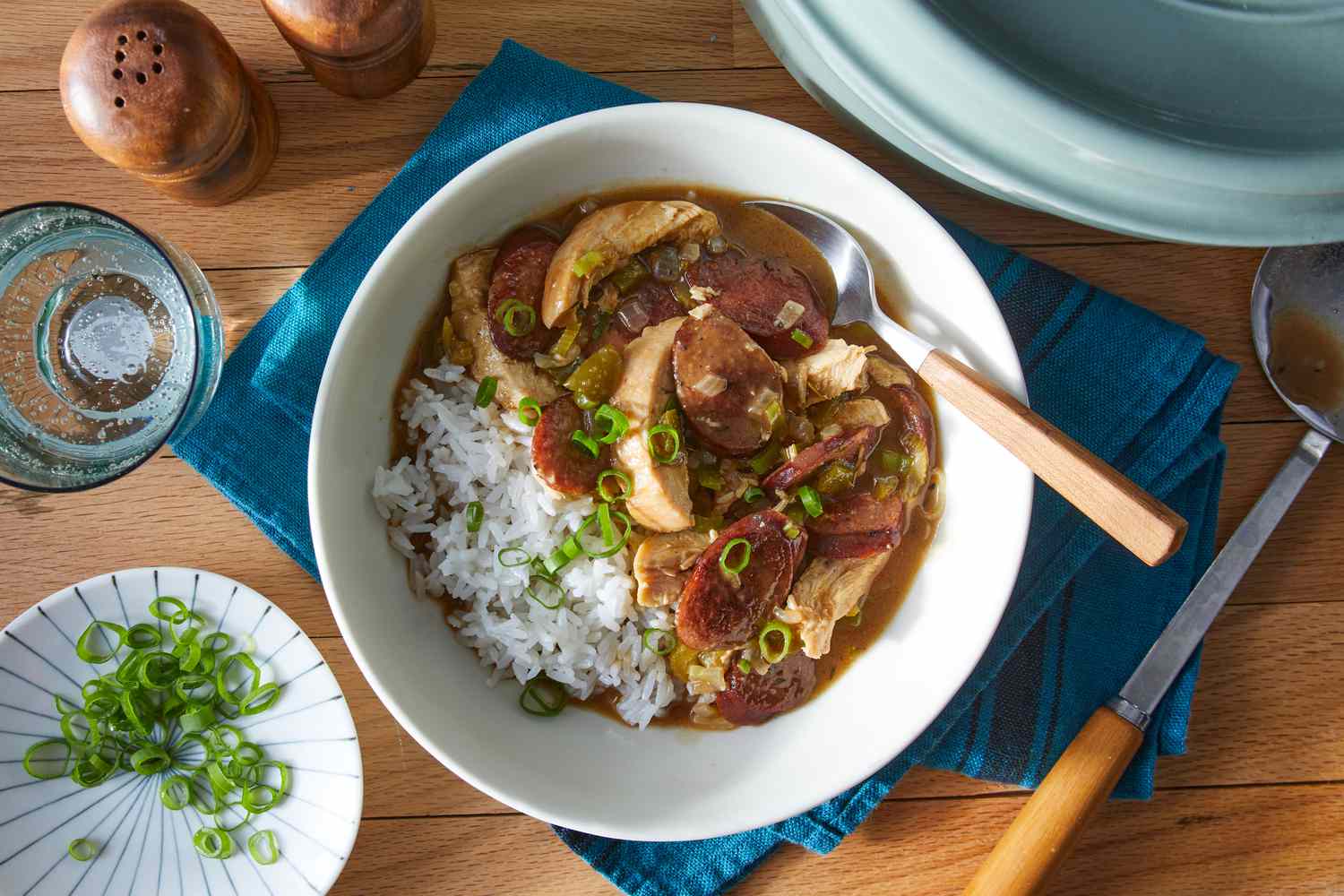
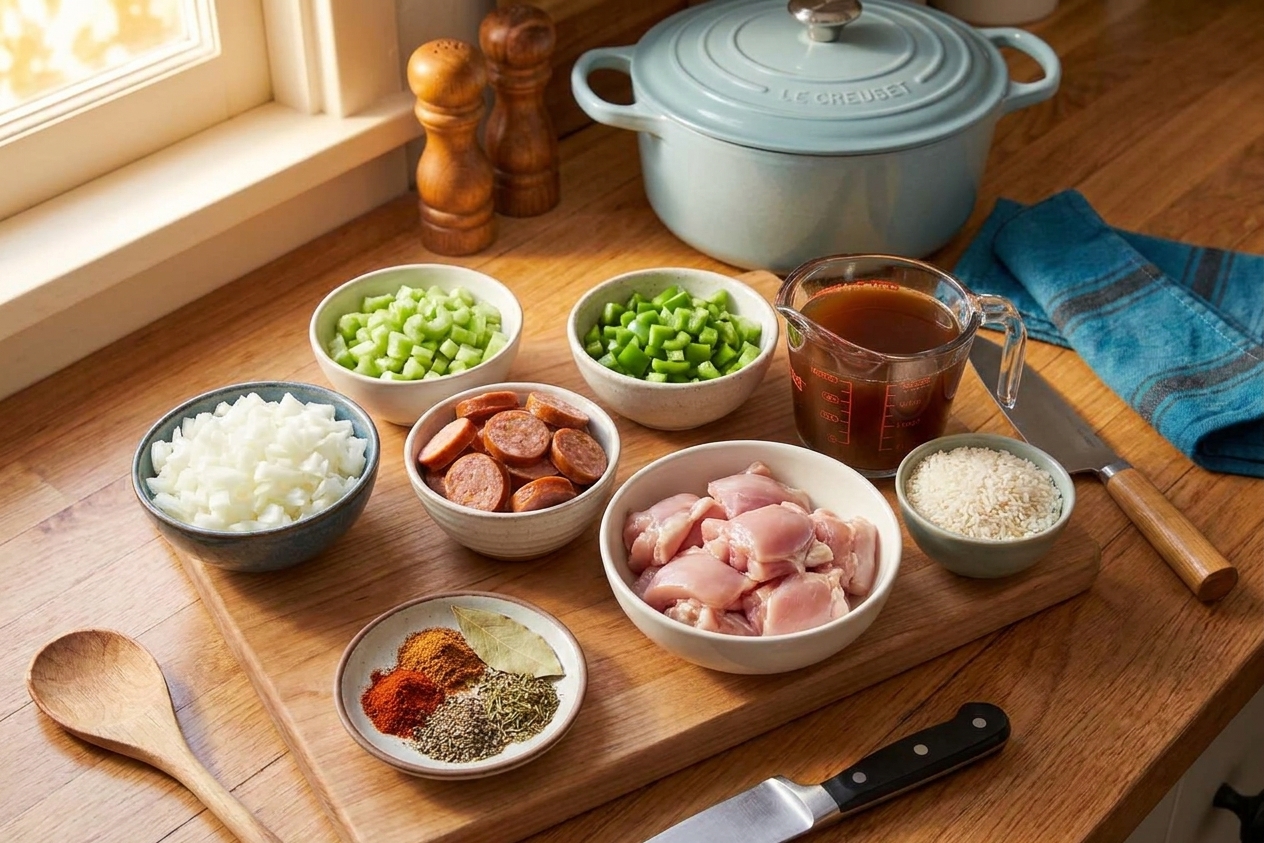
Andouille is classic because it is smoky and seasoned. If you cannot find it, use a smoked sausage like kielbasa. Andouille salt levels vary, so taste your broth before adding extra salt at the end.
How dark should the roux be?
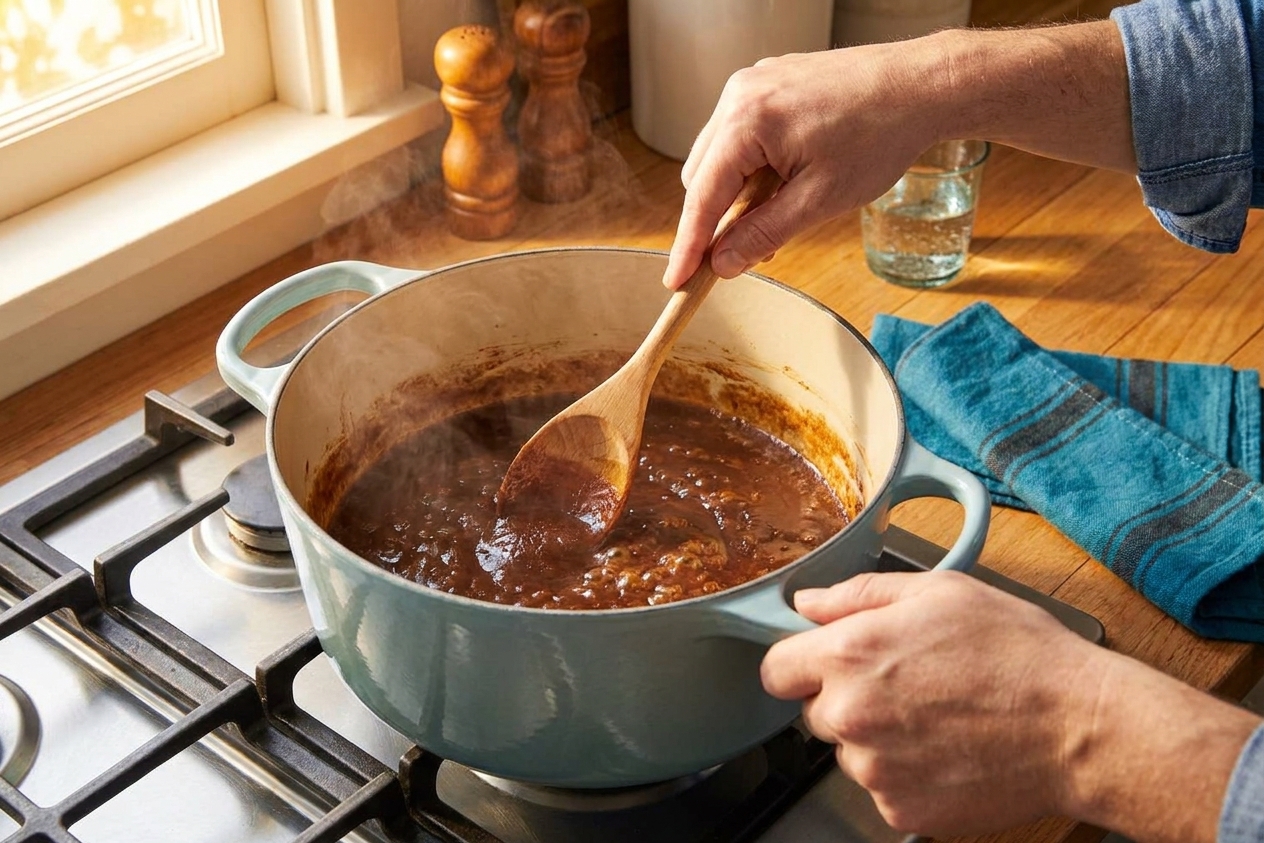
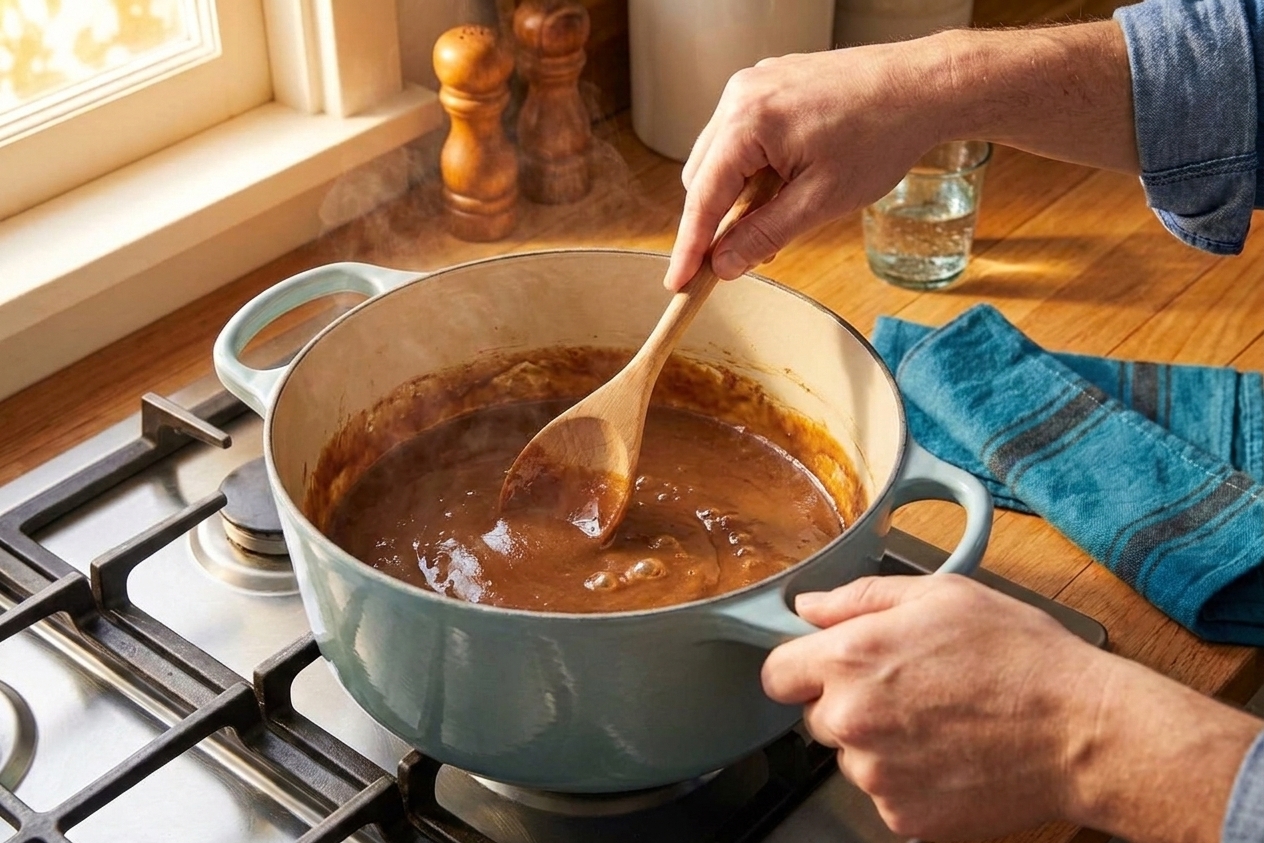
For this style of gumbo, aim for a deep peanut butter to milk chocolate color. Darker roux equals more nutty flavor, but it also thickens a bit less. If you are new to roux, stop at peanut butter brown and you will still get excellent results.
Why did my roux seize up or turn grainy?
Most often the heat was too high, or the flour scorched. Keep stirring and lower the heat. If you see black specks or it smells burnt, it is best to start over. Gumbo does not forgive burnt roux.
Do tomatoes belong in gumbo?
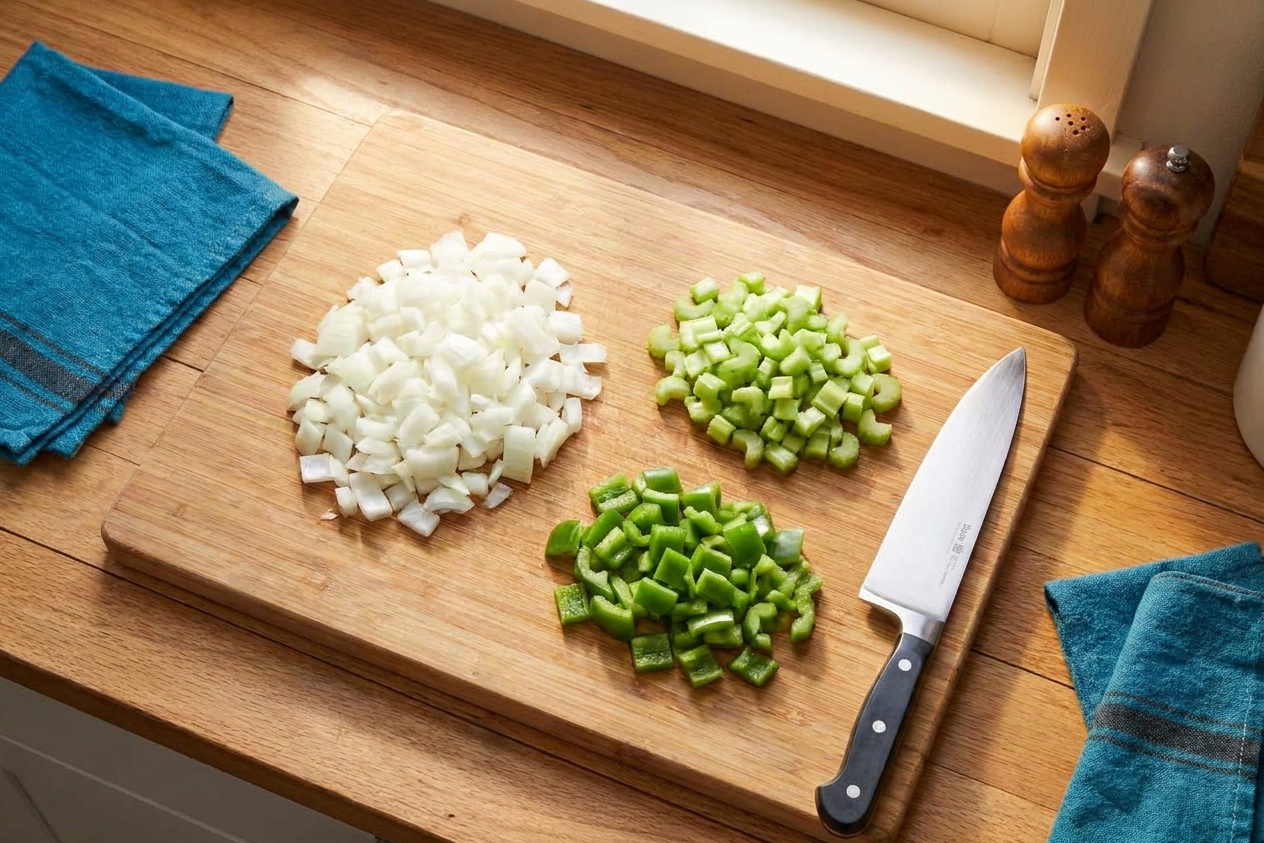
In most Cajun-style chicken and sausage gumbo, tomatoes are typically omitted. Some Creole versions use them. This recipe keeps it tomato-free on purpose so the roux, trinity, and smoke can lead the flavor.
Can I make this in advance?
Yes, and you should if you can. Make the gumbo up to 2 days ahead, chill, then reheat gently. Cook rice fresh right before serving.