Mom's Best Recipes
Recipe

Chicken Milanese

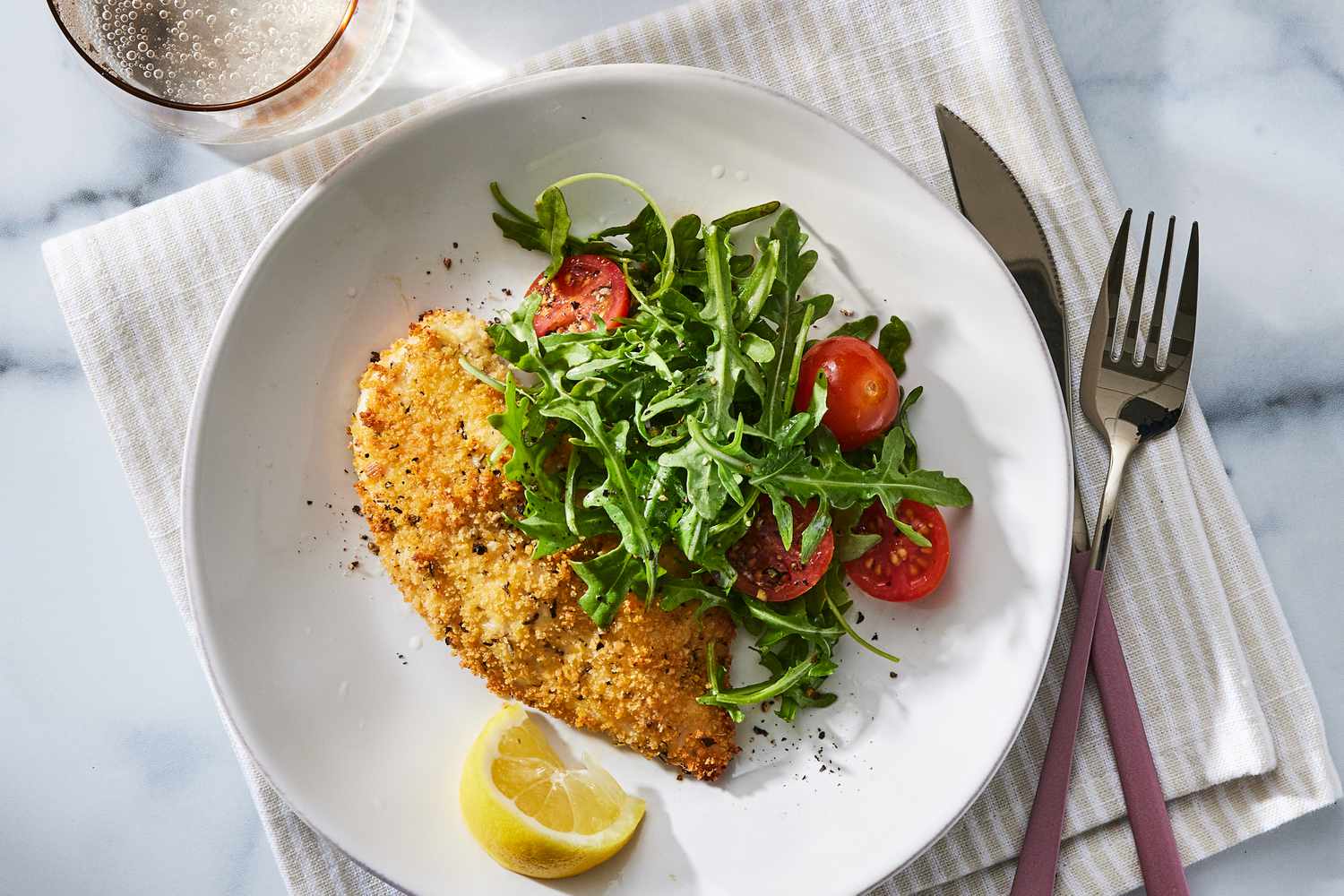
A crispy, golden chicken cutlet topped with a lemony arugula salad. Fast, cozy, and very hard to stop picking at.

Author By Matt Campbell
4.8
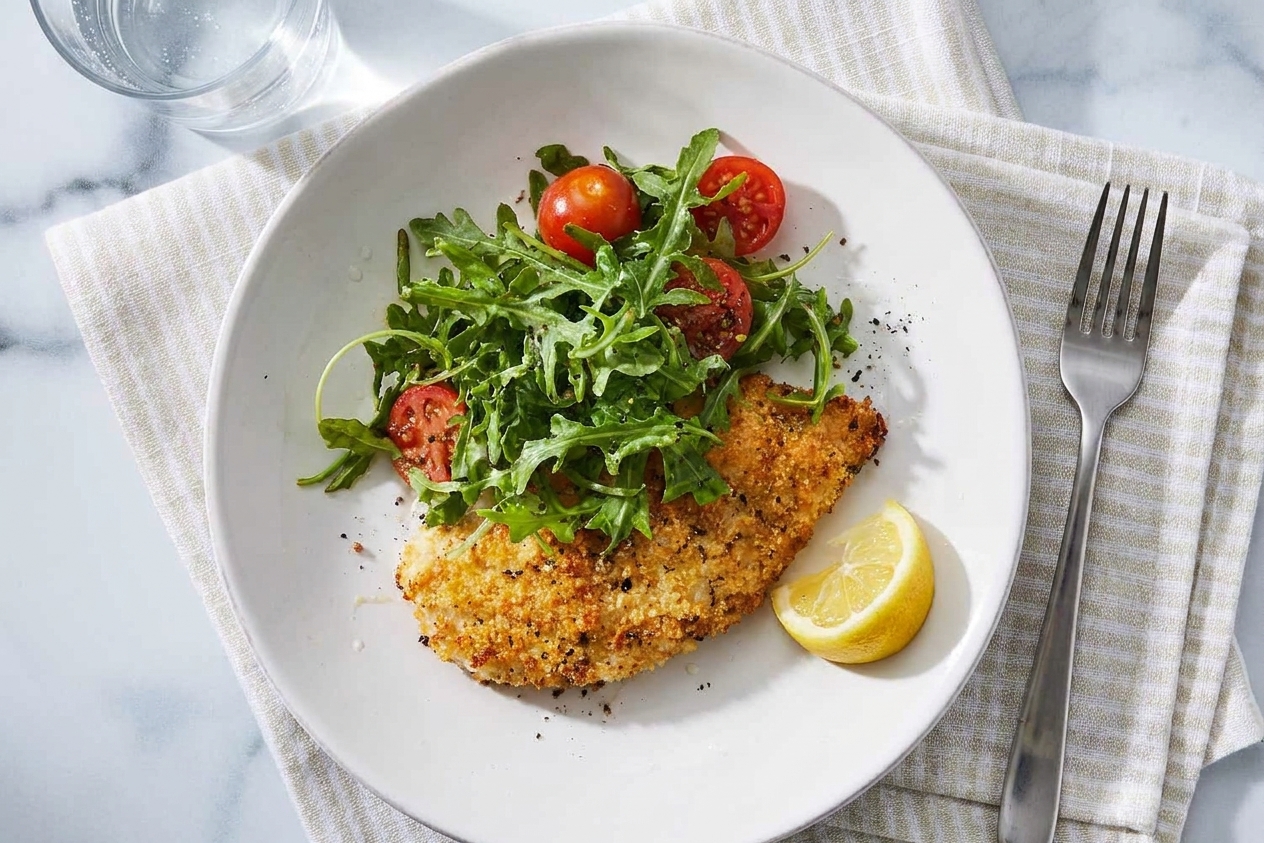
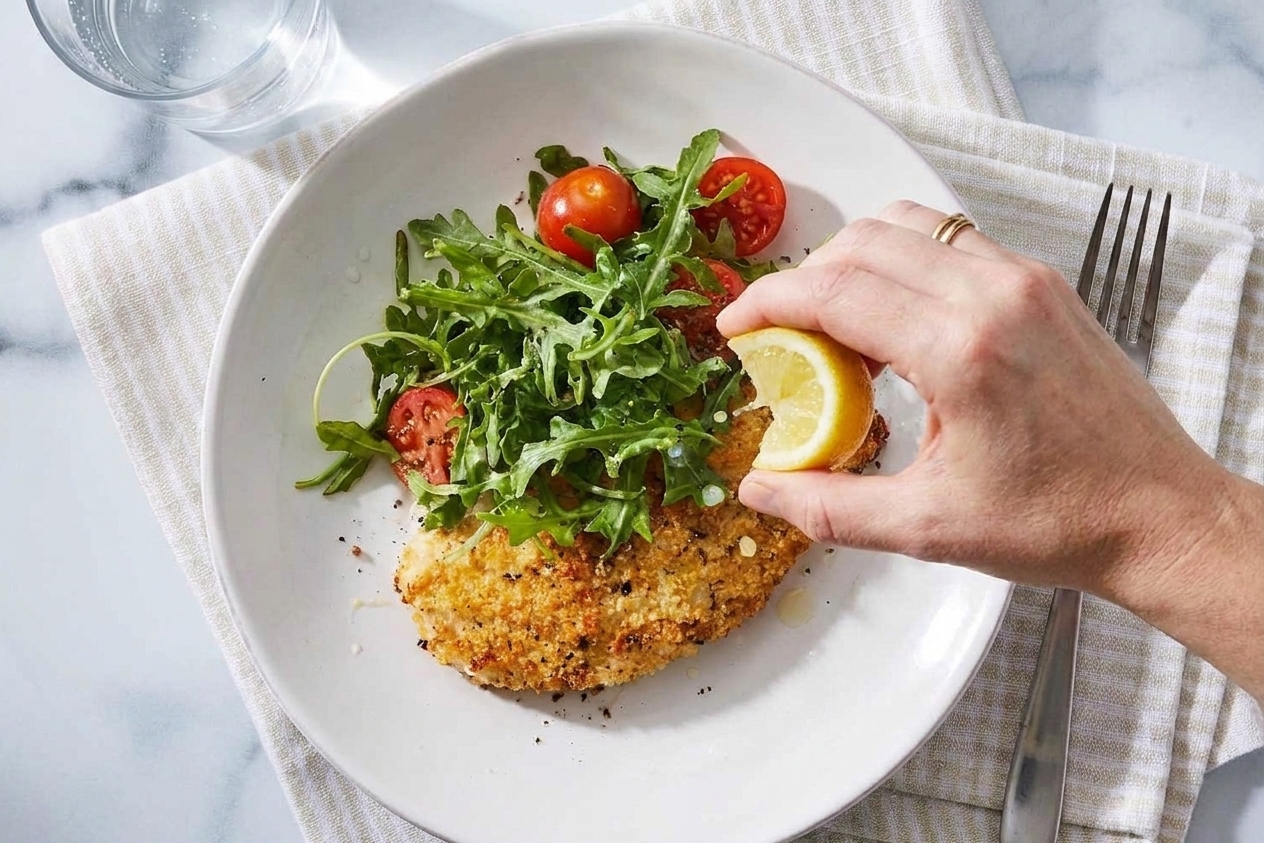
A crispy Chicken Milanese cutlet on a white plate topped with a bright arugula salad and lemon wedges on a warm-toned kitchen table

Chicken Milanese is one of those dishes that feels like you ordered it at a cozy Italian spot, but it is secretly just a smart little system: thin chicken + seasoned breading + hot oil. You get that shatter-crisp crust, juicy meat, and the kind of browned edges that make you “taste test” a slice before it ever hits the table.

My favorite move is the classic finish: a quick lemony arugula salad right on top. It cuts the richness, makes the plate look fancy, and gives you a reason to squeeze lemon like you mean it.

Why It Works

  • Ultra-crispy crust with Parmesan and lemon zest for big flavor without extra fuss.
  • Juicy chicken because we pound the cutlets thin and cook them fast.
  • No soggy breading thanks to a quick rest after breading and properly heated oil.
  • Bright, balanced finish from the arugula topping and a final lemon squeeze.

Pairs Well With

Storage Tips

Chicken Milanese is best right out of the pan, but leftovers can still be very good if you reheat them like you respect them.

Refrigerate

  • Store cutlets in an airtight container for up to 3 days.
  • If possible, keep the arugula topping separate. Dress fresh arugula right before eating.

Reheat for crispiness

  • Oven: 400°F for 8 to 12 minutes on a wire rack over a sheet pan, until hot and crisp (and 165°F inside if you want to be exact).
  • Air fryer: 375°F for 4 to 7 minutes, flipping once, until hot and crisp.
  • Avoid the microwave unless you are okay with “tender-crispy” becoming “soft-sad.”

Freeze (optional)

  • Freeze cooked cutlets on a sheet pan until firm, then bag them up. Keep up to 2 months.
  • Reheat from frozen at 400°F for about 15 to 25 minutes, depending on thickness, until hot in the center (165°F is the goal).

Oil safety

  • Let frying oil cool completely, then pour it into a disposable container and toss it, or strain and save it if it is still clean.
  • Do not pour oil down the sink unless you enjoy plumbing bills.

Common Questions

What is Chicken Milanese?

It is a thin chicken cutlet that is breaded (usually flour, egg, breadcrumbs) and pan-fried until crisp. Think schnitzel’s Italian cousin, often served with lemon and a simple salad.

Do I have to pound the chicken?

You really should. Thin cutlets cook quickly and evenly, and the breading gets crisp before the chicken dries out. If you can buy “thin-sliced chicken cutlets,” you can skip most of the pounding.

Why is my breading falling off?

  • Make sure the chicken is dry before flouring.
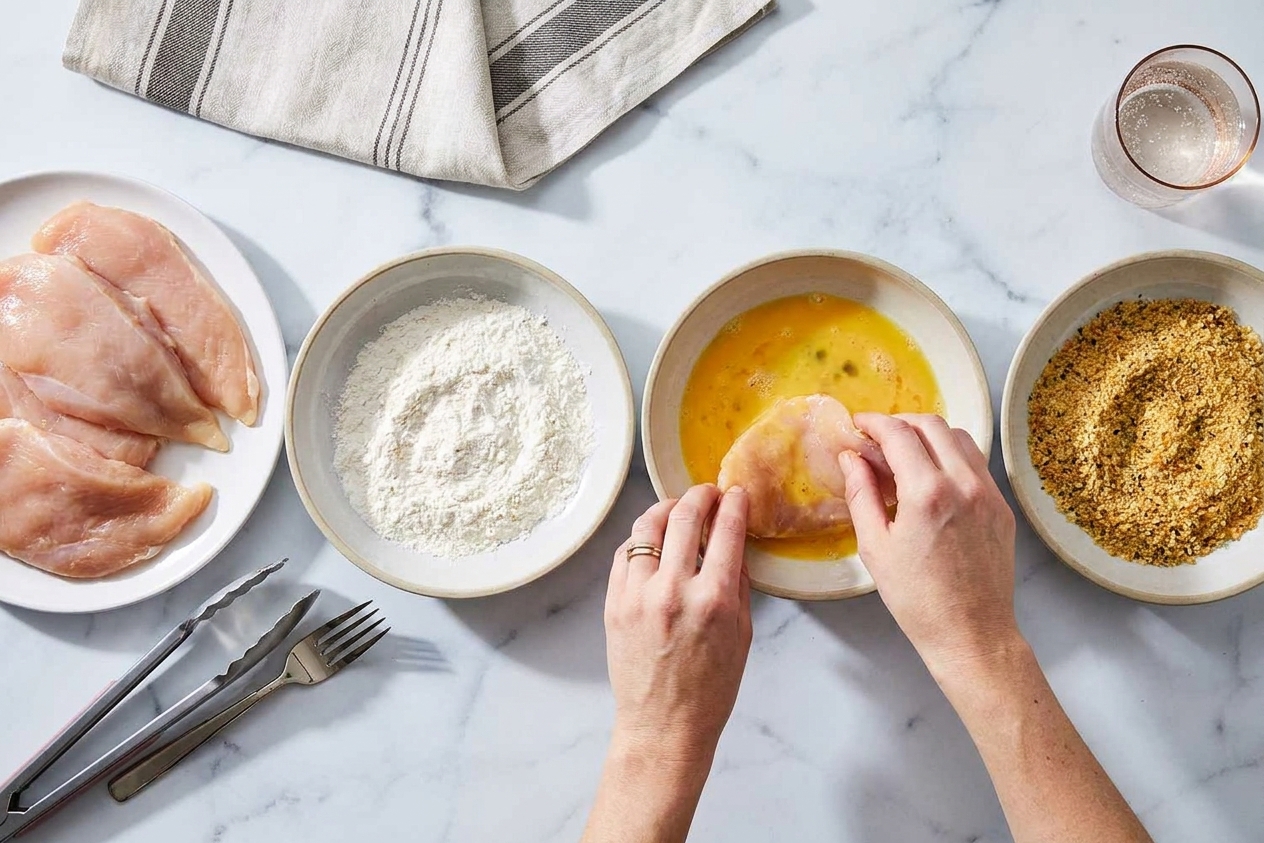
  • Press breadcrumbs on firmly and let the breaded cutlets rest 10 minutes before frying.
  • Do not move the cutlet too soon. Let it set and brown first.

Can I bake Chicken Milanese instead of frying?

Yes. It will be less blistery-crisp than pan-frying, but still good. Bake on a wire rack at 425°F, drizzle with olive oil, and cook about 14 to 18 minutes total, flipping once, until the chicken reaches 165°F.

What breadcrumbs work best?

Panko gives the crunchiest texture. Traditional fine breadcrumbs are more classic and evenly golden. This recipe uses panko for maximum crisp edges.

What oil should I use?

Choose a neutral oil with a higher smoke point like canola, vegetable, grapeseed, or avocado oil. Olive oil can work, but it can smoke faster and taste heavier.

What temperature should the oil be?

If you have a thermometer, aim for about 350°F. If not, the breadcrumb test works: drop in a breadcrumb and it should sizzle immediately and steadily, not burn on contact.
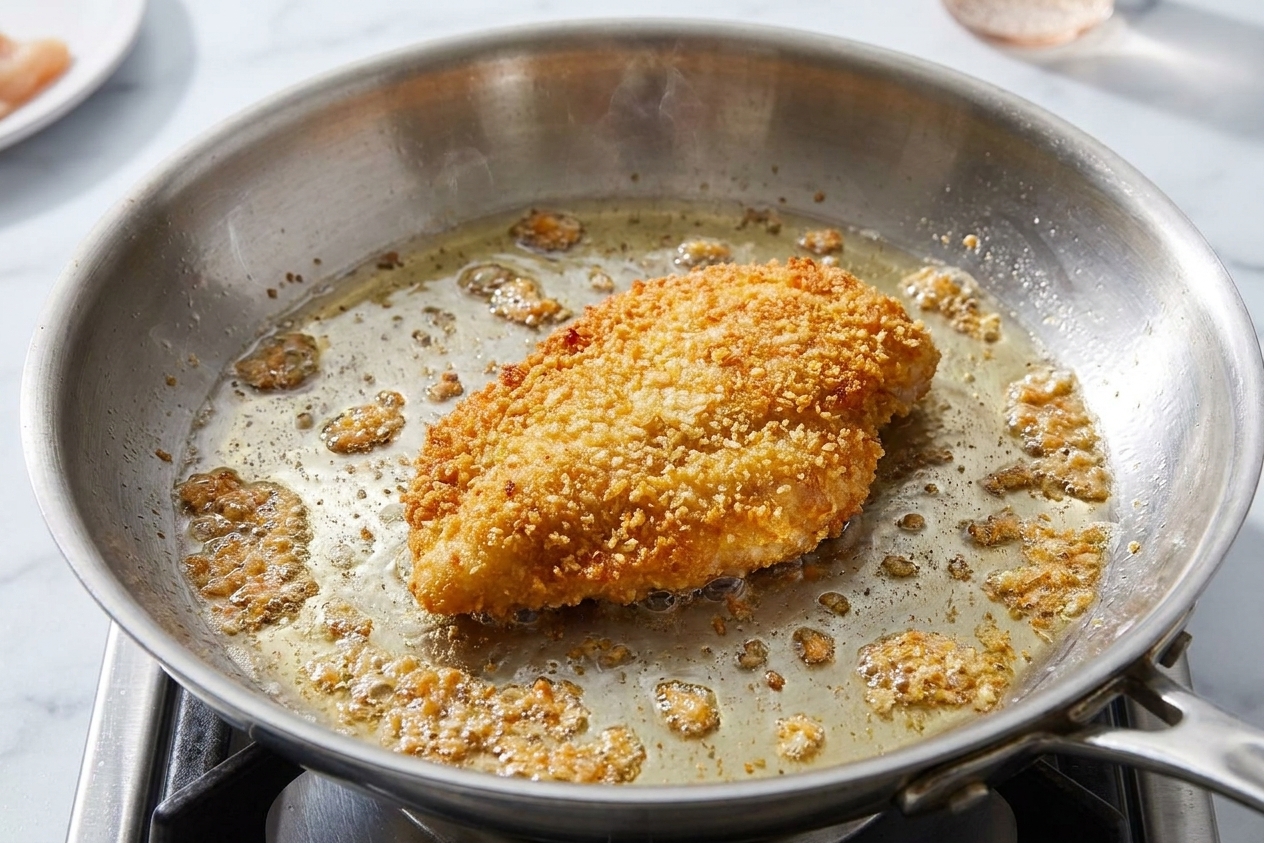

A chicken cutlet frying in shallow oil in a stainless steel skillet with golden crumbs around the edges

The first time I tried making Chicken Milanese at home, I treated it like “just breaded chicken” and wondered why it came out pale and kind of floppy. Turns out Milanese is all about small choices: pounding it thinner than you think, seasoning every layer, and letting the oil get properly hot before you commit. Now it is my go-to when I want a dinner that feels a little dressed up without turning my kitchen into a science fair.