Common Questions
Why is there cinnamon-sugar and also cinnamon in the dough?
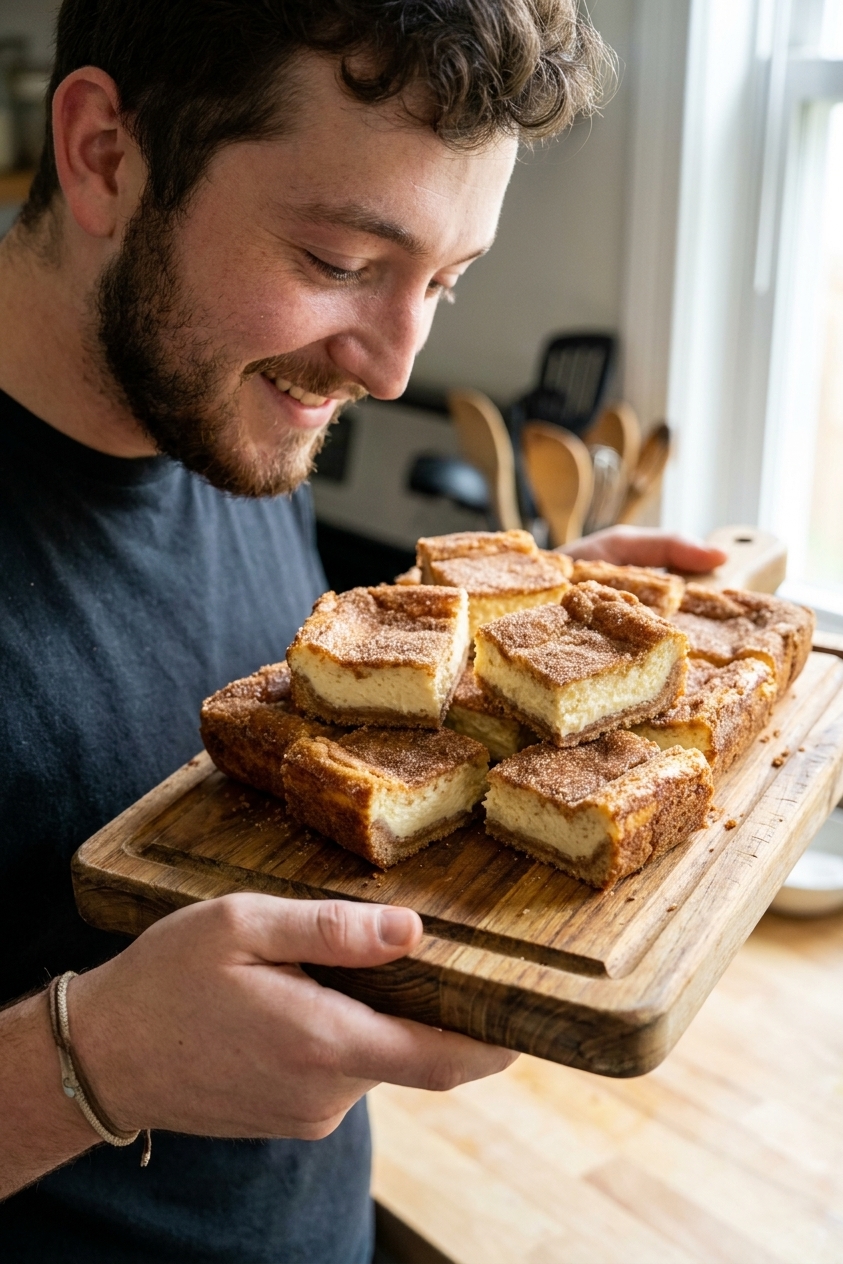
Great catch. The dough is lightly spiced so every bite tastes warm and buttery. The separate cinnamon-sugar is the churro moment: it creates that crackly, sweet top and a little cinnamon hit on the base.
Do I have to par-bake the bottom crust?
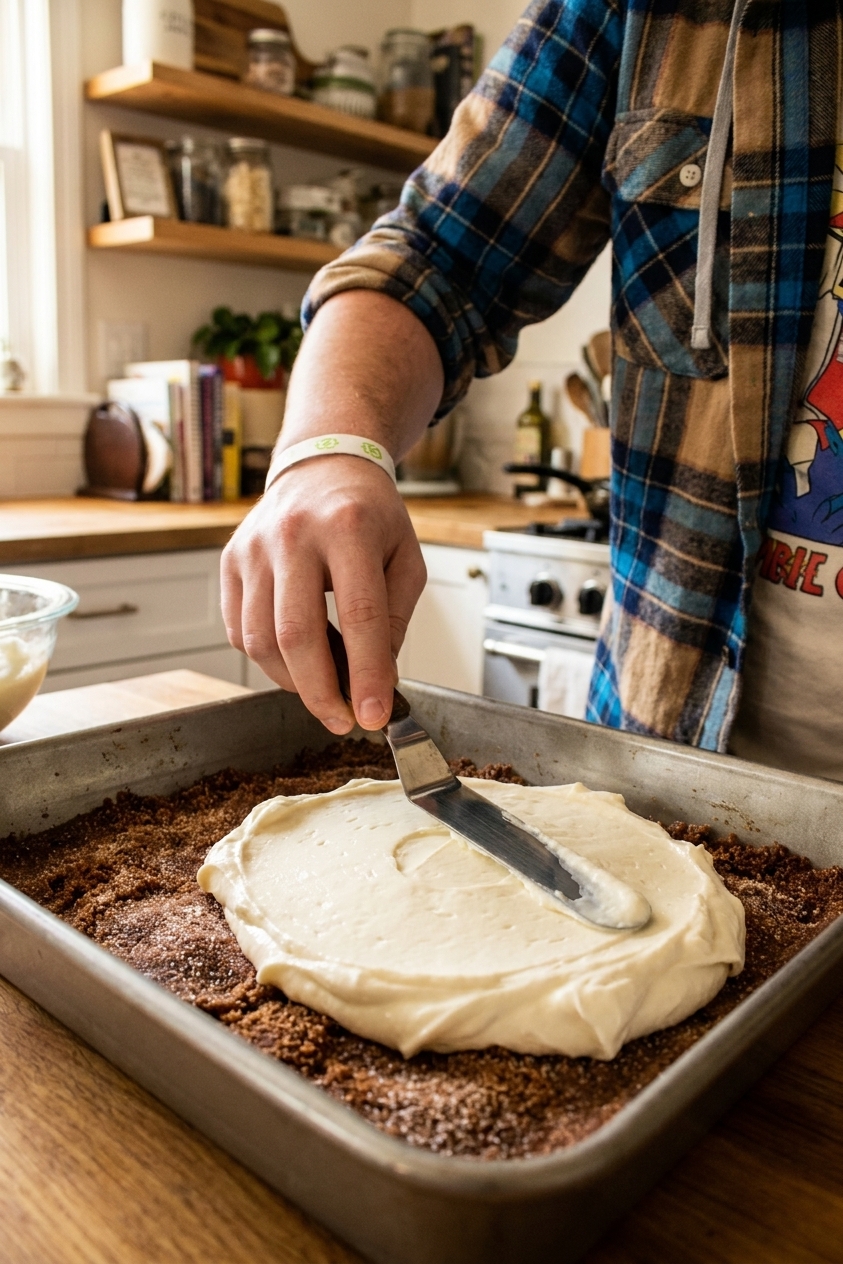
I recommend it. A short par-bake helps the base stay buttery and structured instead of turning a little soggy under the cheesecake layer.
How do I know when the cheesecake layer is done?
Start with visuals. Look for a set edge and a gentle jiggle in the center when you lightly shake the pan.
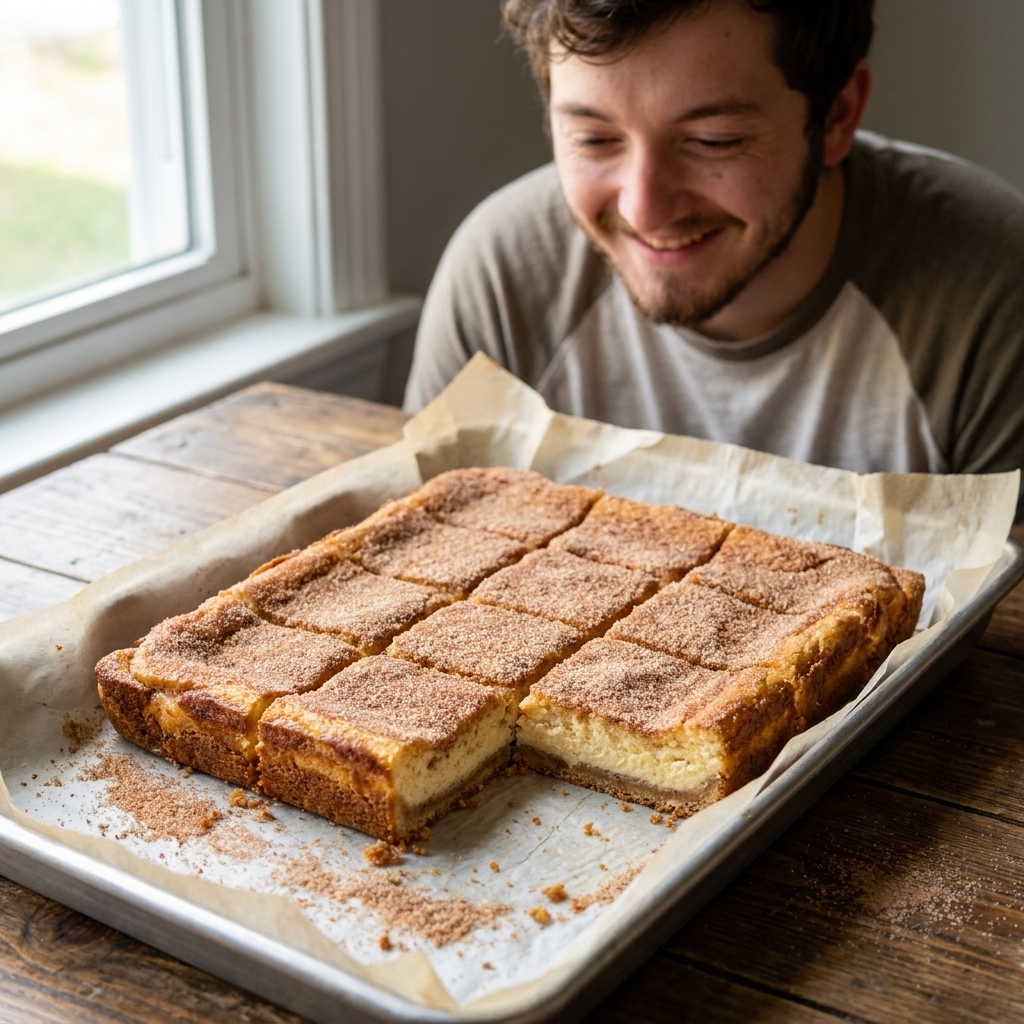
- Fully baked, sliceable bars: Center jiggles like set gelatin, not like liquid. The top is lightly golden.
- Slightly gooey bars: The center looks a touch glossy and jiggles a bit more.
Optional thermometer note: If you like numbers, treat them as approximate because ovens, pan materials, and carryover cooking vary. Aim for roughly 150 to 155°F in the center for fully baked bars, or 145 to 148°F for a softer set, and remember the temp can climb a few degrees as it cools.
Why did my top crack?
Cracks usually come from overbaking or cooling too fast. Good news: cinnamon-sugar is the most forgiving cover-up on earth. Next time, bake a few minutes less and cool at room temp before refrigerating.
Can I use a glass pan?
You can, but glass bakes differently and often takes a little longer. Keep the same oven temperature and use the visual doneness cues. Expect you may need a few extra minutes.
Can I use low-fat cream cheese?
You can, but the filling will be softer and less rich. For the classic thick, creamy bar, stick with full-fat block cream cheese.
Can I make these ahead?
Yes. These are even better after chilling. Make them the day before, refrigerate overnight, then slice right before serving.
Do these need to stay refrigerated?
Yes. They are cream cheese bars, so keep them chilled. For food safety, do not leave them out at room temperature for more than about 2 hours (less if it is very warm in your kitchen).