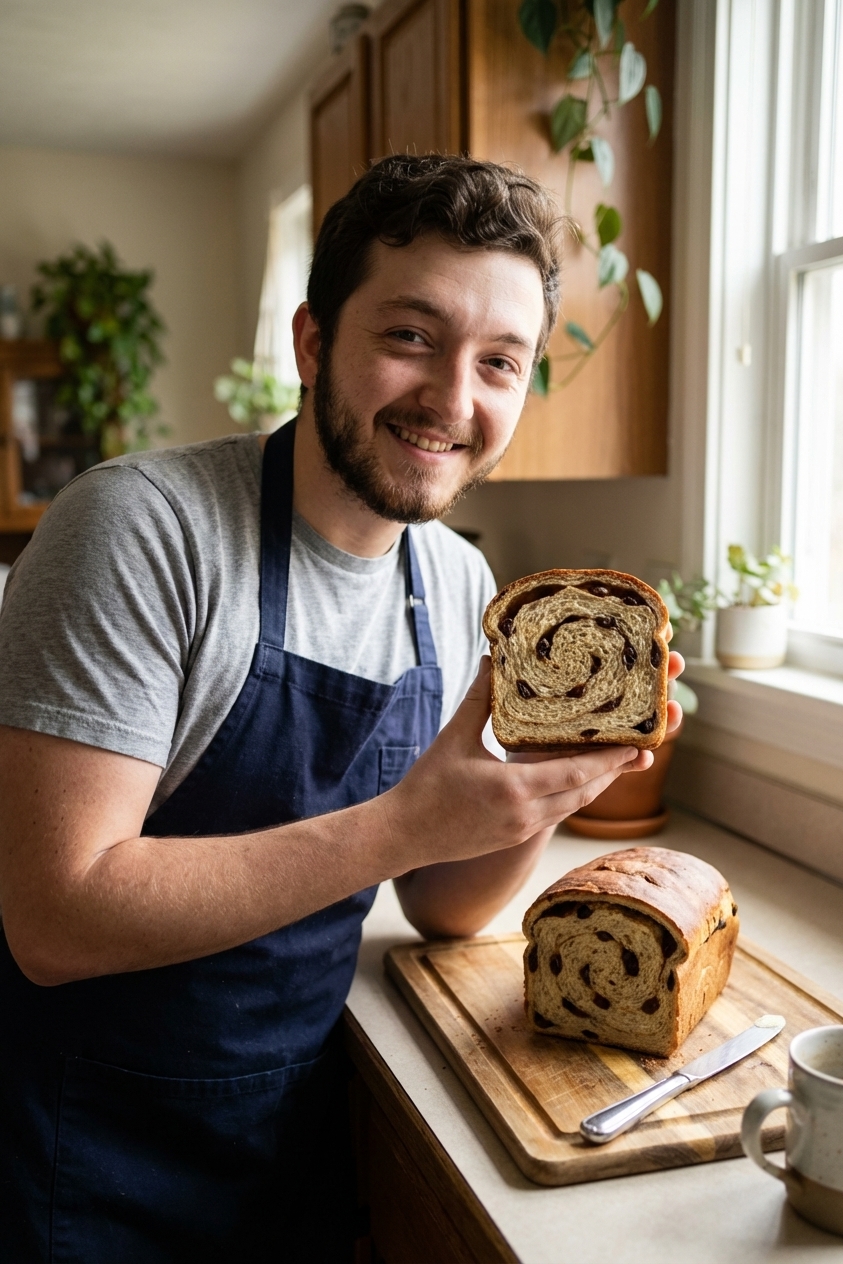
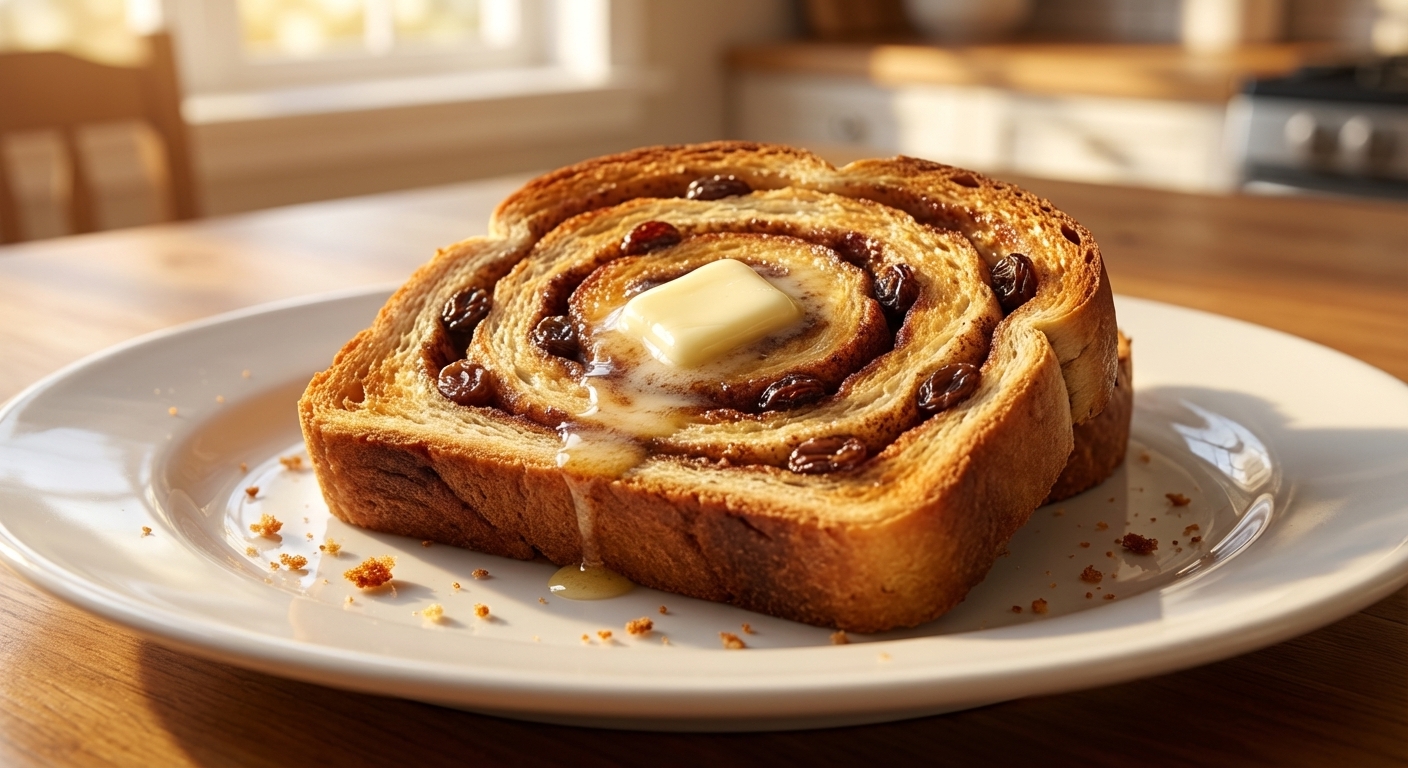
How do I keep the swirl from separating or making gaps?
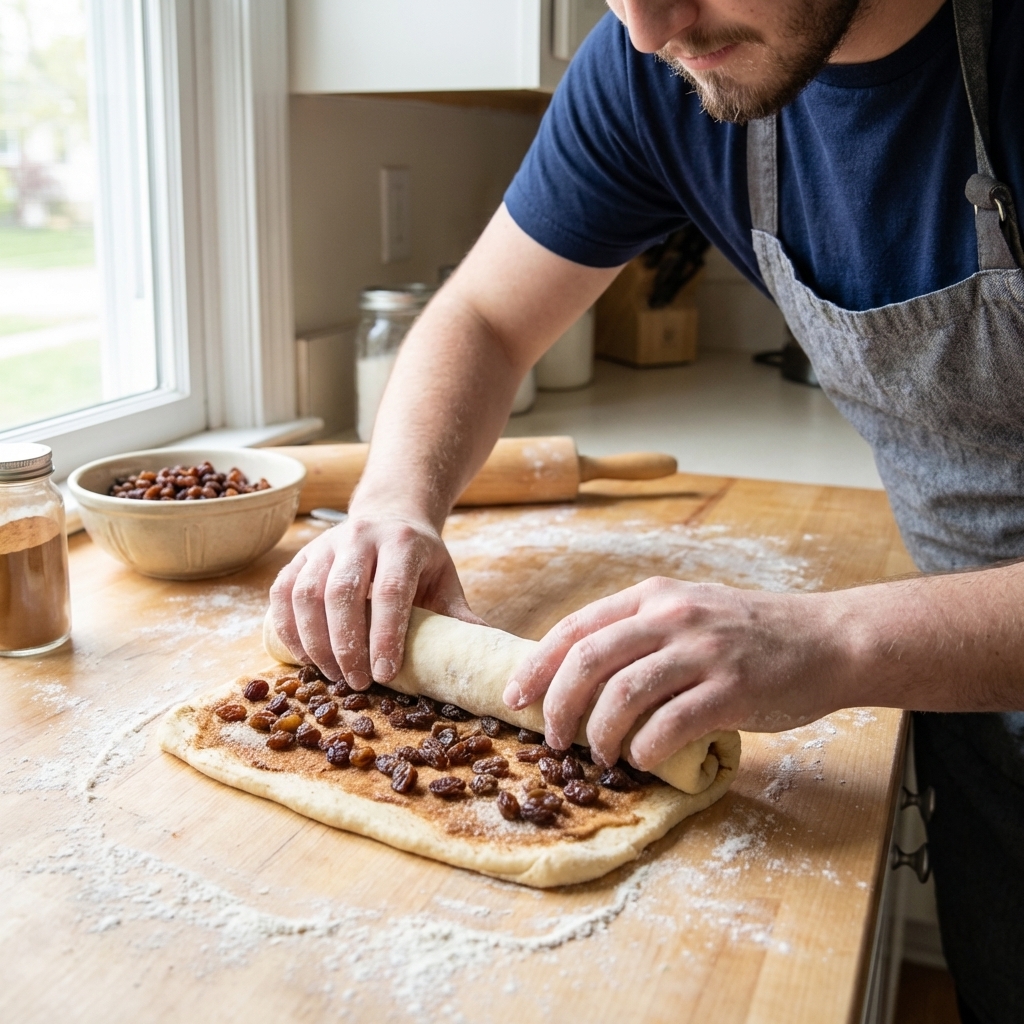
Two moves help the most: brush a thin egg wash over the rolled-out dough before adding cinnamon sugar, and do not overfill. A thick, dry layer of sugar can act like ball bearings and cause separation. Also roll tightly and seal the seam well. Bonus: the tablespoon of flour in the swirl mix helps the filling behave.
Why did my loaf crack or “blow out” on the side?
That is usually a shaping or proofing issue. Common culprits are a loose roll, an unsealed seam, or under-proofing in the pan. Proof until the dough crowns about 1 inch above the rim and feels airy, and make sure the seam is on the bottom when it goes into the pan. Another cue: a gentle fingertip press should spring back slowly, not snap back fast.
Do I have to soak the raisins?
You do not have to, but it is the easiest upgrade. A 10-minute soak in warm water makes raisins plumper and keeps them from stealing moisture from the dough. Dry them well before adding.
Can I use active dry yeast instead of instant?
Yes. Bloom it in the warm milk with a pinch of sugar for 5 to 10 minutes until foamy, then proceed. Rise times may run a little longer.
Can I make this without a stand mixer?
Absolutely. It is a friendly hand-knead. Expect about 8 to 10 minutes of kneading until the dough is smooth and elastic.
Can I swap the raisins for something else?
Yes. Dried cranberries are great. Chopped dates work too, but use less because they are very sweet. For chocolate chips, keep them mini and use about 3/4 cup so the swirl still seals.
What if I only have an 8.5x4.5-inch loaf pan?
It will work, but the loaf will be taller. Proof a little closer to the top of the pan (instead of focusing on the 1-inch-above cue), and expect the bake to run a bit longer. Use color plus an internal temp of 190 to 195°F as your final answer.