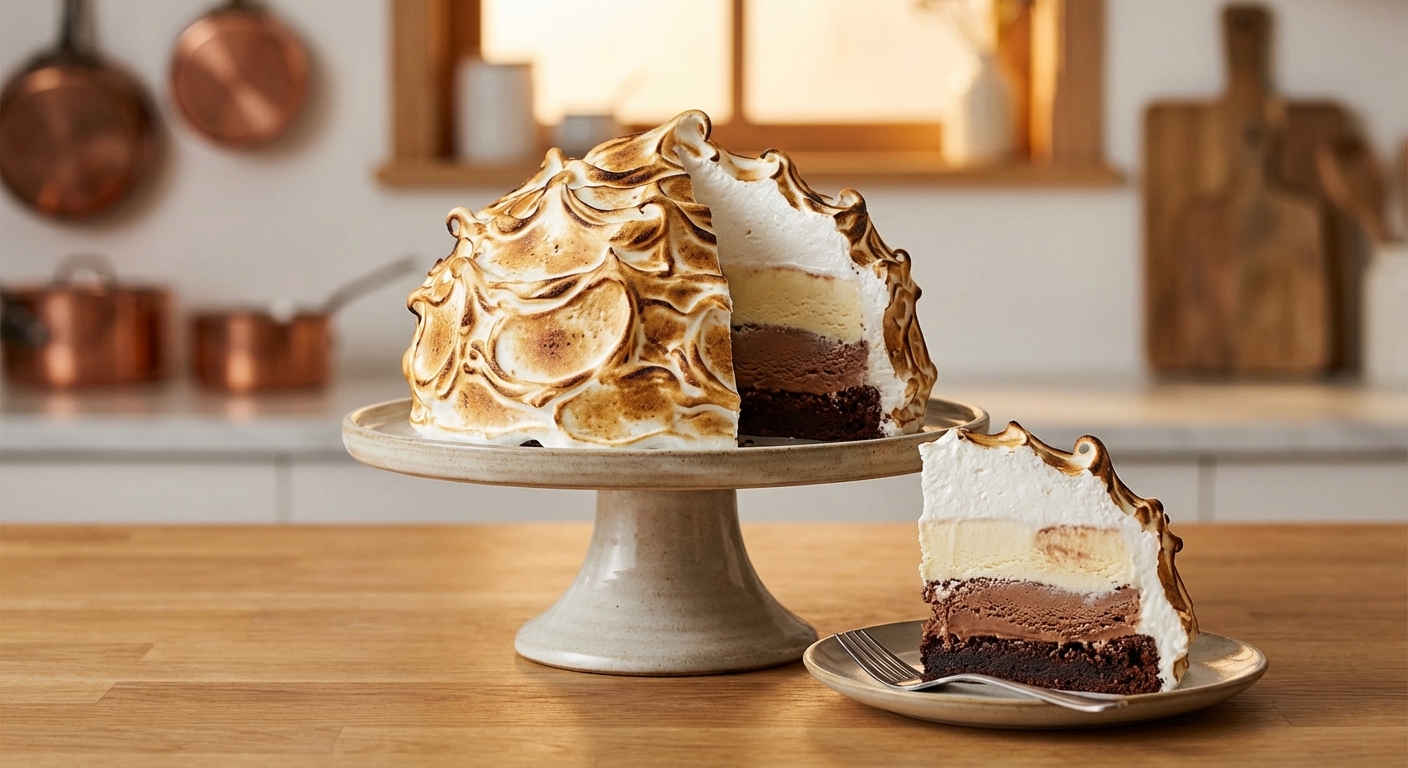
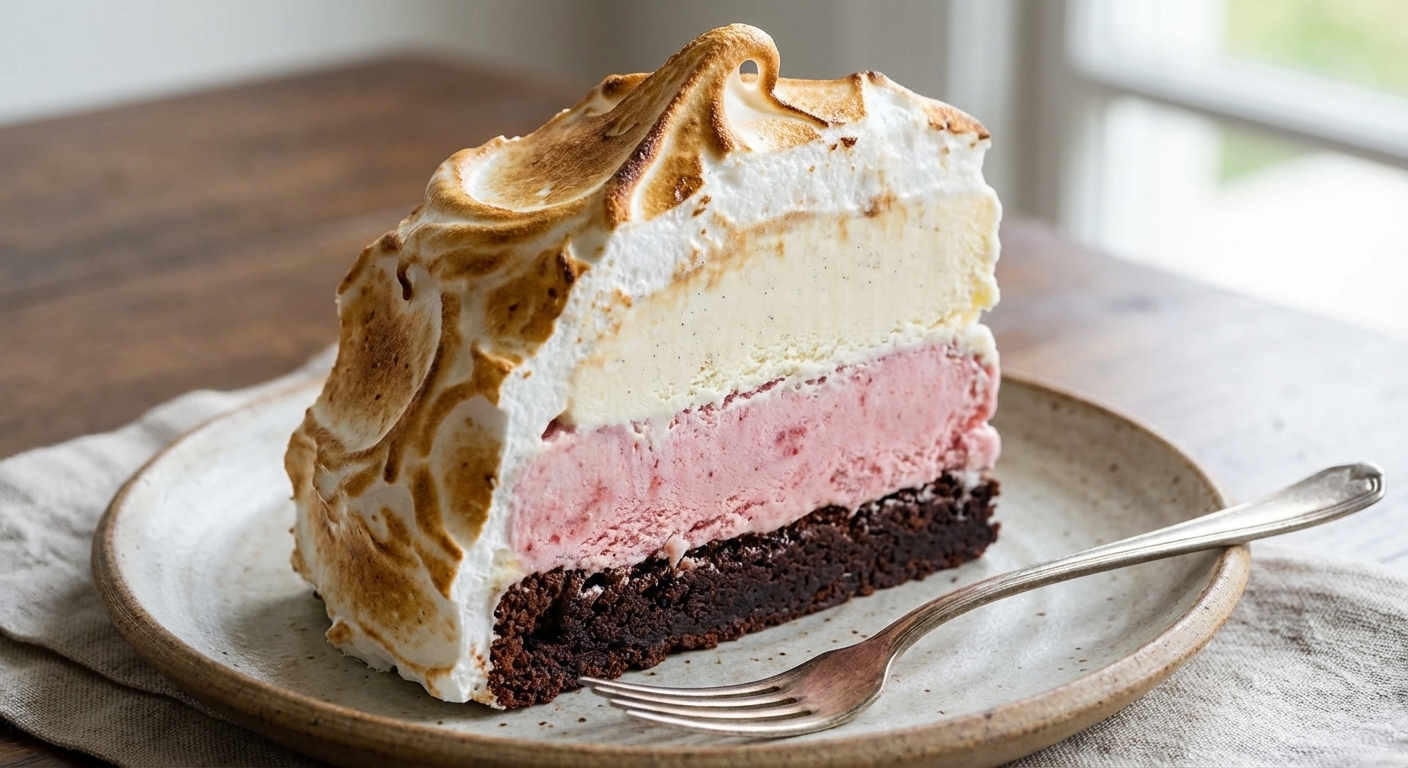
Will the ice cream melt when I torch the meringue?
Not if you freeze the assembled dessert rock-solid first, cover it completely with a thick, gap-free layer of meringue, and toast it fast. The meringue helps slow heat transfer, but the real win is a hard freeze plus quick, high surface heat (torch or broiler).
Do I need a kitchen torch?
A torch is the easiest and most controlled. A broiler can work in a pinch, but it is higher risk because it heats a wider area.
Broiler method (quick and specific): Freeze the fully meringued baked Alaska until very firm (at least 1 hour, longer is better). Set an oven rack about 6 inches from the broiler. Place the dessert on a metal sheet pan (not a glass stand, not a cardboard cake round). Broil on high for 30 to 90 seconds, rotating as needed, and do not walk away. Pull it the second it turns golden.
What ice cream flavors work best?
Anything you love. For the cleanest slices, use flavors that freeze firm and do not have huge mix-ins that make cutting messy. Great combos: vanilla + strawberry, coffee + chocolate, mint chip + chocolate (chopped chips cut cleaner than big chunks).
How far ahead can I make baked Alaska?
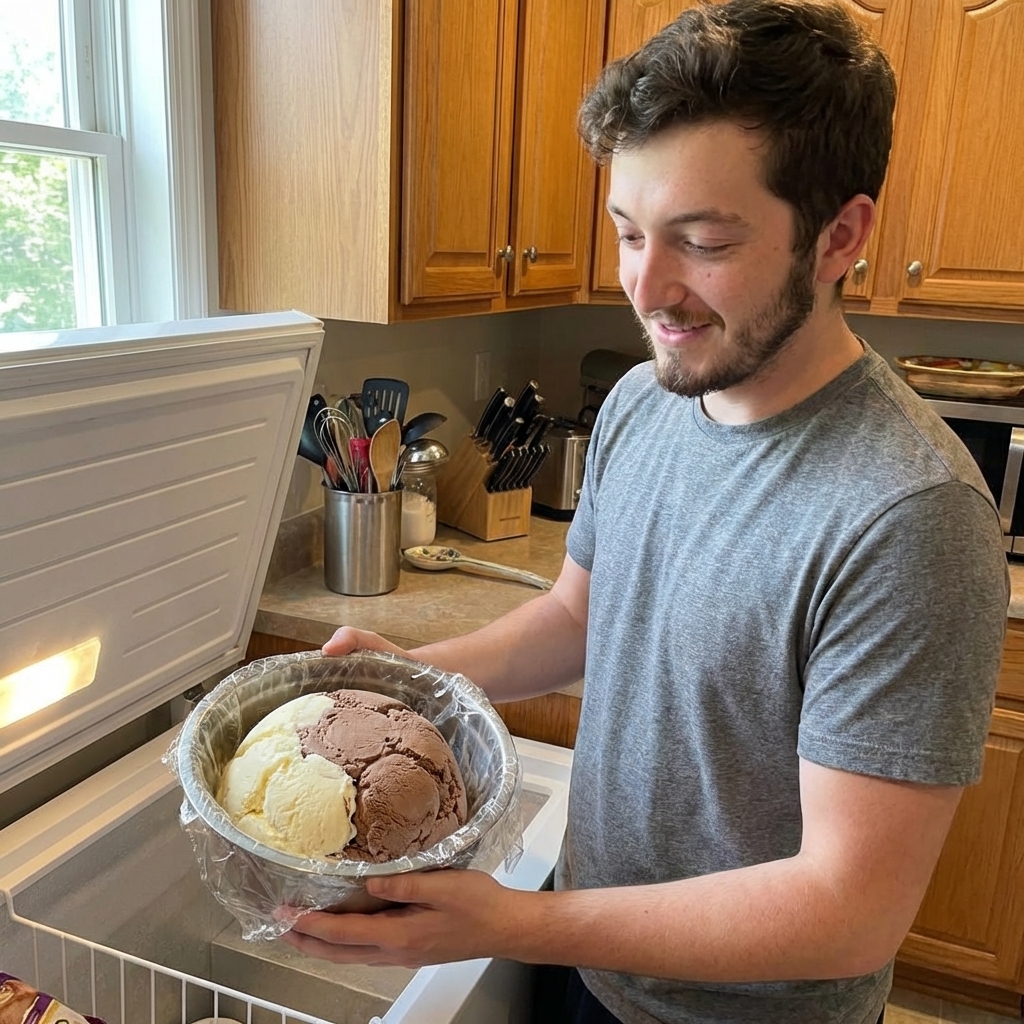
You can assemble the base + ice cream dome, cover it, and freeze up to 2 days. You can also fully cover with meringue and freeze for up to 24 hours. Torch or broil right before serving for the best look and texture.
How do I get neat slices through toasted meringue?
Use a long serrated knife. Dip the blade in very hot water, wipe dry, then slice straight down in one steady motion. Repeat hot dip and wipe between slices.
Is Swiss meringue safe to eat?
Swiss meringue is gently heated over a double boiler until the sugar dissolves. For a reliable safety check, use a thermometer and heat the egg white mixture to 160°F before whipping. “Hot to the touch” can vary a lot from person to person, so the thermometer is the move, especially if you are serving anyone pregnant, elderly, or immunocompromised.