
Mom's Best Recipes
Recipe

Classic Baklava

Crispy phyllo layers packed with pistachios and walnuts, then soaked with a honey lemon syrup that turns crackly, sticky, and absolutely irresistible.

Author By Matt Campbell
4.8
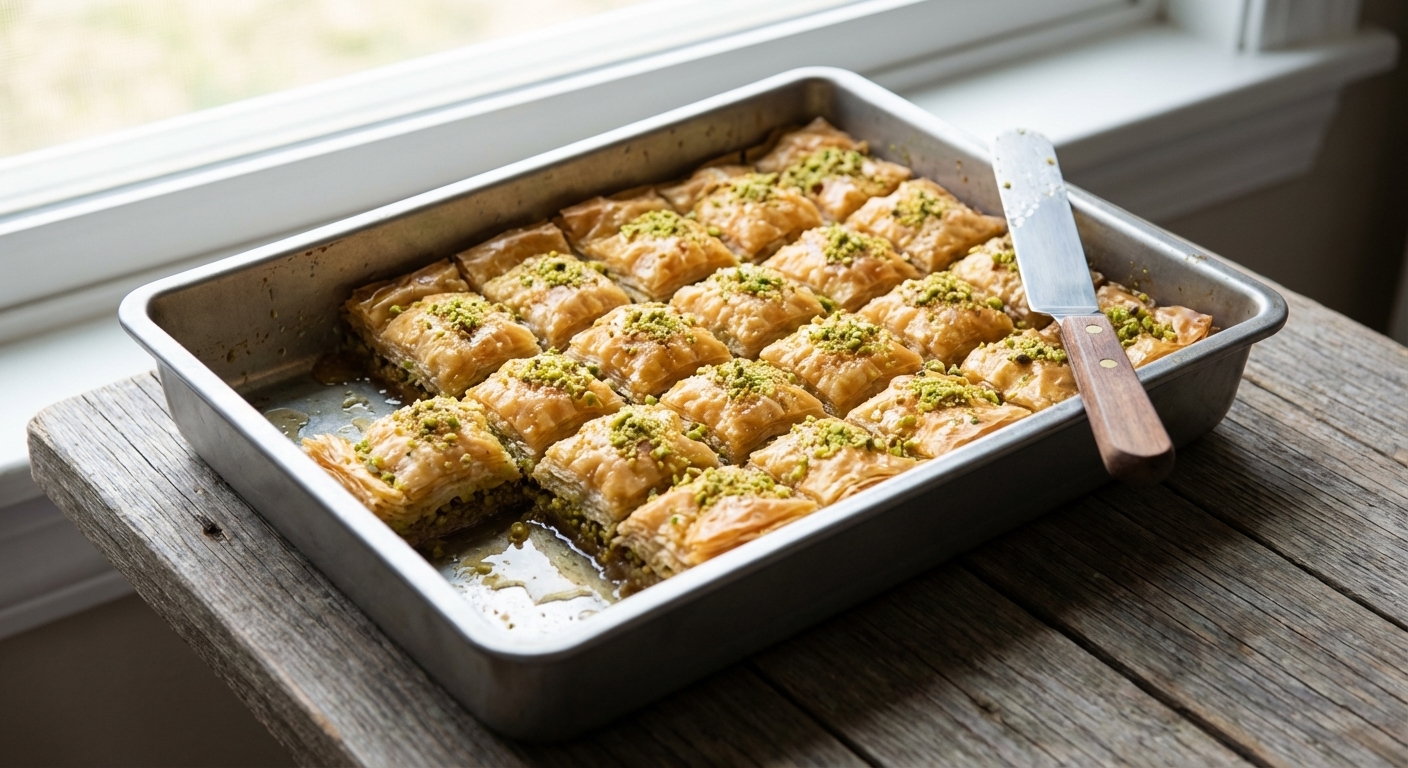
A single metal baking pan filled with diamond cut pistachio baklava, golden brown and glossy from syrup, shot in natural window light with a small offset spatula resting on the edge of the pan, photorealistic food photography

Baklava is one of those desserts that looks like it belongs behind glass at a fancy bakery, but it is secretly a home cook project with a very simple game plan: butter every layer, pack in the nuts, cut it clean, bake it deep golden, then syrup it at the right moment.

This classic version leans into honey, lemon, and pistachios with a little walnut backup for richness. The result is what we all want: shatter crisp top layers, cozy nutty middle, and that glossy syrup that makes you pause mid-bite like, okay, wow.
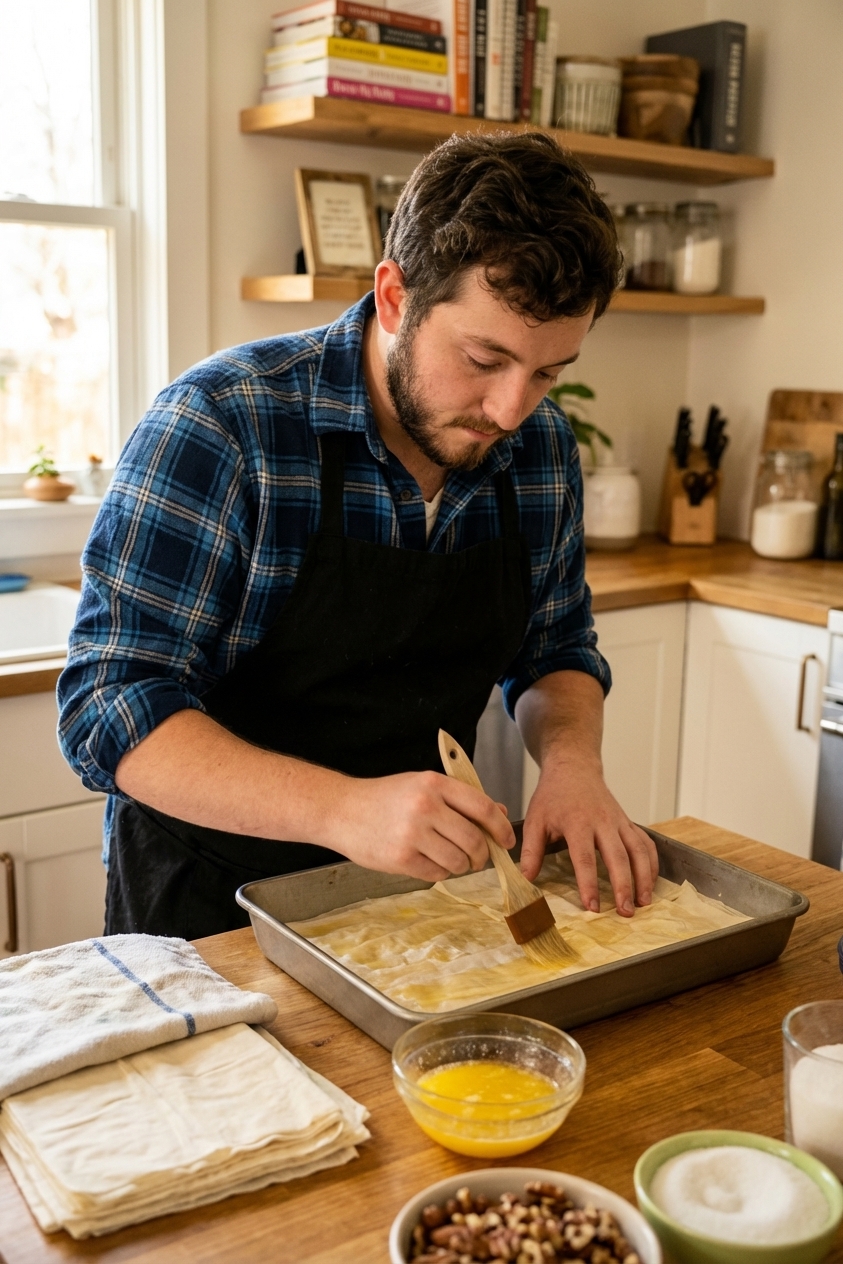
Hands layering thin sheets of phyllo dough into a rectangular baking pan, brushing melted butter over the top with a pastry brush on a wooden countertop, photorealistic kitchen scene

Why It Works

  • Crisp, not soggy: butter between layers creates separation so the phyllo bakes up flaky instead of steaming into one solid sheet.
  • Clean diamonds: cutting before baking means the pieces separate neatly and the syrup can travel into the cuts.
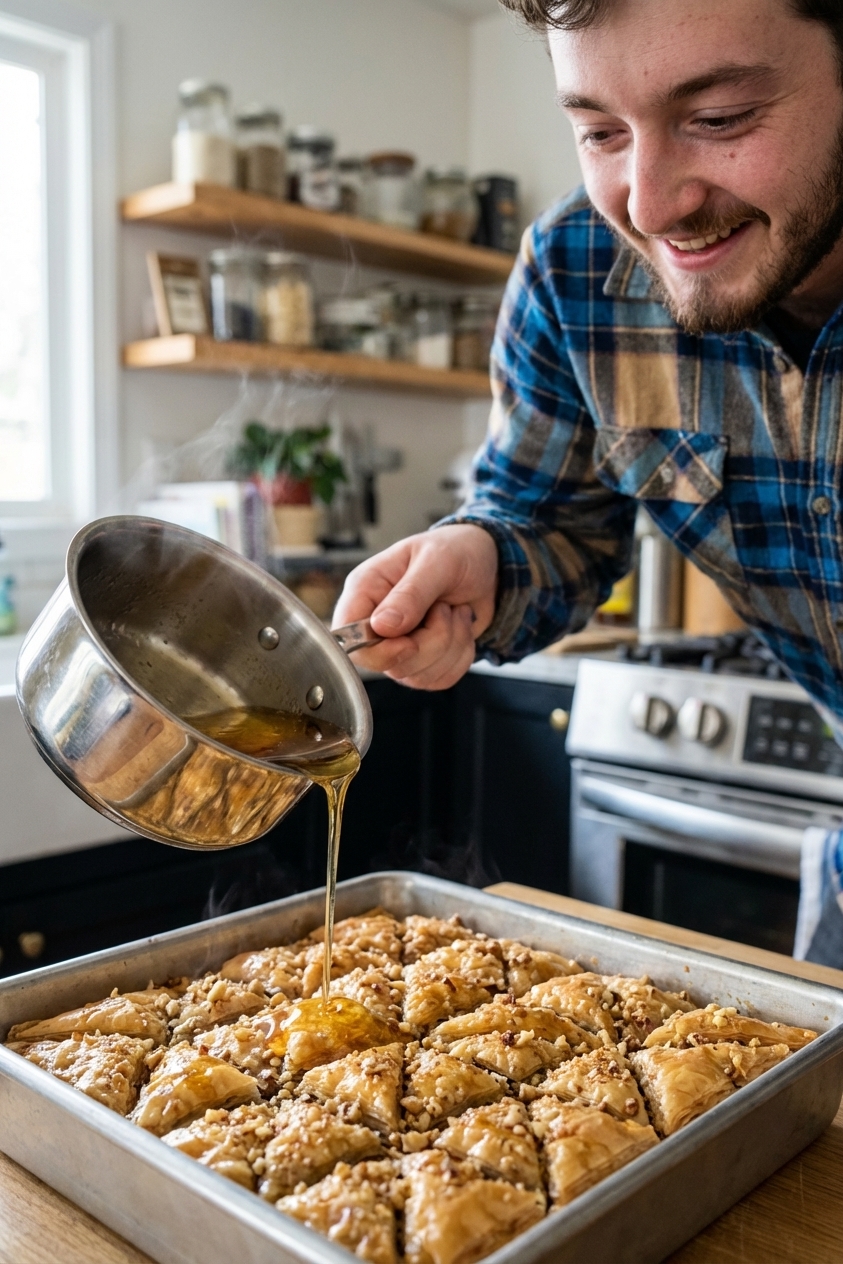
  • Perfect syrup soak: you will pour hot syrup over cooled baklava so it absorbs without turning mushy.
  • Big flavor with simple ingredients: honey, lemon, and a tiny hit of cinnamon make the nuts taste louder without making the dessert “spiced.”

Pairs Well With

Storage Tips

Room temperature is the move. Baklava keeps its crisp edges best when stored at room temp.

  • How to store: let baklava cool completely, then cover the pan with foil or transfer pieces to an airtight container.
  • Best container trick: if stacking pieces, place parchment between layers so they do not glue together.
  • How long it lasts: 5 to 7 days at room temperature in a cool, dry spot.
  • Avoid the fridge: refrigeration makes phyllo lose its crunch faster.
  • Freezing: you can freeze baked, cooled baklava tightly wrapped for up to 2 months. Thaw uncovered at room temperature so condensation does not soften the top.

Common Questions

Do I really have to butter every phyllo sheet?

Yes, if you want that signature flaky stack. The butter is what separates the layers so they bake crisp. The good news: you do not need a thick coat. A quick, even brush is plenty.

Should the syrup be hot or cool when I pour it?

Use hot syrup over cooled baklava. This helps the syrup soak in without turning the phyllo soggy. The general rule is one hot, one cool. You can also do cool syrup over hot baklava, but I get more reliably crisp results with hot syrup on cooled pastry.

Why cut baklava before baking?

Because once phyllo bakes, it shatters. Cutting first gives you clean diamonds and creates channels so syrup can travel down into the layers instead of sitting only on top.

My phyllo is tearing. Is it ruined?

Not at all. Phyllo tears if you look at it wrong. Patch torn areas with another piece, keep going, and remember that syrup and nuts are very forgiving.

Can I use only pistachios or only walnuts?

Absolutely. Pistachio only is a little brighter and sweeter. Walnut only is deeper and toastier. Keep the total nut amount the same.

How do I know when it is baked enough?

Look for deep golden brown on top, not pale blonde. Underbaked phyllo tastes papery. If the top is browning too fast, tent loosely with foil for the last 10 to 15 minutes.

The first time I made baklava, I treated phyllo like it was going to yell at me if I messed up. Then I realized it is basically like working with very dramatic paper. Keep it covered, butter it like you mean it, and do not panic when a sheet tears. Once you pour that honey lemon syrup and hear the faint sizzle, the whole kitchen smells like you just pulled off something wildly impressive. And you did.