Mom's Best Recipes
Recipe

Classic Beef Stew

Tender beef, potatoes, carrots, and a rich gravy-like broth that tastes like you cooked all day.

Author By Matt Campbell
4.8
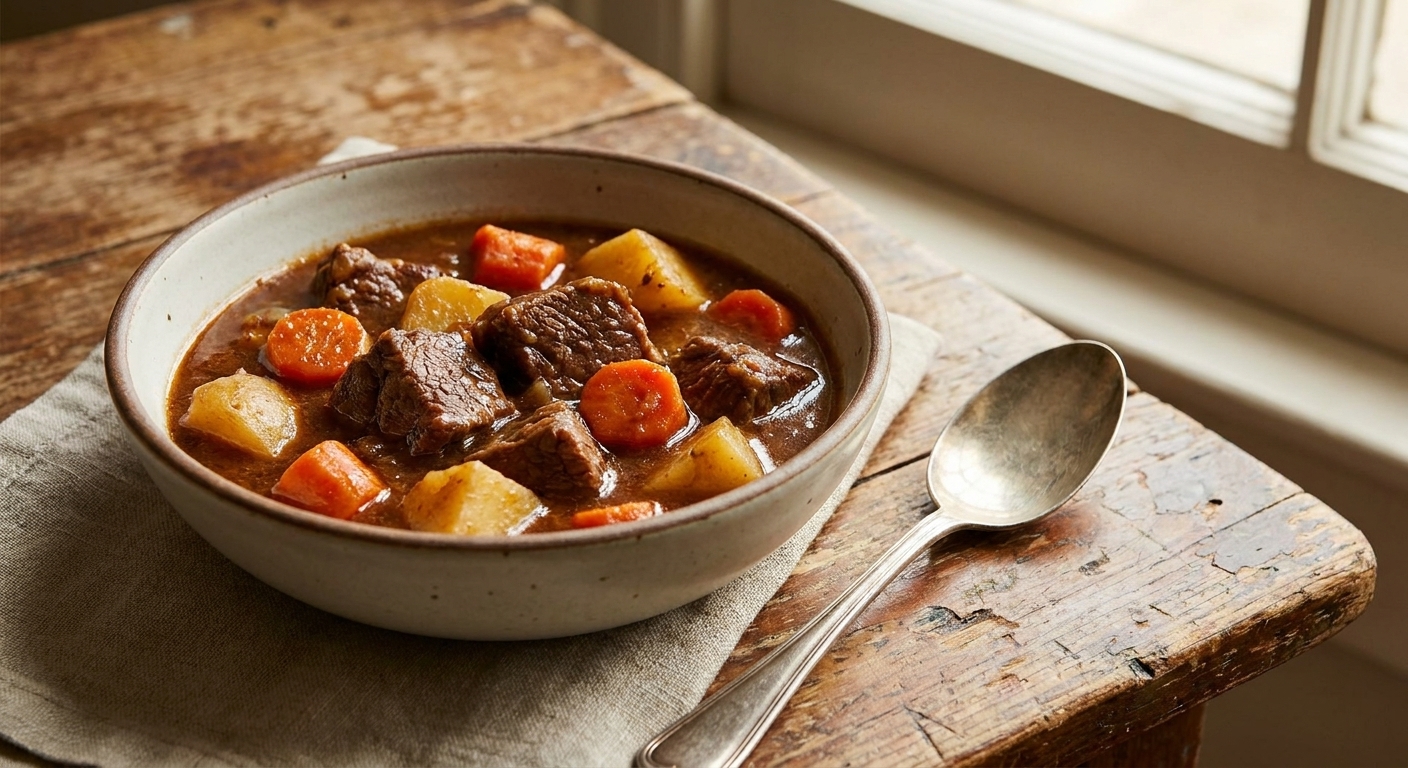
A real photograph of a Dutch oven filled with classic beef stew, showing tender beef chunks, carrots, and potatoes in a glossy rich brown gravy with steam rising on a wooden kitchen counter
Jump to Recipe

Beef stew is one of those recipes that does not need a big speech. It needs tender beef, cozy carbs, and a broth that turns into a silky gravy you want to drag a piece of bread through like it owes you money.

This is the version I make when I want dinner to feel calm even if the day was not. We sear the beef for flavor, build a quick tomato and wine (or broth) base, then let time do the heavy lifting. The result is a pot of stew that tastes like Sunday, even if it is Tuesday.

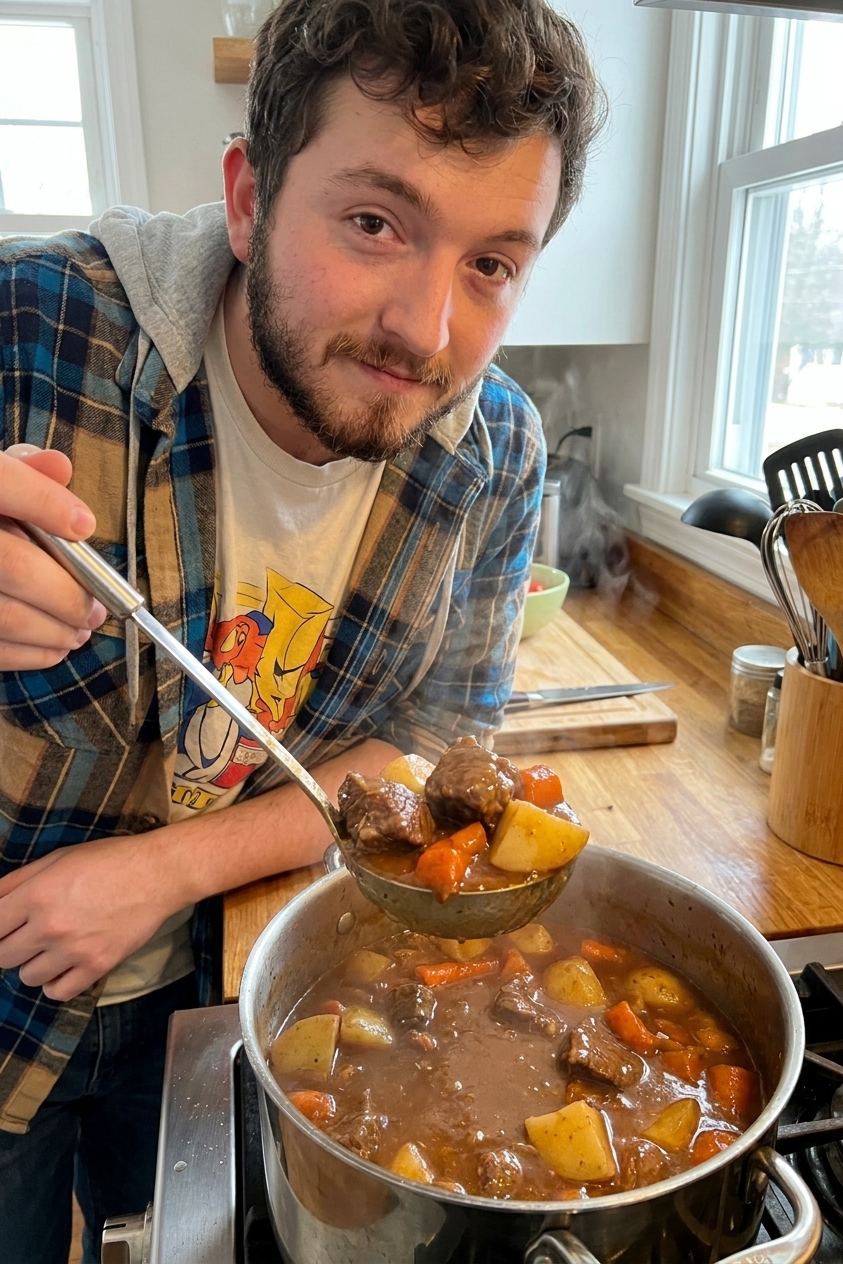
A real photograph of a ladle lifting a portion of beef stew from a pot, showing chunks of beef, potatoes, and carrots coated in thick brown gravy

Why It Works

  • Deep flavor fast: Searing the beef and sautéing the tomato paste gives you that dark, savory backbone without extra ingredients.
  • Fork-tender beef: Low simmer plus enough time breaks down connective tissue so the meat turns plush, not chewy.
  • Thick, glossy gravy: A light flour coat on the beef and a steady simmer naturally thickens the broth.
  • One pot, low drama: Minimal fuss, maximum comfort. Perfect for busy afternoons and even better as leftovers.

Pairs Well With

Storage Tips

How to Store Beef Stew

  • Cool quickly: Get leftovers into the fridge within 2 hours (sooner is even better). Spread into shallow containers to help it cool down fast.
  • Fridge: Store in airtight containers for 3 to 4 days. The flavor gets bolder overnight.
  • Freezer: Freeze in portioned containers for up to 3 months (best quality around 2 to 3 months). Leave a little space at the top for expansion.
  • Reheat: Warm gently on the stovetop over medium-low, stirring occasionally. Add a splash of broth or water if it thickened too much.

Make-ahead

If you are planning this for company, make it a day early. Reheat slowly and taste for salt and a little brightness (a tiny splash of vinegar or lemon at the end can wake it up).

Common Questions

Common Questions

What cut of beef is best for beef stew?

Chuck roast is the classic for a reason. It has enough fat and connective tissue to become tender after a long simmer. Look for well-marbled chuck and cut it yourself into 1 to 1 1/2 inch chunks. If there is a thick cap of fat or silverskin, trim the excess so the stew tastes rich, not greasy.

Why is my stew beef tough?

It usually needs more time, not more heat. Keep the stew at a gentle simmer, cover partially, and give it another 20 to 40 minutes. You want beef that yields easily when you press it with a fork, that is the collagen finally waving the white flag.

How do I thicken beef stew?

This recipe uses a flour coat on the beef plus simmering. If you want it thicker, mash a few potato chunks into the broth. Or stir in a slurry of start with 1 tablespoon cornstarch + 1 tablespoon cold water, simmer 2 minutes, then add a bit more if needed.

Can I make this in a slow cooker?

Yes. Sear the beef and sauté the onion, celery, garlic, and tomato paste first, then add everything except the peas to the slow cooker. Cook on low 8 hours or high 4 to 5 hours. Add peas in the last 10 minutes. If you do not want super-soft potatoes, add them for the last 2 to 3 hours on low (or the last 60 to 90 minutes on high).

Can I skip the wine?

Absolutely. Use extra beef broth plus 1 tablespoon Worcestershire or a splash of balsamic for depth.

When should I add potatoes so they do not fall apart?

Add them after the stew has simmered for a bit. In this recipe, they go in around the 1 hour mark so they cook until tender but hold their shape.

Can I cook this in the oven?

Yes, and it is very hands-off. After you bring the pot just to a boil on the stove, cover and transfer to a 325°F oven. Cook 60 minutes, add carrots and potatoes, then cook 45 to 60 minutes more, until the beef is fork-tender.

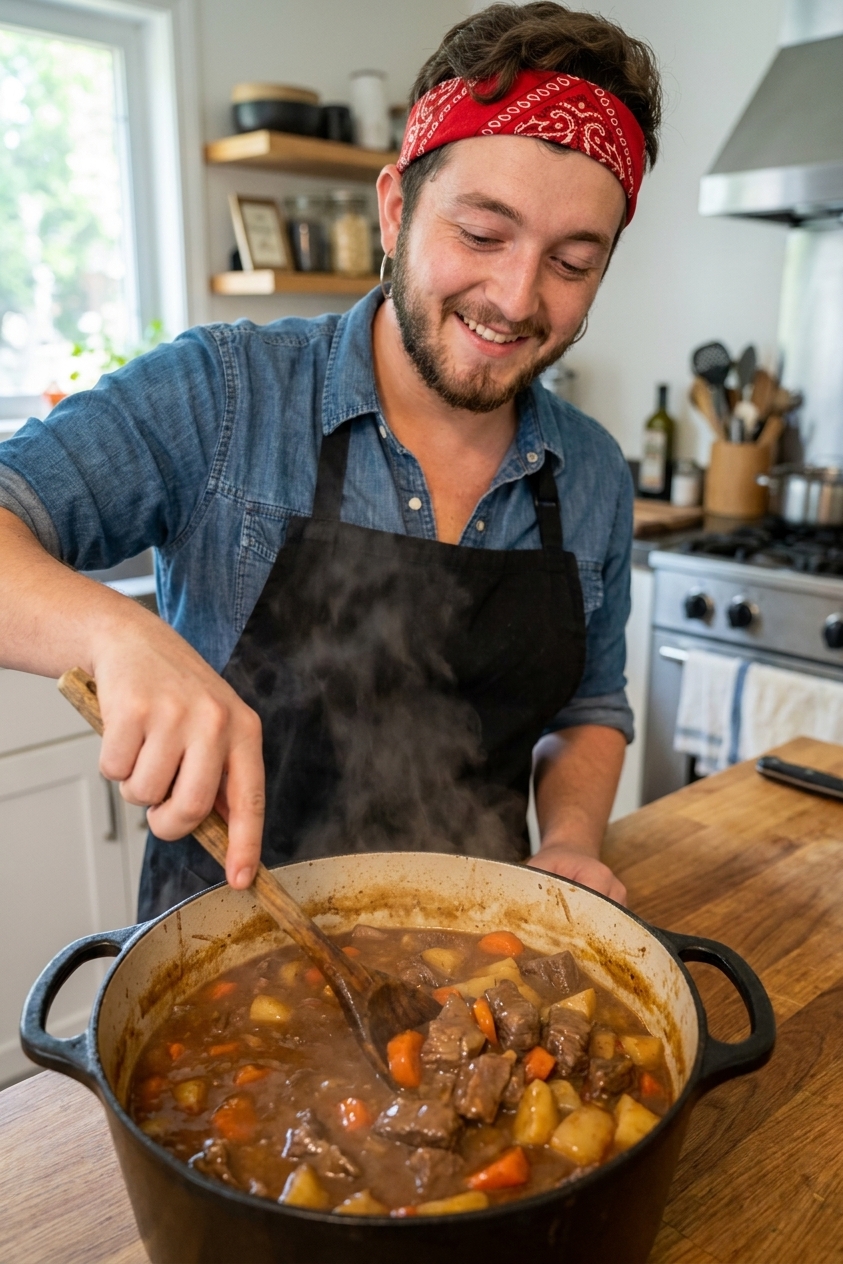
I started making beef stew when I realized I wanted “restaurant comfort” at home without turning a weeknight into a project. The first time I nailed it, it was not because I found some secret ingredient. It was because I slowed down for two moments: I browned the beef until it actually looked browned, and I let the pot simmer long enough that the broth turned into that spoon-coating gravy. Now it is my reset button meal. One pot, a little patience, and suddenly the kitchen feels like the warmest room in the house.