Common Questions
Why is mine cloudy?
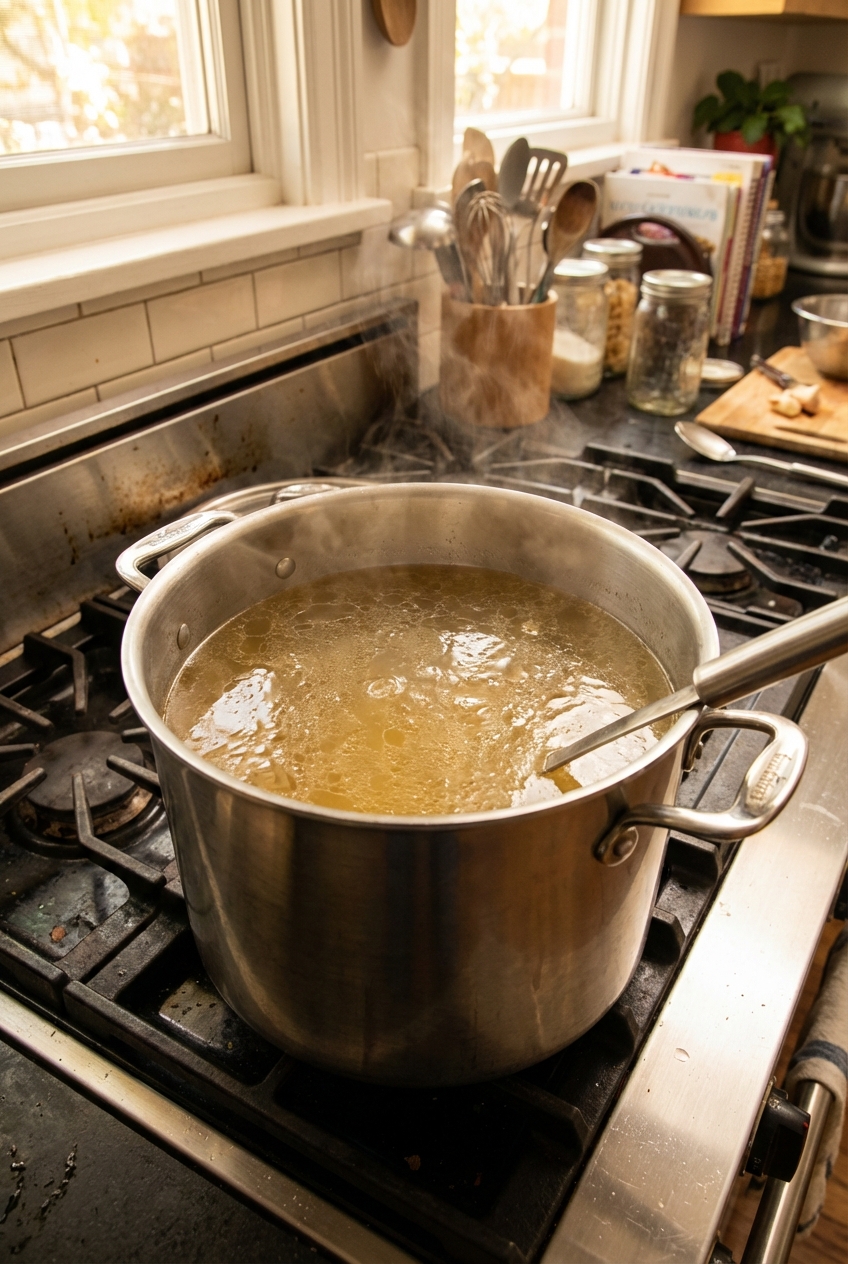
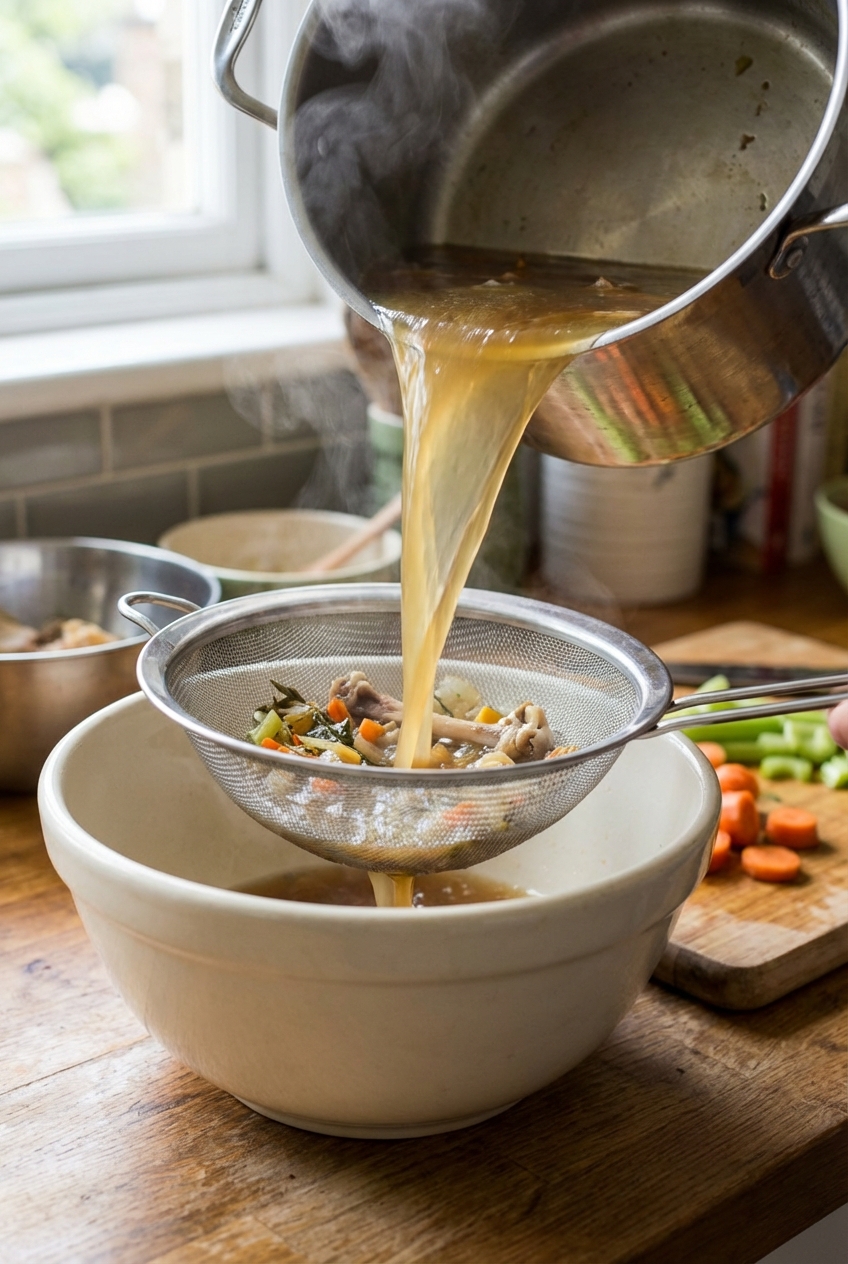
Cloudiness usually comes from boiling. A hard boil emulsifies fat and knocks proteins into the liquid. It can also happen if you stir a lot, overcrowd the pot, press on the solids while straining, or pour the stock too aggressively through the strainer. Keep it at a bare simmer with only a few lazy bubbles, skim early, and strain gently.
What does “light and fluffy” mean for stock?
It is that clean, buoyant feel on the tongue. You get depth without heaviness. Think light, silky, and clear, not greasy or muddy.
My stock turned into gel in the fridge. Did I mess up?
Nope. Gel is a good sign, it means you extracted gelatin. For this style, you are aiming for a lighter body, so it may gel softly or moderately. If it sets up very firmly, that just means you pulled a lot of gelatin (common with wings and especially feet). Warm it up and it will melt right back into liquid.
Should I roast the bones first?
For this recipe, no. Roasting makes a darker, deeper stock with toasted flavors. Delicious, but not the vibe here. This is the classic blond stock that plays well with everything.
Do I need to add salt?
I recommend not salting the stock. You will reduce it sometimes, and salty stock turns into salt soup fast. Season the final dish instead.
Can I make it in a slow cooker or Instant Pot?
Yes, but the results are different. Slow cooker stock can be very clean but sometimes less aromatic. Pressure cooker stock is flavorful and fast, but it tends to be a bit cloudier. If you want the clearest, lightest stock, stovetop gentle simmer wins.
Stock vs broth. What is the difference?
Stock is usually made from bones (often with some meat attached) and is typically unsalted, so you can use it as a flexible cooking base. Broth is usually made with more meat, is often seasoned, and is meant to be sipped or served as-is. In real life, people use the words interchangeably, but this recipe is firmly in unsalted stock territory.