Troubleshooting and Common Questions
Why is my babka dense?
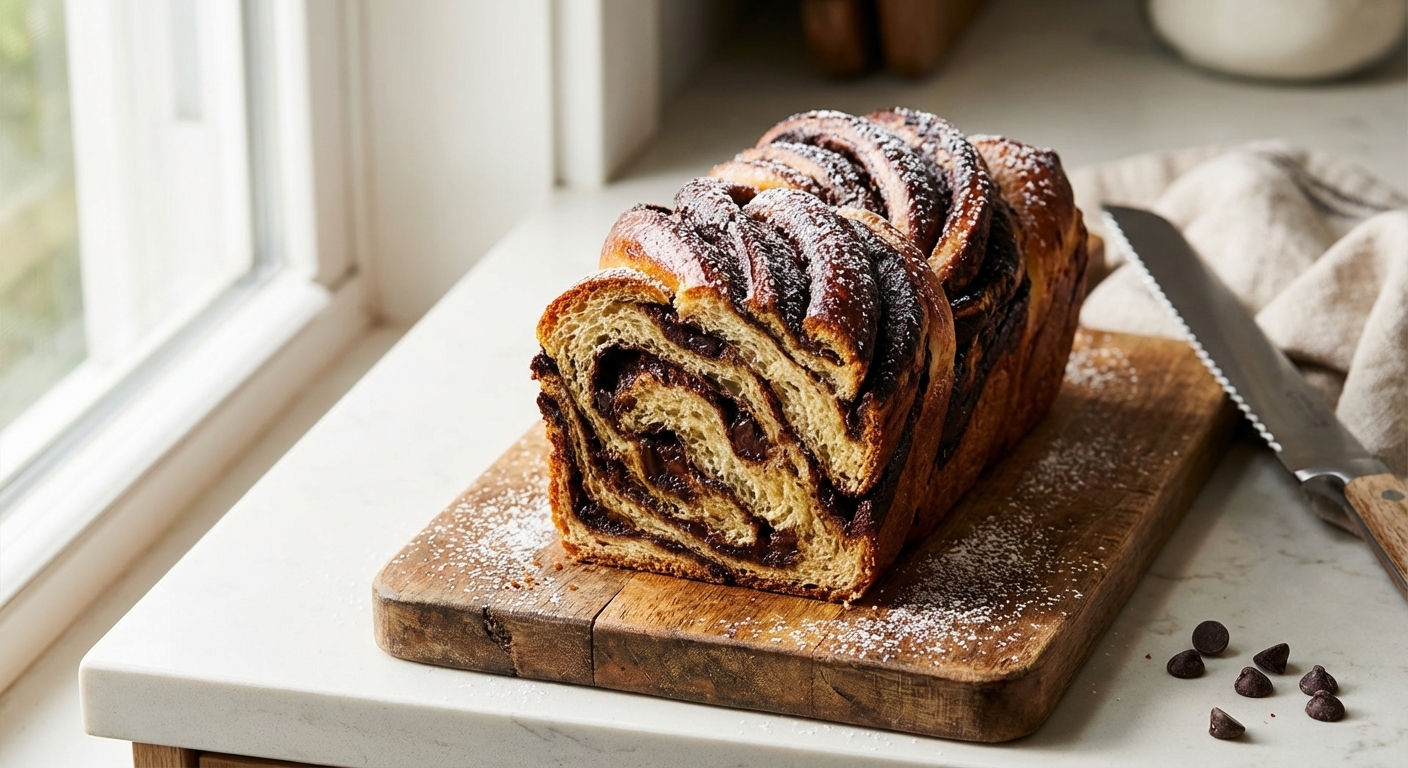
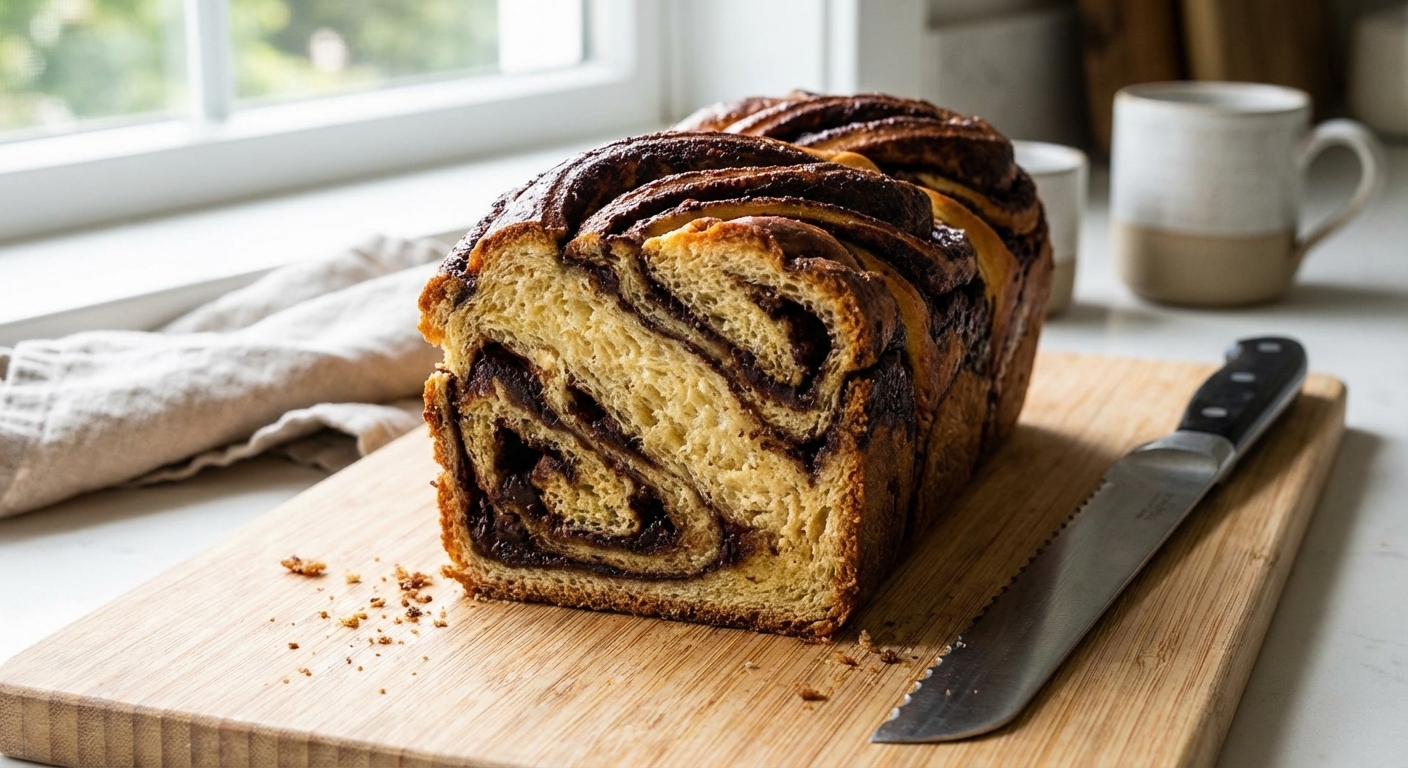
Dense babka usually comes from one of three things: underdeveloped gluten, underproofing, or butter that got too warm during mixing.
- Under-mixed dough: Brioche needs time. Mix until the dough can stretch into a thin “windowpane” before you start the first rise.
- Underproofed: If the loaf goes into the oven before it gets puffy, the crumb stays tight. On the second rise, aim for a loaf that looks lighter and swollen, and springs back slowly when gently pressed.
- Dough too warm: Warm dough turns greasy and struggles to trap air. If your mixer and kitchen run hot, pause and chill the bowl for 10 minutes mid-mix.
Why is my swirl uneven or patchy?
Uneven swirls happen when the filling is too thick to spread, the log is rolled loosely, or the twist is done while the dough is warm and slippery.
- Spread it thin and even: Leave a small border so the seam can seal.
- Roll tight: Use gentle, even pressure as you roll into a log.
- Chill before slicing: A 15 to 25 minute chill firms the filling and makes the twist cleaner.
My filling leaked out and burned. What did I do wrong?
A little leakage is normal, but big leaks usually mean the seam was not sealed or the loaf was overfilled.
- Seal the seam: Pinch it closed, then place the loaf seam-side down.
- Leave a border: Keep about 1/2 inch clear around the edges when spreading filling.
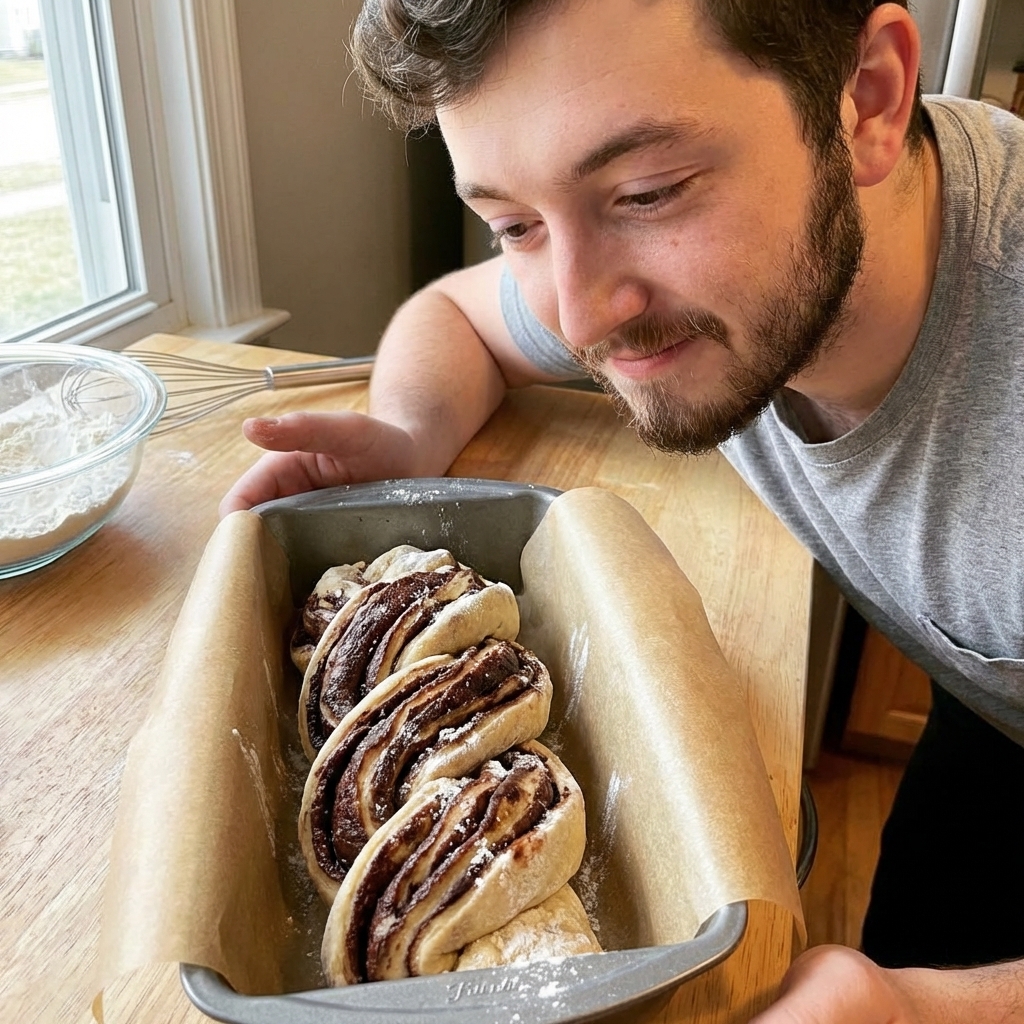
- Use parchment: Line the pan so any caramelized chocolate lifts out easily.
Can I make babka ahead?
Yes. You have two great options: chill the dough overnight for the first rise, or shape the loaf and refrigerate it for the second rise overnight. The cold proof actually makes shaping easier and deepens flavor.
Overnight first rise: Let the dough rise at room temp for 30 minutes, then refrigerate 8 to 24 hours. Shape straight from the fridge.
Overnight second rise: Shape the loaf, cover, and refrigerate 8 to 16 hours. Let sit at room temp until puffy before baking (often 60 to 90 minutes, depending on your kitchen).
Do I need a stand mixer?
It helps a lot with brioche, but it is not required. You can knead by hand, just expect a longer knead and a sticky start. A bowl scraper and a little patience go a long way.
What pan size should I use?
A standard 9 x 5 inch loaf pan is ideal. An 8.5 x 4.5 inch pan works too, but the loaf may dome higher and need a few extra minutes.