Coq au Vin FAQ
What wine is best for coq au vin?
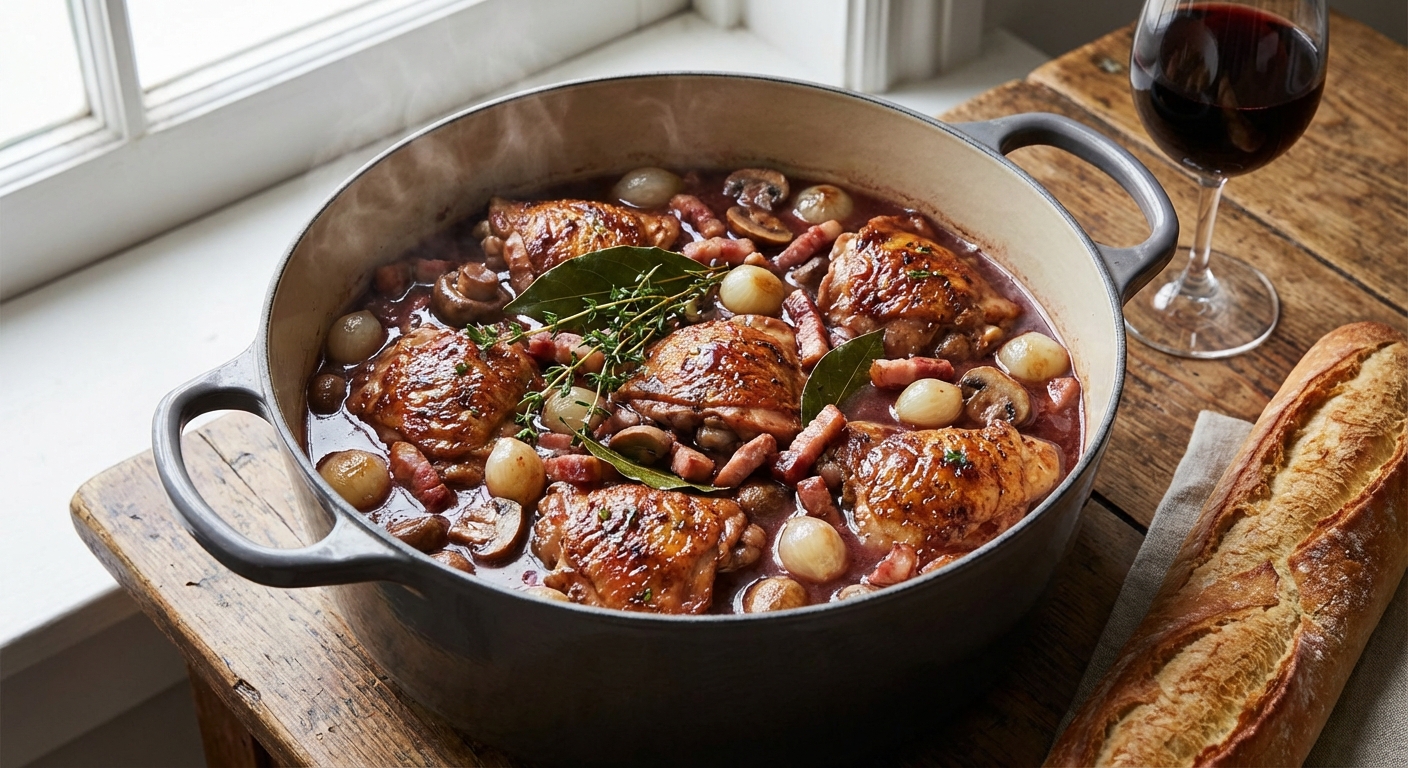
The version most people know is associated with Burgundy (Pinot Noir), but any dry red you like to drink works. Pinot Noir, Beaujolais, Côtes du Rhône, or a mellow Merlot are all solid. Avoid very sweet reds.
Do I have to use a whole bottle of wine?
For classic flavor, yes, the wine should be the main braising liquid. A standard 750 ml bottle is about 3 cups. If you want to use less, replace the remainder with chicken stock, but the dish will taste less wine-forward.
Can I make coq au vin without alcohol?
You can, but it becomes a different dish. Think of this as a flavor approximation, not a classic swap: use extra chicken stock plus 2 tablespoons balsamic vinegar and 1 tablespoon grape juice or pomegranate juice for depth.
Why is my sauce bitter or too sharp?
It usually needs time (simmer longer, uncovered) or a tiny bit of balance. Try 1 to 2 teaspoons of butter whisked in at the end, or a pinch of sugar if the wine is very tannic.
What temperature should the chicken be?
165°F is safe, but for thighs and drumsticks, 175 to 185°F is where they turn tender and silky. Another good cue: the meat should pull easily from the bone without resistance.
Can I do this in a slow cooker?
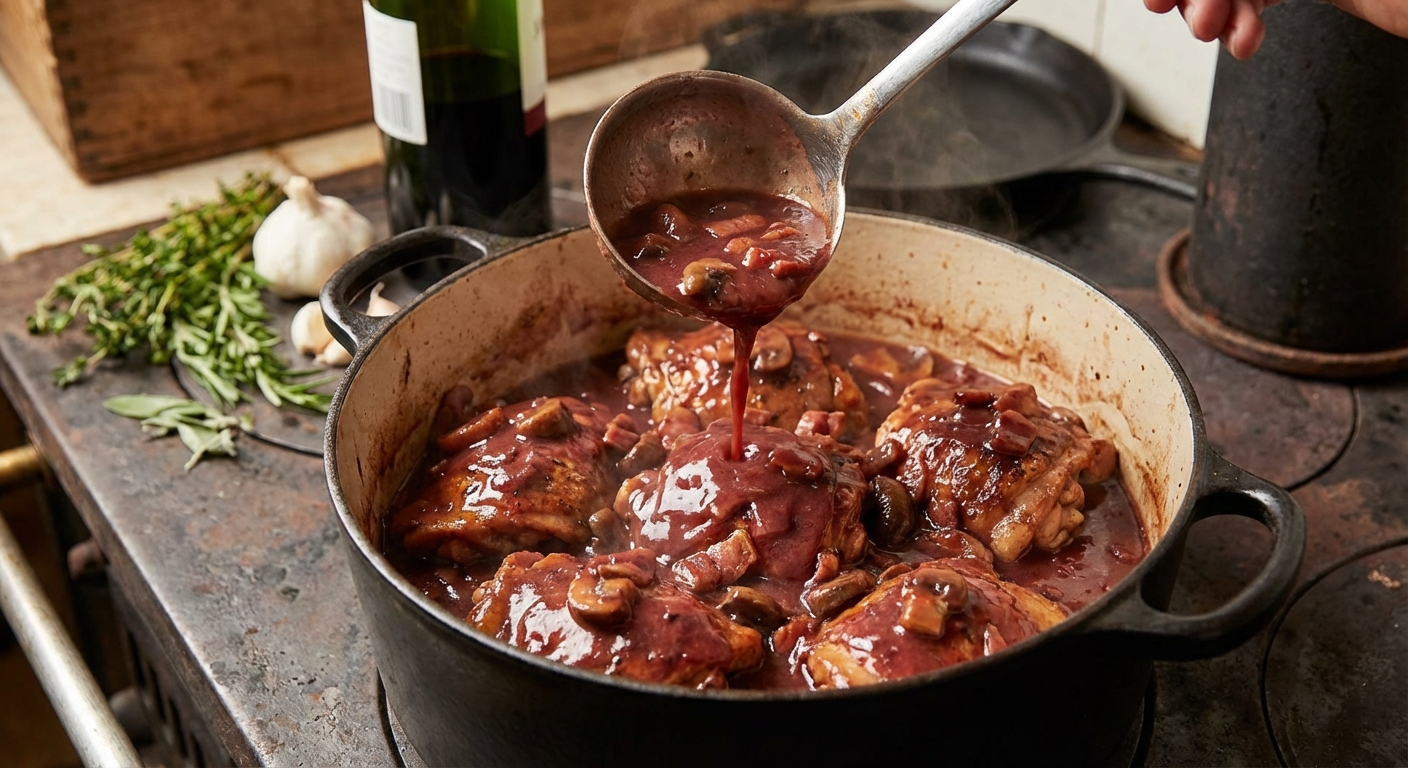
Yes, but do not skip browning. Brown bacon and chicken first, then cook on low 6 to 7 hours. Add mushrooms near the end so they do not turn to sponge.