Common Questions
How do I know crème brûlée is done baking?
Look for set edges and a gentle wobble in the center, like gelatin that has not fully set. If the whole surface sloshes like soup, it needs more time. If it is puffed and firm all the way through, it is likely overbaked and can turn grainy.
Optional thermometer check: If you want a number, aim for about 170 to 175°F (77 to 80°C) in the center.
Why do I need a water bath?
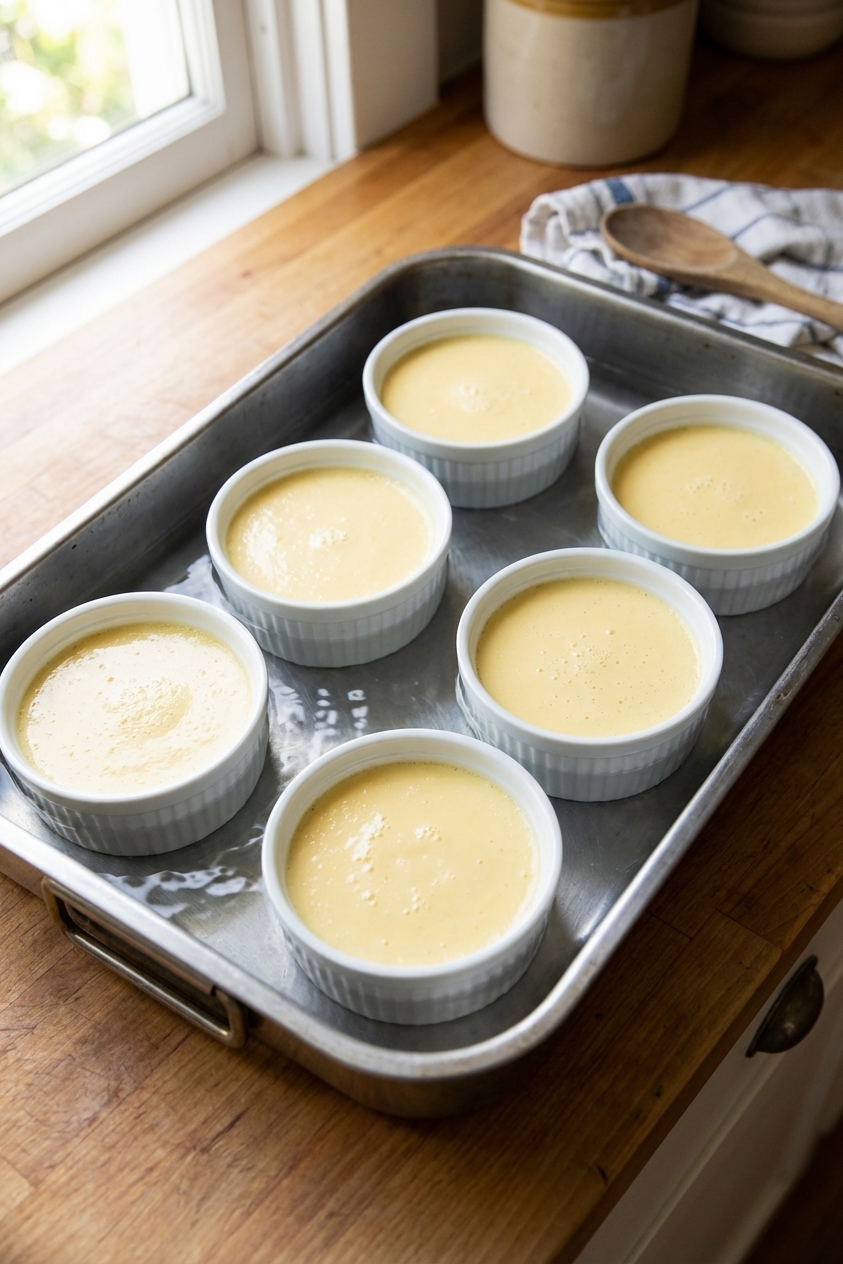
Egg custards hate aggressive heat. The water bath buffers the oven temperature, baking the custards slowly so the proteins set smoothly. It is the difference between silky and scrambled.
Vanilla bean or vanilla extract?
Vanilla bean gives you a deeper, rounder flavor and those classic specks. Vanilla extract is simpler and still delicious. If using extract, add it after heating the cream so the flavor stays bright.
Can I make crème brûlée without a torch?
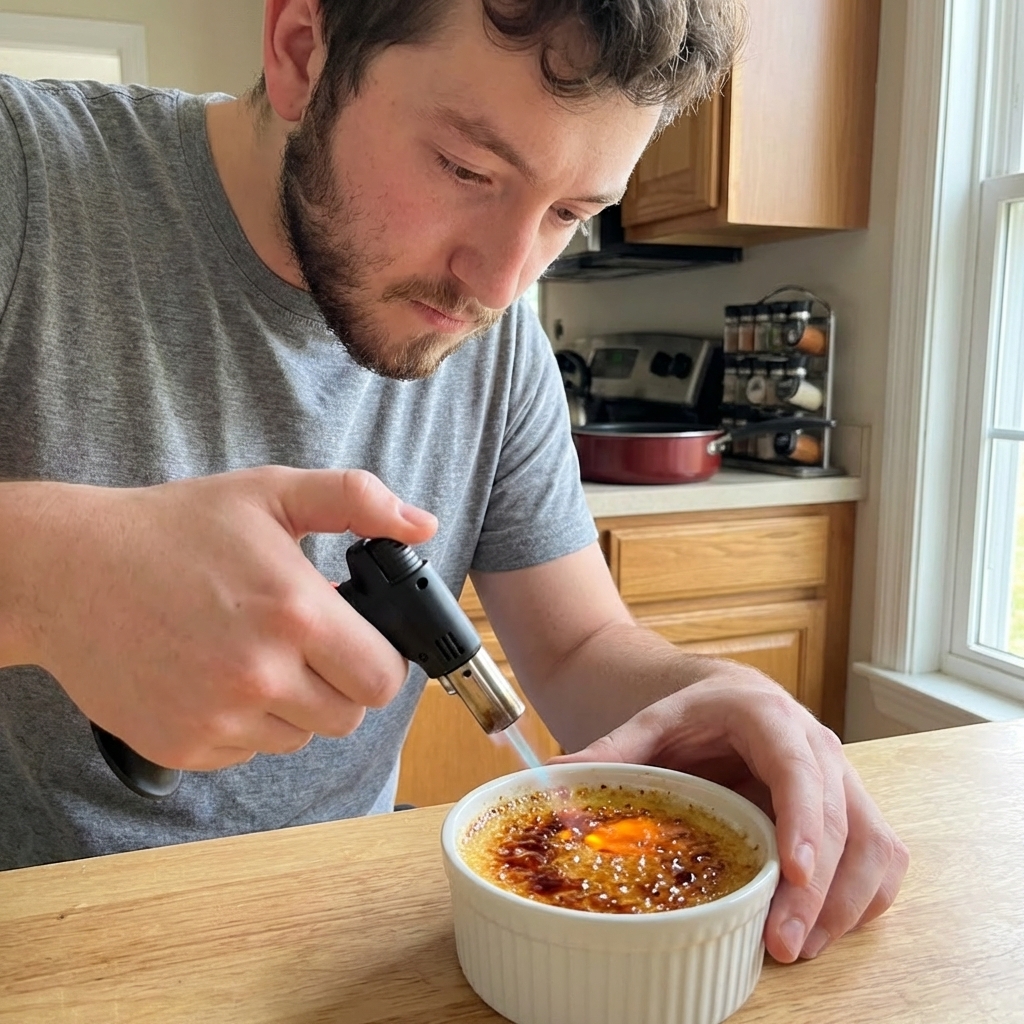
Yes. Use your broiler. The key is that the custard must be very cold and your sugar layer should be thin and even. Broil briefly, watching constantly, and rotate the pan as needed. It can go from pale to burned fast.
What sugar is best for the topping?
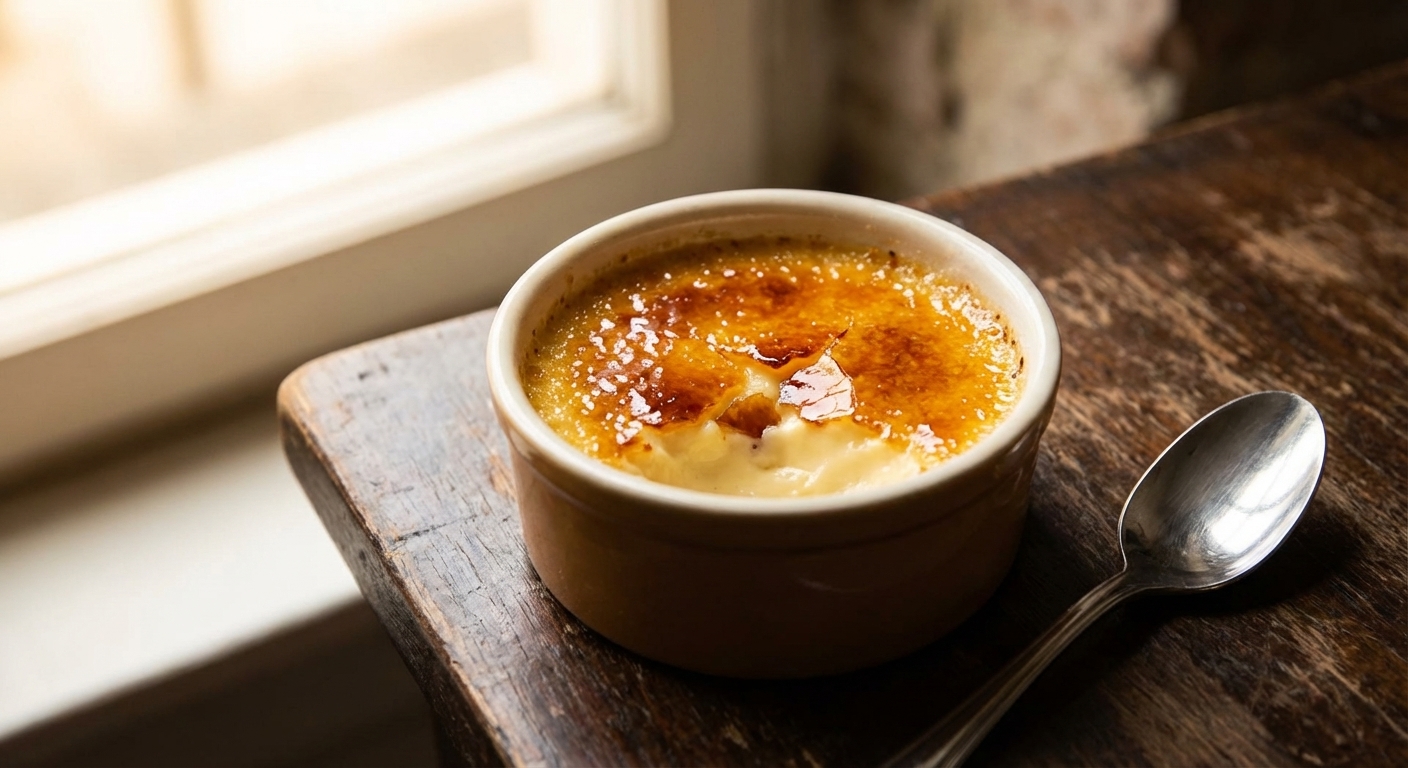
Regular granulated sugar is the standard because it melts cleanly and hardens into a crisp sheet. Superfine works too. Brown sugar can burn before it fully melts and tends to make a softer crust.
Why did my custard get bubbles or a rough texture?
Usually one of three things: the cream boiled hard, the custard mix was whisked too aggressively, or it baked too hot. Next time, heat the cream until steaming, whisk gently, and lean on the water bath.