
Mom's Best Recipes
Recipe

Classic Deviled Eggs

Creamy, tangy deviled eggs with a smooth filling, a gentle mustard kick, and low-drama peeling tips.

Author By Matt Campbell
4.9
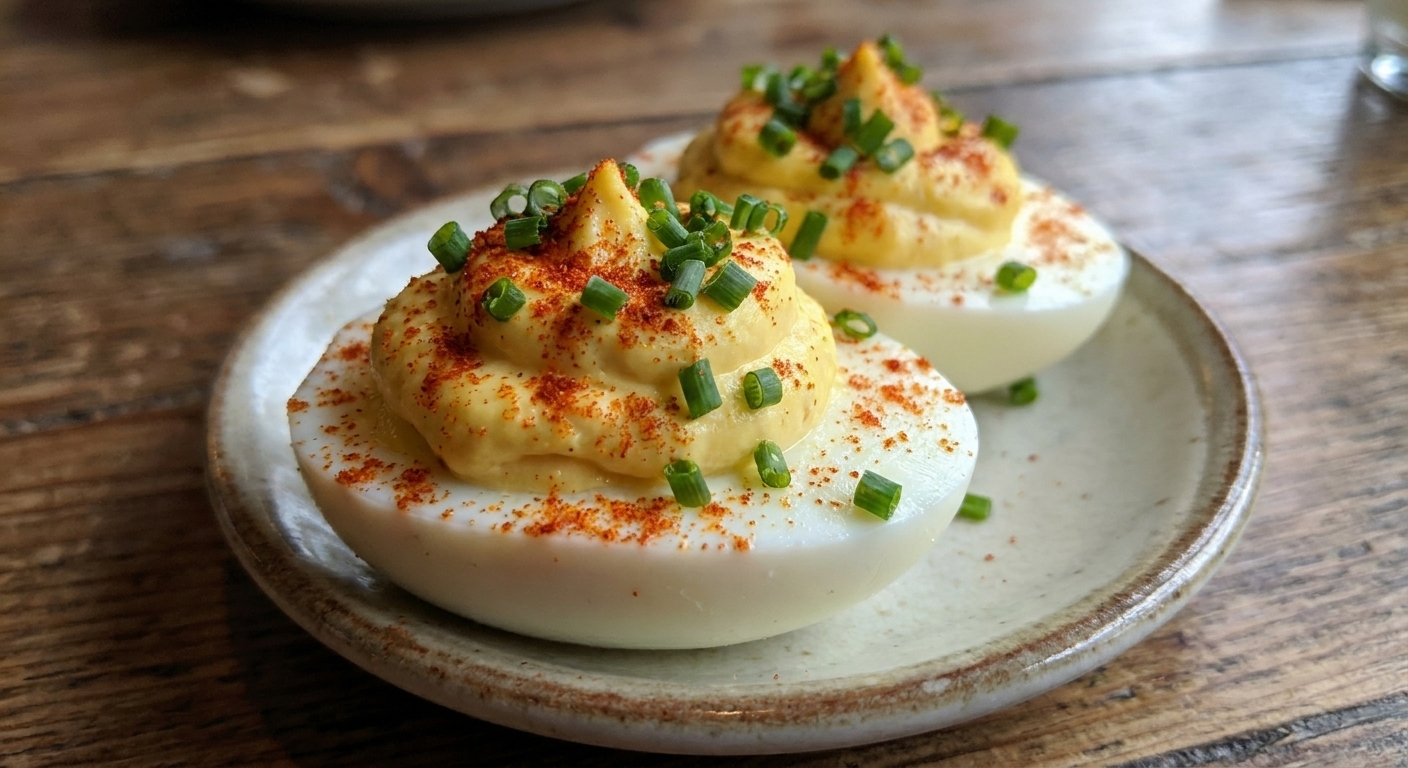
White ceramic platter filled with classic deviled eggs topped with paprika and chives on a bright kitchen table in natural light
Jump to Recipe

Deviled eggs are the kind of recipe that look fancy on a platter but secretly run on pantry staples and good timing. They are creamy, a little tangy, and just rich enough to make you “accidentally” walk by the fridge for one more.

This is my classic, no weird ingredients version, with a couple of small tricks that keep the filling smooth and the eggs easier to peel. I also included a few easy swaps in case you want to go more kid-friendly, more spicy, or more “I’m bringing these to a party and I need them gone in 10 minutes.”

Hand peeling a hard boiled egg over a bowl of ice water with scattered eggshells on a kitchen counter

Why It Works

  • Easier-to-peel eggs: A hot start plus an ice bath helps the whites release more cleanly.
  • Ultra-smooth filling: Pushing yolks through a fine mesh sieve is optional but it makes the texture bakery-level silky.
  • Balanced flavor: Mayo for creaminess, mustard for zip, and a little vinegar or pickle juice to wake everything up.
  • Make-ahead friendly: You can boil the eggs and prep the filling in advance, then assemble right before serving.

Pairs Well With

Storage Tips

Refrigerate: Store deviled eggs in a single layer in an airtight container. They keep well for up to 2 days for best texture. (They are safe a bit longer, but the filling can weep and the whites can get rubbery.)

Best make-ahead method: Keep the egg whites and the filling separate. Refrigerate whites covered, and store filling in a zip-top bag or container. Pipe the filling into the whites right before serving.

Transport tip: Line the container with a paper towel to catch any condensation, and keep the eggs chilled until you are ready to set them out.

Do not freeze: The whites turn spongy and the filling can split when thawed.

Common Questions

What makes deviled eggs hard to peel, and how do I fix it?

Very fresh eggs tend to cling to the shell. If you can, buy eggs a few days ahead. For easier peeling, use a hot start: gently lower eggs into already simmering water (or steam them), then chill in an ice bath. Peel under a little running water if needed, and start at the wider end where the air pocket usually sits.

How do I keep the filling from being lumpy?

Mash the yolks thoroughly, or for the smoothest filling, press them through a fine mesh sieve. Also make sure your mayo is well mixed before you start adding extras like mustard and pickle juice.

Can I make deviled eggs without mayonnaise?

Yes. Swap in Greek yogurt or sour cream for some or all of the mayo. The flavor will be tangier and a little lighter. You may want an extra pinch of salt.

Why are my deviled eggs watery?

This usually happens when the filling has too much liquid (pickle juice, vinegar) or the eggs sat uncovered in the fridge and picked up condensation. Add liquid a little at a time, and store covered. If it is already loose, mix in another yolk or a spoonful of mayo to tighten it up.

How long can deviled eggs sit out at a party?

For food safety, keep them out no more than 2 hours total at room temperature (or 1 hour if it is very hot out). Set the platter over a tray of ice if they will be out for a while.

I used to think deviled eggs were one of those “someone’s aunt has the secret recipe” foods. Then I made them myself and realized the secret is basically this: salt your yolks properly, add just enough tang to keep them from tasting flat, and do not rush the chill. Now they are my go-to contribution when I need something that feels classic, travels well, and gets eaten fast, even by the picky kids who claim they “don’t like eggs.”