Mom's Best Recipes
Recipe

Classic Deviled Eggs

Creamy, tangy deviled eggs with a smooth filling, bright mustard flavor, and a little paprika sparkle.

Author By Matt Campbell
4.8
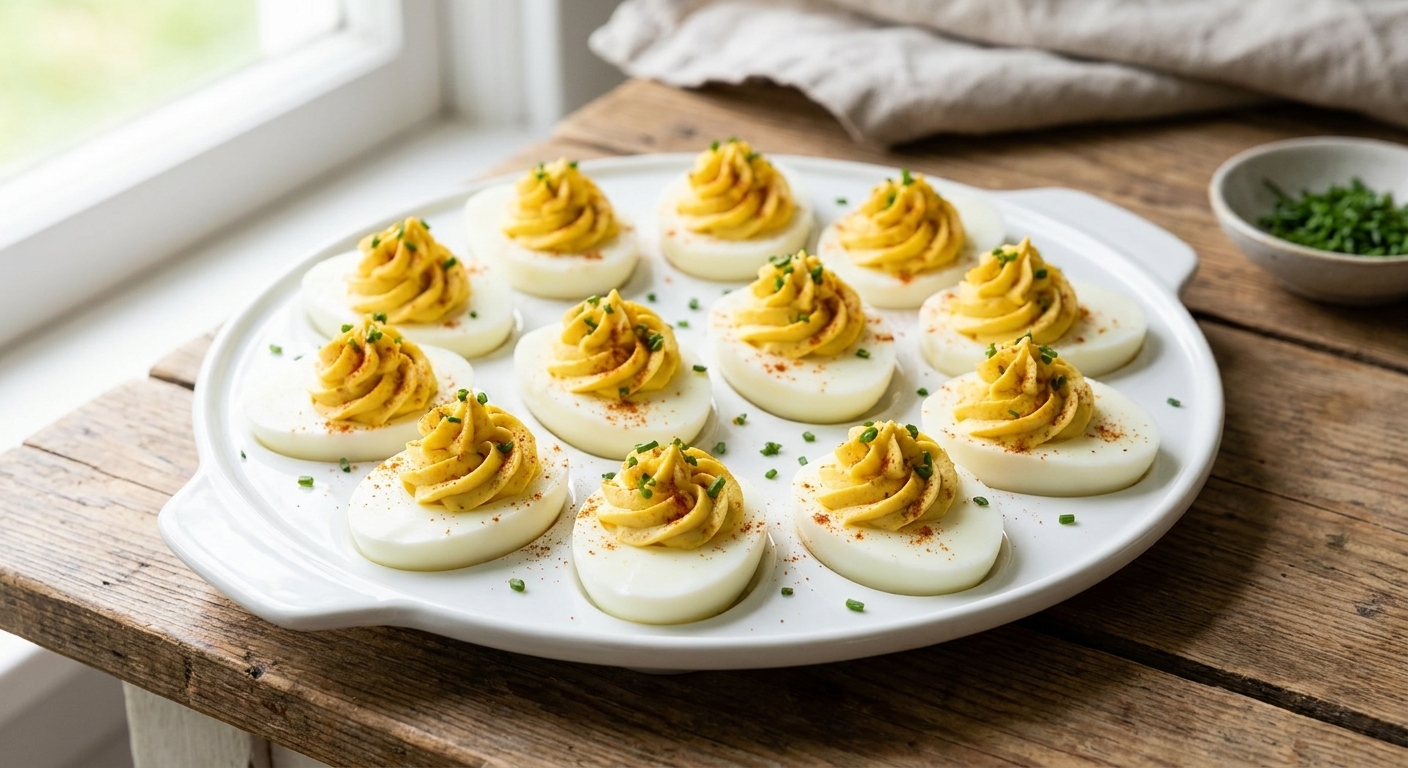
A real photo of classic deviled eggs arranged on a white serving platter, creamy yellow filling swirled into the egg whites and lightly dusted with paprika, soft natural window light
Jump to Recipe

Deviled eggs are the ultimate small bite with big main character energy. They are creamy, salty, tangy, and just fancy enough to look like you tried really hard, even if you made them while your kitchen timer was yelling at you.

This is my classic deviled eggs recipe for smooth filling, clean seasoning, and no weird ingredients you will use once. Plus, I am sharing the peeling trick that saves you from that heartbreaking moment when half the egg white stays glued to the shell.

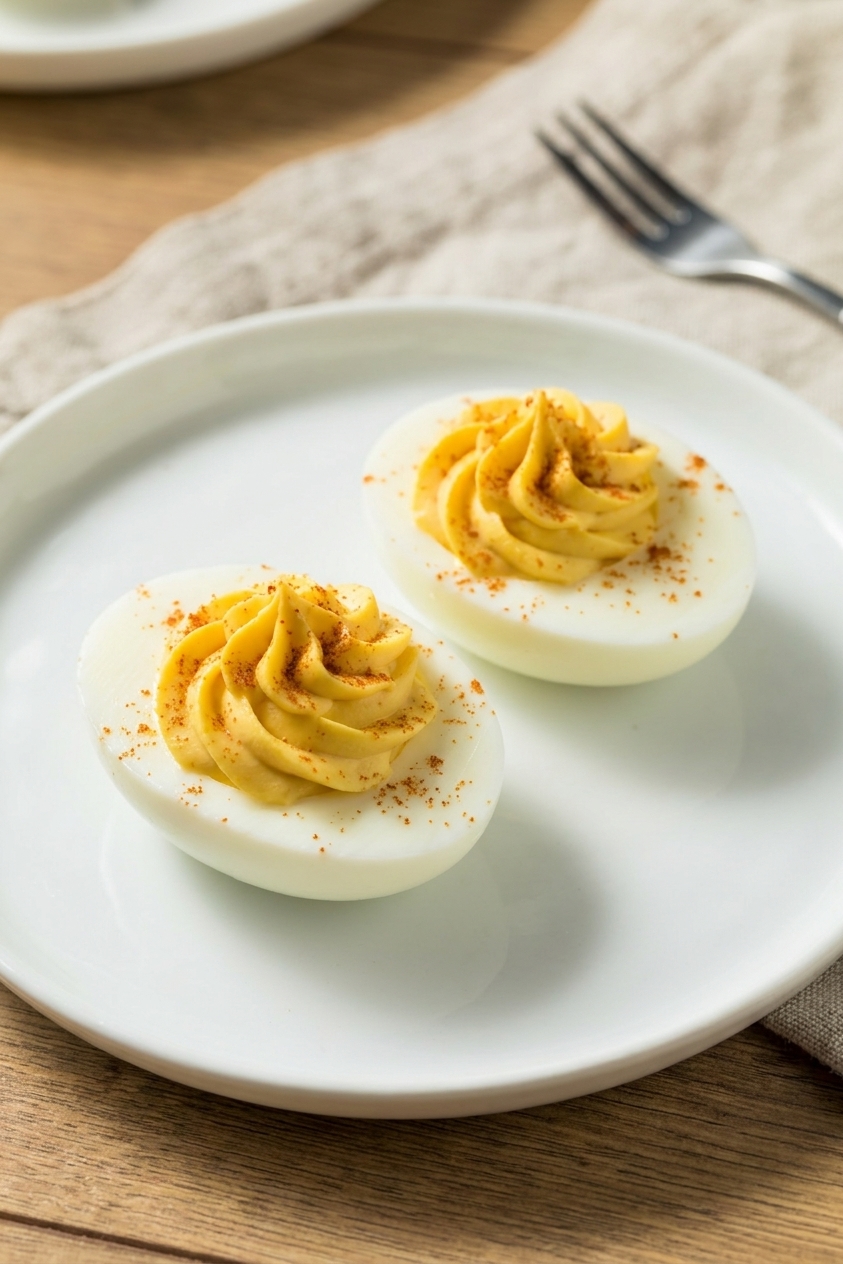
A close up real photo of two deviled eggs with silky piped filling and a light sprinkle of paprika on top, on a simple plate

Why It Works

  • Easy-to-peel eggs: A hot-water start, a gentle simmer, an ice bath, and one simple peeling trick so the whites stay smooth.
  • Balanced filling: Mayo for creaminess, mustard for brightness, a splash of vinegar or dill pickle juice for tang, and just enough salt to make it pop.
  • Make-ahead friendly: Prep the parts in advance and assemble right before serving for the prettiest results.
  • Customizable: Keep it classic or add pickles, bacon, hot sauce, or herbs without messing up the base.

Pairs Well With

Storage Tips

How to Store Deviled Eggs

  • Refrigerate promptly: Keep deviled eggs chilled and covered. Do not leave them out longer than 2 hours, or 1 hour if it is hot outside. For parties, set the platter over a tray of ice to keep things safe and creamy.
  • Best container: A single layer in an airtight container is ideal. If you stack, place parchment between layers to protect the filling.
  • How long they last: Best within 2 days for the nicest texture, up to 3 to 4 days if kept very cold and covered.
  • Make-ahead move: Store whites and filling separately. Pipe or spoon the filling in right before serving so the tops stay fluffy.
  • Freezing: Not recommended. The whites get rubbery and the filling can separate.

Common Questions

Common Questions

How do I make hard-boiled eggs that peel easily?

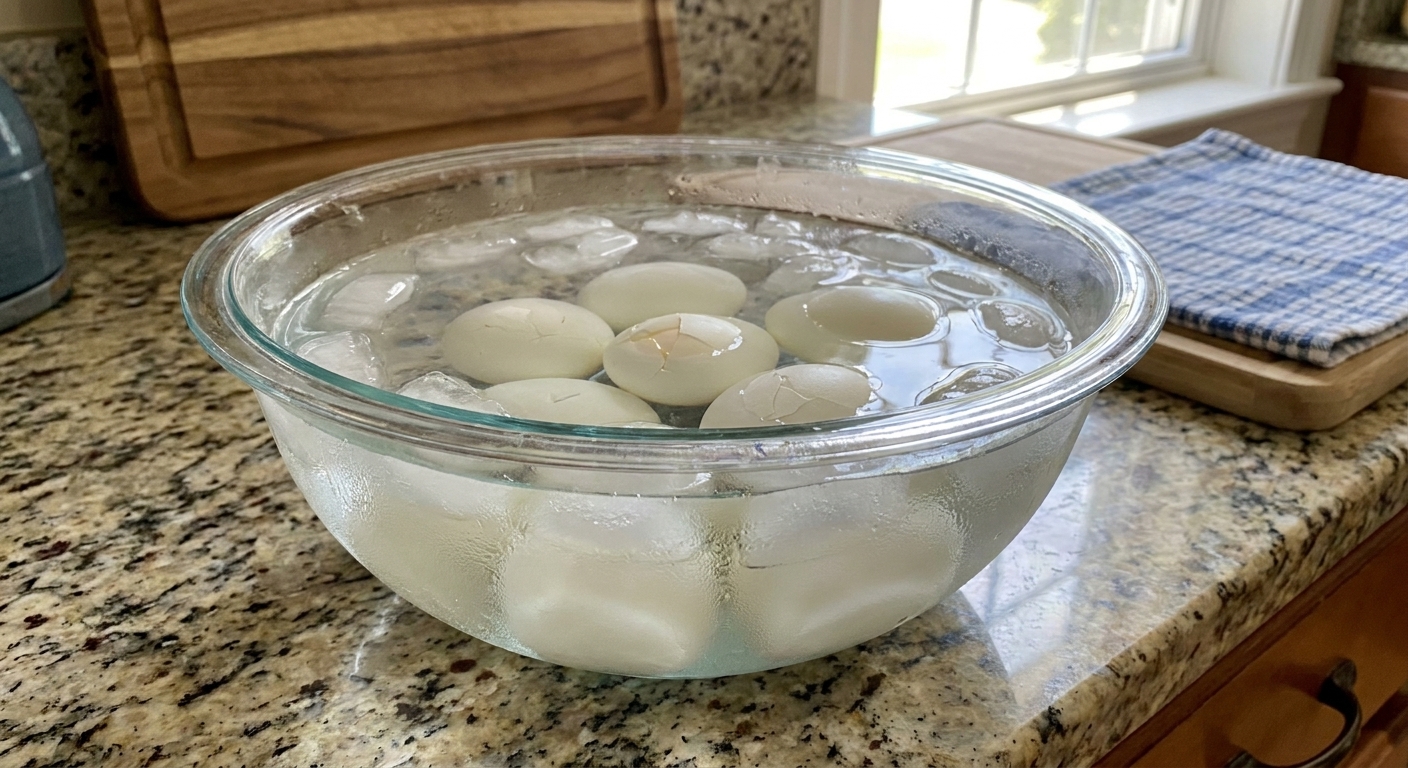
Use a hot-water start: bring the water to a boil, lower the eggs in, then keep it at a gentle simmer. After cooking, move the eggs straight into an ice bath for at least 10 minutes. My favorite peeling trick is to crack the shell all over (tap and roll), then peel under a thin stream of cool water so the shell slides off instead of taking the egg white with it.

Why is my deviled egg filling lumpy?

Usually it is under-mashed yolks or not mixing thoroughly. Mash the yolks until completely smooth, then add mayo and other ingredients gradually. For ultra-smooth filling, press the yolks through a fine-mesh sieve before mixing.

Can I make deviled eggs the night before?

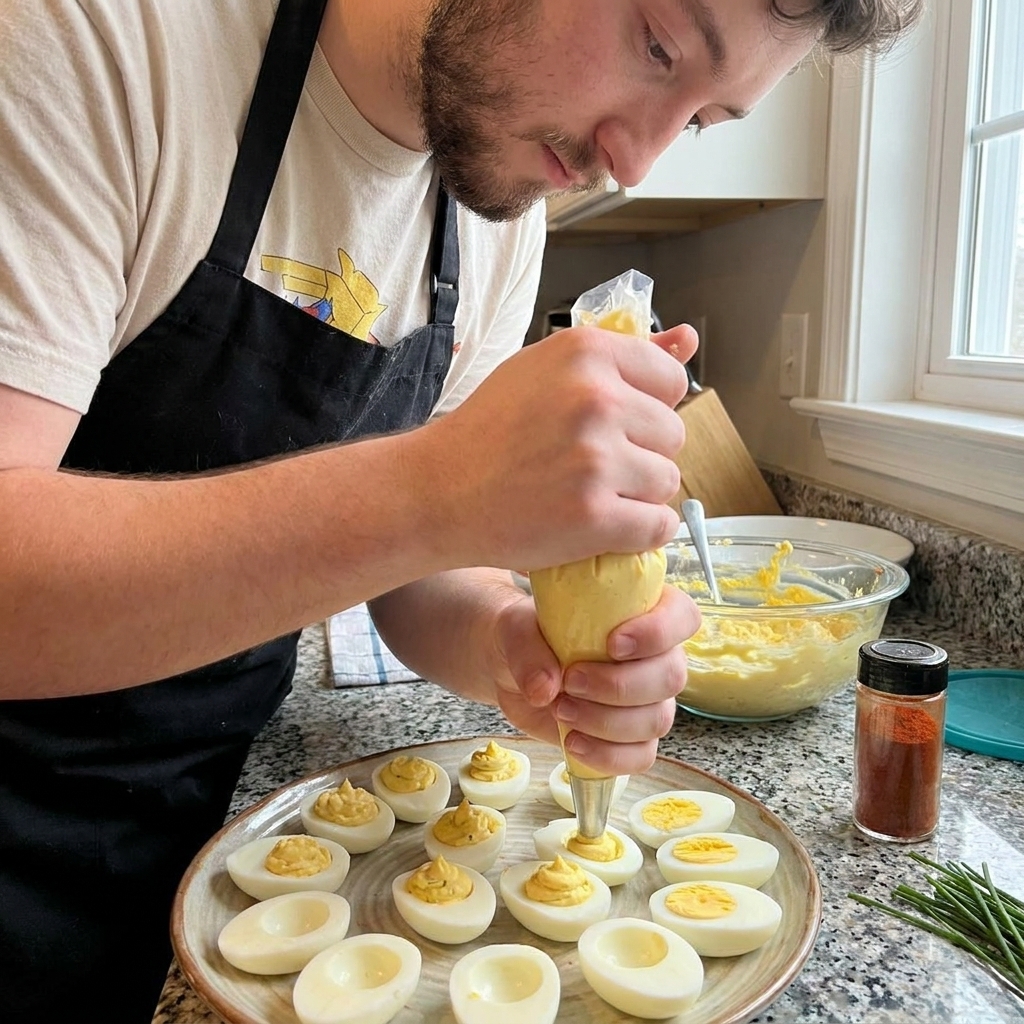
Yes. For the best texture, keep the filling in a piping bag or zip-top bag and keep the whites in a separate container. Assemble up to a few hours before serving.

How do I keep deviled eggs from sliding around on a platter?

Slice a tiny sliver off the bottom of each egg white half so it sits flat. Or serve on a bed of lettuce or fresh herbs to help grip them.

What can I use instead of mayo?

Greek yogurt works for a tangier, lighter filling, but it can be thicker. You can also do half mayo and half yogurt or sour cream. Taste and adjust salt and vinegar since yogurt brings its own tang.

How do I transport deviled eggs without ruining them?

Use a deviled egg carrier if you have one. If not, line a container with paper towels, nestle the whites snugly, and carry the filling separately to pipe on arrival. If you are outdoors, keep the tray chilled over a larger tray of ice until serving time.

Can I double this recipe?

Absolutely. It doubles and triples easily. Just cook the eggs in batches so the pot is not crowded and the water returns to a gentle simmer quickly.

Deviled eggs were one of the first “bring a dish” foods I learned to make without calling someone mid-recipe. I love them because they are low effort, high reward, and they teach a real kitchen skill: seasoning to taste. The first time I nailed the balance, mustard bright, vinegar sharp, salt on point, I ate one standing at the counter and immediately made a second batch because somehow a tray of deviled eggs is never actually a tray of deviled eggs once people show up.