What makes a martini “dry”?
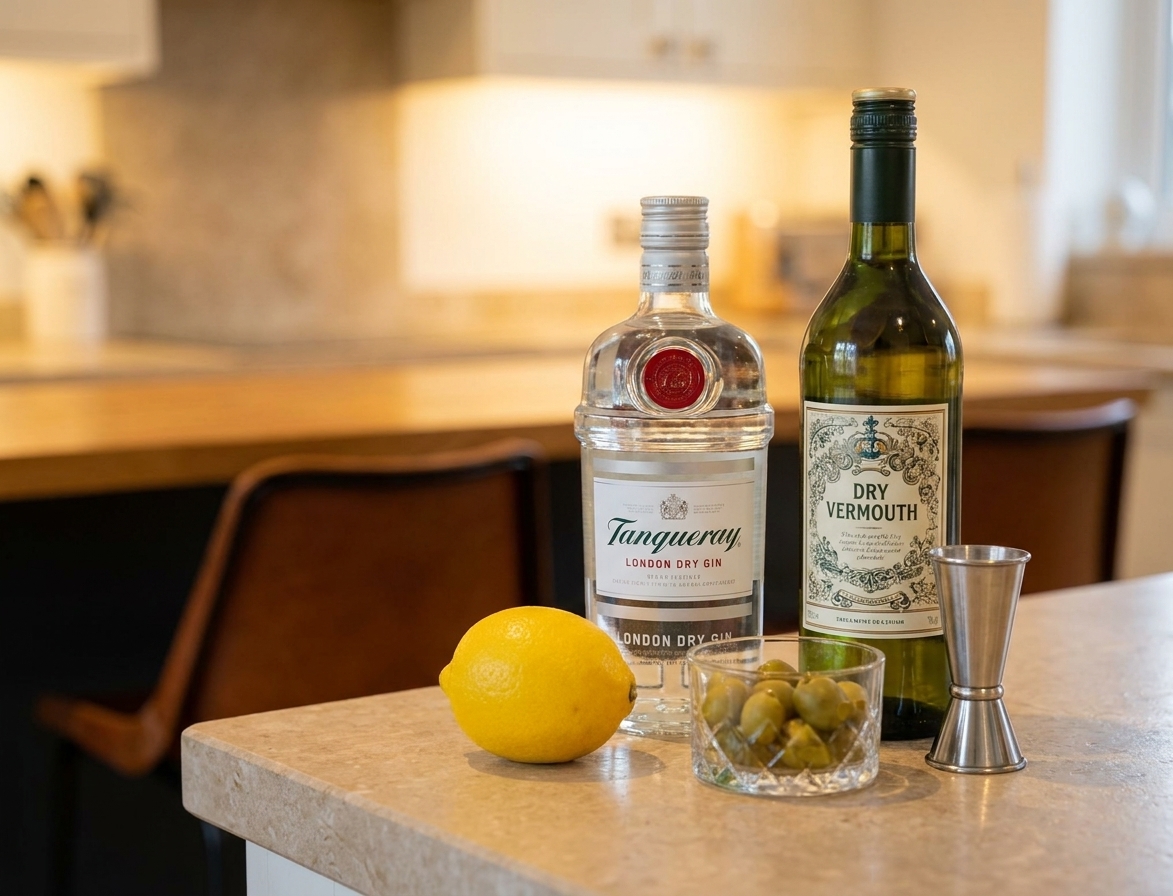
“Dry” usually means less vermouth. A classic dry martini might be anywhere from 2.5 oz gin to 0.5 oz vermouth (5:1) down to a 15:1 whisper. If you want bone-dry, use 1 to 2 teaspoons vermouth, or rinse the glass with vermouth and dump it.
Stir or shake?
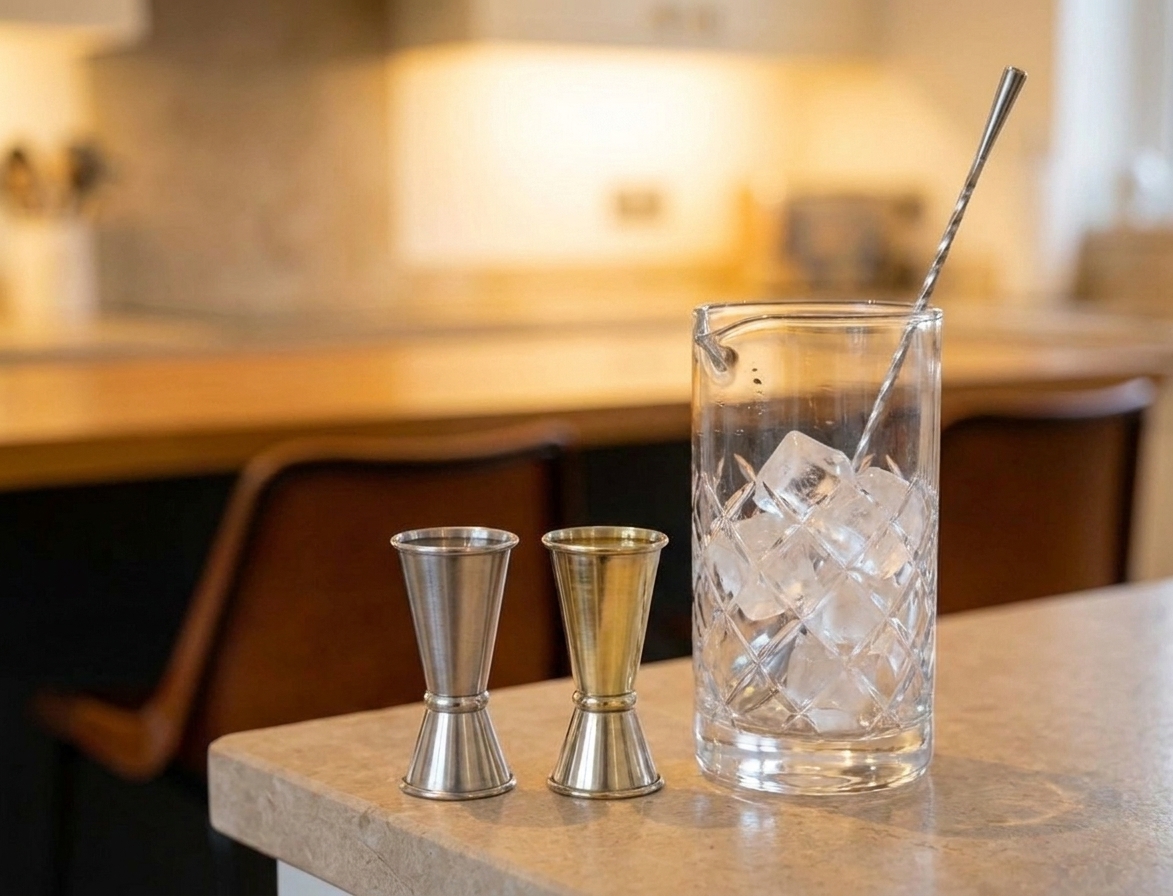
Stir for a traditional dry martini. Stirring chills and dilutes while keeping it clear and silky. Shaking adds more air bubbles and ice shards, which can make it look cloudy and taste more aggressively cold. If that is your preference, go for it. Just know what you are choosing.
Gin or vodka?
Classic dry martini is gin. Vodka makes a cleaner, more neutral drink. Same method, just swap spirits. If you are vodka-curious, try a lemon twist to keep it bright.
Olive or twist?
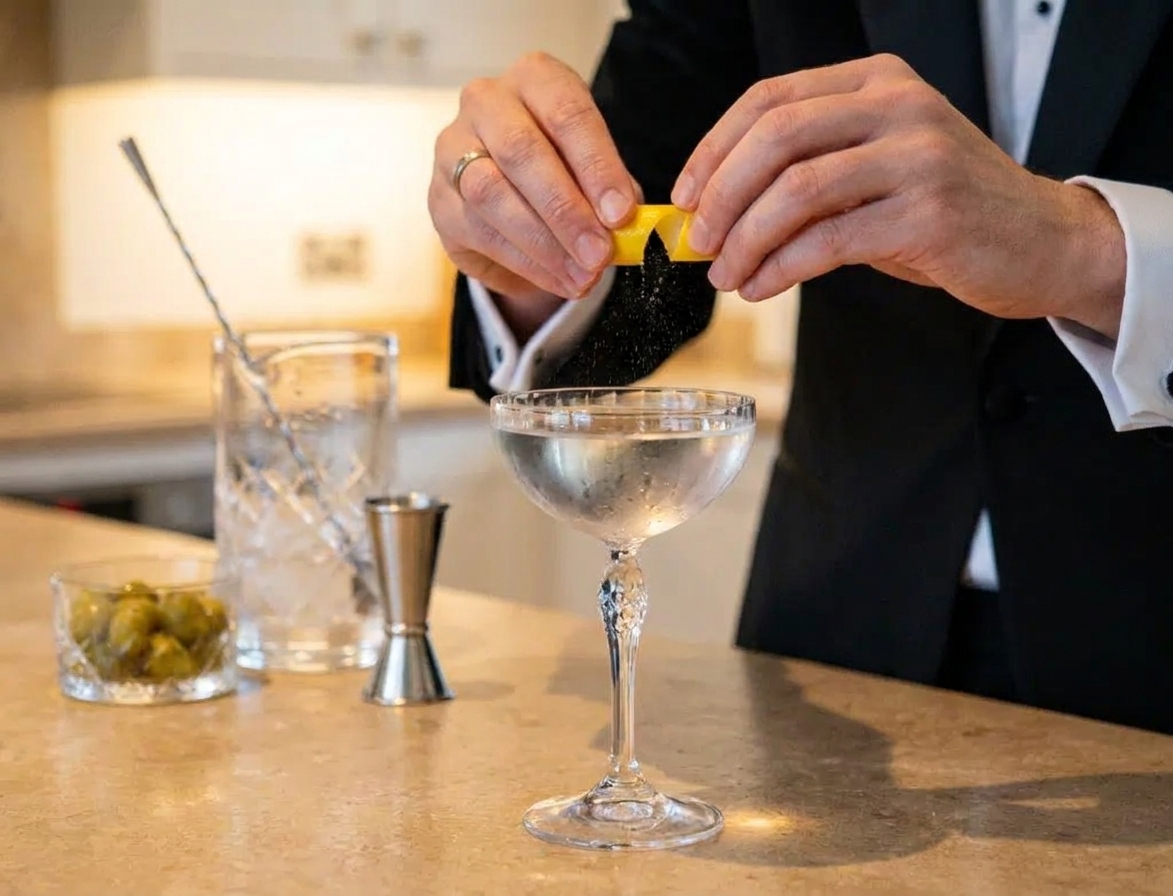
Olives add savory, briny weight. A lemon twist adds aroma and a sharp, clean lift. If you use olives, pick good ones. If you use lemon, express the peel over the drink like you mean it.
Can I add olive brine?
Yes. Then it is a dirty martini. Start with 1 teaspoon brine, taste, and work up from there. Too much brine can bulldoze the botanicals in gin.
Why does my martini taste “hot”?
Usually one of three things: your glass was not chilled, you did not stir long enough, or your ice is small and already wet. Use fresh, hard ice and stir about 20 to 30 seconds until the mixing glass is frosty and the drink tastes well-chilled and slightly diluted.
How do I know if my vermouth has gone off?
Dry vermouth is wine, and it fades fast. If it smells flat, bruised, overly winey, or just kind of dull, it is time to replace it. Keep it refrigerated and aim to use it within 4 to 8 weeks for the cleanest flavor.
What is a “wet” martini?
A wet martini simply uses more vermouth. Try 3:1 (2 1/4 oz gin, 3/4 oz vermouth) or even 2:1 if you love that herbal, winey lift.