Is Alfredo sauce supposed to have heavy cream?
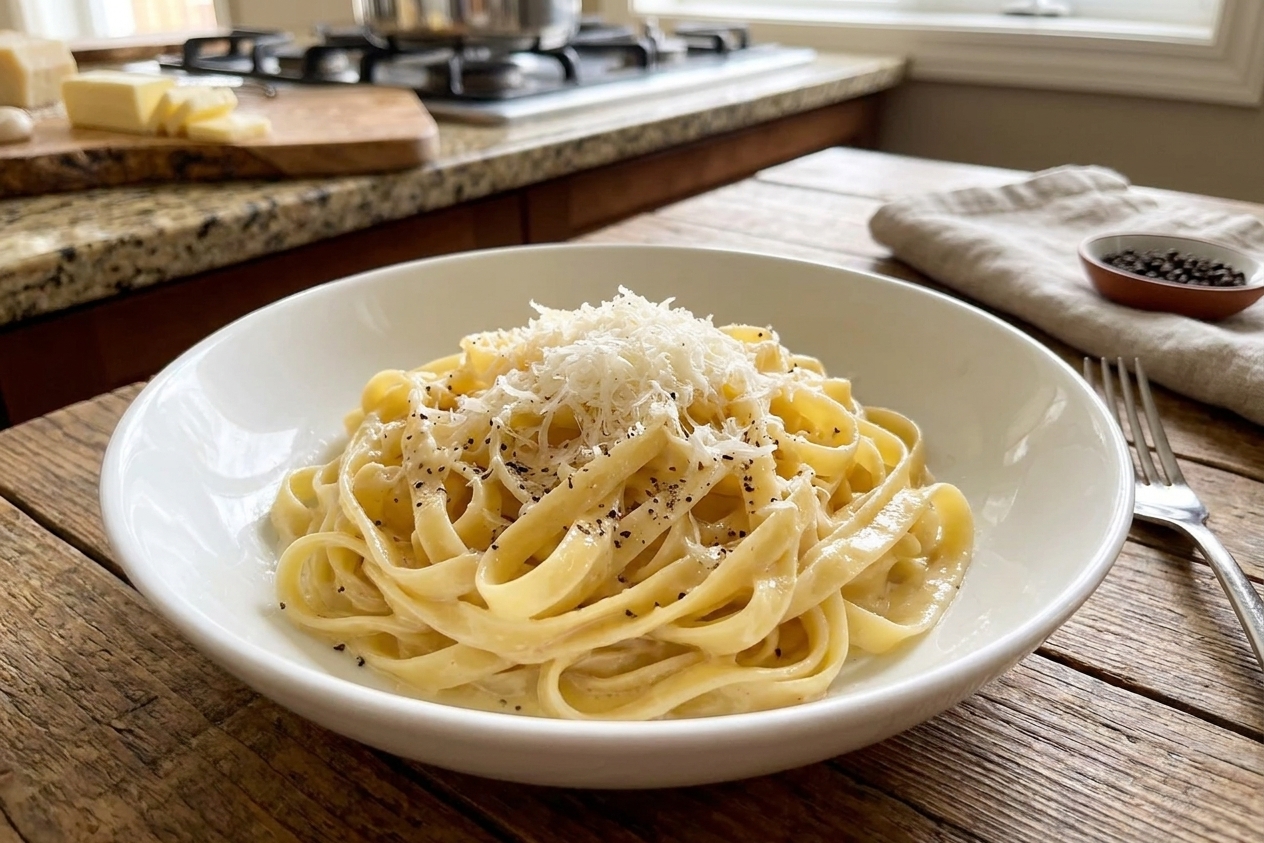
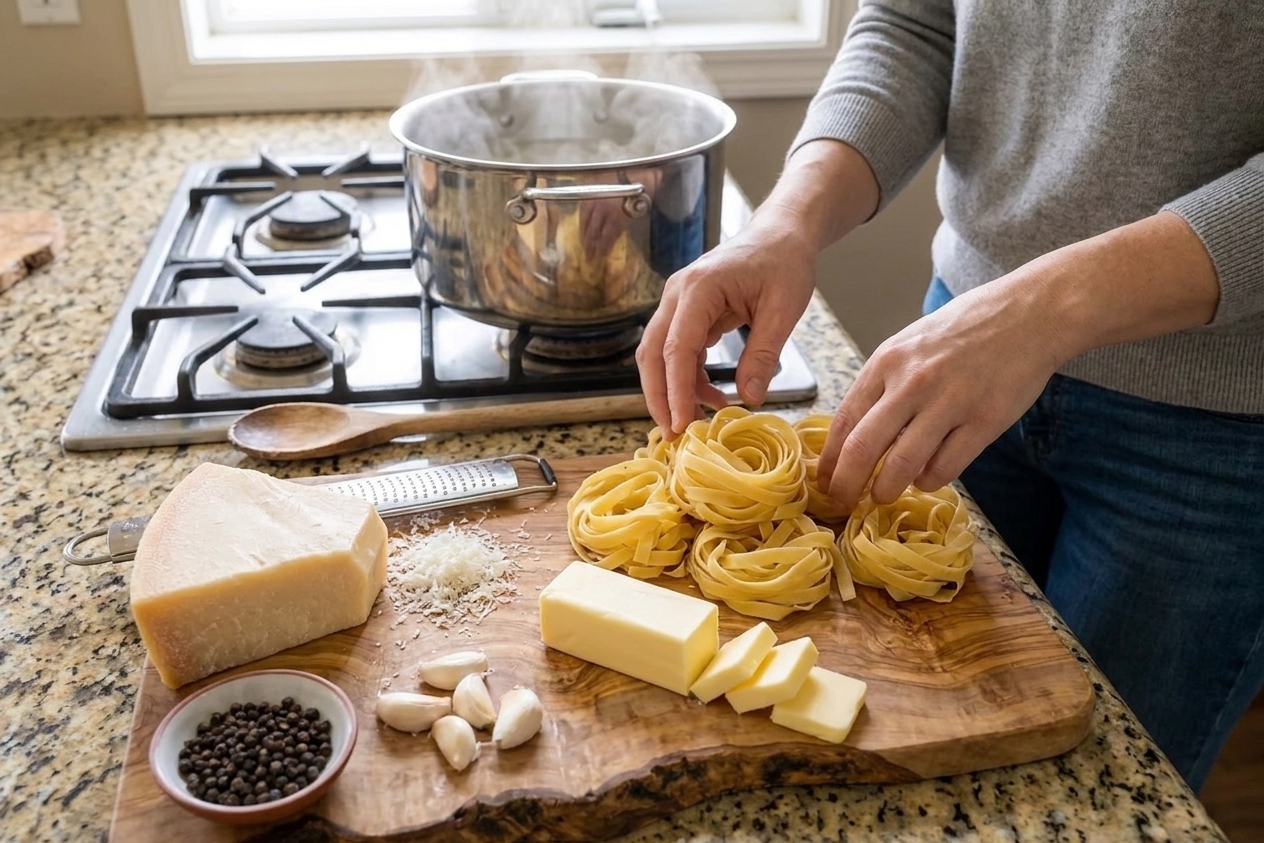
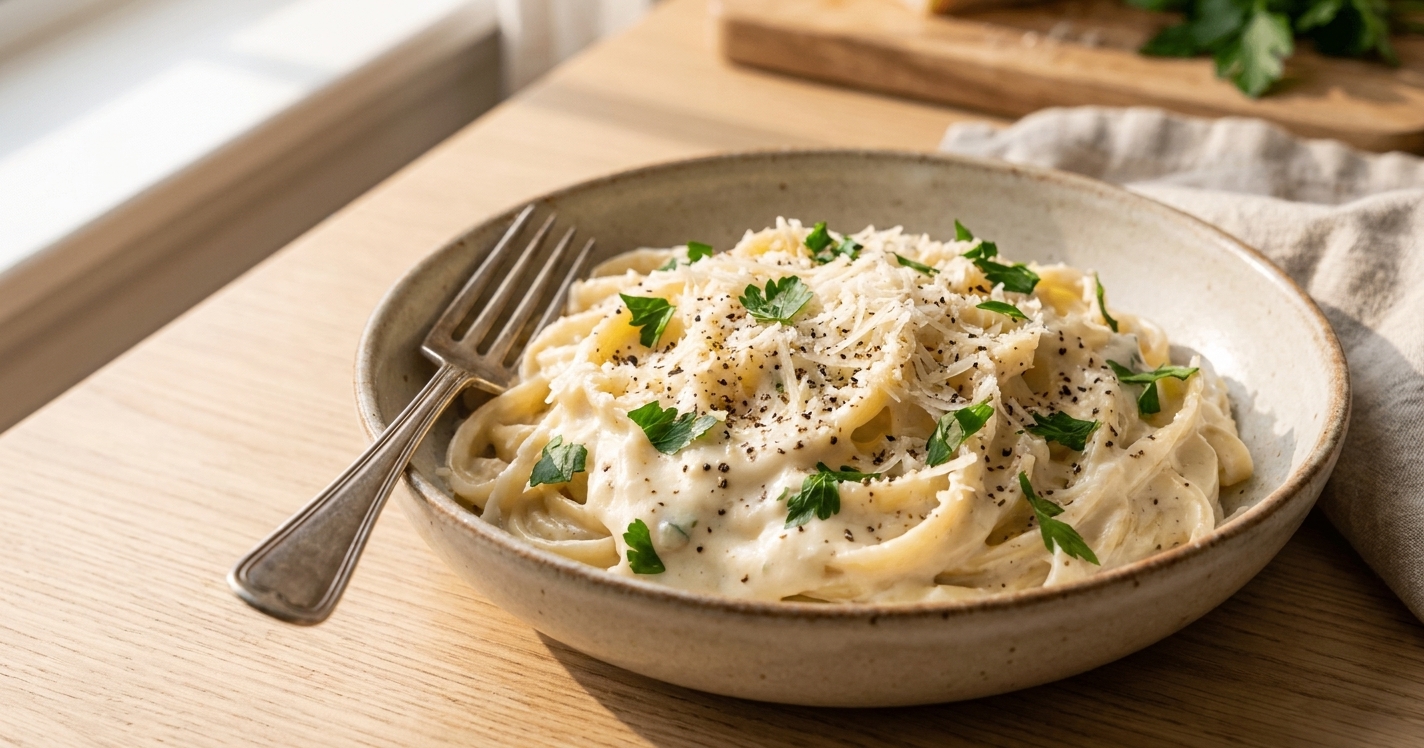
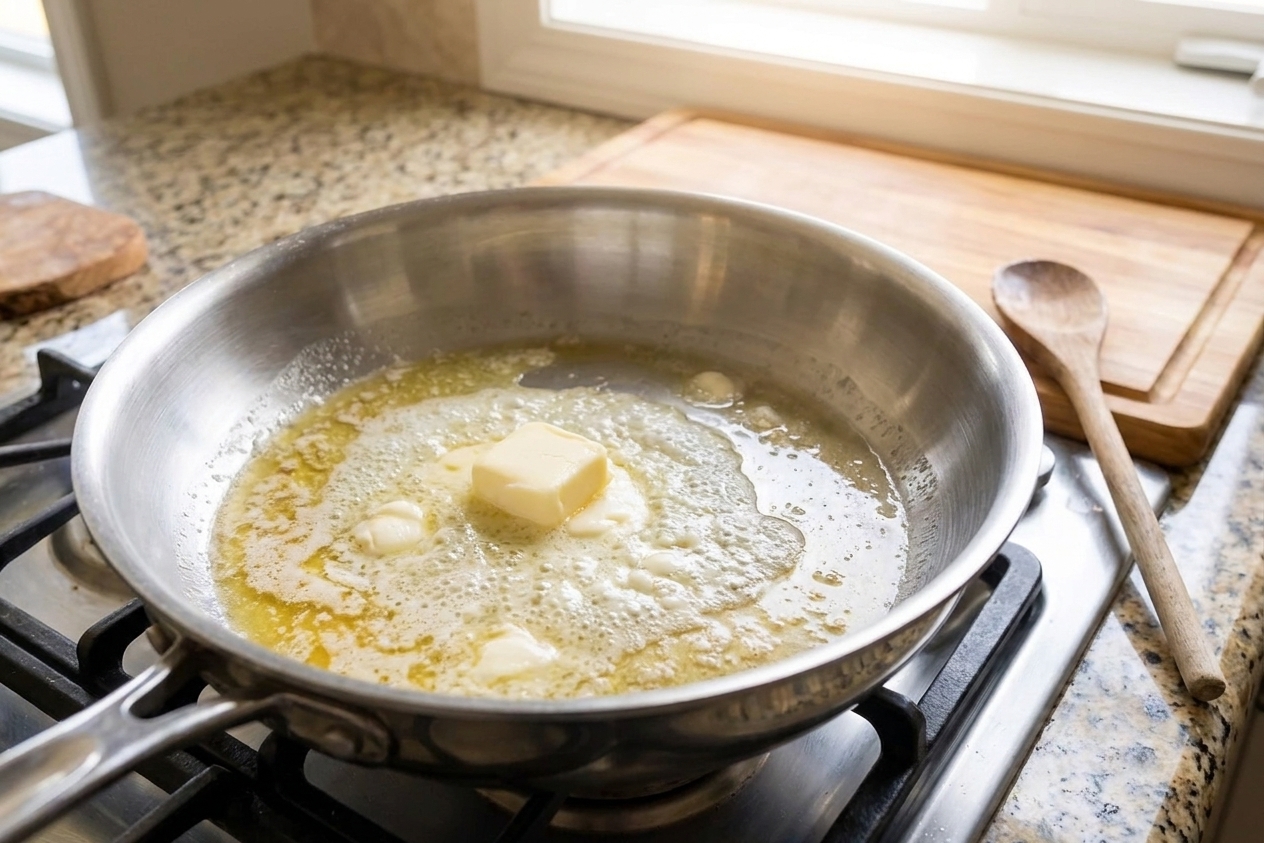
Not necessarily. The original Italian-style Alfredo is typically just butter + Parmigiano-Reggiano (and sometimes a little cooking water). Many home cooks, including me, lean on starchy pasta water to help everything emulsify into that creamy, glossy sauce without a splash of heavy cream. American-style versions often add cream for extra richness and stability, but you can absolutely get a luxurious sauce without it if you emulsify properly.
Why did my Alfredo turn clumpy or grainy?
The usual culprits are too much heat, pre-grated Parmesan with anti-caking agents, or cheese that is very aged and dry. Fix it by taking the pan off heat, adding a splash of warm pasta water, and stirring or tossing hard. Next time, use freshly grated cheese and add it gradually with the heat off.
Why is my sauce watery?
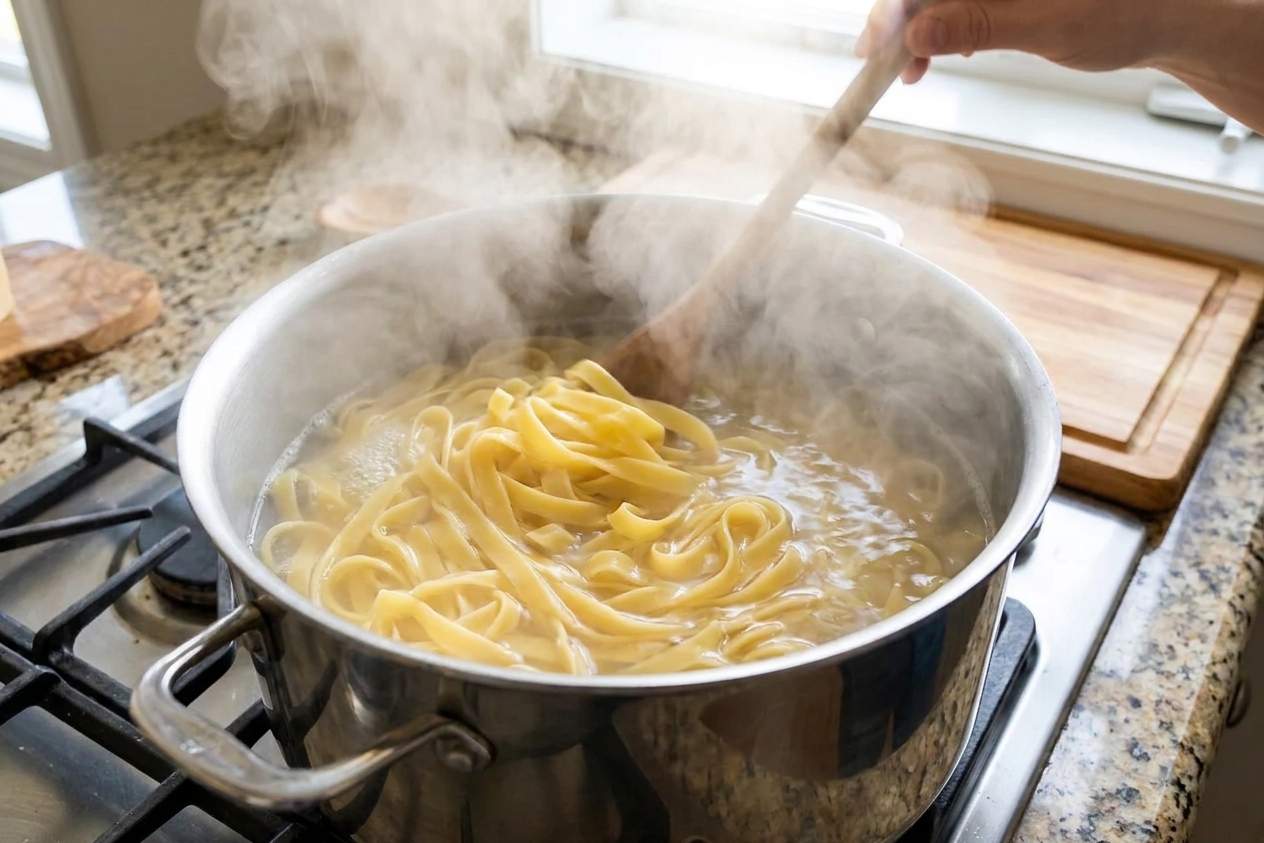
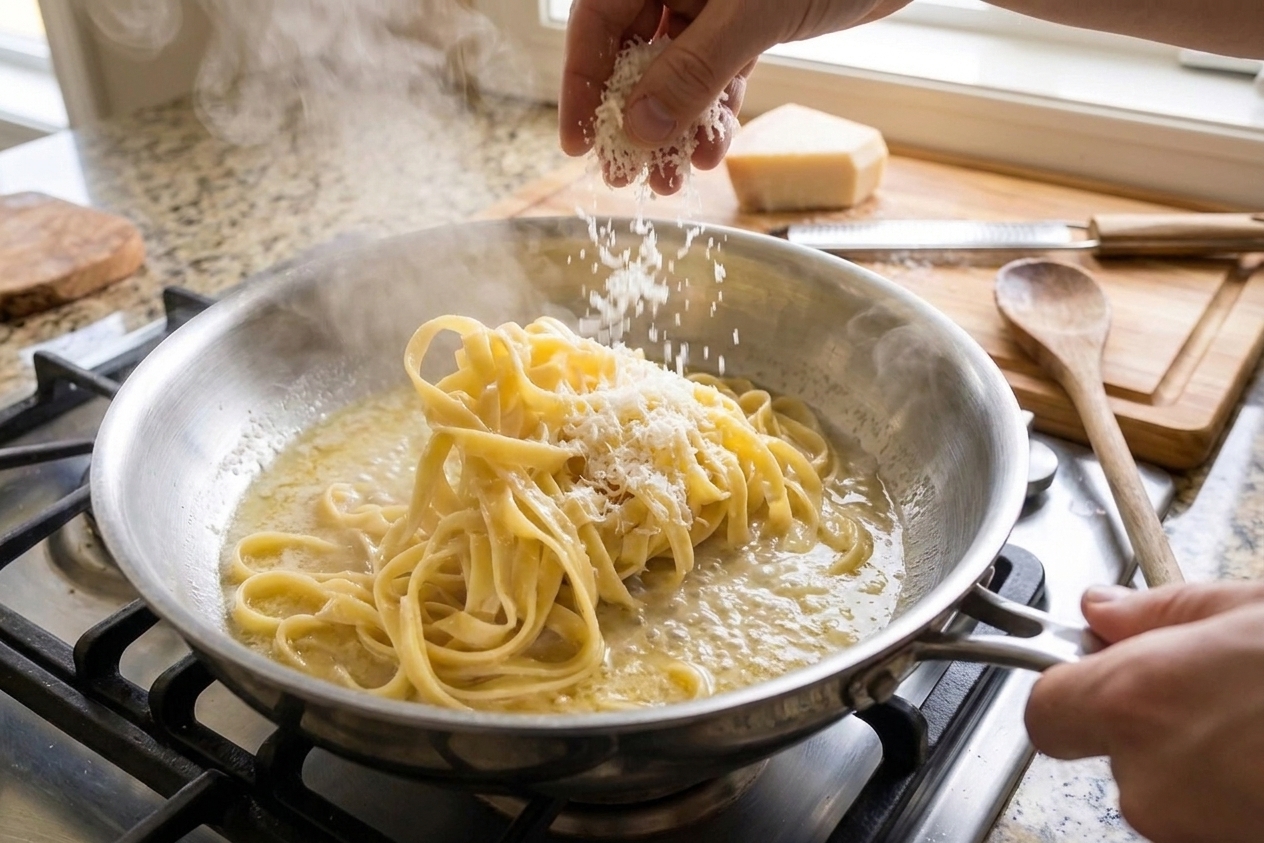
Either the pasta water was not starchy enough, or you added too much at once. If you need to tighten things up, let the sauce simmer briefly before adding the cheese (or move the pasta to a bowl, reduce the liquid for a minute, then return the pasta). Once you start adding Parmesan, keep the heat off and toss, adding more cheese a little at a time until it turns glossy and coats the noodles.
Can I add chicken or shrimp?
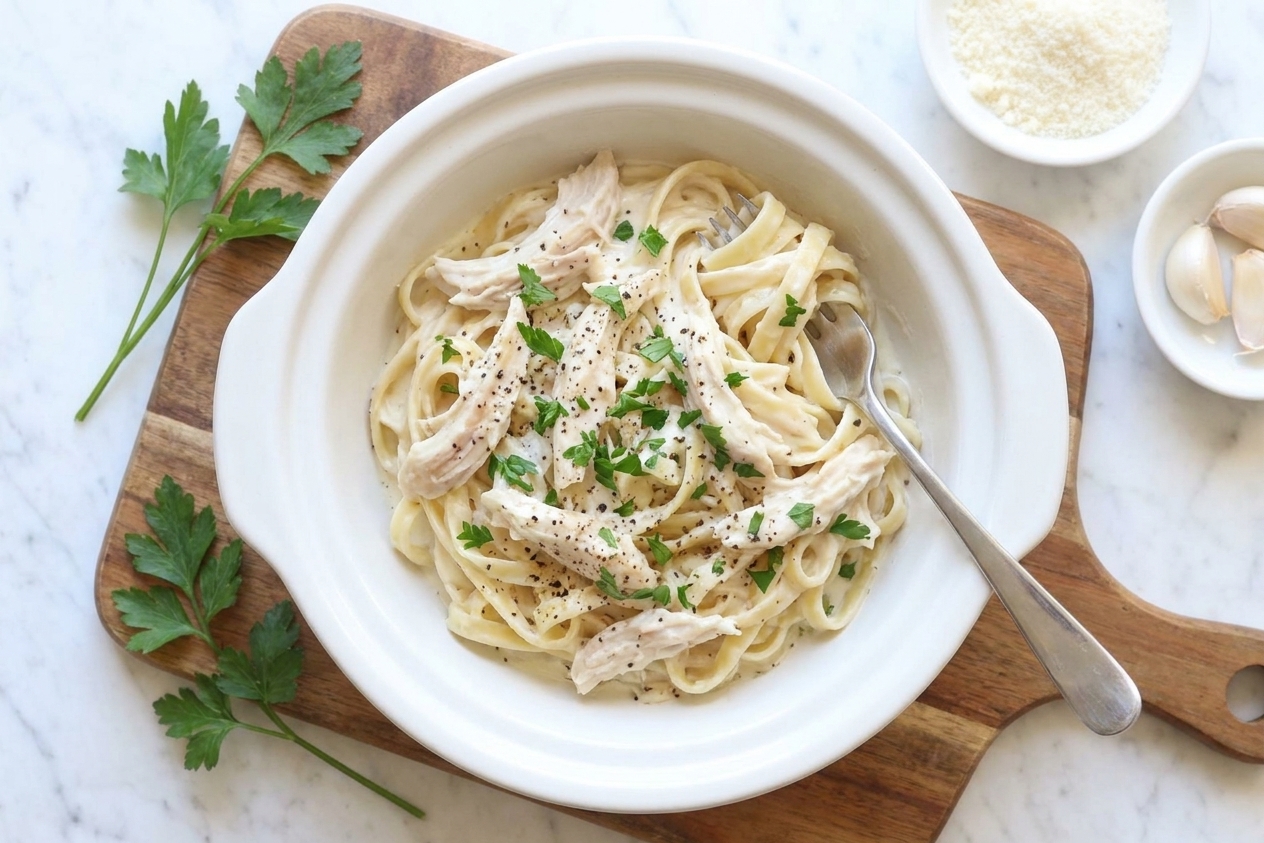
Absolutely. Keep the base recipe the same and add cooked, seasoned chicken or sautéed shrimp at the end. If you add a lot of protein, plan on an extra splash of pasta water to keep everything saucy.
What Parmesan should I buy?
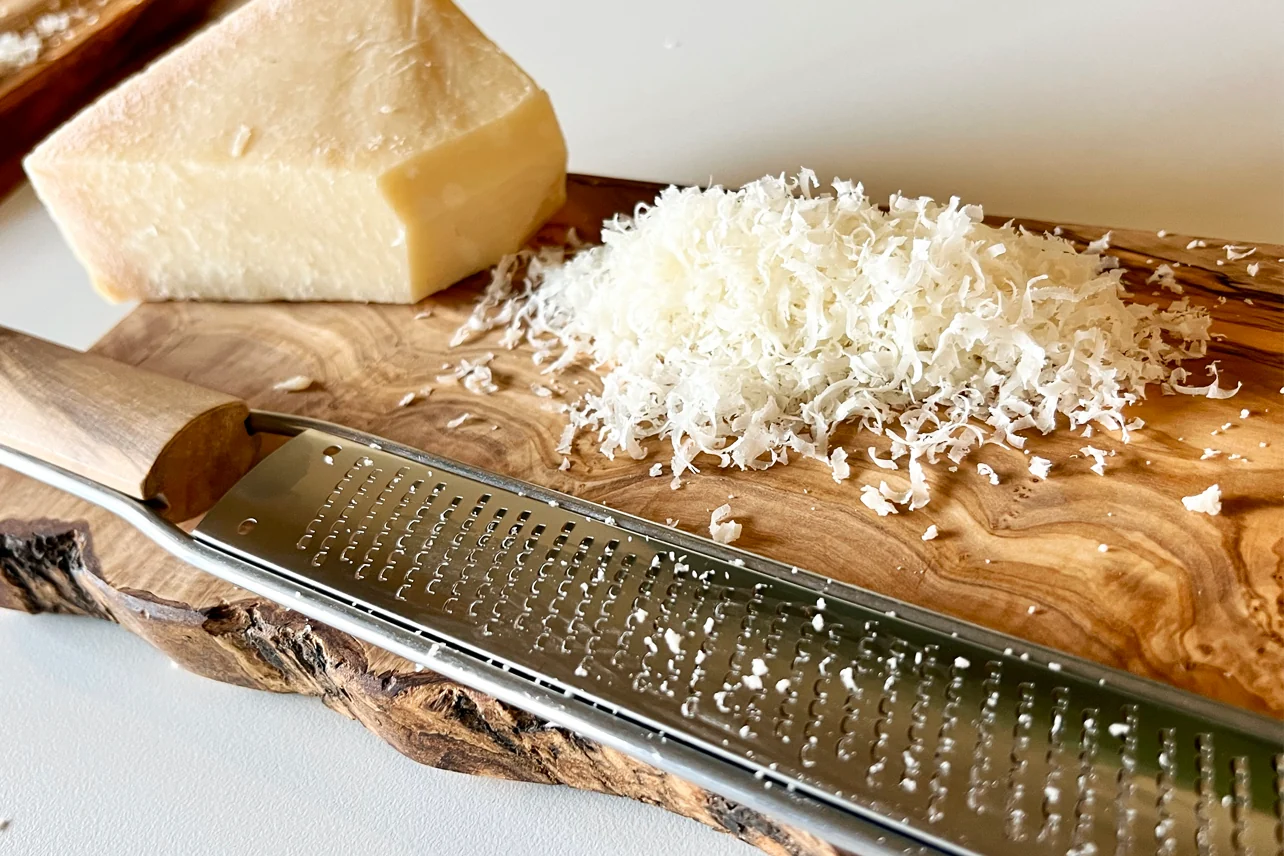
Look for a wedge labeled Parmigiano-Reggiano if you can. If not, a good-quality Parmesan wedge works. Grate it yourself for the smoothest melt. If you like a sharper, saltier edge, you can swap in a little Pecorino Romano for part of the cheese.