Mom's Best Recipes
Recipe

Classic Greek Salad

A true Horiatiki style Greek salad with ripe tomatoes, crunchy cucumber, red onion, Kalamata or other briny Greek olives, green pepper, and a thick slab of feta, finished with olive oil and either red wine vinegar or lemon.

Author By Matt Campbell
4.9
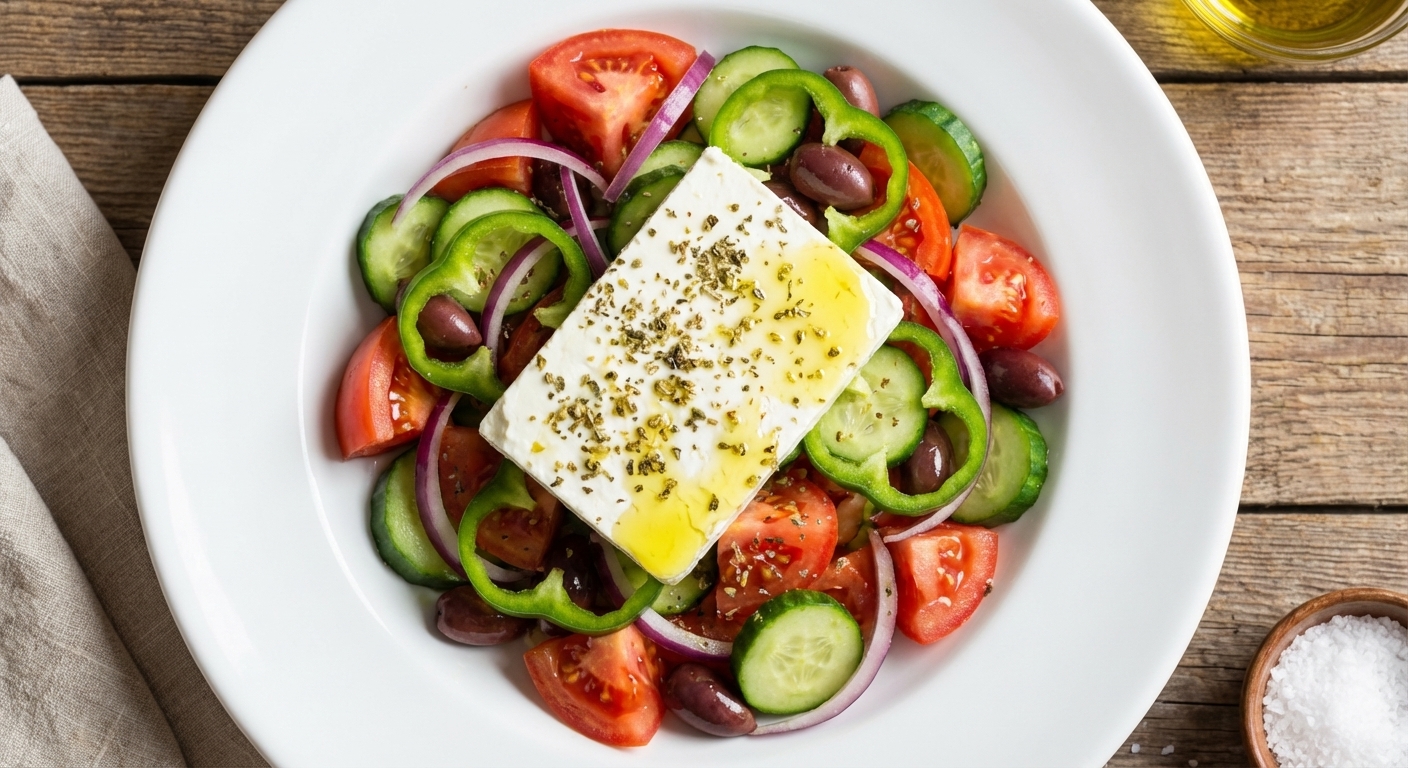
A photorealistic overhead food photograph of a classic Greek salad on a wide white ceramic plate with chunky ripe tomatoes, sliced cucumbers, red onion, green bell pepper rings, Kalamata olives, a thick slab of feta on top, dried oregano, and a glossy drizzle of olive oil in bright natural window light

Greek salad is one of those recipes that feels almost too simple until you make it with peak summer produce, then it suddenly tastes like you found a secret door to the Mediterranean. This is the real-deal Horiatiki style: big tomato chunks, crisp cucumbers, a little bite from red onion, briny olives, green pepper, and a proud slab of feta right on top.

No leafy greens. No bottled dressing. Just olive oil, oregano, and either red wine vinegar or lemon, plus enough salt and pepper to make the tomatoes taste like themselves, only louder.

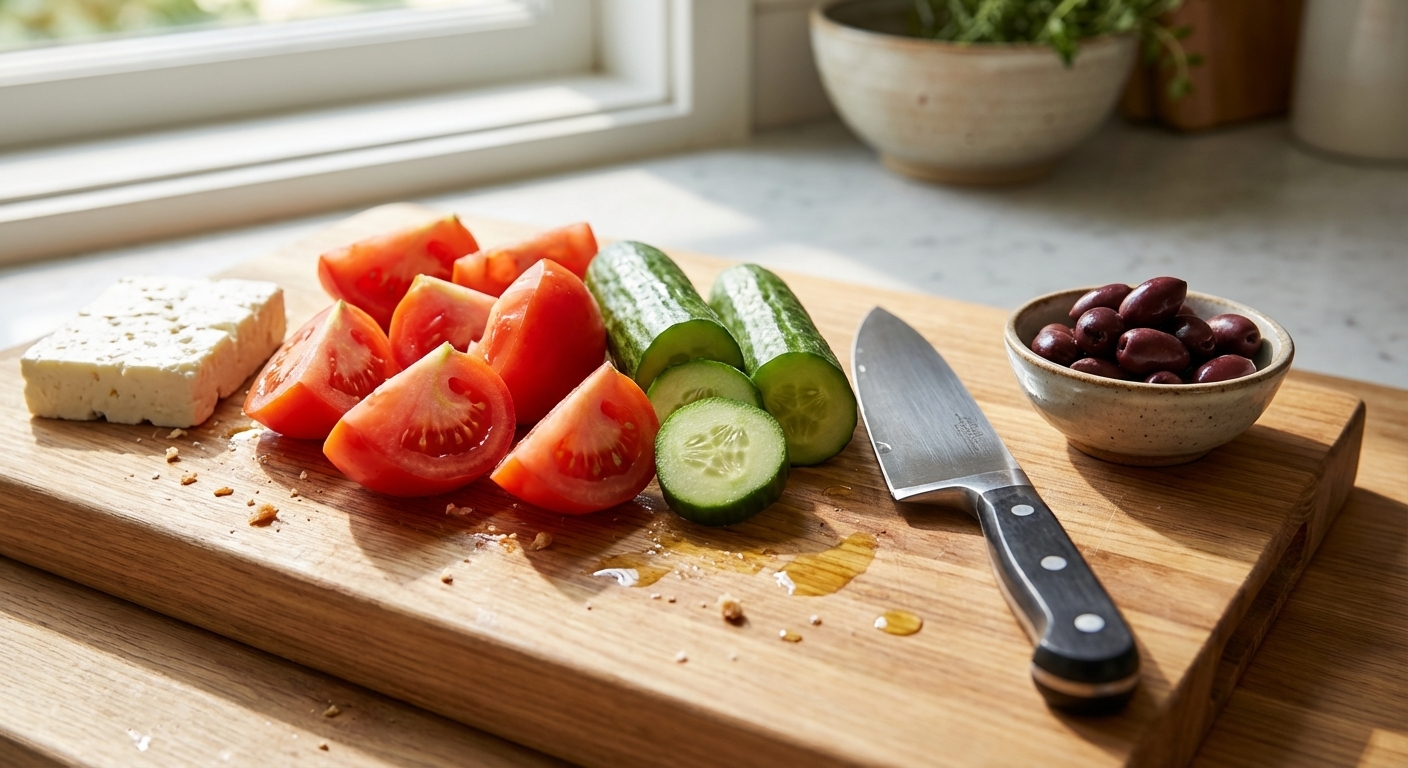
A close up photorealistic kitchen photo of a cutting board with chunky chopped ripe tomatoes, thick cucumber slices, and a block of feta, with a chef knife and a small bowl of Kalamata olives nearby in soft natural light

Why It Works

  • Bright, balanced flavor: juicy tomatoes plus sharp vinegar or lemon, fruity olive oil, and oregano.
  • Great texture: crunchy cucumber and pepper, creamy feta, and briny olives in every forkful.
  • Fast and easy: no cooking, no fancy tools, and it is ready in minutes.
  • Built for summer: this is basically a celebration of ripe tomatoes, so the better your produce, the better the salad.

Pairs Well With

Storage Tips

Greek salad is best fresh, but leftovers can still be very good if you store them the right way.

Best method

  • Store in an airtight container in the fridge for up to 2 days.
  • If you know you will have leftovers, keep the feta on the side and add it per serving. It stays firmer and less waterlogged that way.
  • Expect the tomatoes and cucumbers to release juice. That is not a failure, it is just physics. Stir and taste before serving, then add a small splash of vinegar or lemon or a pinch of salt if it needs a reset.

How to revive day two salad

  • Add a handful of fresh chopped tomato or extra cucumber for crunch.
  • Finish with a fresh drizzle of olive oil and a pinch of oregano.

Do not freeze. The vegetables will turn soft and watery.

Common Questions

Is lettuce traditional in Greek salad?

Not in classic Horiatiki. Traditional Greek salad is vegetables, olives, feta, olive oil, oregano, and either vinegar or lemon (plus the tomato juices doing a lot of the work). If you love lettuce, go for it, but this recipe is the classic version.

Should I cube the feta or leave it in a slab?

A thick slab on top is the traditional move and it eats like a creamy “sauce” as it softens and breaks into the juices. Cubes are fine too, especially for serving a crowd, but the slab is the vibe.

Do I need to peel the cucumber?

Not required. If the skin is thick or waxy, peel it in stripes. If it is a thin-skinned cucumber, leave it on for crunch and color.

How do I mellow the red onion?

If your onion is extra sharp, soak the slices in cold water for 10 minutes, then drain well and pat dry. You still get the onion flavor, just with less bite.

Can I use cherry tomatoes?

Yes. Halve them and be generous with salt so they start to give up their juice. That tomato juice plus olive oil is basically the best dressing on the plate.

What olives work best?

Briny Greek olives are the move. Kalamata (also called Kalamon) are common and delicious, but any good black Greek olive works. Use whole olives if you can, and pit them if you prefer easier eating.

What is the green pepper in Greek salad?

Typically green bell pepper, sliced into rings or strips. It adds a fresh, slightly bitter crunch that balances the sweet tomatoes.

What feta should I buy?

Go for block feta in brine if possible, ideally sheep’s milk or a sheep and goat blend. It tastes richer and holds its shape better than pre-crumbled feta.

I love Greek salad because it is the rare recipe where doing less actually gets you more. When tomatoes are really ripe, I do not want to hide them under anything. I want salt, vinegar or lemon, olive oil, oregano, and a big piece of feta that slowly softens into the juices at the bottom of the bowl. Then I mop it up with bread like it is my job. It is relaxed, a little messy, and exactly the kind of food that makes you want to invite someone into the kitchen.