Mom's Best Recipes
Recipe

Classic Soda Bread

A light, fluffy loaf with a tender crumb and crisp edges. No yeast, no waiting. Just mix, shape, bake, and slice into something cozy.

Author By Matt Campbell
4.8
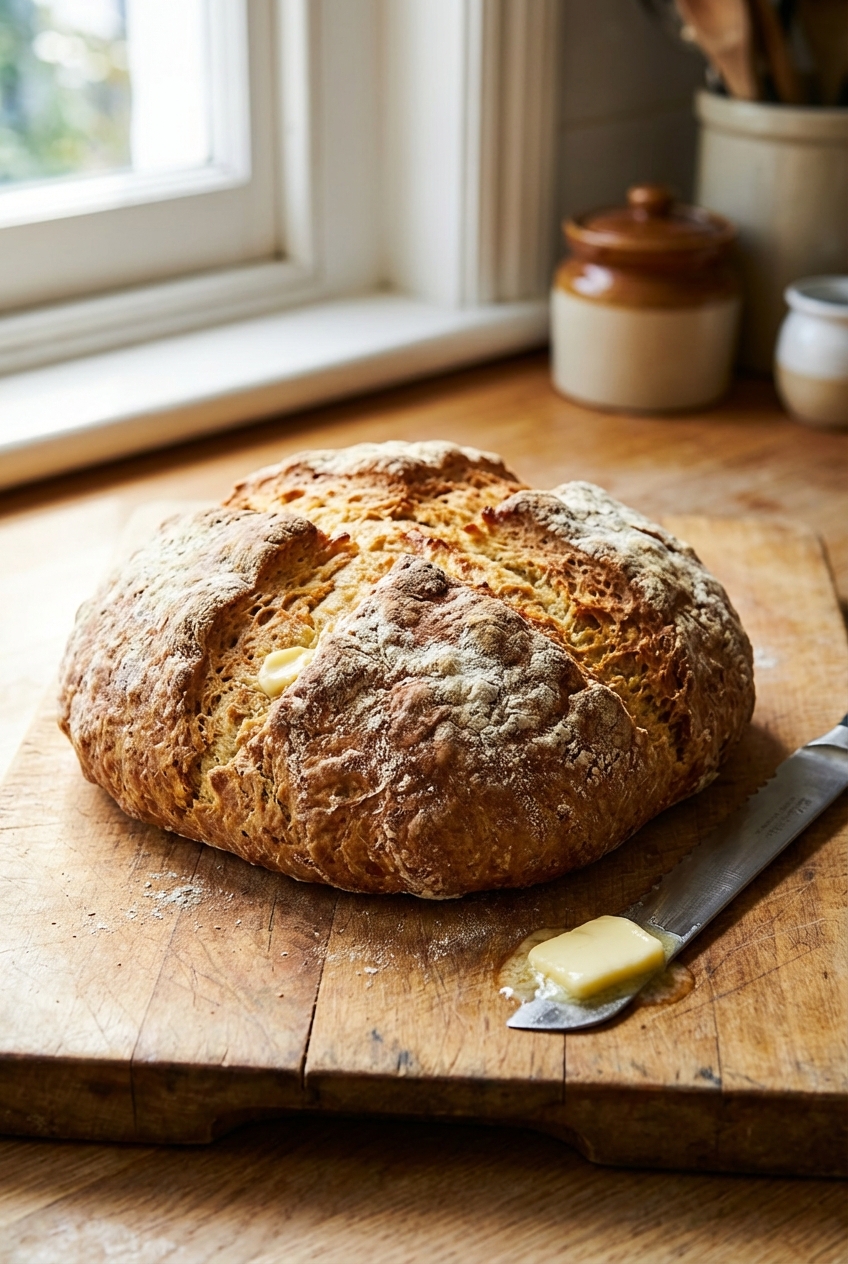
A freshly baked Irish soda bread loaf with a deep cross cut on top, sitting on a wooden cutting board with a pat of butter and a bread knife nearby in natural window light

Irish soda bread is the kind of recipe I love because it does not ask you to be a professional baker. No yeast. No proofing. No dramatic stand mixer moment. It is a quick, old school loaf that leans on baking soda plus buttermilk for lift, and it comes out with that perfect contrast: a golden, crisp crust and a soft, fluffy interior that begs for butter.

This version stays classic-style, but it is tuned for what most of us want at home: light and tender, not dry or brick-ish. (True traditional loaves often use Irish soft wheat flour, but all-purpose flour works beautifully in a home kitchen.) The big secret is treating the dough gently and getting it into a hot oven fast. You are basically making biscuits, but in loaf form.
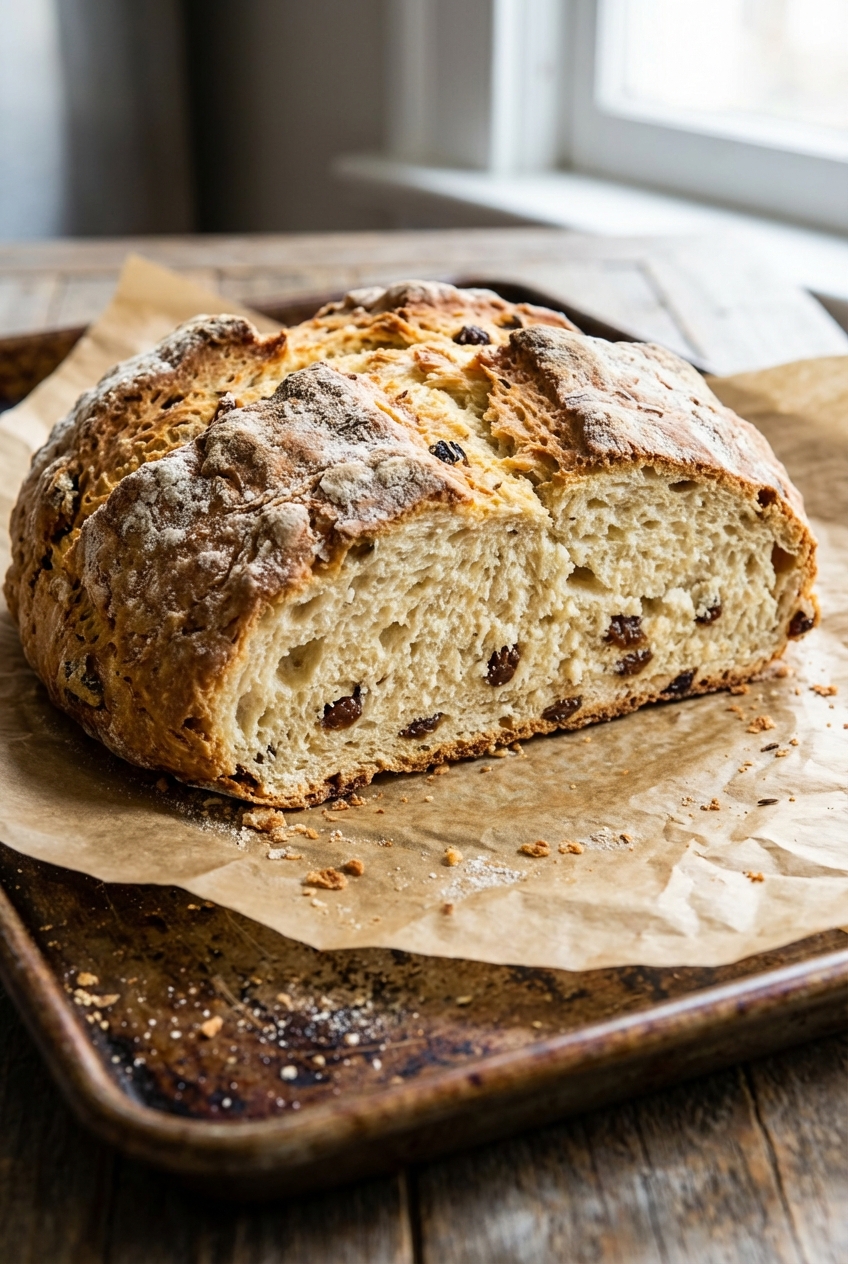

A close-up of a sliced Irish soda bread loaf showing a soft, fluffy crumb and golden crust on a parchment-lined baking sheet

Why It Works

  • Light, fluffy crumb thanks to the buttermilk and a quick mix that avoids overworking the gluten.
  • Reliable rise without yeast because baking soda reacts immediately with acidic buttermilk. Mix and bake right away for best lift.
  • Crisp, rustic crust from a hot oven and a simple flour-dusted top.
  • Not dry because we keep the dough slightly sticky and avoid extra flouring that can toughen the loaf.

Pairs Well With

Storage Tips

Day 1: Soda bread is at its absolute best the day it is baked. If you can, slice what you need and keep the rest of the loaf intact.

  • Room temp (best within 1 to 2 days): Wrap tightly in foil or keep in a sealed bag. I like foil if you want to preserve the crust, and a bag if you want it softer.
  • Freeze (up to 2 months): Slice first, then freeze slices in a zip-top bag. That way you can toast straight from frozen.
  • Reheat: Toast slices for crisp edges, or warm the whole loaf in a 325°F oven for 10 to 15 minutes.

Leftover upgrade: Thick slices make excellent toast with butter and jam, and they are also fantastic for a quick egg sandwich.

Common Questions

Why cut a cross on top?

It’s practical. The cut helps the center bake through and gives the loaf a controlled place to expand. Also, it makes the whole thing look beautifully rustic.

Can I make Irish soda bread without buttermilk?

Yes. For a quick substitute, put 1 3/4 to 2 tablespoons lemon juice or white vinegar in a liquid measuring cup, then pour in enough milk to reach the 1 3/4 cup line. Let it sit 5 to 10 minutes, then use it like buttermilk.

Why is my soda bread dense?

The usual culprits are overmixing, adding too much flour while shaping, or letting the dough sit too long before baking. Mix just until combined, keep it a little sticky, and get it into the oven quickly.

Should I knead soda bread?

Only barely. Think of it like biscuit dough. A few gentle folds is plenty. Real kneading builds gluten and can make the loaf tough.

Is classic-style Irish soda bread sweet?

Classic versions are not sweet. Many American versions add sugar and raisins. This recipe keeps it classic-style and versatile, so it works with savory meals or a simple butter-and-jam moment.

I love recipes that feel like a kitchen high five. Irish soda bread is exactly that. It is the loaf I make when I want fresh bread but I do not want a whole production. The first time I made it, I treated the dough like regular bread dough and kneaded it until it felt “right.” It baked up like a doorstop. Lesson learned. Now I mix it like I am handling a sleepy puppy, get that cross on top, and let the oven do the heavy lifting. The reward is a warm, fluffy slice that makes you slow down for a second, even on a busy weeknight.