Mom's Best Recipes
Recipe

Mixed Paella

A deeply savory, saffron-kissed Spanish-style mixed paella with juicy chicken, smoky chorizo, tender shrimp, and that crispy golden socarrat on the bottom.

Author By Matt Campbell
4.8
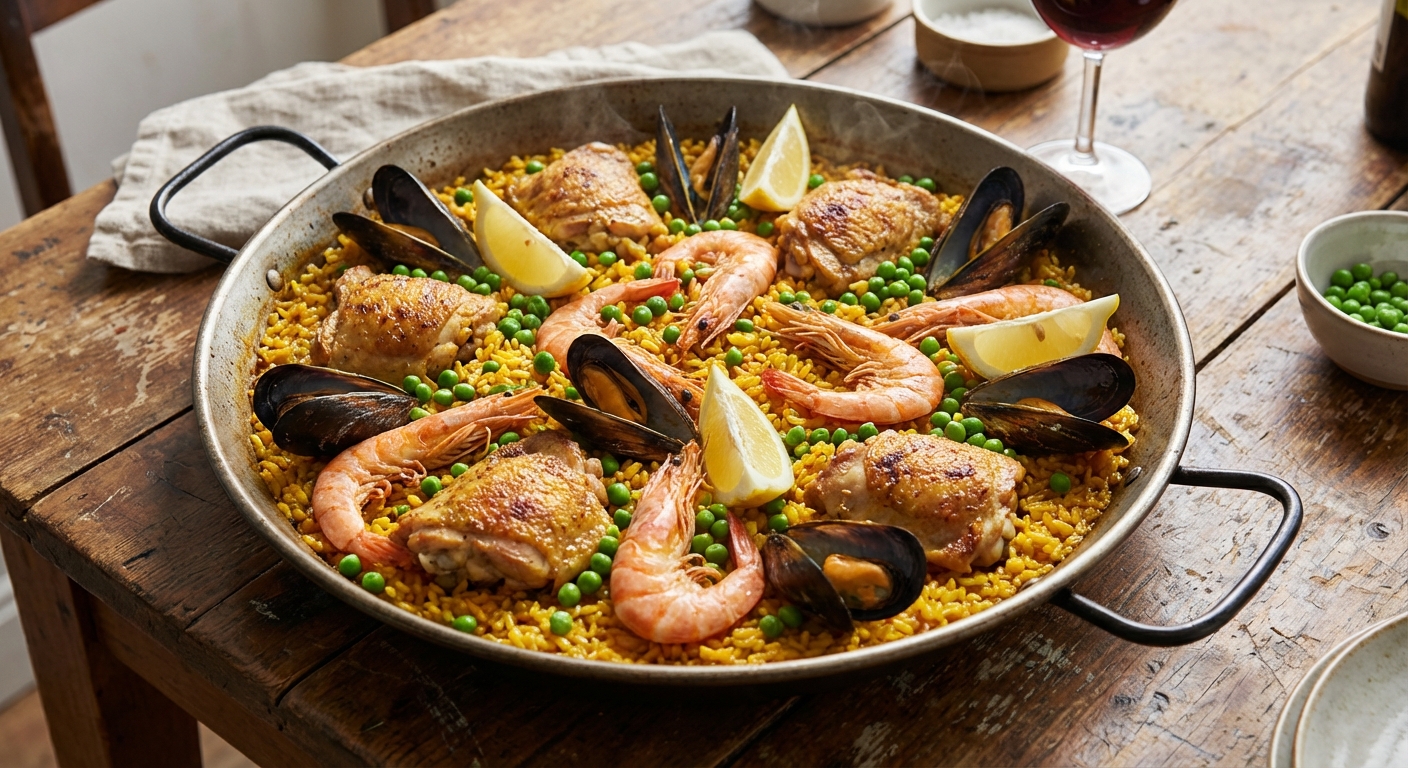
A wide paella pan filled with golden saffron rice, chicken thighs, shrimp, mussels, peas, and lemon wedges on a rustic wooden table

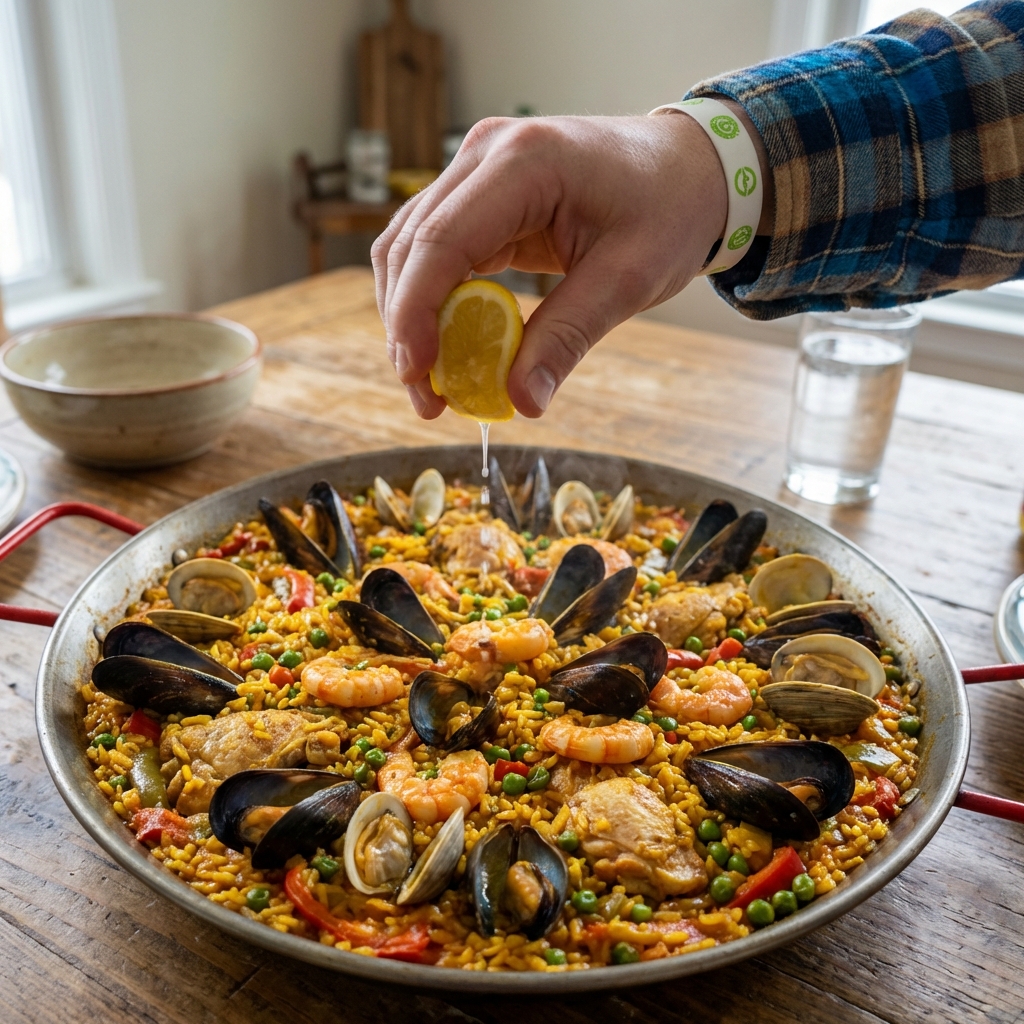
Paella is one of those dishes that looks like a flex, tastes like a celebration, and secretly runs on a few very learnable rules. The big one is this: once the broth goes in, you stop stirring and let the rice do its thing. That is how you get separate, flavorful grains up top and the legendary crispy layer on the bottom called socarrat.

This Spanish-style mixed paella keeps the ingredient list accessible but still feels legit where it counts: bomba rice (or other Spanish paella rice such as Calasparra), a little saffron, a good smoky paprika, and a broth that actually tastes like something. I like a chicken-and-seafood situation because it feeds a crowd and makes everyone at the table lean in like, "Wait, you made this?" Yes. You did. And you are about to feel extremely cool.

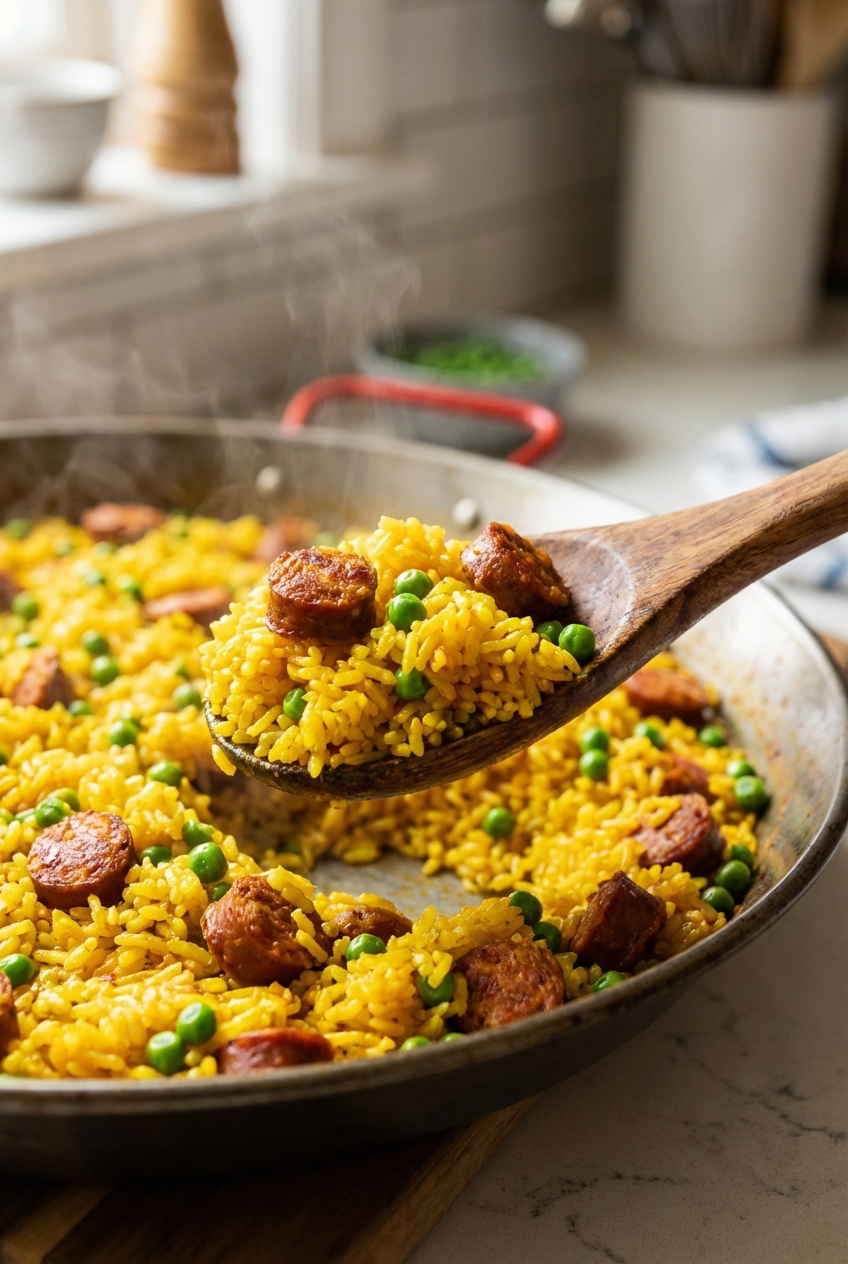
A close-up of a wooden spoon lifting saffron-stained rice with bits of chorizo and peas from a paella pan

Why It Works

  • Big flavor, not fussy: Saffron, paprika, and a quick sofrito build a rich base fast.
  • Perfect rice texture: Using Spanish paella rice helps it absorb broth without turning mushy.
  • That crispy bottom layer: Simple heat control and zero stirring after the broth goes in means dependable socarrat.
  • Crowd-friendly: Everything cooks in one pan and finishes all at once, which is exactly the vibe paella deserves.

Pairs Well With

Storage Tips

Paella is best the day it is made, but leftovers still make a very happy lunch.

  • Cool fast: Spread leftovers in a thin layer on a sheet pan. Let it stop steaming, then refrigerate. (Do not leave rice out for more than about 1 hour total.)
  • Refrigerate: Store airtight for up to 3 days.
  • Freeze: You can freeze for up to 2 months, but seafood can get a little firm after thawing. Still tasty, just different.
  • Reheat: Best in a skillet with a splash of broth or water, covered, over medium-low until hot. If you want crispy bits again, uncover for the last few minutes. Microwave works too, but the skillet keeps the texture.

Common Questions

Do I need a paella pan?

No, but it helps. A wide, shallow pan is the goal so the rice cooks evenly. For 2 cups rice, aim for a 14-inch minimum. A 14-inch stainless steel skillet works well. Cast iron works too but holds heat aggressively, so watch the bottom closely.

If your biggest skillet is 12 inches, scale the rice down to 1 1/2 cups and reduce the stock accordingly, or expect a deeper rice layer and more risk of uneven cooking.

What rice is best for paella?

Bomba is the classic choice. Another great option is Spanish paella rice such as Calasparra (often bomba or similar varieties). They absorb a lot of broth without going creamy.

If you cannot find Spanish rice, look for other medium-grain options labeled Valencia-style or paella rice. Arborio works in a pinch, but it is more eager to go creamy, so do not stir and keep a close eye on liquid.

Can I stir the rice?

Once the broth is in, do not stir. Stirring releases starch and makes the texture more creamy than paella should be. You can gently shake the pan once or twice if needed to level the rice.

How do I know when socarrat is happening?

You will smell a toasty, nutty aroma near the end. Listen for a faint crackle. To check, slide a spoon down to the bottom and see if you feel a lightly stuck, crisp layer. If it smells sharply burnt, pull back immediately.

My broth ran out. Now what?

Totally normal. Rice, pan width, and burner strength all change the math. Keep extra hot stock nearby and add a splash at a time if the pan looks dry but the rice is still crunchy.

Is chorizo authentic?

This is a mixed paella (paella mixta-inspired) meant for big, bold flavor. Traditional paella valenciana does not use chorizo. If you want a more traditional lane, skip it and add more chicken, or go all-in on a regional recipe.

Can I make this without seafood?

Absolutely. Swap shrimp and mussels for more chicken, or add rabbit if you want a more traditional vibe. Use chicken broth and keep the method the same.

The first time I made paella at home, I treated it like fancy rice and stirred it like I was getting paid per lap. It tasted good, sure, but it did not have that dramatic crispy bottom or the "everyone hover around the stove" energy. The next time, I promised myself I would stop meddling. I set a timer, tasted the broth before it went in, and let the pan do the work. When I finally heard that tiny crackle and smelled the toastiness, I knew I was in business. Now paella is my go-to when I want the table to feel like a party, even if it is just a Tuesday and I am wearing sweatpants.