
Mom's Best Recipes
Recipe

Classic New Orleans Muffuletta

A bold, pressed sandwich with zippy olive salad, layered Italian meats, and provolone on a round loaf, rested until everything melds into the kind of bite that stops conversation.

Author By Matt Campbell
4.8
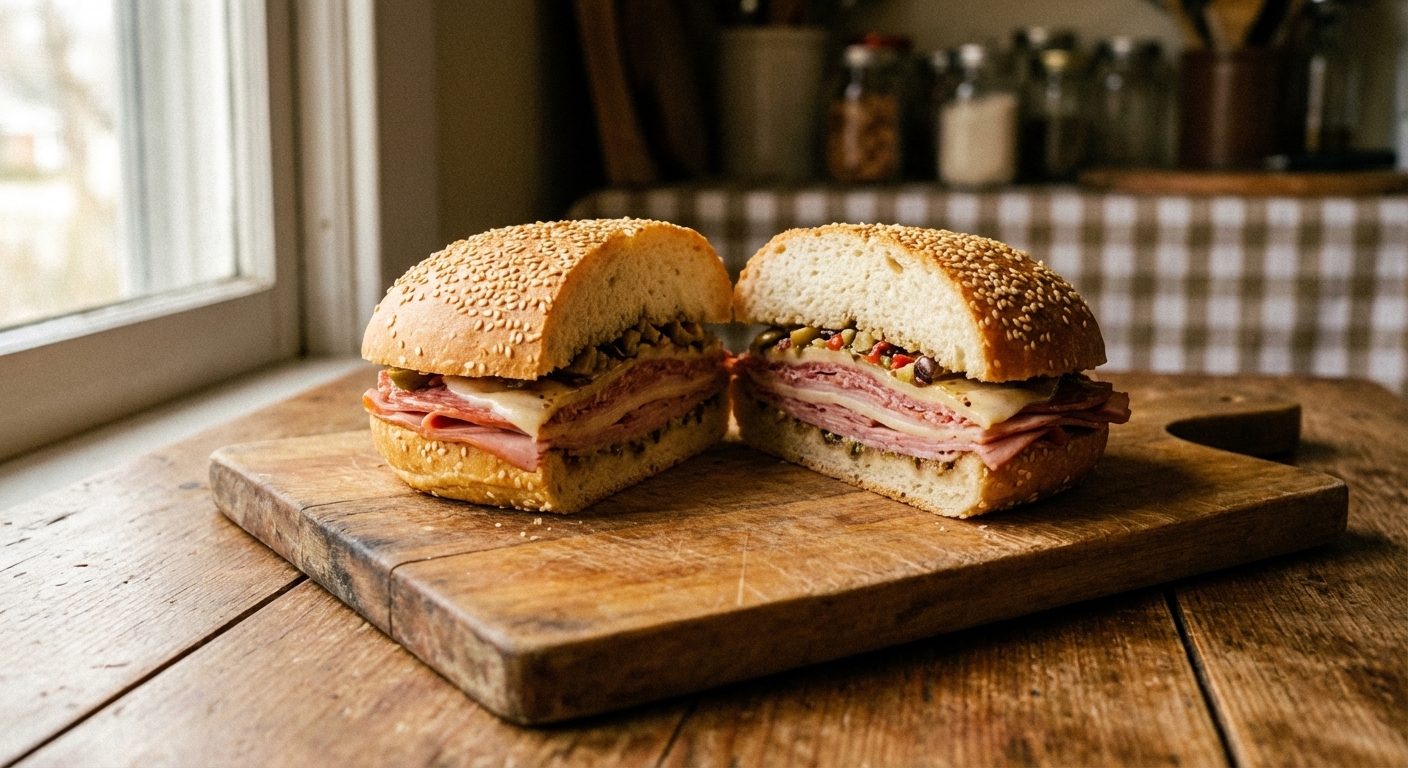
A real photograph of a classic New Orleans muffuletta on a wooden cutting board, the round sesame loaf sliced to show layers of mortadella, salami, ham, provolone, and glossy olive salad, natural window light

If you have never had a muffuletta, picture this: a big round loaf, stuffed with a stack of Italian meats and provolone, then hit with a bright, briny olive salad that seeps into every crumb. It is messy in the best way, but also weirdly elegant once you learn the one trick that makes it clean and sliceable: you press it and let it rest.

This is a classic New Orleans deli trick. You build it, you wrap it tight, you weigh it down, and you walk away. A few hours later (and even more so the next day), the flavors settle in and the bread soaks up just enough olive oil and vinegar to taste deeply seasoned. You get crisp edges, cozy carbs, and that salty, tangy punch that makes you go back for “just one more wedge.”
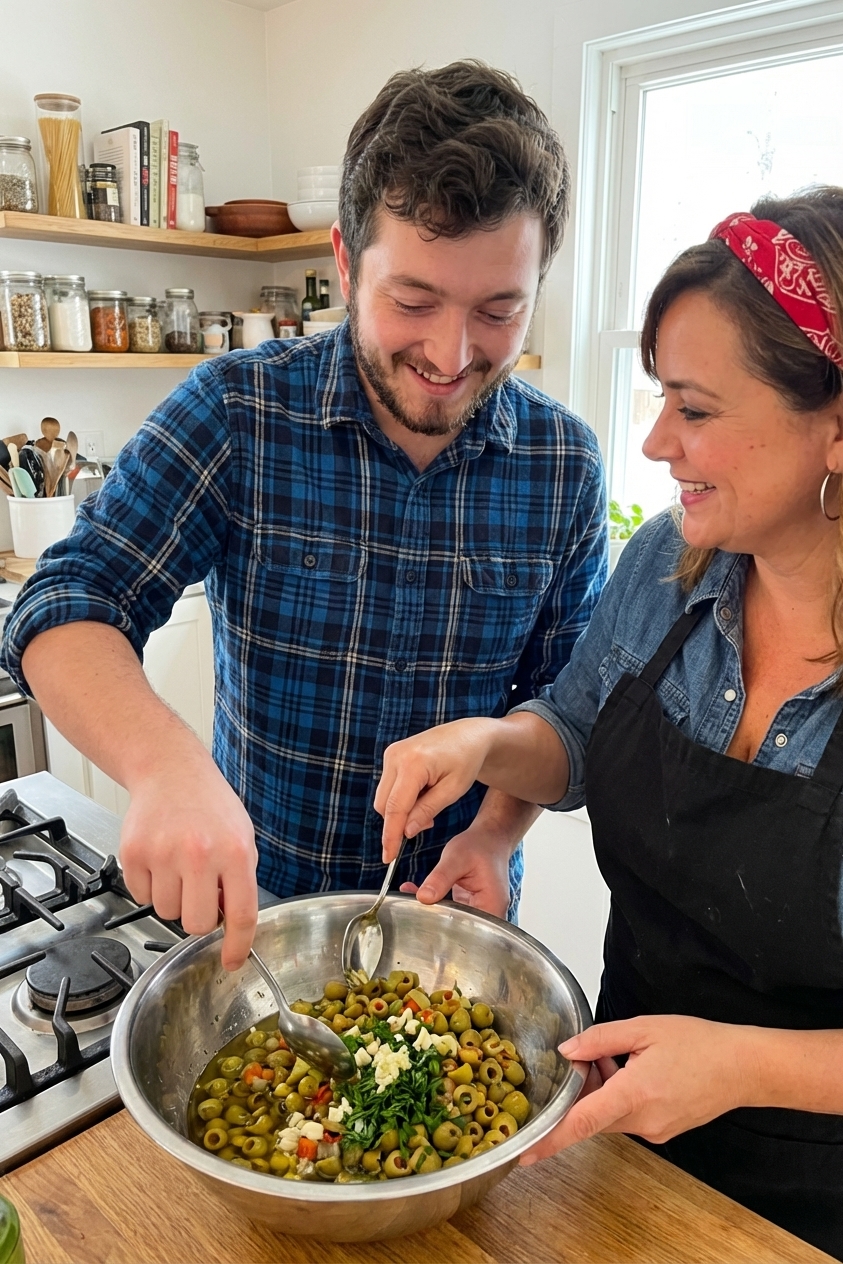
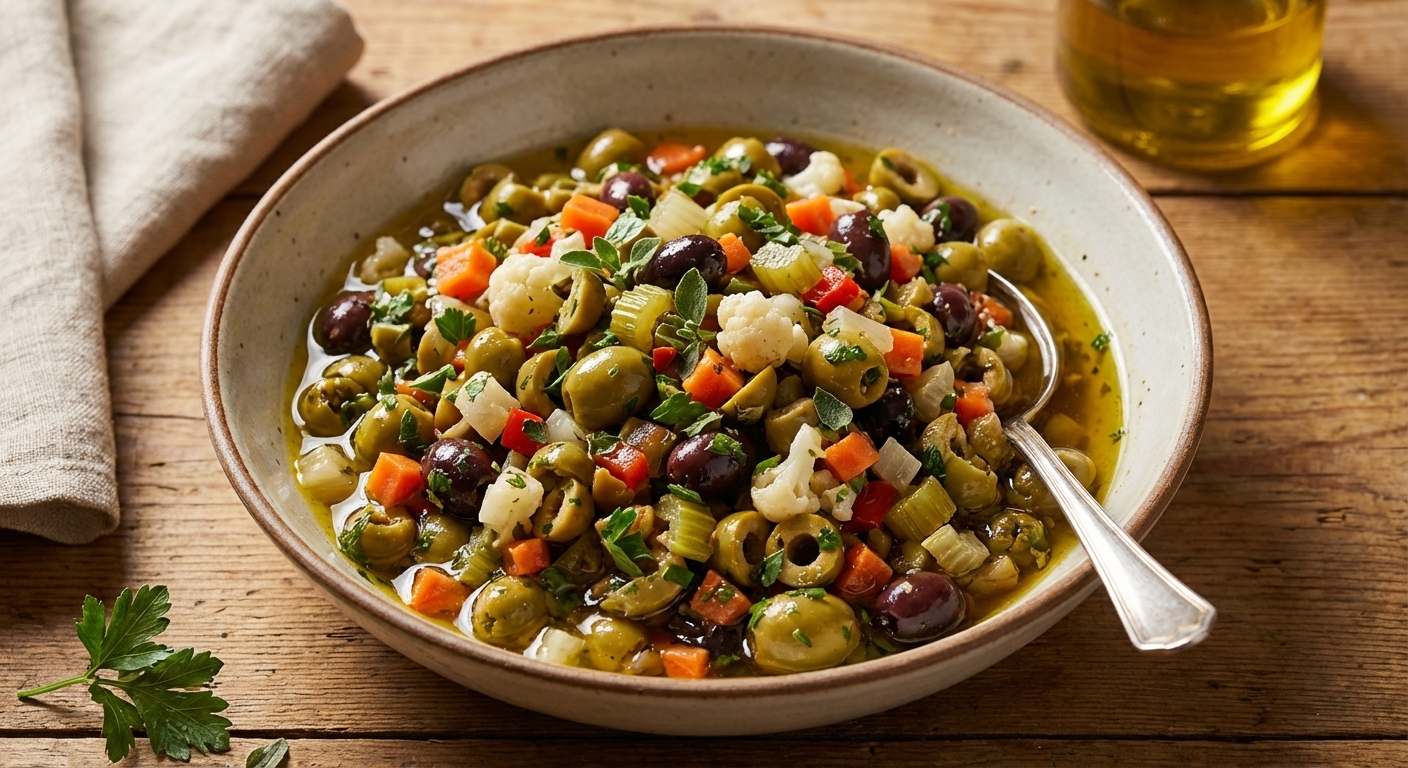
A real photograph of olive salad being stirred in a stainless steel bowl with a spoon, showing chopped green olives, giardiniera, garlic, parsley, and olive oil

Why It Works

  • Olive salad does the heavy lifting. Chopping it fine and letting it sit gives you that signature briny, bright bite that makes the whole sandwich.
  • Pressing equals better texture. It compresses the layers so the sandwich does not slide around, and it helps the dressing absorb into the bread evenly.
  • Rest time equals better flavor. This is one of those rare sandwiches that gets better as it sits, especially overnight.
  • Clean slicing guidance included. Because no one wants a beautiful stack of meats launching out the side on slice one.

Pairs Well With

Storage Tips

Good news: muffuletta is basically built for leftovers.

Fridge

  • Wrapped whole or in wedges: Wrap tightly in plastic wrap, then tuck into a zip-top bag or airtight container.
  • How long it lasts: 3 to 4 days.
  • Best move: Keep it pressed for the first night if you can. A small sheet pan with a couple of cans on top works great.

Serving leftovers

  • Cold is classic and keeps the layers neat.
  • If you want it warmer, let a wedge sit at room temp for 20 minutes. Heating it can make the oil seep and the bread go soft fast, so I do not recommend microwaving.

Freezing

Not ideal. The olive salad and deli meats get watery once thawed, and the bread loses its magic.

Common Questions

What bread should I use for a muffuletta?

The classic is a round Sicilian style loaf, usually with sesame seeds. Look for something about 7 to 9 inches wide, sturdy but not brick-hard. If you cannot find muffuletta bread, use a round Italian boule or a seeded sandwich round that can handle a press.

Do I really need to press it?

Yes, if you want the “New Orleans deli” result. Pressing helps the olive salad soak into the bread and keeps the fillings from sliding out when you slice.

Can I make the olive salad ahead?

Absolutely. It is better after a few hours, and even better the next day. Make it up to 4 days ahead and keep it refrigerated.

How do I keep the sandwich from getting soggy?

Two things: hollow the bread slightly (just a little) and spread the olive salad on both cut sides so it absorbs evenly instead of pooling in the center. Also, do not drench it with extra liquid from the bowl. Spoon the salad on, then add a little of the oil only if it looks dry.

What meats are traditional?

Most classic versions use mortadella, salami, and ham, plus provolone. Some shops add capicola. Use what you can find, but keep the vibe: salty, cured, thin-sliced, and stackable.

Can I make it vegetarian?

Yep. Double the provolone, add roasted red peppers, grilled eggplant, or marinated artichokes. Still press it. Still let it rest.

The first time I made a muffuletta at home, I treated it like a regular sandwich. Built it, sliced it immediately, watched the whole thing slither apart like it was trying to escape my cutting board. The flavor was awesome, but the structure was pure chaos.

Then I tried the press-and-rest method and it clicked. This sandwich is not fast food. It is planned food. You do a little work today, and later you get a wedge that holds together, tastes deeper, and somehow feels like it came from a place with a long line and a short menu.