Mom's Best Recipes
Recipe

Classic Ratatouille Recipe

A fresh, rustic French vegetable stew with tender zucchini, eggplant, peppers, and a bright tomato base. Cozy enough for weeknights, impressive enough for company.

Author By Matt Campbell
4.8
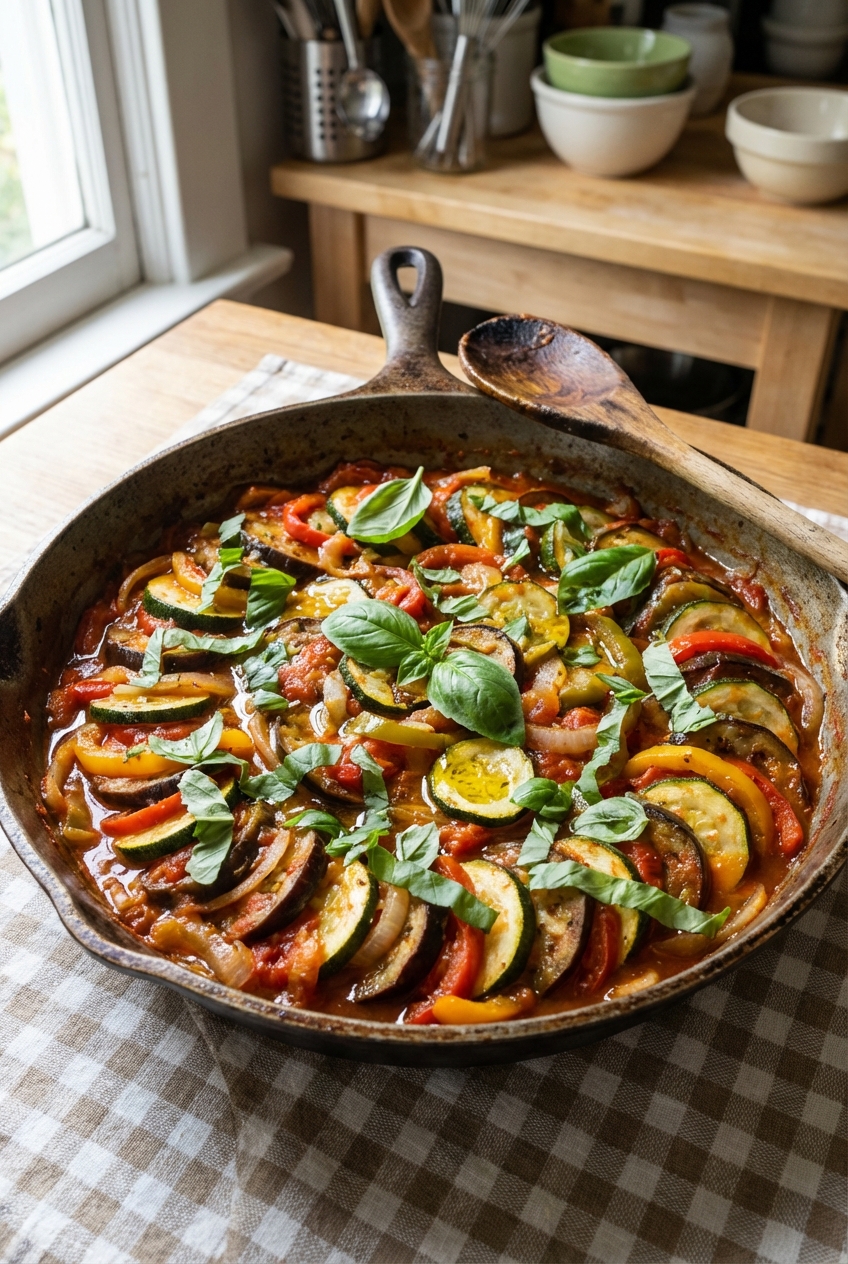
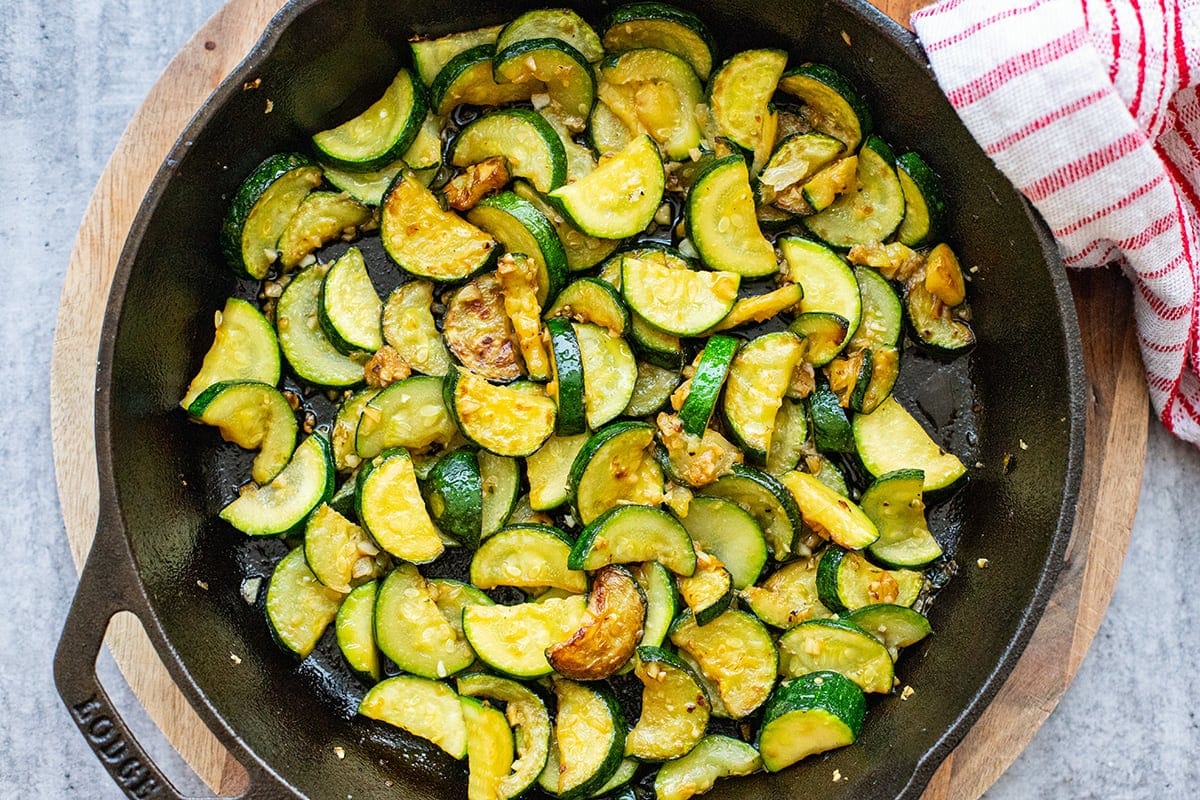
A rustic cast iron skillet filled with classic ratatouille, topped with fresh basil, with a wooden spoon resting on the edge

Ratatouille is one of those dishes that feels like it took all day, even when it did not. It is humble, colorful, and ridiculously satisfying: soft ribbons of zucchini and eggplant, sweet peppers, a tomato sauce that tastes like it got a pep talk from garlic and herbs, and that little slick of olive oil on top that makes everything taste expensive.

This is the classic, rustic version, not the fussy spiral. We are chopping, sautéing in smart stages, and letting the vegetables finish together until they turn silky but not sad. The result is bright, cozy, and very forgiving, which is exactly what I want from a dish built on summer produce.
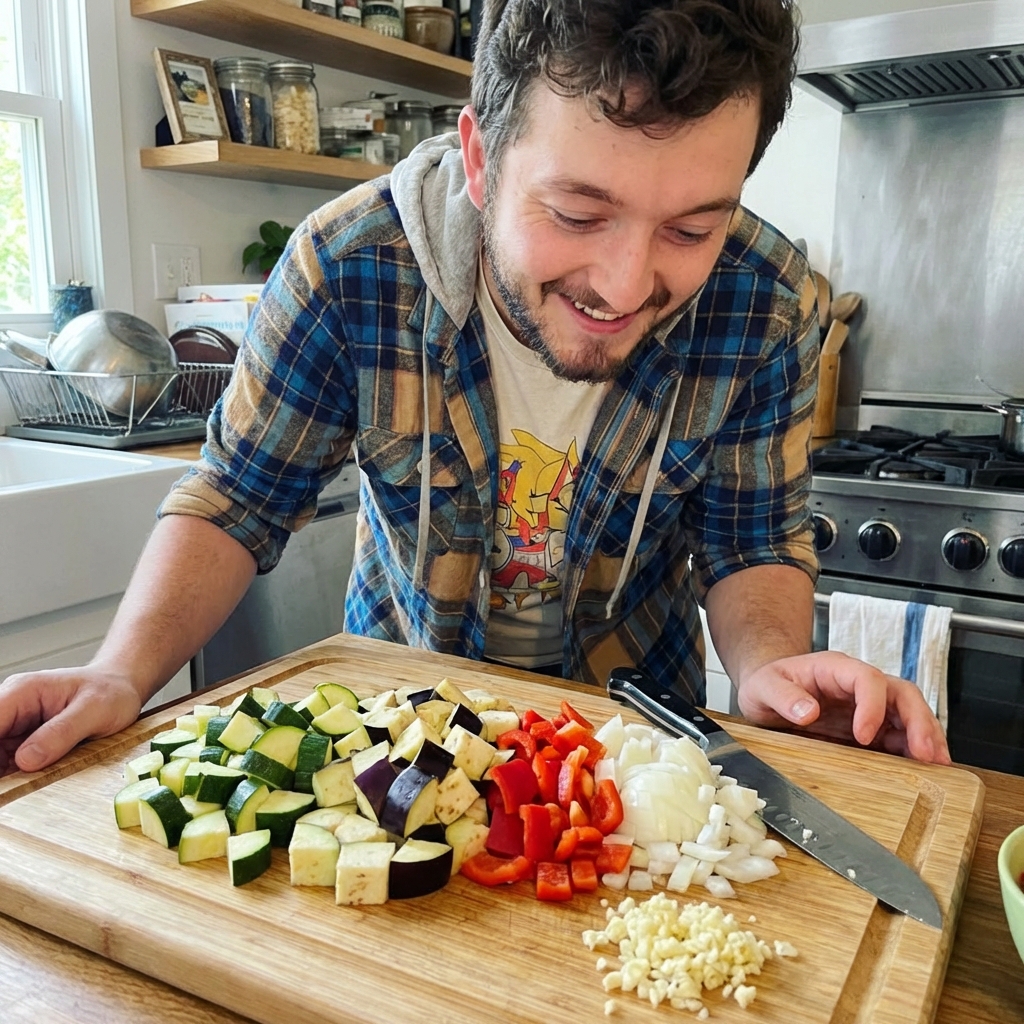
Chopped zucchini, eggplant, bell pepper, onion, and garlic on a wooden cutting board with a chef's knife

Why It Works

  • Layered flavor without drama: Sautéing the vegetables in stages builds a deeper, sweeter base than dumping everything in at once.
  • Fresh but cozy: Tomato, garlic, and herbs keep it bright, while slow simmering makes it spoonable and rich.
  • Better the next day: Like many stews, the flavors settle in and get friendlier overnight.
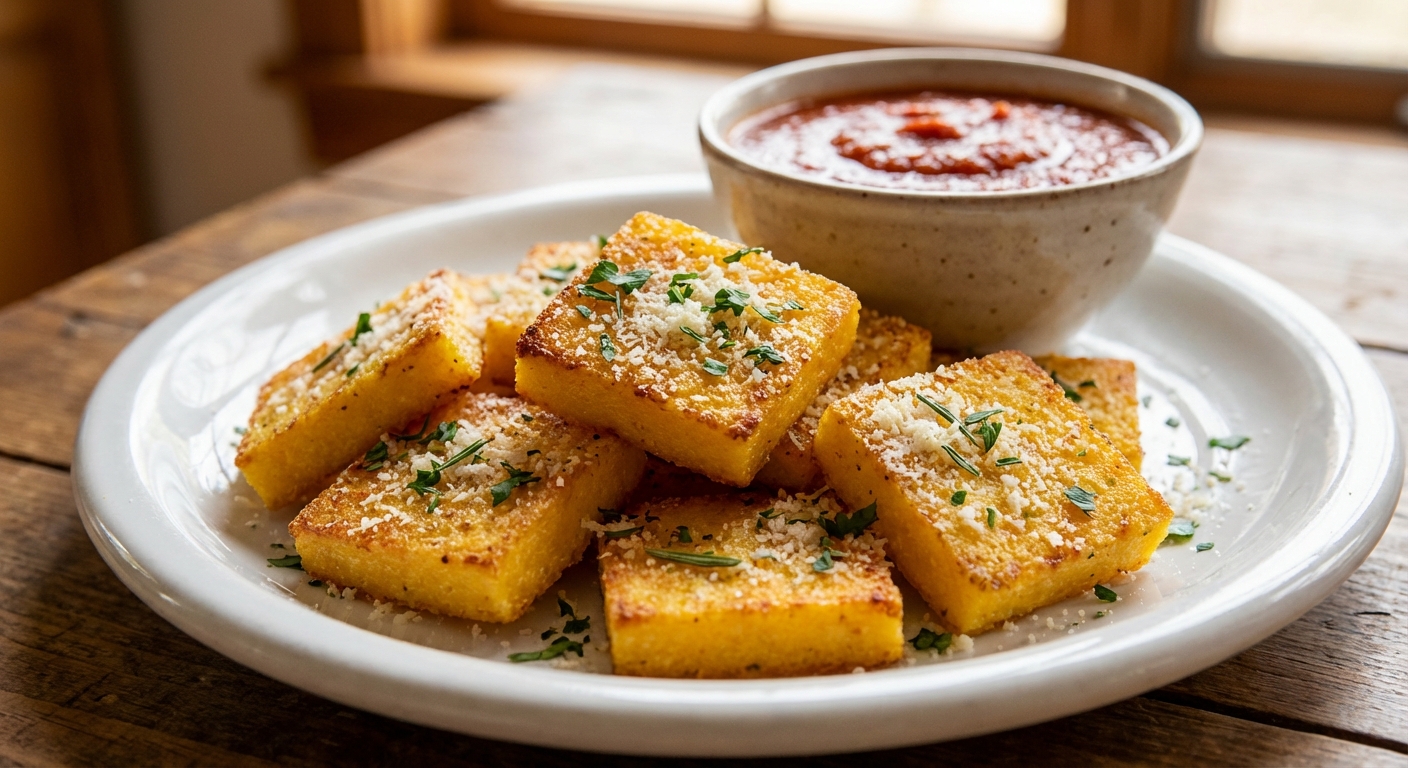
  • Flexible serving options: Eat it as a main, a side, a toast topper, or a pasta sauce that just happens to be packed with vegetables.

Pairs Well With

Storage Tips

Refrigerate: Cool completely, then store in an airtight container for up to 4 to 5 days.

Freeze: Ratatouille freezes well because it is already soft and saucy. Freeze in portioned containers for up to 3 months. Thaw overnight in the fridge.

Reheat: Warm gently in a skillet over medium-low heat, stirring occasionally. If it looks thick, splash in a tablespoon or two of water or broth. Microwave reheating works too, but stovetop keeps the texture nicer.

Next-day upgrade: Stir leftovers into cooked pasta with a little olive oil and Parmesan, or pile it on toast with ricotta.

Common Questions

Do I need to salt the eggplant first?

Usually, no. Modern eggplant is much less bitter than it used to be. If your eggplant is very large or you have time, you can salt the cubes for 20 minutes, then pat dry. It helps them brown a little better, but it is not required.

Why sauté the vegetables separately?

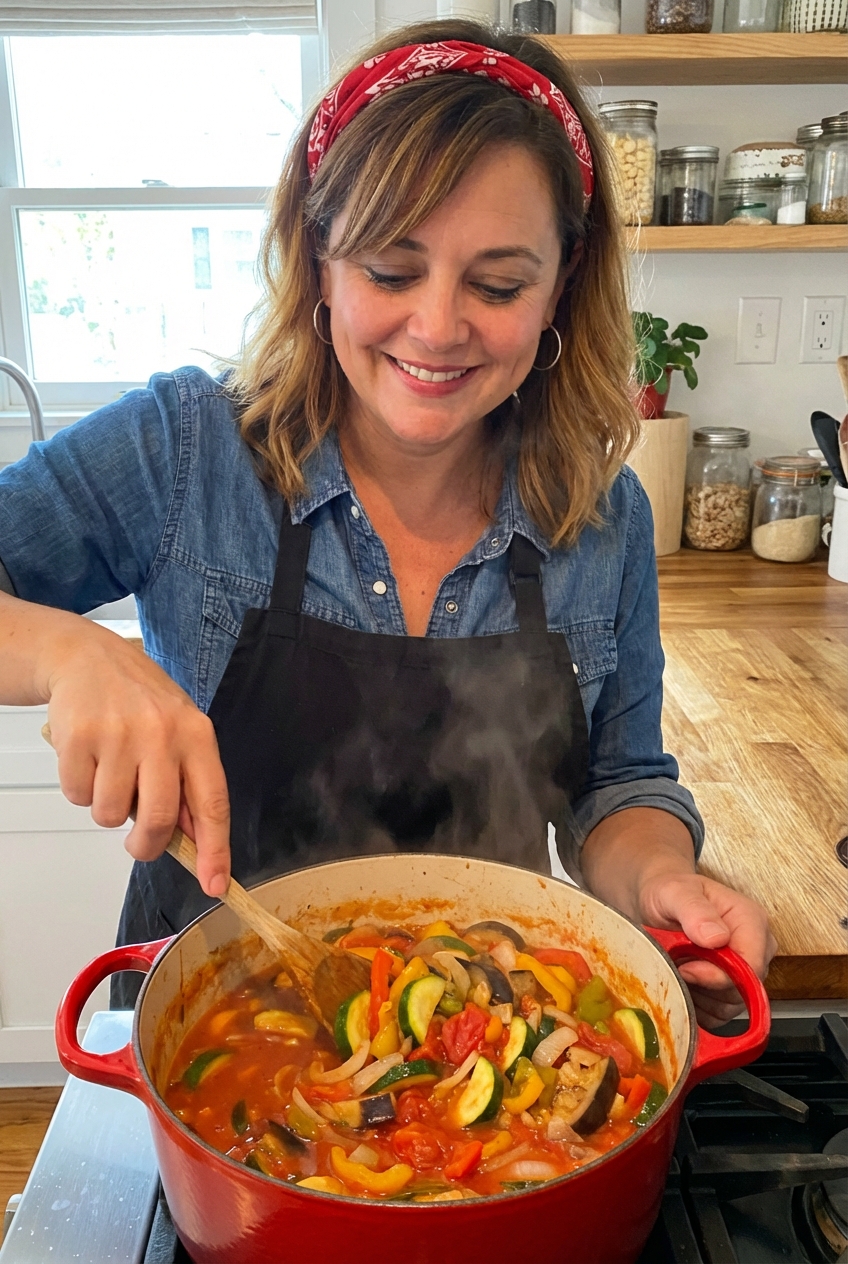
Because vegetables release water at different speeds. Sautéing in stages helps you get caramelization instead of a watery veggie soup. That browning is where a lot of the flavor lives.

Can I make ratatouille in the oven instead?

Yes. You can sauté the onion, garlic, and tomato base on the stove, then add the vegetables and bake at 375°F covered for 30 minutes, uncovered for 15 to 25 minutes. The stovetop method is faster and easier to adjust as you go.

What herbs are most traditional?

Thyme and bay leaf are classics. Basil at the end tastes fresh and slightly sweet. If you have herbes de Provence, it fits right in.

How do I keep it from turning to mush?

Cut the vegetables into similar-sized pieces, sauté in stages, and simmer gently. Ratatouille should be tender and spoonable, not baby food. If you want more bite, shorten the final simmer by 5 to 10 minutes.

The first time I made ratatouille, I treated it like a fridge clean-out and a science experiment at the same time. I chopped everything, tossed it in one pot, and waited for magic. It was fine, but it was not pause mid-bite fine.

Then I started cooking the vegetables in stages and letting the tomato base do its thing first. Suddenly it tasted like a little bistro dinner, even though I was in sweatpants, eating it out of a bowl, chasing the last bits with bread like it owed me money. That is still my favorite way to eat it: rustic, a little messy, and completely worth the extra pan time.