Mom's Best Recipes
Recipe

Classic Sausage Gravy

Creamy, peppery, and loaded with savory sausage, this is the cozy, cling-to-your-biscuit gravy you want on a slow morning or a fast weeknight breakfast-for-dinner.

Author By Matt Campbell
4.9
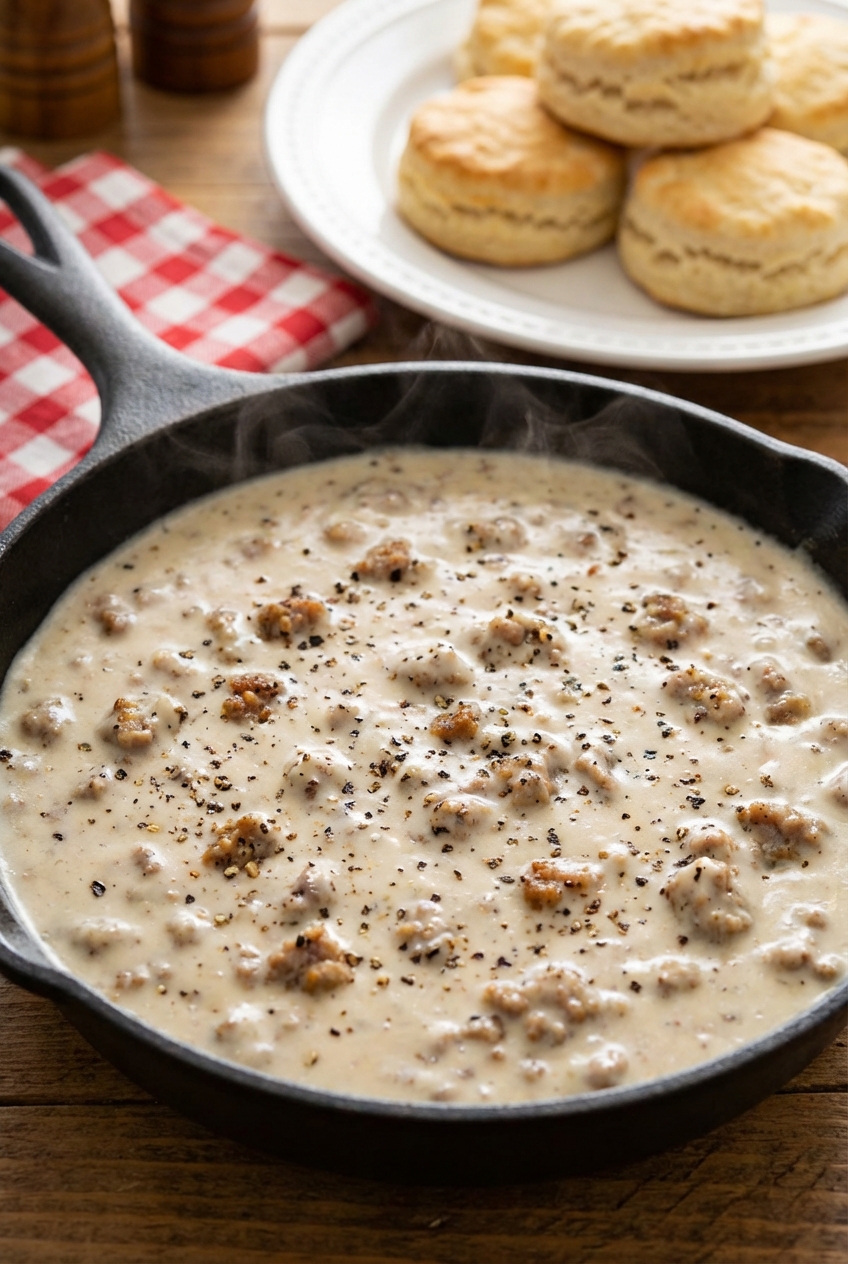
A close-up photo of creamy sausage gravy in a skillet with browned sausage crumbles and cracked black pepper, with warm biscuits on a plate in the background

Sausage gravy is one of those dishes that feels like a warm hoodie for your soul. It's rich, savory, and just peppery enough to make you go back for another bite even when you promised yourself you were only having one biscuit.

This version keeps it classic: browned breakfast sausage, a simple flour roux, and milk simmered until it turns into that spoon-coating, biscuit-loving magic. No weird ingredients, no stress. Just a few small tricks that make it taste like the best diner plate of your life, but from your own stovetop.
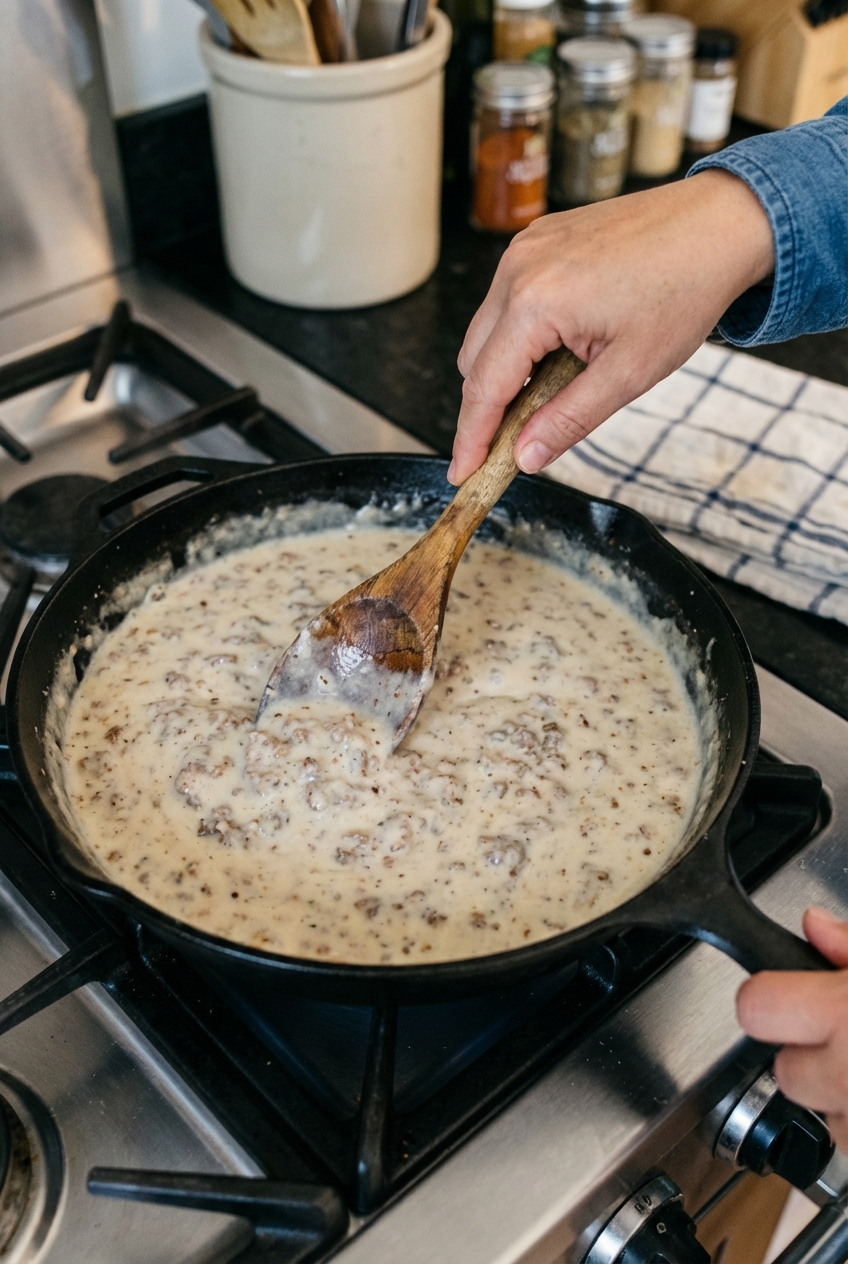
A real photo of a wooden spoon stirring thick sausage gravy in a cast iron skillet on a stovetop

Why It Works

  • Big savory flavor from properly browning the sausage, which builds the base before the milk ever hits the pan.
  • Silky, not pasty because we cook the flour in the sausage fat for a full minute to knock out any raw taste.
  • Perfect thickness control with an easy rule: start with 2 cups milk, then loosen with a splash if you want it more pourable.
  • Classic peppery finish with lots of black pepper and optional red pepper flakes for a little wake-up call.

Pairs Well With

Storage Tips

Sausage gravy reheats like a champ, but it does thicken as it cools. That's normal. Think of it as gravy taking a nap.

Cool it safely

  • Cool leftovers quickly and refrigerate within 2 hours.

Refrigerator

  • Cool, then store in an airtight container for up to 3 to 4 days.

Freezer

  • Freeze in a freezer-safe container for up to 2 months.
  • Thaw overnight in the fridge for best texture.

Reheat

  • Warm in a saucepan over low heat, stirring often.
  • Add milk 1 to 2 tablespoons at a time until it loosens back into a creamy gravy.
  • Reheat to 165°F/74°C.
  • If it looks a touch grainy after freezing, keep the heat low and whisk in a splash of warm milk. A tiny pat of butter can help, too. Avoid boiling, which can make it split more.

Common Questions

Why is my sausage gravy lumpy?

Usually it's one of two things: the milk went in too fast, or the heat was too high. To fix it, drop the heat to low and whisk like you mean it. If lumps are stubborn, pour the gravy through a fine-mesh strainer and return it to the pan. Still tastes great.

Can I use half-and-half or cream instead of milk?

Yes. Half-and-half makes it extra rich. If using heavy cream, cut it with a little milk (or even a splash of broth) so it doesn't turn into gravy cement.

What kind of sausage is best?

Classic breakfast sausage, either mild or hot. Sage sausage is also amazing if you like a more old-school flavor.

How do I make it thicker or thinner?

For thicker: simmer a few more minutes, stirring often. For thinner: add a splash of milk and stir until smooth. Gravy's forgiving if you treat it gently. Also, it thickens a bit as it cools, so don't panic if it looks a touch loose in the skillet.

Can I make this gluten-free?

You can. Swap the flour for a 1:1 gluten-free all-purpose blend, but results can vary by brand. If it isn't thickening like you want, use cornstarch instead: whisk 1 to 2 tablespoons cornstarch with a few tablespoons of cold milk to make a slurry, then whisk it into the simmering gravy near the end and cook 1 minute to thicken.

When I was learning to cook, sausage gravy was one of the first “real” stovetop things that made me feel like I had kitchen instincts. It's just sausage, flour, and milk, but somehow it teaches you everything: how to build flavor by browning, how to manage heat, how to trust your eyes when something thickens, and how tasting as you go is the difference between good and oh-wow.

Now it's my go-to comfort recipe when I want maximum payoff with minimal drama. Also, I'll say this: the first time you nail the texture, you're going to stand there dipping a biscuit into the skillet like you're guarding a treasure. That's normal. Encouraged, even.