Mom's Best Recipes
Recipe

Classic Sicilian Caponata

A sweet-sour eggplant relish with olives, capers, raisins, and a bright vinegar finish. Better the next day and perfect for spooning on basically everything.

Author By Matt Campbell
4.8
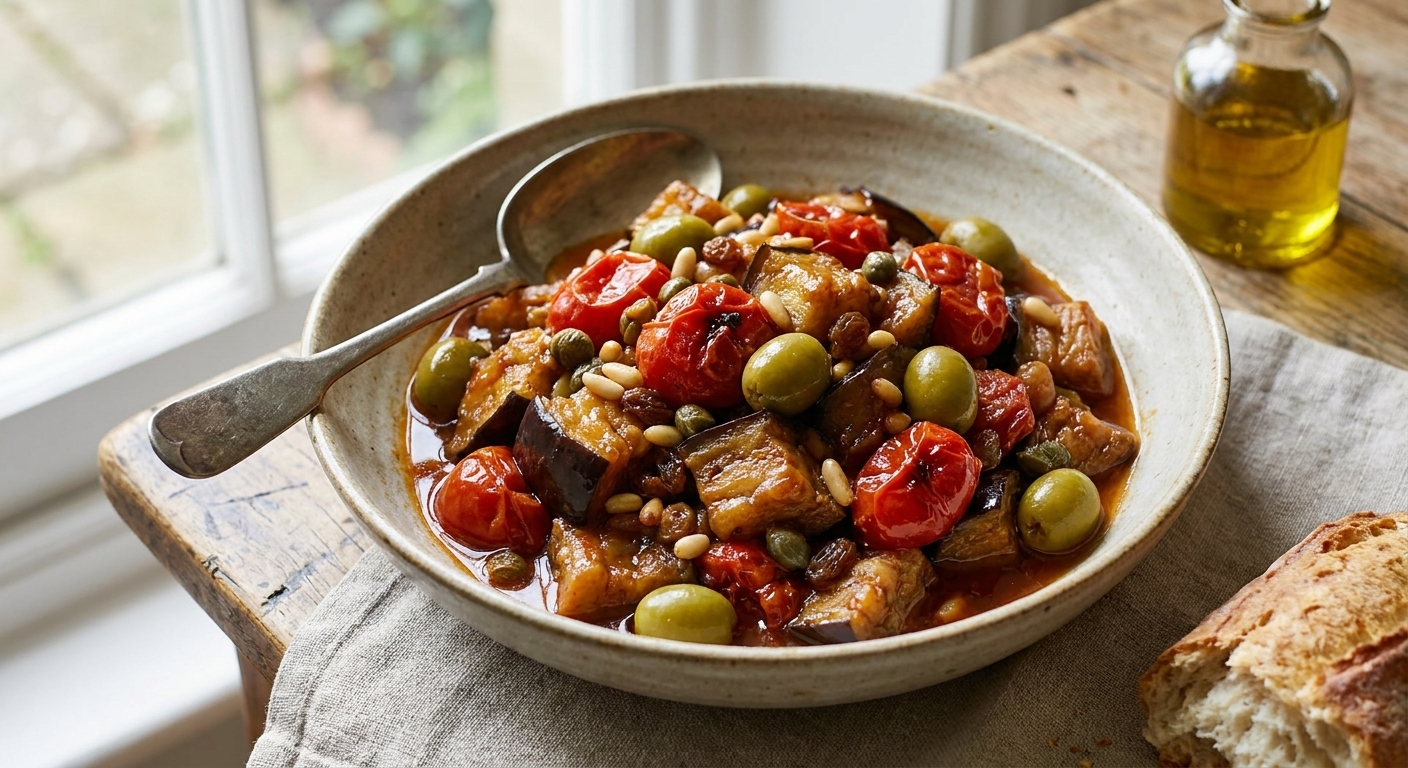
A bowl of classic Sicilian caponata with tender eggplant, tomato, green olives, and capers, glossy sweet-sour sauce, and a spoon resting on the side, natural window light

Caponata is one of those dishes that feels like it was invented by someone who refuses to choose between savory and sweet. You get eggplant that turns silky and rich, tomatoes that melt into a jammy sauce, and then the fun stuff: briny olives, punchy capers, and little pops of sweetness from raisins. Finally, right at the end, you hit it with vinegar so everything wakes up. It is bold, balanced, and extremely spoonable.

This version is classic-inspired with a couple of practical home cook moves so your eggplant does not drink half a bottle of oil. I also added gentle cues for two common Sicilian directions you will see referenced: Palermo-leaning (often a touch sweeter, sometimes with raisins and pine nuts) and Agrigento-leaning (often more vegetable-forward, sometimes with bell pepper). Either way, caponata is happiest after a night in the fridge, which is great news if you like cooking once and eating well for days.
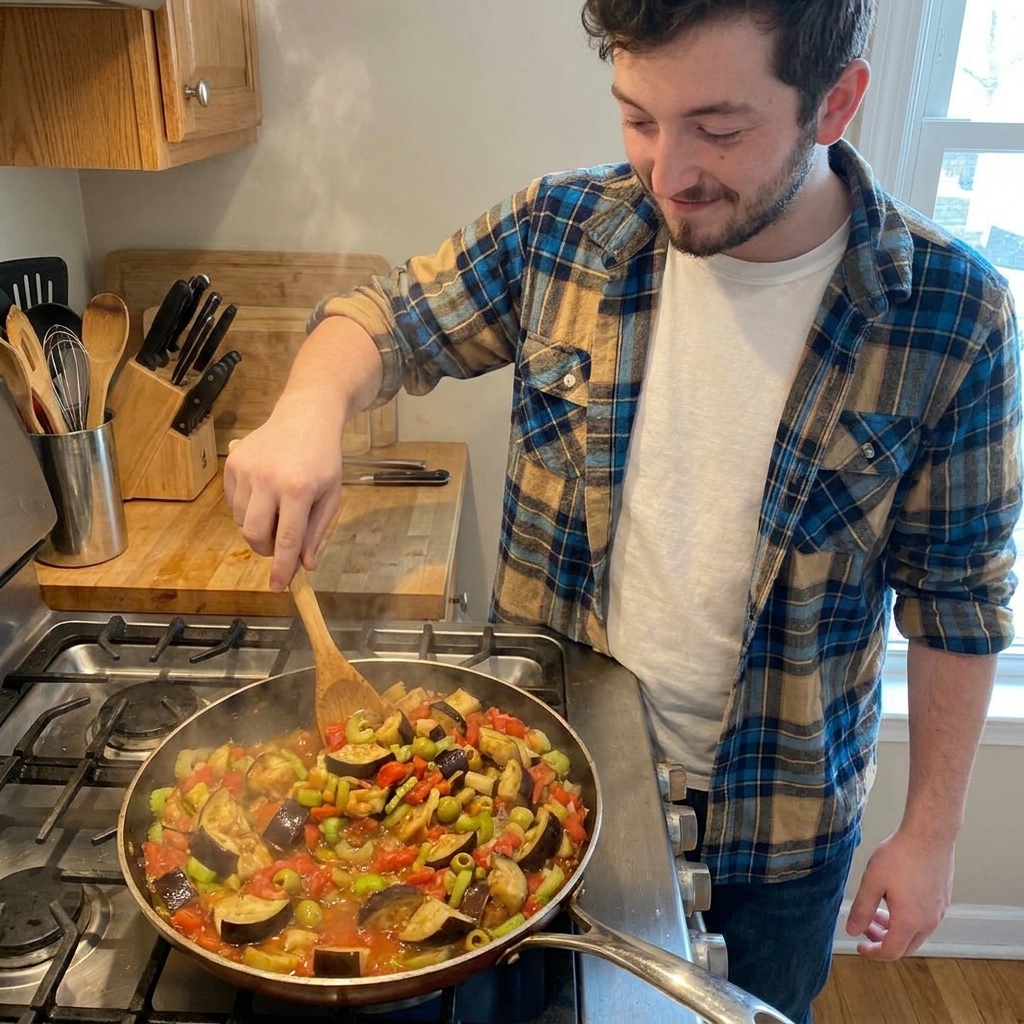
Caponata simmering in a wide skillet on a stovetop, with chunks of eggplant, tomato, olives, and celery visible in a glossy sweet-sour sauce

Why It Works

  • Sweet-sour balance you can control: You add vinegar and sugar at the end, so you can taste and land exactly where you want.
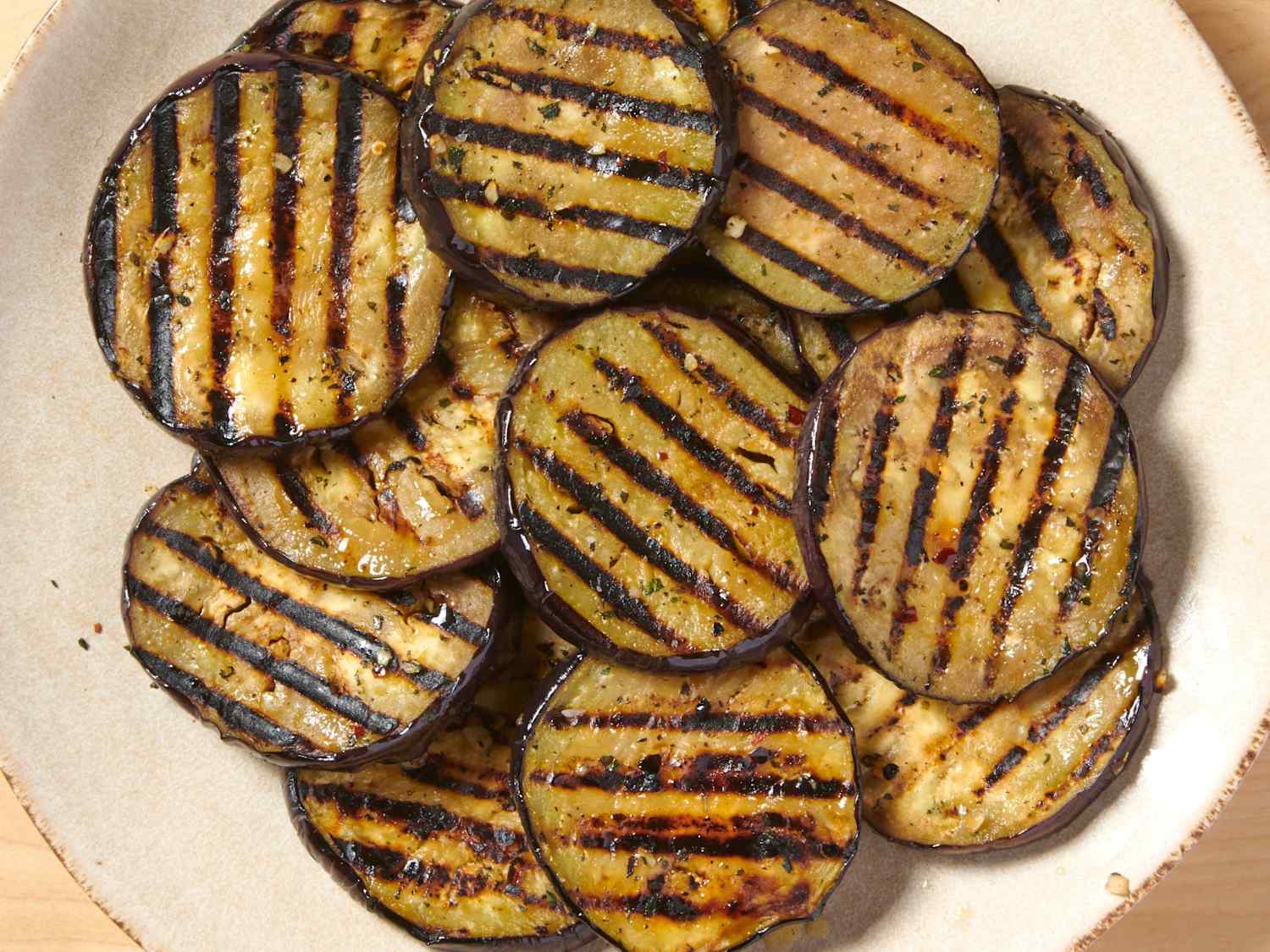
  • Eggplant that is tender, not greasy: Salt, rest, and roast. Less oil absorption, better texture, crisp edges.
  • Big flavor from pantry staples: Capers, olives, tomato paste, and a little raisin sweetness do most of the heavy lifting.
  • Make-ahead friendly: Like many Mediterranean vegetable dishes, it tastes even better after it sits.

Pairs Well With

Storage Tips

Fridge: Store caponata in an airtight container for 5 to 7 days. Cool it quickly and refrigerate within 2 hours. The flavor improves after 12 to 24 hours, so it is basically designed for make-ahead lunches.

Freezer: You can freeze it, but the texture softens more once thawed. If you do, freeze in a flat layer for faster chilling and easier stacking. Best within 2 months.

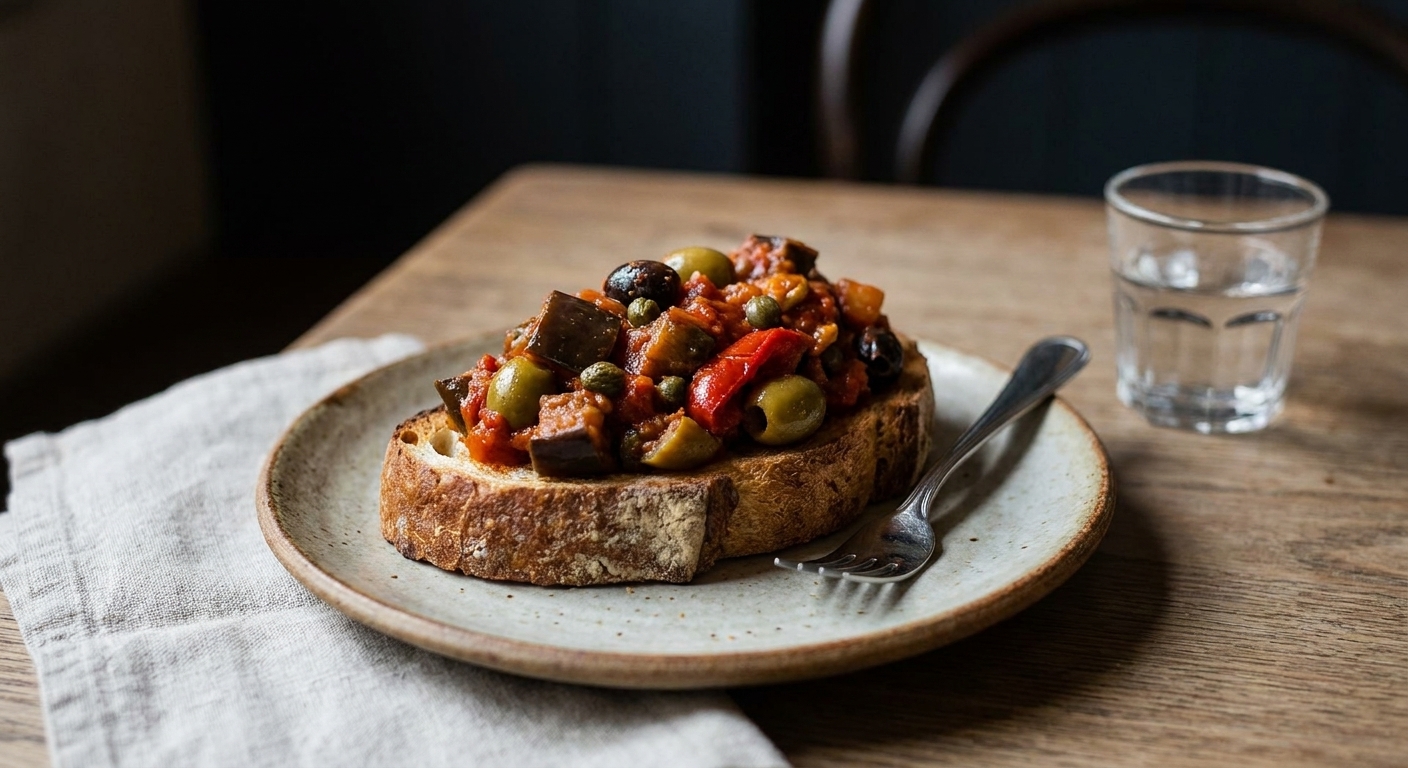
Serving leftover caponata: Eat it cold or room temp on toast, or warm it gently in a skillet with a splash of water. If it tastes muted from the fridge, add a tiny splash of vinegar and a pinch of salt to bring it back to life.

Food safety note: This recipe is not written for shelf-stable canning. Keep it refrigerated.

Common Questions

What is the difference between Palermo and Agrigento caponata?

Sicilian caponata changes from town to town, and honestly, from kitchen to kitchen. That said, Palermo-style versions often lean a little sweeter and richer, and you will sometimes see raisins and pine nuts show up. Agrigento-style versions are often more vegetable-forward, and bell pepper is a common (but not mandatory) addition in some recipes. Both are very much caponata, and both are delicious.

Do I have to salt the eggplant?

You do not have to, but it helps a lot with texture and browning. Salting draws out some moisture so the eggplant roasts up tender with less oil. If you skip it, keep the oven hot, spread the cubes well, and go lighter on oil.

Why finish with vinegar at the end?

Vinegar added early mellows as it cooks and loses that sharp edge. Adding it at the end keeps the bright, clean tang that makes caponata taste like itself.

Can I make caponata without raisins?

Yes. If you prefer it less sweet, skip raisins and reduce the sugar slightly. If you still want a little sweetness, try a spoonful of chopped dates or a tiny drizzle of honey.

What should I serve caponata with for a veggie-forward plate?

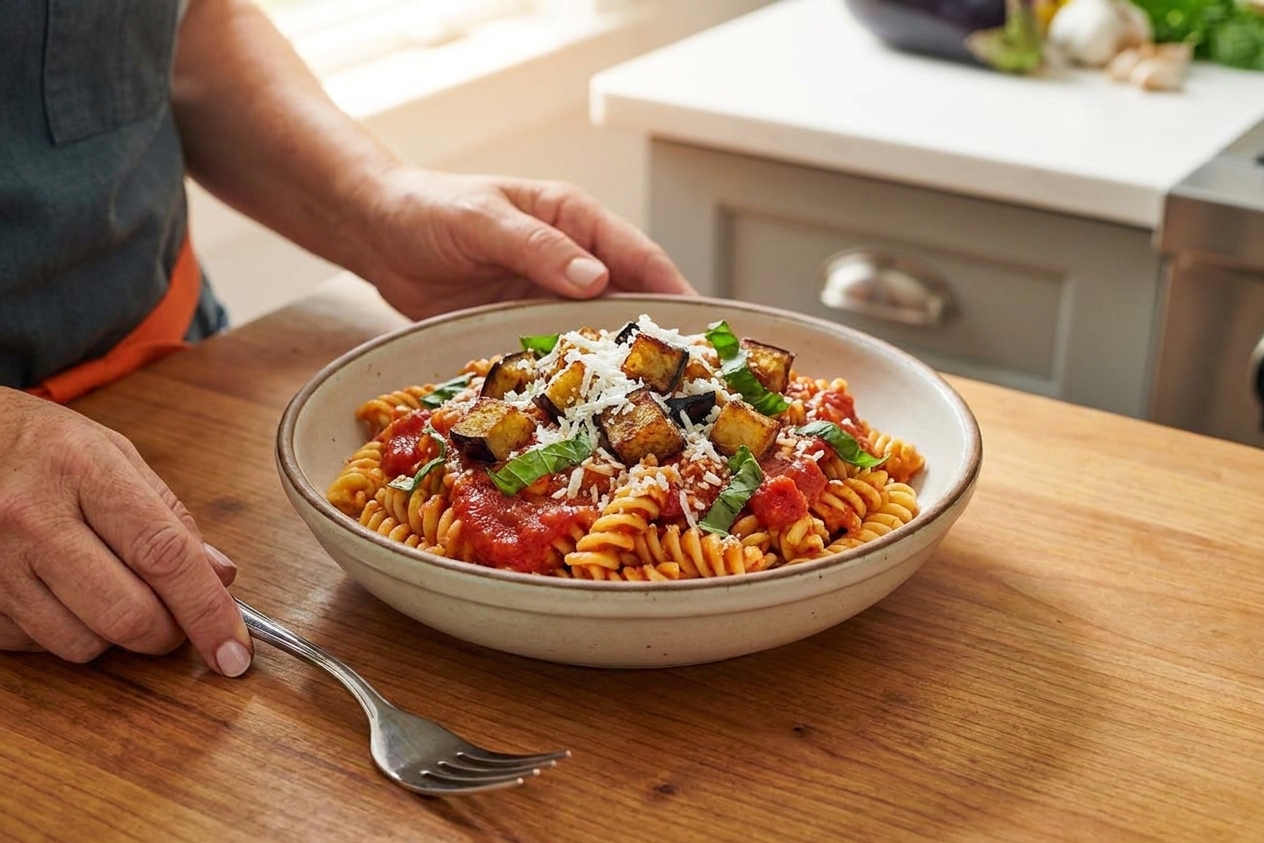
My go-tos: caponata over creamy polenta, tossed with hot pasta, spooned onto crispy potatoes, or piled on toast with a thick smear of ricotta. Add a fried egg and you have dinner.

The first time I made caponata, I did what many of us do when we meet eggplant: I poured oil at it like I was putting out a kitchen fire. The flavor was great, but the texture was heavy, and it left that “I need a nap” feeling. Roasting the eggplant was the fix. Same rich vibe, way less greasy, and you still get those browned edges that taste like you actually know what you are doing. Now I keep a container in the fridge and treat it like a condiment that also counts as a vegetable side. That is the kind of multitasking I respect.