Common Questions
How do I know my starter is ready to bake with?
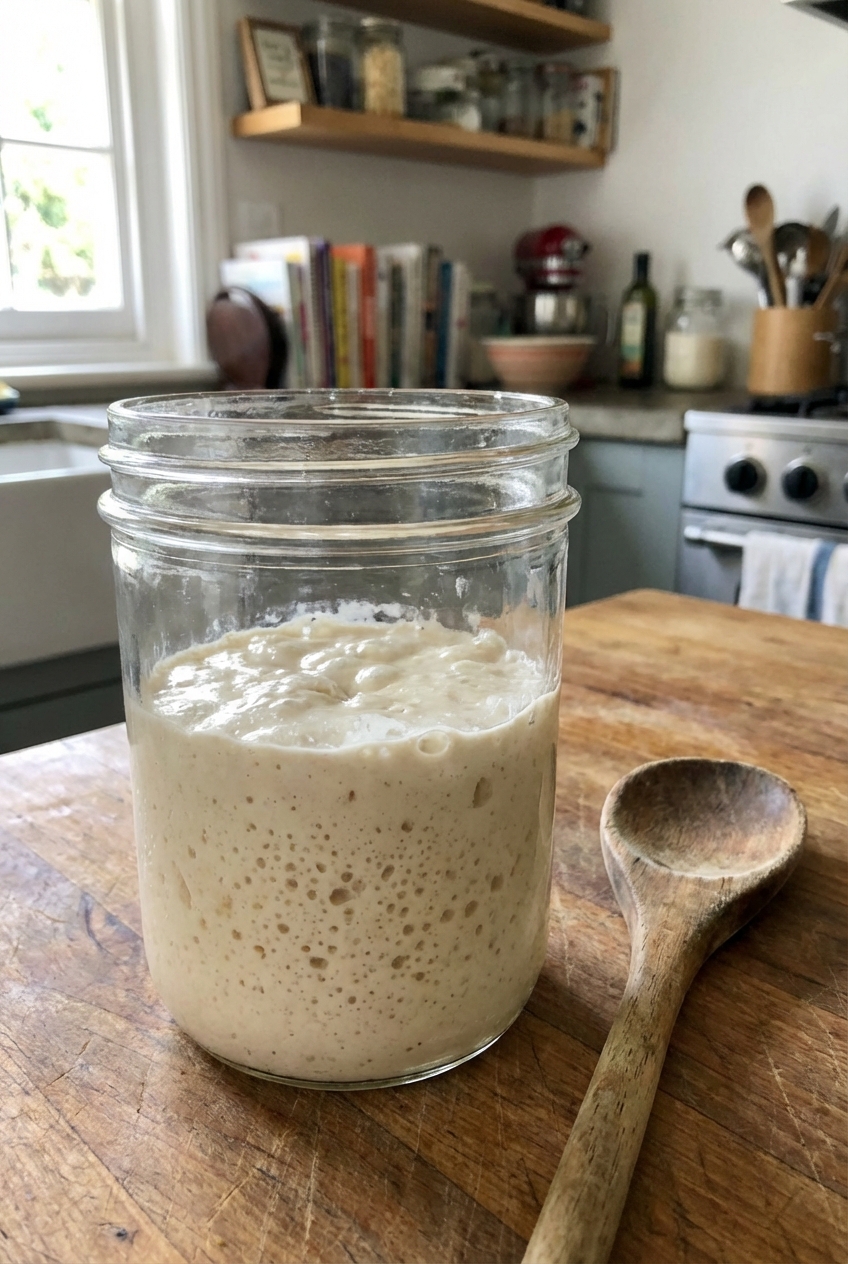
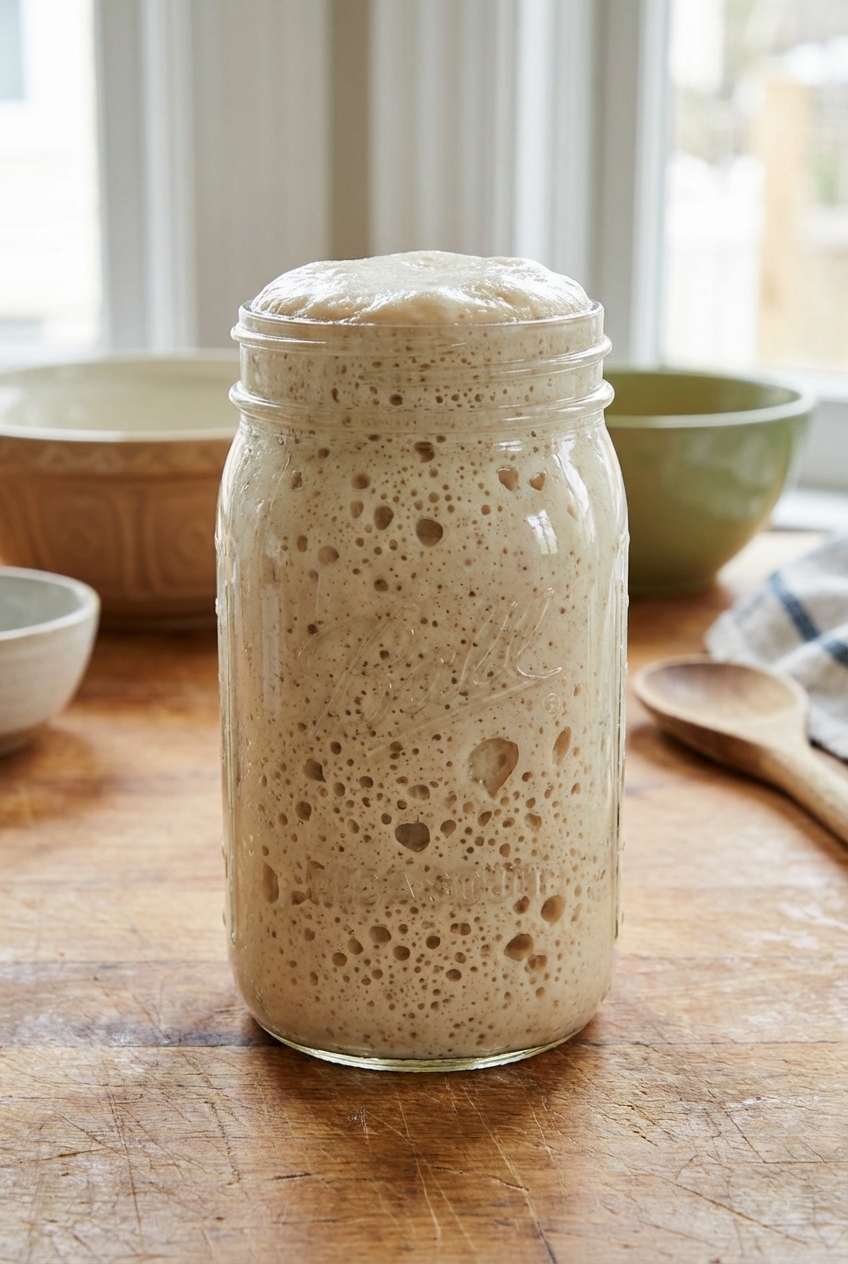
Your starter should be active and at or near peak: bubbly, risen noticeably (often doubling), and smelling pleasantly tangy, not harsh. If a spoonful floats in water, that can be a helpful hint, but the rise and bubbles matter more than the float test.
My dough feels sticky. Did I mess it up?
Probably not. Sourdough starts sticky, then gets smoother as the flour hydrates and you do a few folds. Lightly wet your hands for folding, and resist adding lots of extra flour. A little stick is normal.
Can I use all-purpose flour only?
Yes. You may get a slightly less open crumb than with some bread flour, but the loaf will still be delicious. If you have bread flour, use it for a bit more chew and height.
Why is my loaf not as tall?
Most common causes: under-fermented or over-fermented dough (often from a too-warm bulk), starter not strong enough, shaping that did not build enough surface tension, or a proof that went too long (including an extra-long cold proof). Next time, watch the dough more than the clock and aim for a dough that looks puffy and aerated before shaping.
Do I have to cold proof overnight?
No, but it helps. Cold proofing boosts flavor and makes scoring easier. If you need same-day bread, proof at room temp until the dough passes the poke test (slow spring back) and bake.
My dough feels dense after the fridge. What now?
If the loaf feels rock-hard and looks like it never puffed up, let it sit at room temperature for 30 to 60 minutes while the oven preheats. You are looking for a slightly puffy, chilled dough that still feels alive.
How do I know when it is baked through?
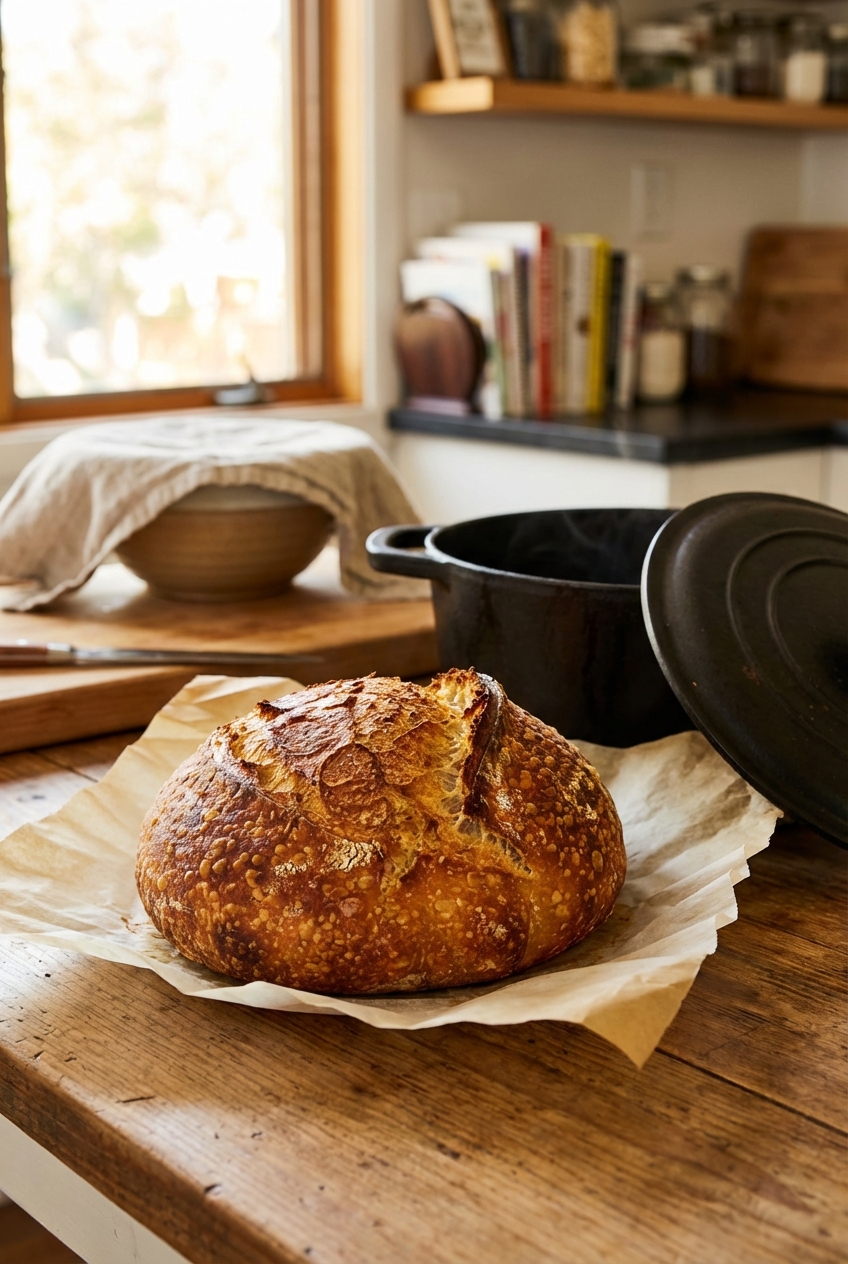
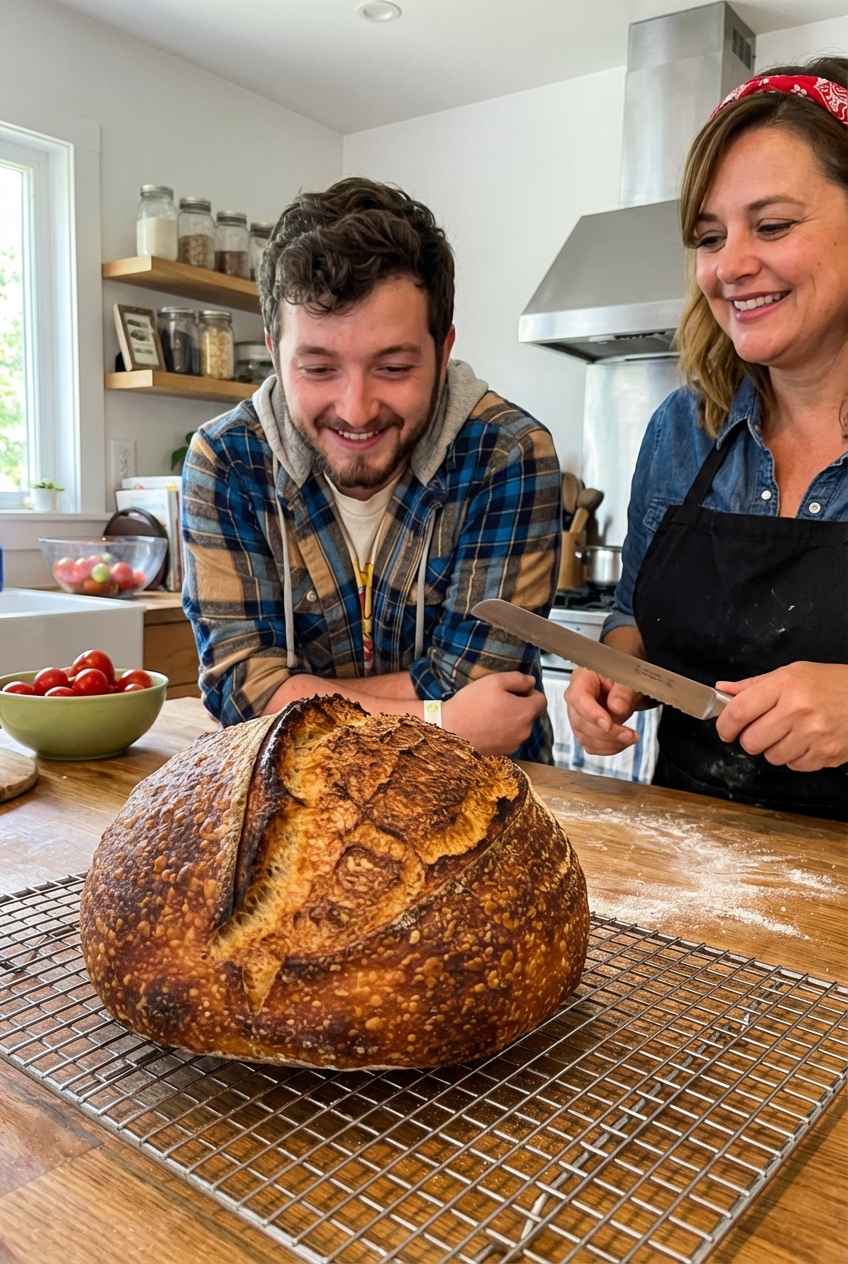
Look for a deep golden brown crust and a hollow-ish sound when tapped. If you have an instant-read thermometer, aim for an internal temp of 208°F to 212°F.
Why wait before slicing?
Because the crumb is still setting as it cools. If you slice too early, it can turn gummy. Give it at least 1 hour, and if you can wait 2, your future self will thank you.